
I’ll be honest with you – I bombed my first salary negotiation. Walked in unprepared, accepted the first offer, and left thousands on the table. Don’t be me five years ago.
Here’s what I wish someone had told me: HR is booming right now. We’re growing 5% faster than most other jobs according to the Bureau of Labor Statistics, and companies finally see us as strategic partners, not just the people who handle benefits enrollment. That shift? It’s your golden ticket to better pay.

What You’ll Learn
-
The real salary ranges (and why location matters more than you think)
-
Which specializations actually pay premium rates
-
How to negotiate like you know what you’re doing
-
What’s coming next (and how to prepare for it)
-
Your step-by-step action plan
The Bottom Line
-
HR manager salaries: $65K-$150K+ (median around $90K)
-
Major cities boost pay by 20-40%
-
Tech companies pay best, followed by healthcare and finance
-
Right certifications = 10-20% salary bump
-
Future belongs to data-savvy, strategic HR pros
-
Total compensation matters more than base salary
What HR Managers Actually Make (The Real Numbers)
Let me cut through the BS salary surveys and give you the real deal. After tracking this stuff for years, here’s what I’ve learned: your paycheck depends way more on where you work and what you specialize in than how many years you’ve been around.
The whole “HR is just admin work” thing? Dead. We’re expected to be business strategists, data analysts, and culture builders all at once. If you’re still thinking like an old-school HR generalist, you’re already behind.

The Salary Breakdown Nobody Talks About
According to PayScale, top performers hit $104K, but that’s just the beginning of the story. Here’s how it really breaks down:
|
Experience |
What You’ll Make |
What You’re Actually Doing |
|---|---|---|
|
0-2 years |
$65K-$75K |
Putting out fires, learning the ropes |
|
3-5 years |
$75K-$95K |
Running programs, managing people |
|
6-10 years |
$95K-$120K |
Strategic planning, being taken seriously |
|
10+ years |
$120K-$150K+ |
Sitting at the big kids’ table |
That jump from mid-level to senior? That’s where most people get stuck. They keep doing the same tasks instead of thinking bigger.
But here’s what’s interesting – these ranges shift dramatically based on where you work and what industry you’re in. A mid-level HR manager in tech might out-earn a senior manager in retail by $30K or more.
Geography: Your ZIP Code Is Your Salary Code
Your location can make or break your paycheck. A $85K salary in Cleveland becomes $115K in San Francisco – but good luck affording rent. The trick is finding that sweet spot where higher pay actually means more money in your pocket.
Remote work changed everything. Now you might snag that Silicon Valley salary while living in Nashville. But don’t get too excited – companies are catching on and adjusting pay scales accordingly.
Here’s the reality: major metropolitan areas consistently offer 20-40% higher salaries than national averages. But you need to calculate your real purchasing power, not just get dazzled by bigger numbers.
Industry Reality Check
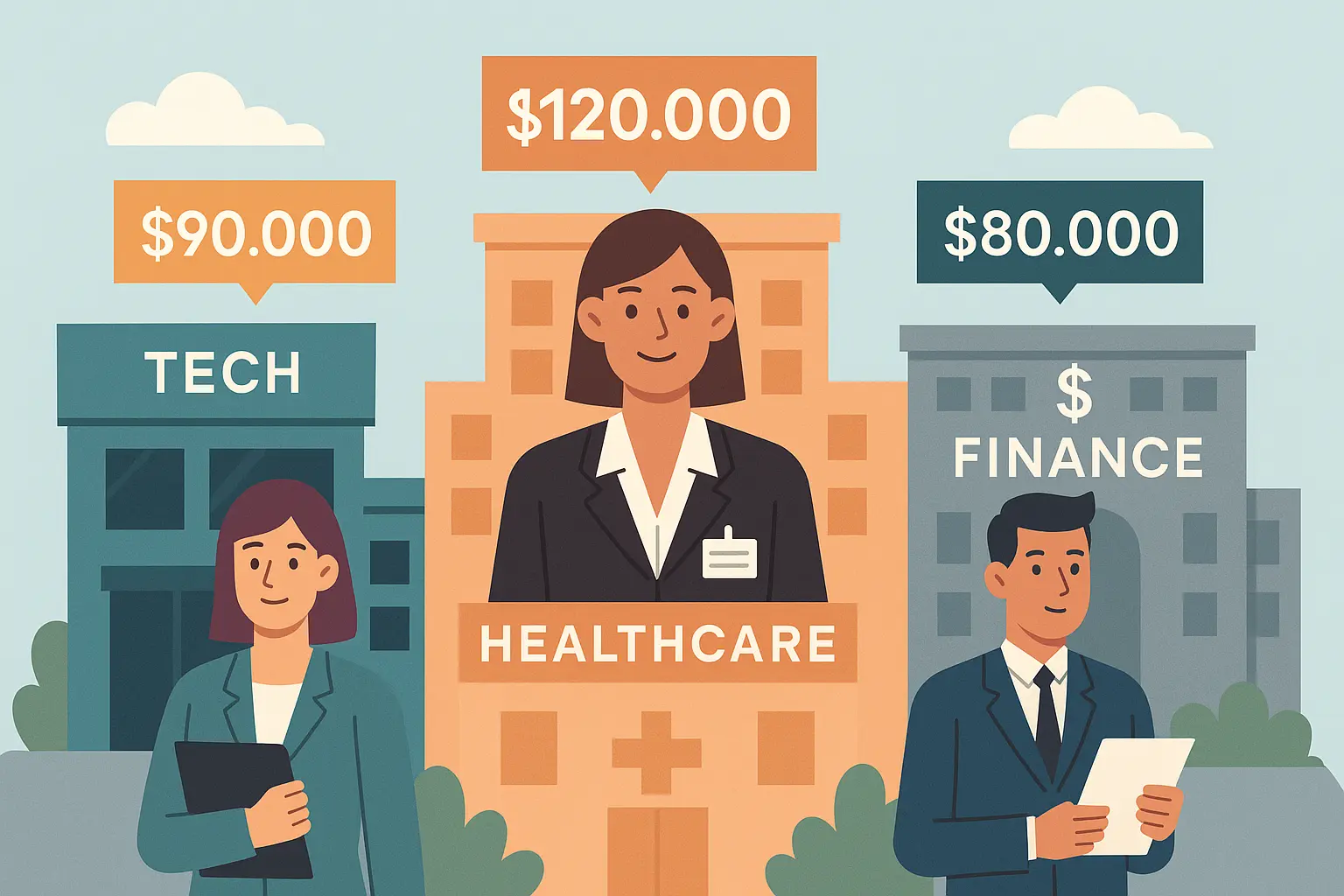
Tech companies still pay the most, but here’s what the salary surveys don’t tell you:
-
Tech: Highest base pay, stock options, unlimited PTO (that nobody takes)
-
Healthcare: Solid pay, amazing benefits, job security
-
Finance: Good money, traditional advancement paths
-
Manufacturing: Lower base but incredible stability
The secret sauce? Industry knowledge. An HR manager who understands healthcare regulations is worth way more than a generalist with the same experience.
What Actually Drives Your Paycheck (Beyond the Obvious Stuff)
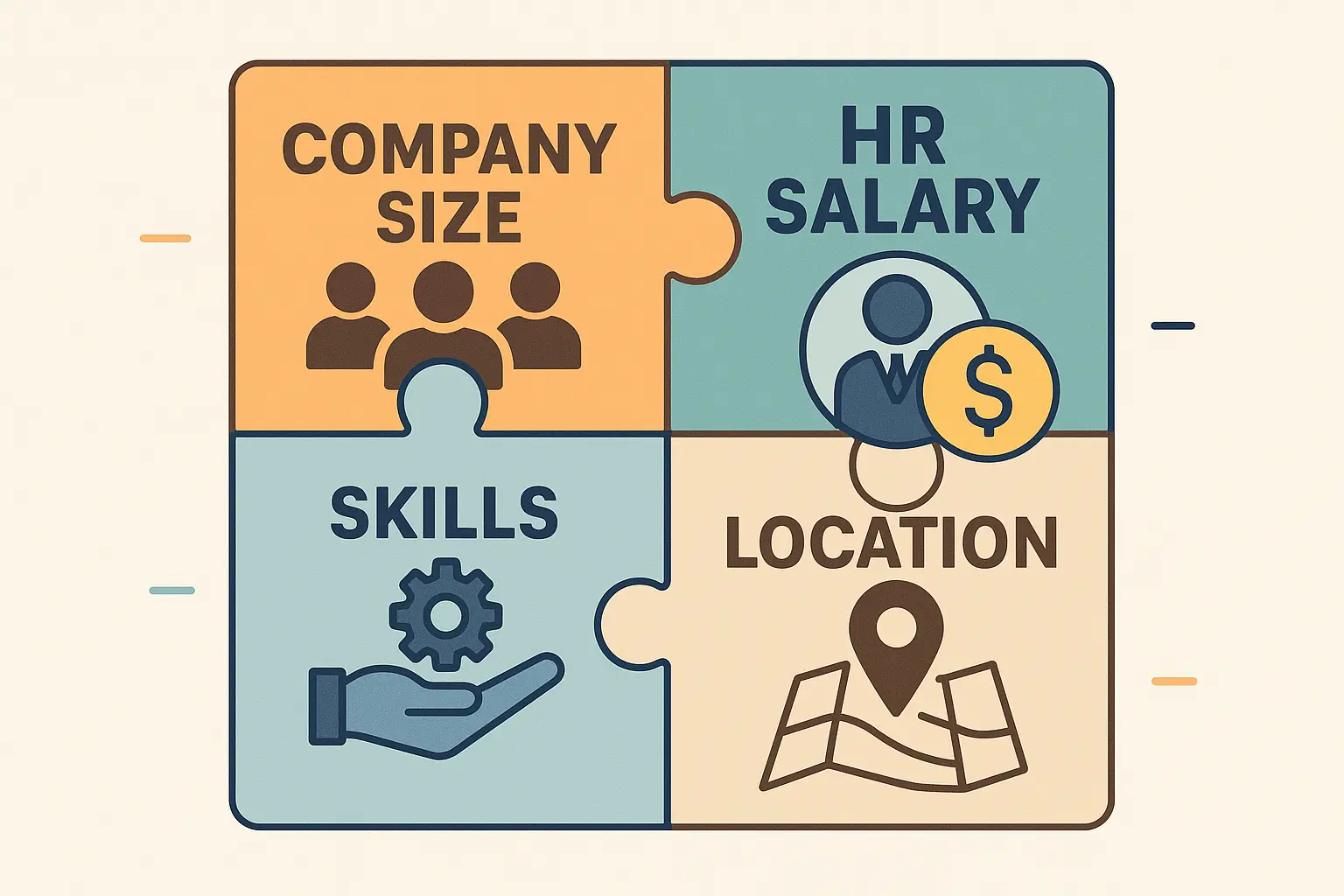
Forget what you think you know about salary factors. Company size, education, certifications – they all matter, but not how you’d expect.
Company Size: The Goldilocks Problem
The relationship between company size and pay isn’t as straightforward as you’d think:
|
Company Size |
Average Range |
The Real Deal |
|---|---|---|
|
Startup (<100) |
$70K-$90K |
Equity lottery tickets, 47 different hats |
|
Mid-size (100-1,000) |
$85K-$110K |
Sweet spot of growth and structure |
|
Large Enterprise (1,000+) |
$100K-$140K+ |
Highest pay, best benefits, slowest advancement |
I’ve seen people chase startup equity dreams and end up broke. I’ve also watched corporate climbers get stuck in bureaucracy hell. Pick your poison based on what you value most.
Education: When Your Degree Actually Matters
Bachelor’s degree gets you in the door. Master’s degree gets you 15-25% more money. But here’s the kicker – it matters way more at smaller companies where you’re expected to know everything.
For professionals looking to advance their careers, understanding is it worth it to get a college degree becomes crucial when considering whether additional education will boost your earning potential. The investment often pays dividends, but timing matters enormously.
Lost your diploma during a move? Yeah, that happens. Services like replacing a lost diploma become crucial when you’re trying to prove your credentials during negotiations.
The Benefits Game Changes Everything
Base salary is just the beginning. I’ve seen people turn down $10K more in salary for better total packages – and they were absolutely right. Health insurance, 401K matching, professional development budgets, flexible work – it all adds up to real money.
Benefits packages can add 20-30% to your total compensation value. A $5,000 lower salary with full health coverage, 6% 401k matching, and a $3,000 professional development budget often beats a higher base with minimal benefits.
The Hidden Reality of Oversight and Control
Company structure affects more than just your salary – it impacts your autonomy and responsibilities too. A recent case reported by “UNILAD” highlights why this matters: an HR manager exploited lack of supervision to embezzle over $2.2 million through fake employee schemes over eight years.
This shows how different company sizes handle oversight differently. Larger companies with robust systems might offer more security but less flexibility, while smaller organizations provide more autonomy but potentially more risk.
Specializations That Actually Pay Premium
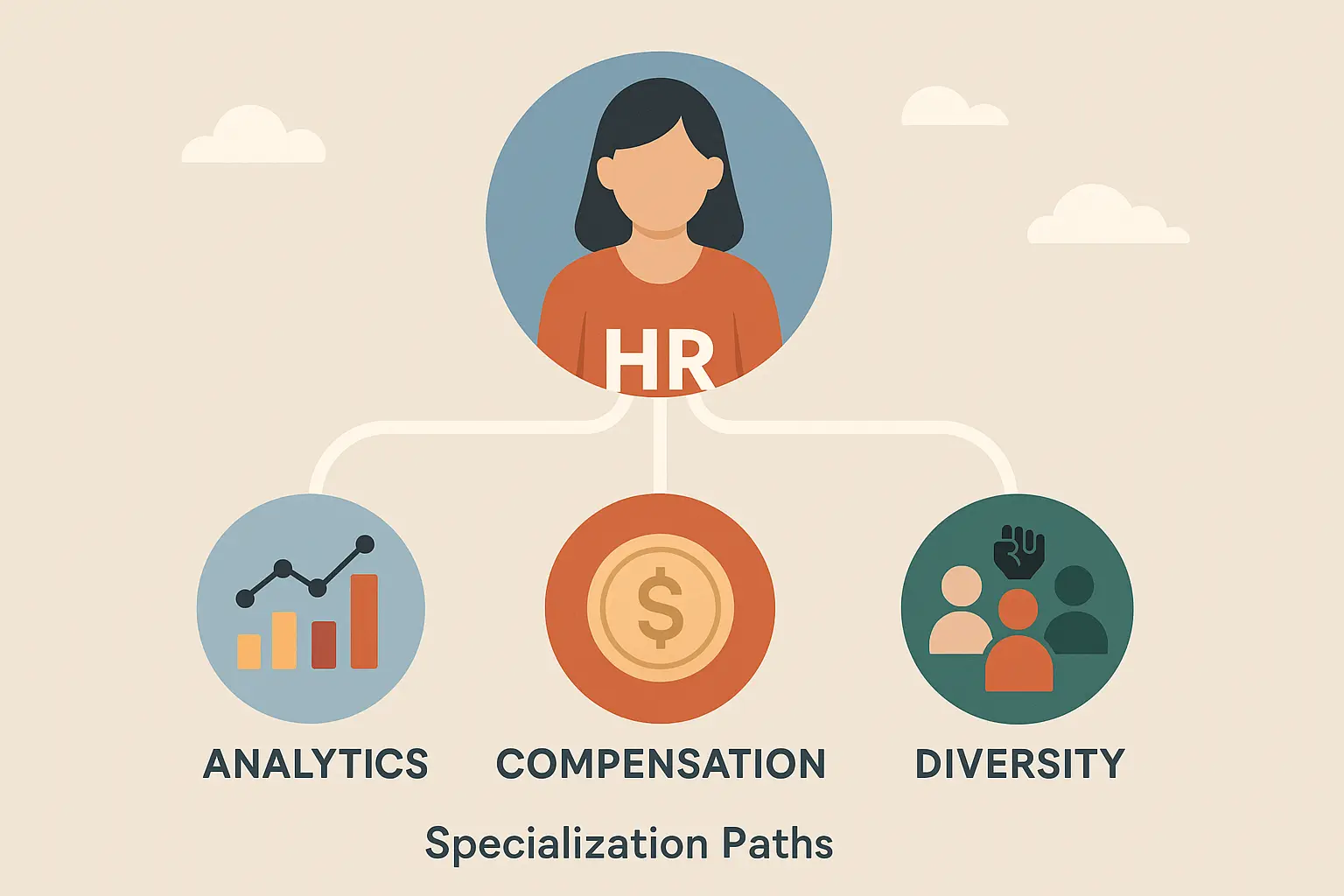
Being a generalist is fine if you like being replaceable. Specialists make the real money. Here are the areas that consistently command premium pay:
The Money Makers
Compensation & Benefits: You’re literally managing the company’s biggest expense. A compensation specialist at a Fortune 500 company might analyze pay equity across 10,000+ employees and design programs that save 15% in turnover costs. That kind of impact justifies salaries 20-25% above general HR roles.
HR Analytics: Companies are obsessed with data. If you can turn people problems into spreadsheet solutions, you’re golden. Organizations want to understand turnover patterns, predict performance, and optimize workforce investments. Professionals who provide these insights command premium compensation because they directly contribute to business outcomes.
Diversity & Inclusion: Not just feel-good stuff anymore. Real DEI work drives business results and commands serious pay. Modern DEI specialists design inclusive hiring processes, create belonging initiatives, and measure business impact – strategic work that justifies higher compensation.
Employee Experience: The new frontier. Companies finally figured out that happy employees = more money.
Specialization Priority List:
-
☐ Compensation and Benefits Analysis
-
☐ HR Analytics and Data Science
-
☐ Diversity, Equity, and Inclusion (DEI)
-
☐ Employee Experience Design
-
☐ HR Technology Implementation
-
☐ International HR and Global Mobility
-
☐ Organizational Development and Change Management
Certifications Worth Your Time (And Money)
Professional certifications can boost your salary by 10-20% while demonstrating your commitment to the profession. According to “Best Colleges”, earning certifications significantly boosts credibility when job searching, with the SHRM-SCP requiring three years of HR experience beyond the initial SHRM-CP certification.
Certification Priority:
-
☐ SHRM-CP/SCP: Industry standard, opens doors everywhere
-
☐ PHR/SPHR: Old school credible, especially in traditional industries
-
☐ GPHR: For international roles
-
☐ Specialized certs: Pick ones that match your niche
Don’t just collect certificates like Pokemon cards. Get certified in areas where you actually want to work.
How to Actually Negotiate (Without Looking Desperate)
Most people suck at salary negotiations because they ask for more money without explaining why they deserve it. Here’s how to do it right.

Do Your Homework Like Your Paycheck Depends On It
Research isn’t just looking up salary ranges on Glassdoor. Talk to people in similar roles. Join professional groups. Know what companies in your area actually pay, not what websites say they pay.
The Bureau of Labor Statistics projects 17,900 openings annually. That’s leverage if you know how to use it.
I spend time gathering data from multiple sources – industry surveys, professional associations, networking conversations. This research becomes ammunition for your negotiation, but only if you present it strategically.
Timing Is Everything
Don’t negotiate when you’re desperate. The best time to ask for more money is right after you’ve saved the company money or solved a big problem.
Sarah, an HR manager I know, waited until after she implemented a new performance system that cut turnover by 23%. She calculated the savings ($180K annually), presented the numbers, and got a 15% raise plus promotion. Smart timing, better execution.
The lesson? Don’t just do good work – measure its impact and present your case when the results are fresh and quantifiable.
Think Beyond Base Salary
Sometimes the best deal isn’t the highest salary. Consider the total package:
Total Compensation Negotiation Checklist:
-
☐ Base salary adjustment
-
☐ Annual bonus structure
-
☐ Stock options or equity participation
-
☐ Professional development budget
-
☐ Flexible work arrangements
-
☐ Additional vacation time
-
☐ Health insurance premium coverage
-
☐ Retirement plan matching increase
What’s Coming Next (And How to Prepare)
HR is changing fast. The professionals who see these trends coming will make the most money. The ones who don’t will get left behind.

From Admin to Strategic Partner
Companies want HR leaders who understand business, not just policies. If you can tie your work to revenue growth or cost savings, you’re worth more money. Period.
The transition from HR administrator to business partner represents one of the most significant salary jumps available in our field. But it requires developing skills that many HR professionals find uncomfortable initially – like understanding financial metrics, market dynamics, and operational challenges beyond traditional HR scope.
Technology Won’t Replace You (If You Smart)
AI and automation are coming for routine HR tasks. But they can’t replace human judgment, empathy, or strategic thinking. Focus on skills that complement technology rather than compete with it.
Future-proof skills:
-
Data interpretation (not just collection)
-
AI tool management
-
Remote team leadership
-
Change management
-
Strategic business partnership
Remote Work Management: The New Essential
Skills in managing distributed teams and virtual employee experiences have become highly valued, particularly post-pandemic. This expertise extends beyond just managing remote workers to designing digital employee experiences, virtual onboarding processes, and distributed team dynamics.
Your Action Plan (Stop Reading, Start Doing)
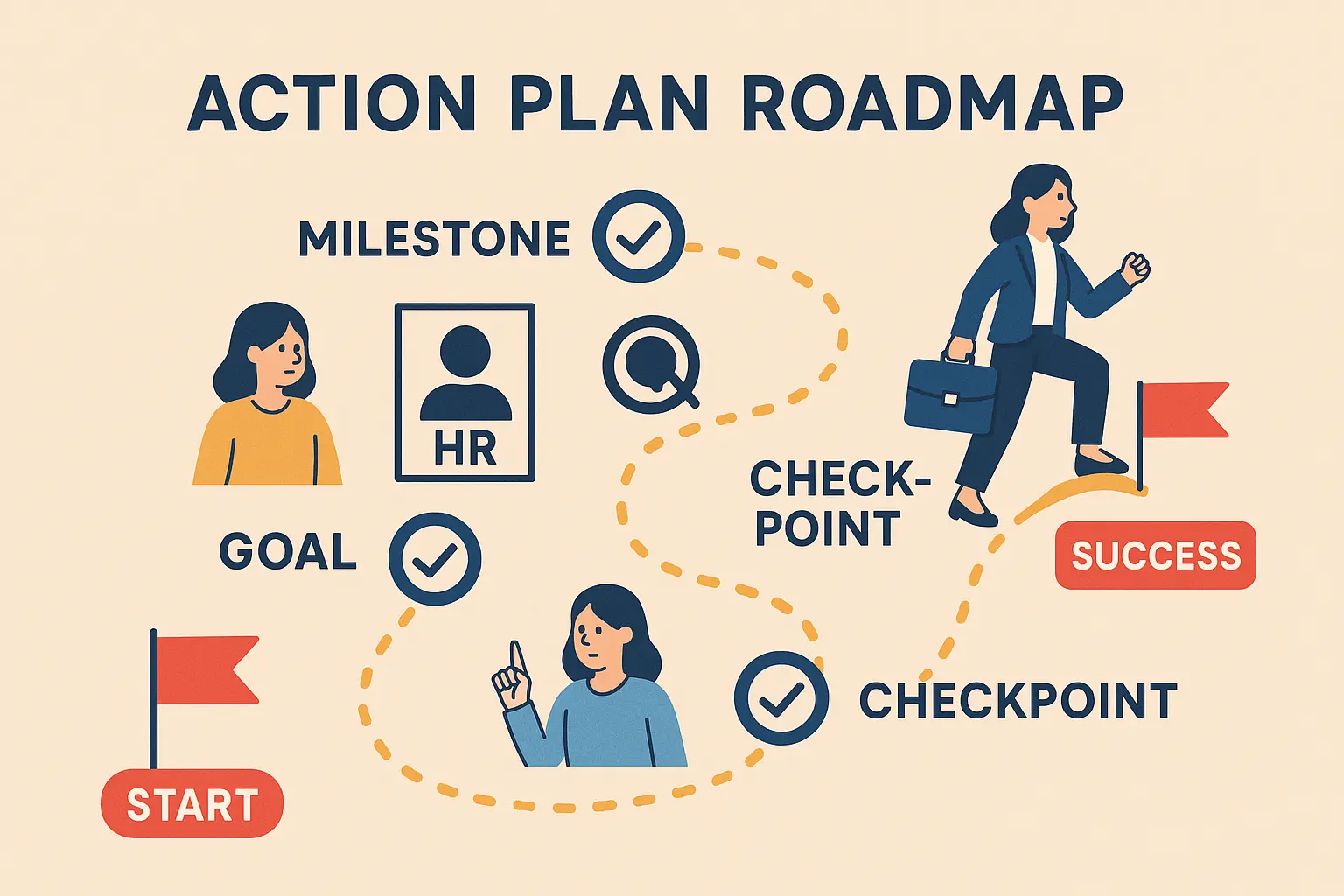
Stop reading about what you should do and start doing it. Here’s your roadmap:
This Week
-
Update your LinkedIn with actual achievements (not just job descriptions)
-
Research salary ranges for your role and location
-
Document your recent wins with numbers
Next 90 Days
-
Join one professional HR association
-
Schedule coffee chats with 3 senior HR leaders
-
Identify your biggest skill gap and make a plan to fix it
Quick Win Checklist:
-
☐ Update LinkedIn profile with quantifiable achievements
-
☐ Research salary benchmarks for your role and location
-
☐ Identify 3 key skills gaps to address
-
☐ Schedule informational interviews with senior HR leaders
-
☐ Join at least one professional HR association
-
☐ Document recent accomplishments with metrics
This Year
-
Get certified in something valuable
-
Take on a project that saves the company money
-
Build relationships before you need them
Long-term Strategy
Consider advanced education, but choose programs that provide both knowledge and networking opportunities. For professionals displaying their achievements, understanding how to display certificates on wall becomes important for creating impressive office spaces that reinforce professional credibility during client meetings and salary discussions.
Building leadership skills and seeking progressively responsible roles creates pathways to executive-level compensation. This requires stepping outside your comfort zone and taking on challenges that demonstrate strategic thinking abilities.
Assessment and Gap Analysis
Conduct an honest evaluation of your current capabilities against market demands. Create a skills matrix comparing your abilities with job postings for roles you want to pursue. The gaps you identify become your development roadmap.
Network actively before you need it. The time to build relationships isn’t when you’re job hunting – it’s when you’re content in your current role and can focus on helping others.
ValidGrad: Supporting Your Professional Journey
For HR professionals advancing their careers, having proper documentation of educational achievements is crucial for salary negotiations and career advancement. Whether you’ve lost your original diploma or need backup copies for professional display, ValidGrad’s diploma replacement services help you maintain the professional image that supports your earning potential.
Many professionals find themselves needing to showcase their educational credentials during job interviews, networking events, or office displays. ValidGrad’s high-quality replicas ensure you can confidently present your qualifications while keeping originals safe.
When preparing for career advancement, professionals often need to present their credentials professionally, making framed college diploma display solutions essential for creating impressive office environments that support salary negotiations and professional credibility.
The Real Talk
Your salary isn’t determined by how hard you work or how nice you are. It’s determined by how much value you create and how well you communicate that value.
The HR profession is evolving whether you like it or not. You can either adapt and prosper, or resist and get left behind. The choice is yours.
Your earning potential isn’t fixed – it’s something you can actively influence through strategic decisions and consistent effort. The market rewards professionals who stay current with trends, develop specialized skills, and position themselves as strategic business partners rather than administrative support.
The most important thing I’ve learned is that salary growth happens through a combination of skill development, strategic positioning, and effective negotiation. You can’t control every factor that influences your compensation, but you can control how you prepare yourself for opportunities and how you present your value to employers.
Start with an honest assessment of where you are now, identify the gaps between your current skills and market demands, then create a plan to bridge those gaps systematically. Whether that means pursuing certifications, developing technology skills, or building your professional network, consistent action toward your goals will compound over time into significant salary improvements.
As you advance in your career, maintaining proper documentation becomes crucial – services like how to get a diploma replacement ensure you’re always prepared for new opportunities and salary negotiations with complete professional credentials.
The HR profession will continue evolving, creating new opportunities for those who adapt and challenges for those who resist change. Your earning potential depends largely on which group you choose to join.
Start where you are, use what you have, do what you can. But start today.
The market rewards preparation, specialization, and strategic thinking. Everything else is just noise.