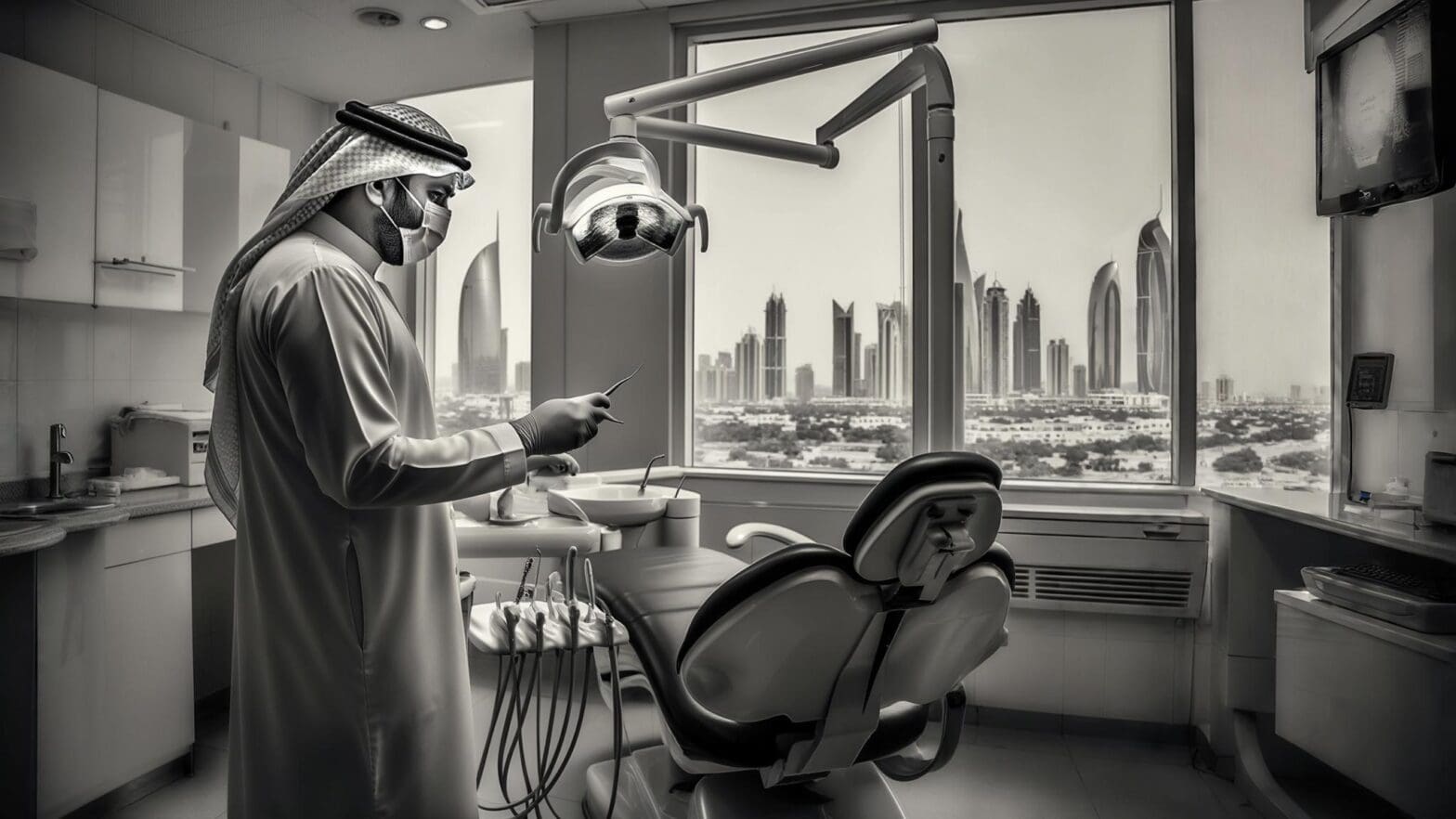
A friend of mine just landed a dental job in Riyadh making 22,000 SAR a month. Sounds great, right? But after rent, utilities, and living expenses, he’s actually saving less money than his colleague working in a smaller city for 15,000 SAR. That’s when I realized how misleading those average salary numbers can be.
Here’s what I found when I started looking into dental salaries in Saudi Arabia: the Kingdom’s Vision 2030 initiative has completely transformed the healthcare landscape, creating both incredible opportunities and unexpected challenges for dental professionals.
According to SalaryExpert, the average medical dentist gross salary in Saudi Arabia is 336,550 SAR annually, with entry-level dentists (1-3 years of experience) earning an average of 231,219 SAR, while senior-level dentists (8+ years of experience) can earn up to 424,246 SAR per year.

Understanding the financial landscape is crucial for any dental professional considering career opportunities abroad, especially when evaluating whether pursuing higher education credentials is worth the investment for maximizing earning potential in international markets.
Table of Contents
-
Current Market Reality: What’s Actually Happening Right Now
-
Where You Work Changes Everything
-
Practice Settings: Where You Work Shapes Your Paycheck
-
What Actually Determines Your Paycheck
-
Experience Levels: Your Career Timeline
-
Negotiation Tactics That Actually Work
-
Future Market Predictions and Career Planning
-
How ValidGrad Supports Your Professional Journey
-
Final Thoughts
TL;DR
-
Dentist salaries vary dramatically by location – Riyadh pays more but costs way more to live there
-
Private practice offers the highest earning potential but demands longer hours and business skills
-
Western degrees command 25-40% salary premiums that persist throughout your career
-
Specialty certifications can boost earnings by 30-50% above general dentistry
-
Vision 2030 and Saudization policies are reshaping the entire job market
-
Technology skills and Arabic fluency are becoming non-negotiable for top positions
-
Smart salary negotiation requires cultural understanding and thorough market research
Current Market Reality: What’s Actually Happening Right Now
Let me tell you what’s really going on in Saudi dental right now – it’s nothing like what you’d expect from reading those generic salary websites.
The government threw serious money at healthcare over the past few years, which sounds great until you realize it created this weird situation where there are tons of opportunities but also way more competition. Plus, there’s this whole Saudization thing happening that’s changing the game completely.

Here’s what caught me off guard: by 2025, dental clinics need 45% Saudi nationals on staff, jumping to 55% by 2026. According to Corporate Immigration Partners, “Saudi Arabia Expands Saudization Requirements in Key Professions” reports that new Saudization requirements will mandate a 45% Saudi national workforce in dental establishments with three or more dentists by July 2025, increasing to 55% by 2026, with a minimum salary threshold of SAR 9,000 for Saudi employees.
The reality nobody talks about: You can’t just look at average numbers anymore. A dentist in a private Riyadh clinic might make double what someone in a government hospital earns, but they’re also working 60-hour weeks and dealing with completely different patient expectations.
What surprised me most was how much regulatory changes are impacting everything. “New minimum wage for Saudi dentists from April” from Dental Tribune reports that starting April 11th, the monthly minimum wage for dentists was set at SAR 7,000 (€1,640) as part of the broader Nitaqat program, which aims to reserve 60% of private dental clinic jobs for Saudi nationals.
Where You Work Changes Everything
Location isn’t just about the paycheck – it’s about your entire quality of life. I’ve seen dentists make what looked like terrible financial decisions that actually made them way happier and wealthier in the long run.
Take Dr. Fatima, who turned down a 24,000 SAR job in Jeddah for a 16,000 SAR position in Tabuk. Everyone thought she was crazy. But here’s what the numbers really looked like:
Jeddah offer: 24,000 SAR minus 8,000 rent, minus 2,000 transportation, minus higher food and entertainment costs = about 11,000 SAR net savings
Tabuk offer: 16,000 SAR plus 3,000 housing allowance, minus 2,500 total living expenses = 16,500 SAR net savings
She’s saving 5,500 SAR more each month, has a 10-minute commute instead of an hour, and her patients actually remember her name. Sometimes the “worse” job is actually way better.
|
City |
Average Monthly Salary (SAR) |
Cost of Living Index |
Net Purchasing Power |
|---|---|---|---|
|
Riyadh |
18,000 – 25,000 |
High (100) |
Moderate |
|
Jeddah |
17,000 – 24,000 |
High (95) |
Moderate |
|
Dammam |
16,000 – 22,000 |
Medium (85) |
Good |
|
Abha |
12,000 – 16,000 |
Low (60) |
Very Good |
|
Tabuk |
11,000 – 15,000 |
Low (55) |
Very Good |
The Hidden Costs Nobody Mentions
The hidden costs of big cities:
-
Rent can eat 30-40% of your salary
-
Traffic means you’re spending 2+ hours daily commuting
-
Everything costs more, from groceries to entertainment
-
You’re competing with way more dentists for the same patients
Small city advantages nobody mentions:
-
Patients are more loyal (less competition)
-
Lower stress, better work-life balance
-
You become a respected community member faster
-
Your money goes much further
Dr. Ahmed, a general dentist with 5 years of experience, compared two job offers: one in Riyadh offering 22,000 SAR monthly and another in Abha offering 15,000 SAR monthly plus housing allowance (3,000 SAR) and transportation (1,500 SAR). After calculating living expenses, his net savings in Abha were actually 2,000 SAR higher per month than the Riyadh position.
Practice Settings: Where You Work Shapes Your Paycheck
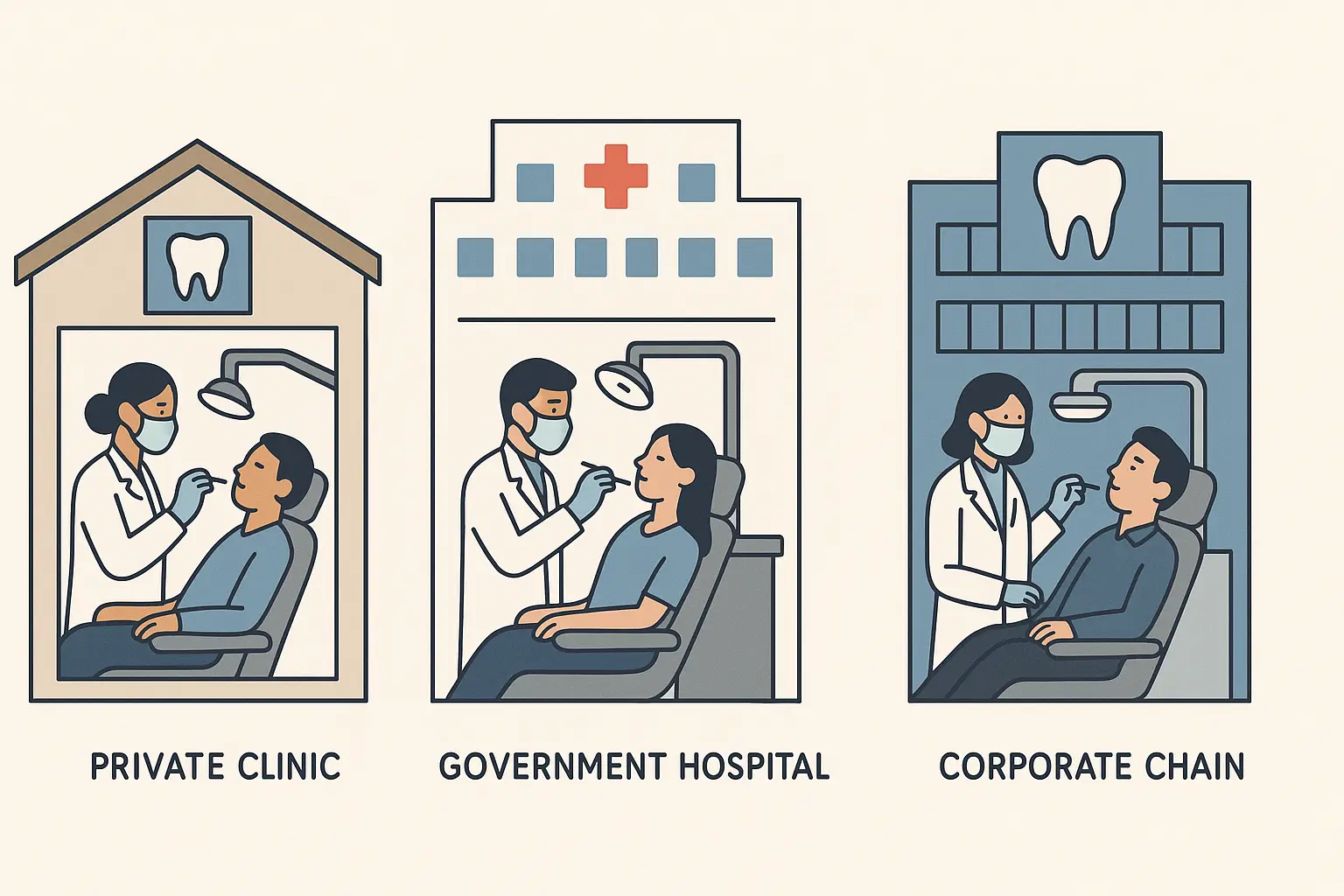
This is where most people get it completely wrong. They think private practice always pays more, government jobs are boring, and corporate chains are just okay. The reality is way more nuanced.
Private Practice: The Good, Bad, and Ugly
Yes, private practice can pay the most – I’ve seen experienced dentists pull in 40,000+ SAR monthly. But here’s what they don’t tell you: you’re not just a dentist anymore. You’re a salesperson, marketer, and business developer all rolled into one.
Dr. Ahmad works at a high-end private clinic in Riyadh. His base salary is 20,000 SAR, but with bonuses, he averages 32,000 SAR monthly. Sounds amazing, right? But he works six days a week, sees 15-20 patients daily, and spends evenings doing treatment plans and following up with patients. His hourly rate? Actually lower than his government hospital friend.
The performance bonuses can be substantial, but they come with expectations. You might need to bring your own patient base, participate in marketing efforts, or meet specific revenue targets.
Government Sector: Stability Has Its Price
Government jobs won’t make you rich, but they offer something money can’t buy – predictability. You know exactly when you’ll work, when you’ll get paid, and when you can go home. For some people, that’s worth more than extra cash.
The career progression is clear too. You know that after X years, you can apply for Y position with Z salary increase. No surprises, no politics, no wondering if your clinic will still be profitable next year.
You’ll also get comprehensive benefits – health insurance, retirement contributions, and sometimes housing allowances. The work-life balance is generally much better than private practice.
Corporate Chains: The Middle Path
These are growing fast and might be the sweet spot for many dentists. You get better pay than government with more stability than private practice. Plus, they usually have actual HR departments, training programs, and clear advancement paths.
Corporate chains often provide structured performance bonuses while maintaining more predictable schedules. The support systems are better too – standardized procedures, equipment maintenance handled by others, and less individual stress.
What Actually Determines Your Paycheck
Let’s cut through the fluff and talk about what really matters when someone’s deciding how much to pay you.
Your degree matters more than you think. Western degrees command 25-40% salary premiums, and that gap doesn’t disappear over time. It’s not fair, but it’s reality. If you have a local degree, you need to work harder to prove your value through results and additional certifications.
Language skills are huge. If you can’t communicate effectively with patients in Arabic, you’re limiting yourself to expat-heavy areas and practices. That shrinks your opportunities and your negotiating power.
Specialization is your fast track to higher pay. General dentists compete with everyone. Orthodontists compete with other orthodontists. Guess which group has more leverage?
Technology skills separate winners from everyone else. If you can handle digital workflows, CAD/CAM systems, and modern imaging, you’re valuable. If you’re still doing everything the old way, you’re becoming obsolete.
For dental professionals who have misplaced their original credentials, having proper documentation is essential for salary negotiations in international markets, which is why services for replacing lost diplomas become crucial when pursuing opportunities abroad.
Education Makes or Breaks Your Starting Point
International degrees from US, UK, Canadian, or Australian institutions typically start 25-40% higher than local qualifications. This premium often persists throughout careers, especially in private practice settings.
But don’t despair if you have a local degree. Strong clinical performance, additional certifications, and proven patient satisfaction can help bridge this gap over time. Some employers actually value local cultural understanding and language skills that international graduates might lack.
Research from PayScale indicates that entry-level dentists with less than 1 year of experience can expect an average total compensation of SAR 60,000, while early career dentists with 1-4 years of experience earn an average of SAR 78,000, demonstrating the rapid salary progression possible in the Saudi market.
Specialty Certifications: Your Ticket to Higher Pay
Specialty certifications represent the fastest path to significant salary increases. Orthodontists, oral surgeons, and pediatric dentists consistently earn 30-50% more than general practitioners. The investment in specialty training typically pays for itself within 2-3 years.
Even general dentists can benefit from focused certifications in areas like implantology, cosmetic dentistry, or endodontics. These specialized skills allow you to charge premium rates for specific procedures and differentiate yourself in competitive markets.
Experience Levels: Your Career Timeline
Career progression follows fairly predictable patterns, but knowing these milestones helps you plan strategic moves and set realistic expectations.
|
Experience Level |
Years |
Average Salary Range (SAR) |
Key Responsibilities |
Growth Opportunities |
|---|---|---|---|---|
|
Fresh Graduate |
0-1 |
8,000 – 12,000 |
Basic procedures, learning |
Skill development |
|
Early Career |
1-4 |
12,000 – 18,000 |
Independent practice |
Specialization options |
|
Mid-Career |
5-10 |
18,000 – 28,000 |
Complex cases, mentoring |
Leadership roles |
|
Senior Level |
10-15 |
25,000 – 40,000 |
Department leadership |
Practice management |
|
Expert Level |
15+ |
35,000 – 60,000+ |
Practice ownership |
Consulting, teaching |
Fresh Graduates (0-2 years): Focus on Learning, Not Earning
Starting salaries range from 8,000-12,000 SAR monthly. International degree holders start higher, but everyone’s basically learning on the job. Your first position matters more for what you’ll learn than what you’ll earn.
Choose opportunities that offer diverse case exposure, mentorship, and skill development rather than just chasing the highest starting salary. This foundation will pay dividends throughout your career.
Mid-Career (3-8 years): The Growth Zone
This is where smart career moves pay off big time. You should see 15-25% annual increases during this period if you’re strategic about job changes and skill development. Don’t get comfortable – this is your opportunity to accelerate.
Dr. Sarah, a recent dental graduate from Jordan University, started at a government hospital in Riyadh earning 9,000 SAR monthly. After 18 months of dedicated performance and completing two additional certifications, she moved to a private practice earning 16,000 SAR monthly – an 78% salary increase in less than two years.
Mid-career dentists also start exploring leadership opportunities – department head positions, practice management roles, or partnership tracks. These transitions can significantly accelerate earning potential beyond traditional clinical work.
Senior Level (8+ years): Leadership and Ownership
At this level, you’re not just doing dentistry – you’re leading teams, managing departments, or considering practice ownership. Your earning potential becomes less about hourly work and more about the value you create for organizations.
According to PayScale data, the highest documented pay for a dentist in Saudi Arabia reaches SAR 501,000 per year, while the lowest recorded is SAR 6,000 per year, demonstrating the wide range of earning potential based on experience, specialization, and practice setting.
Equity participation becomes possible – whether through practice partnerships, ownership stakes, or profit-sharing arrangements. These opportunities can create long-term wealth beyond just salary income.

Negotiation Tactics That Actually Work
Salary negotiation in Saudi Arabia requires a different approach than what might work in Western countries. Cultural sensitivity and thorough preparation can make the difference between getting your target salary and settling for less.
Do your homework, but don’t lead with numbers. Walk into negotiations knowing exactly what the market pays, but start by talking about what you bring to the practice. Numbers come after you’ve established your value.
Understand the cultural context. Saudi business culture values relationships and respect. Aggressive negotiation tactics that might work elsewhere can backfire here. Be confident but respectful.
Think beyond base salary. Housing allowances, transportation, health insurance, and professional development budgets can add significant value. Sometimes a lower base salary with better benefits works out better financially.
Timing matters. End of fiscal year, after successful patient outcomes, or when the practice is expanding – these are your windows for salary discussions.
Research That Actually Matters
You can’t negotiate effectively without solid market data. Spend at least 2-3 weeks researching current salary ranges for your specific situation before entering any negotiation.
Professional networks, recruitment agencies, and industry contacts provide the most accurate salary information. Online salary surveys can be helpful but often don’t reflect the nuances of local markets or recent changes in compensation trends.
Recruitment firms specializing in healthcare placements often have the most current salary data. They’re usually willing to share general market information if you’re a serious candidate.
Professional Development: Your Negotiation Ammunition
Strategic skill development can justify significant salary bumps and open doors to new opportunities. Completing advanced training programs or earning additional certifications provides concrete justification for salary increases during performance reviews.
Dr. Mohammed invested 15,000 SAR in an advanced implantology certification program. Within six months of completion, he negotiated a 4,000 SAR monthly salary increase and began performing high-value implant procedures, recovering his training investment in less than four months while significantly boosting his long-term earning potential.
Choose continuing education strategically – focus on skills that are in high demand in your local market. Digital dentistry, implantology, and aesthetic procedures consistently command premium rates in Saudi Arabia’s private practice market.
Arabic language proficiency and cultural competency often matter more than technical skills for long-term career success. Patients prefer dentists who can communicate effectively in their native language, and this preference translates directly into higher patient satisfaction and retention rates.

Cultural understanding also improves your integration into practice teams and professional networks. These relationships often lead to better opportunities and stronger negotiating positions when salary discussions arise.

Future Market Predictions and Career Planning
Vision 2030 is creating a two-tier market. High-skilled, culturally competent dentists with modern skills will do very well. Everyone else will face increasing competition and pressure.
Technology integration isn’t optional anymore. Practices are investing heavily in digital systems. If you can’t keep up, you’ll get left behind.
Specialization demand is growing. As the population becomes more affluent and health-conscious, demand for specialized services increases. General dentistry will still exist, but the growth and money are in specialties.
Vision 2030’s healthcare modernization goals are creating unprecedented opportunities for dental professionals. Government investment in healthcare infrastructure, medical cities, and specialized treatment centers is expanding the job market and driving salary competition.
Saudization policies present both challenges and opportunities. While they prioritize Saudi nationals for certain positions, they also create demand for experienced professionals who can train and mentor local talent – roles that command premium compensation.

Technology: The Digital Advantage
Digital dentistry skills are becoming non-negotiable for career advancement. Practices investing in CAD/CAM systems, digital imaging, and treatment planning software need dentists who can maximize these investments. These skills consistently command salary premiums.
Telemedicine and remote consultation capabilities expanded rapidly and show no signs of slowing down. Dentists comfortable with digital patient interactions and remote treatment planning have access to opportunities that didn’t exist five years ago.
Dentists who embrace digital technologies position themselves for premium compensation and leadership roles in modernizing practices. Technology skills are becoming essential for career advancement.
How ValidGrad Supports Your Professional Journey
When you’re applying for positions in Saudi Arabia, having your documentation ready can make or break opportunities. I’ve seen dentists lose out on great positions because they couldn’t provide credential copies quickly enough.
ValidGrad’s diploma replacement services ensure you’re never caught without proper documentation. Whether you need backup copies for multiple applications, display copies for your office while keeping originals secure, or professional replacement diplomas for damaged credentials, ValidGrad provides high-quality replicas with fast turnaround times.
This preparation demonstrates professionalism to potential employers and supports your efforts to secure optimal compensation packages. For professionals considering displaying their credentials professionally in their practice, having multiple copies ensures both security and presentation needs are met.
Additionally, for those who need to verify their educational background through academic transcripts, ValidGrad’s comprehensive services ensure all documentation requirements are properly addressed for international career opportunities.

Final Thoughts
Here’s what I wish someone had told me before I started researching Saudi dental salaries: the numbers you see online are just starting points. Your actual earning potential depends on dozens of factors that have nothing to do with your clinical skills.
The dentists making the most money aren’t necessarily the best at dentistry – they’re the best at understanding the market, positioning themselves strategically, and making smart career moves at the right times.
Don’t chase the highest starting salary if it means sacrificing long-term opportunities. Sometimes taking less money upfront for better training, mentorship, or advancement potential pays off significantly over time.
The Saudi dental market is changing fast, and that creates opportunities for people who are paying attention. Vision 2030, technology integration, and changing patient expectations are reshaping the profession in ways that will determine who succeeds over the next decade.
Your salary isn’t just about what you know – it’s about how well you understand the market, how effectively you can communicate your value, and how strategically you plan your career moves. Get these right, and the financial rewards will follow.
Remember that salary negotiation is an ongoing process, not a one-time event. Your compensation should evolve with your skills, experience, and market value. Regular market research and strategic career moves ensure you’re always earning what you’re worth in this dynamic market.
The opportunities are there for dental professionals willing to embrace change and invest in their skills. Technology integration, cultural competency, and specialty certifications aren’t just nice-to-have additions anymore – they’re becoming essential for competitive positioning in Saudi Arabia’s evolving dental market.