
The healthcare industry’s demand for flexible nursing professionals has never been higher. With PRN nurses earning an average of $42.29 per hour ($51,102.24 per year), ranging from $34.11 to $55.55 per hour, this career path offers significant financial opportunities for those who understand how to navigate its complexities. But becoming a successful PRN nurse requires far more than just clinical skills and scheduling flexibility.
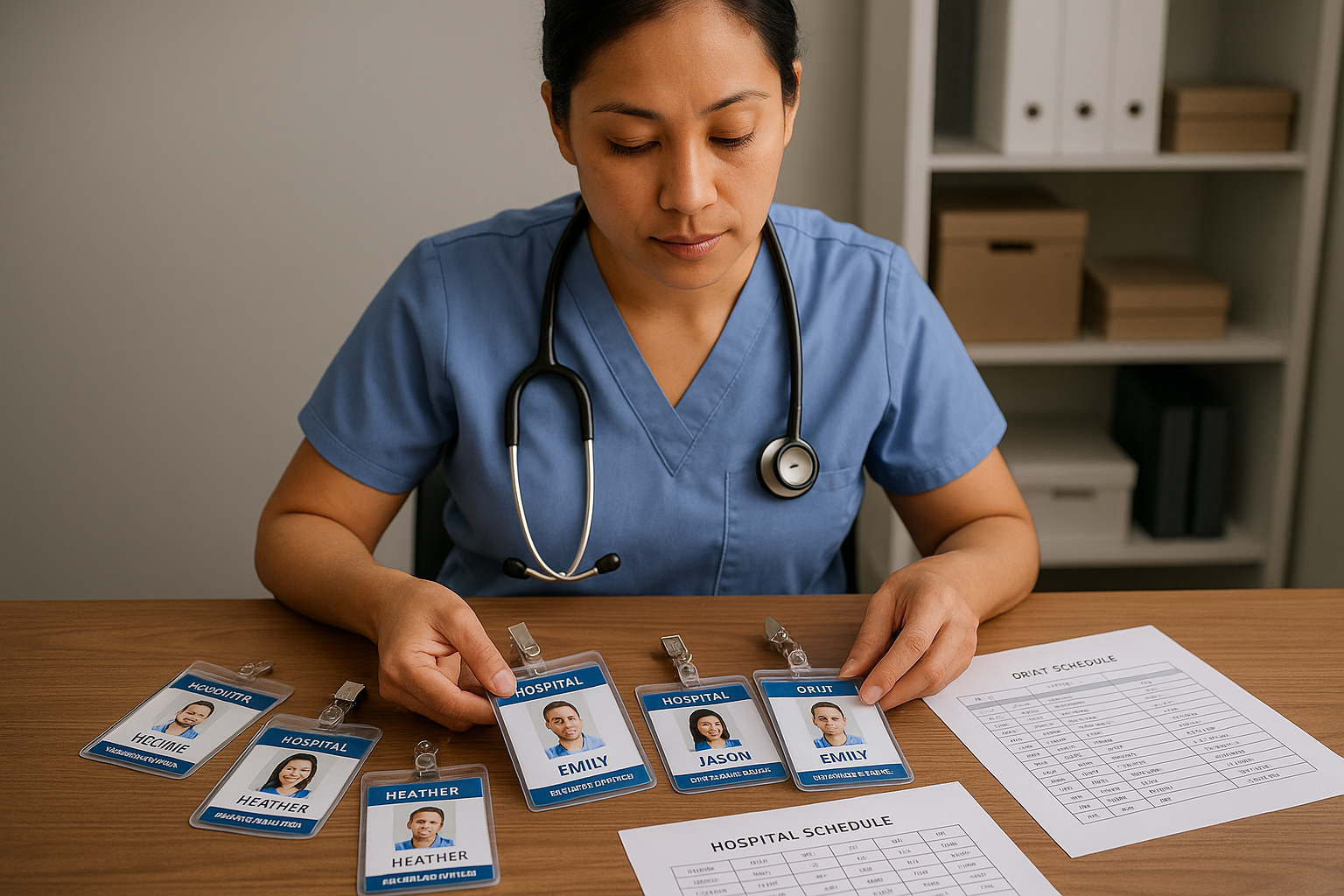
Understanding how to replace lost nursing credentials is crucial for PRN nurses who frequently change facilities and may need backup documentation for credentialing purposes. I’ve seen too many nurses get caught off guard when they need duplicate licenses or certifications for multiple facility orientations.
Table of Contents
-
The Psychology of PRN Work: Mental Frameworks for Success
-
The Hidden Economics of PRN Nursing
-
Technology Integration and Digital Presence
-
Strategic Career Architecture
-
Final Thoughts
TL;DR
-
PRN nursing requires an entrepreneurial mindset where you manage your own brand, schedule, and career trajectory across multiple healthcare environments
-
Financial success depends on understanding tax optimization, benefit arbitrage, and market positioning strategies that most nurses never learn
-
Technology mastery goes beyond basic computer skills – you need to quickly adapt to different EHR systems and maintain a strategic digital presence
-
PRN work can accelerate career advancement through targeted skill acquisition and diverse clinical experience when approached strategically
-
Success requires developing cognitive flexibility, stress management techniques, and professional identity outside traditional employment structures
The Psychology of PRN Work: Mental Frameworks for Success
Understanding how to become a PRN nurse successfully starts with a complete psychological shift. You’re rewiring how you think about work, identity, and professional relationships. This mental transformation involves embracing uncertainty as your new normal, building resilience against constant adaptation, and creating a professional identity that doesn’t depend on belonging to one team or institution.
The psychological demands are intense, but they’re also what make PRN nursing incredibly rewarding for the right person. I’ve watched nurses struggle with this transition because they underestimated the mental gymnastics required. You can’t just show up and expect to blend in – every shift is a performance where you’re proving your worth to a new audience.
The Entrepreneurial Nurse Mindset
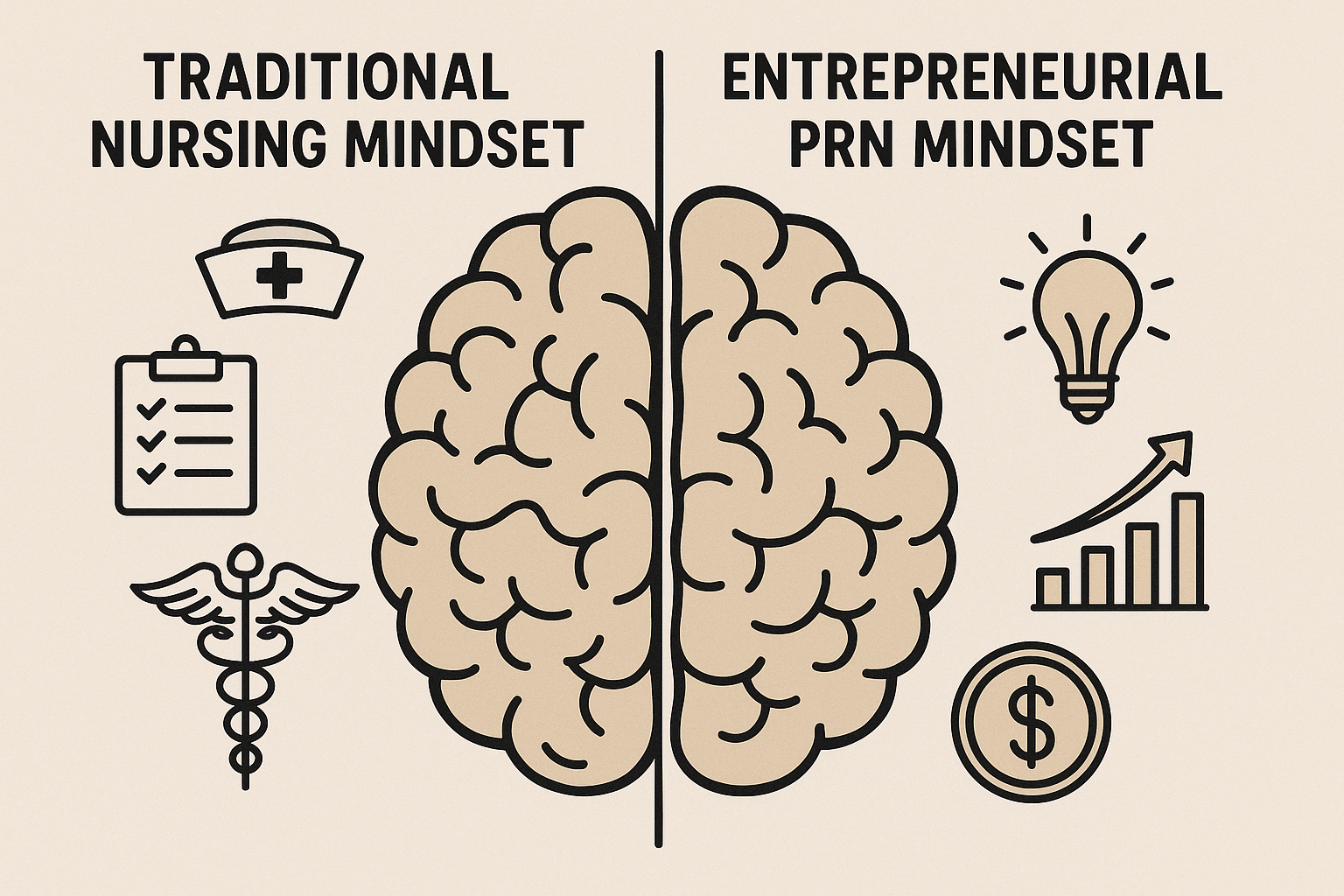
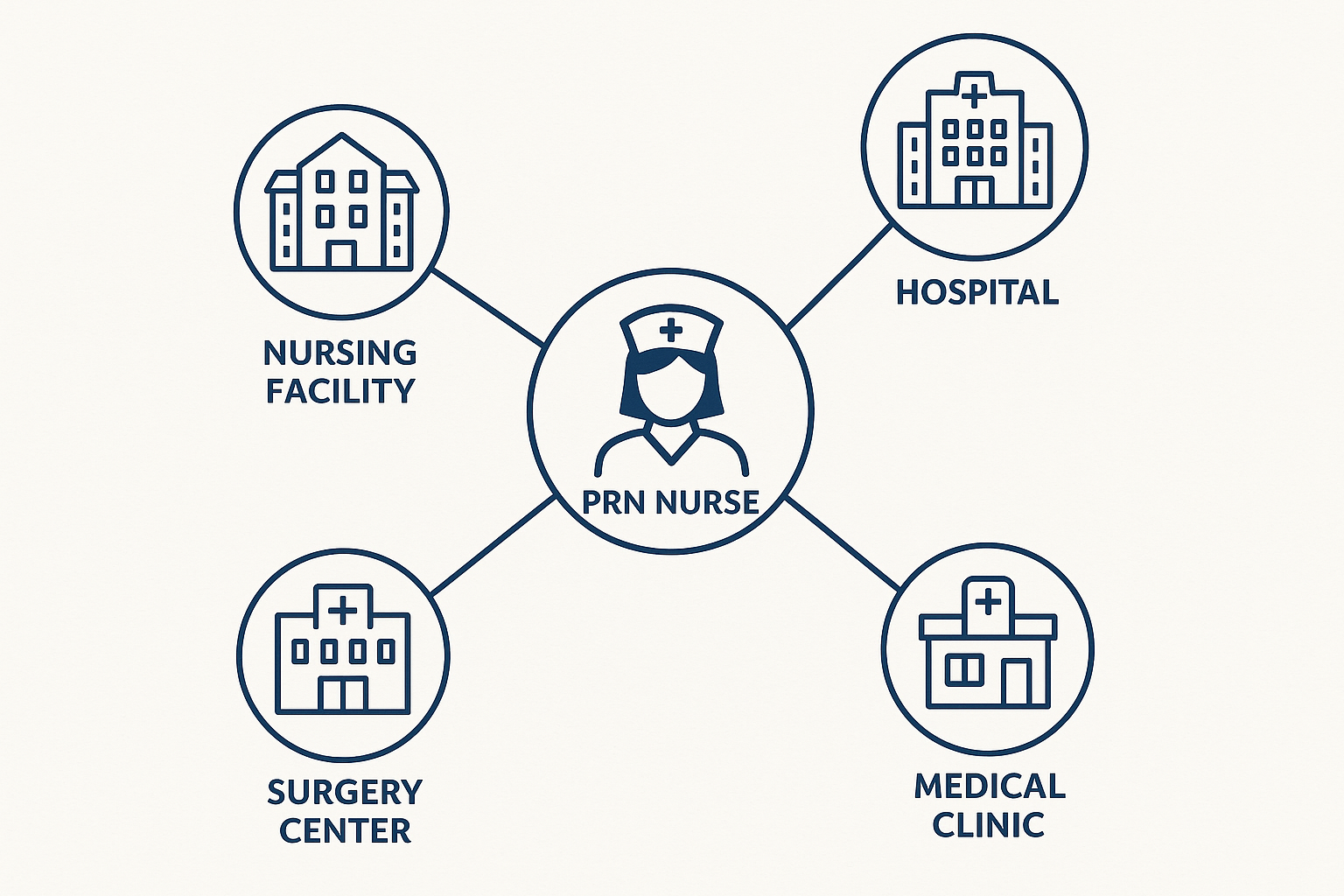
PRN nurses operate as healthcare entrepreneurs, even though most don’t realize it. You’re essentially running a one-person nursing business where your reputation, skills, and relationships are your primary assets. This means thinking strategically about every assignment, every interaction, and every skill you develop.
Your success depends on how well you can market yourself, manage your time, and deliver consistent value across different environments. The nursing industry continues to evolve with new employment models. As reported by Nurse.org, “PRN nursing is a great way to get your foot in the door if there isn’t a full-time position available, or keep your foot in the door if you need schedule flexibility related to other factors. You’ll often hear about nurses ‘going PRN’ while they attend advanced degree programs.” This trend reflects the growing recognition that PRN work serves as both a career strategy and a lifestyle choice.
What is PRN nursing exactly? It’s a fundamental shift from being an employee to being a service provider. Every PRN assignment becomes an opportunity to demonstrate your value proposition to potential long-term partners.
|
PRN Nurse Business Assets |
Traditional Employee Assets |
|---|---|
|
Personal reputation across multiple facilities |
Seniority within one organization |
|
Diverse skill portfolio |
Specialized unit expertise |
|
Flexible scheduling control |
Predictable schedule security |
|
Multiple income streams |
Single steady paycheck |
|
Extensive professional network |
Deep workplace relationships |
|
Market rate negotiation power |
Union/HR determined compensation |
Personal Brand Development in Healthcare Settings
Your reputation travels faster than you do in healthcare. Within weeks of starting PRN work, you’ll discover that nurse managers talk to each other, and your name either opens doors or closes them. Building a strong personal brand means developing signature approaches to patient care and communication that make you memorable for the right reasons.
I’ve seen PRN nurses become legends in their local healthcare community because they consistently delivered exceptional care. These nurses understand that every patient interaction, every colleague conversation, and every crisis response becomes part of their professional story.
Steps to take:
-
Create a personal mission statement for your nursing practice
-
Develop consistent documentation habits that reflect your attention to detail
-
Establish signature patient interaction techniques that demonstrate your value
Sarah, a PRN nurse in Atlanta, developed a reputation for exceptional patient education skills. She created laminated visual aids for common procedures that she carried between facilities. Within six months, three different hospitals began specifically requesting her for complex discharge planning cases, allowing her to command premium rates for specialized assignments.
Risk Assessment and Mitigation Strategies
Every new assignment brings unknown variables – unfamiliar equipment, different protocols, new team dynamics. Successful PRN nurses develop systematic approaches to quickly identify and manage these risks. You can’t afford to spend days figuring out how things work; you need frameworks that help you become effective immediately while keeping patients safe.
What is PRN work without proper risk management? It’s a recipe for burnout and potentially dangerous situations. I’ve developed personal protocols that help me assess and adapt to new environments quickly.
Steps to take:
-
Create personal checklists for orienting to new units
-
Develop a system for quickly identifying key personnel and resources
-
Build templates for common clinical scenarios you’ll encounter
PRN Orientation Checklist:
-
☐ Locate emergency equipment and supplies
-
☐ Identify charge nurse and key team members
-
☐ Review unit-specific protocols and policies
-
☐ Test access to EHR and communication systems
-
☐ Understand patient acuity and assignment expectations
-
☐ Confirm break schedules and coverage procedures

Cognitive Flexibility and Adaptation Mastery
The mental gymnastics required for PRN nursing go way beyond what most people imagine. You’re constantly switching between different hospital cultures, electronic systems, and team expectations. Some facilities are laid-back, others are military-precise. Some use Epic, others use Cerner.
Your brain needs to rapidly recalibrate to each environment while maintaining clinical excellence. This cognitive flexibility can be developed, but it requires intentional practice. According to the Bureau of Labor Statistics, RNs employed at government institutions reported a median annual wage of $84,490, whereas RNs employed at nursing and residential care facilities reported a median annual wage of $68,450. This $16,040 difference highlights the importance of strategic facility selection for PRN nurses who can work across different healthcare settings.
Protocol Translation Across Systems
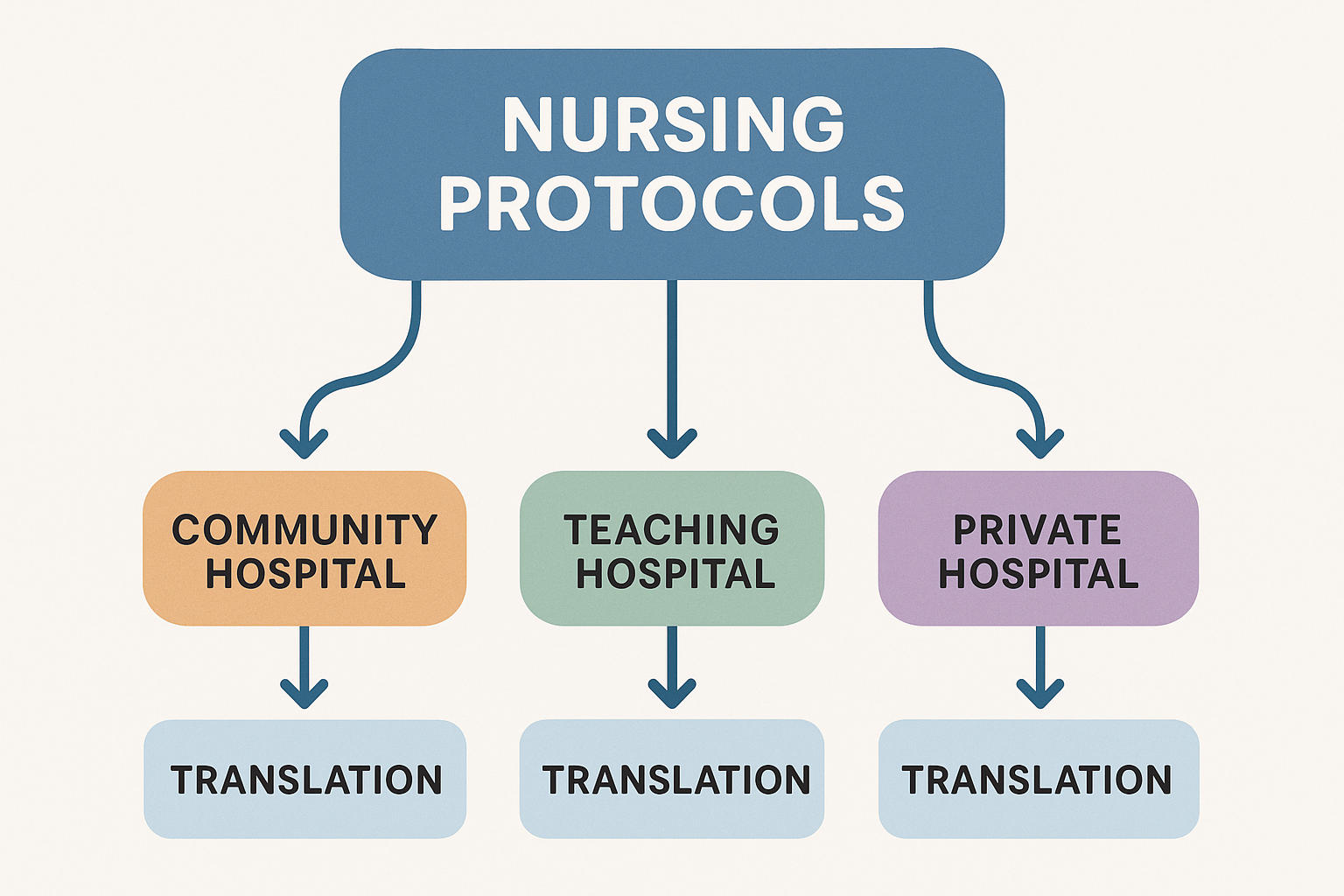
Each healthcare system has its own way of doing everything – from medication administration to discharge planning. The challenge isn’t learning these differences; it’s developing the ability to quickly translate your knowledge and skills across these varying systems.
You need to become fluent in multiple “dialects” of nursing practice while maintaining your core clinical competencies. What is PRN nursing success? It’s mastering this translation process so seamlessly that you appear to be a seasoned employee within hours of starting a new assignment.
Cultural Intelligence in Healthcare Teams
Reading the room becomes a survival skill when you’re constantly joining new teams. Every unit has unspoken rules, established hierarchies, and communication patterns that aren’t written in any orientation manual. Your ability to quickly understand and adapt to these cultural nuances determines whether you’ll be welcomed or merely tolerated.
High emotional intelligence isn’t just helpful – it’s essential. Marcus, a PRN nurse working in different ICUs, noticed that one facility had a very formal communication style while another was more casual. He developed a “cultural assessment” routine where he observed team interactions for the first hour before fully engaging. This approach helped him avoid social missteps that could have damaged his reputation at new facilities.
Stress Response Optimization
PRN nursing creates unique stressors that staff nurses never face. You’re always the new person, always proving yourself, always learning new systems. The performance pressure is intense because you don’t get the grace period that permanent staff receive.
Developing personalized stress management techniques separates successful PRN nurses from those who burn out quickly. I’ve learned that managing stress in PRN work requires proactive strategies rather than reactive coping mechanisms.
Stress Management Toolkit for PRN Nurses:
-
☐ Pre-shift meditation or breathing exercises
-
☐ Post-shift decompression routine
-
☐ Physical exercise schedule that accommodates irregular hours
-
☐ Professional counseling or peer support groups
-
☐ Boundary-setting strategies for work-life balance

Identity Formation Beyond Traditional Employment
One of the biggest psychological challenges of PRN work is figuring out who you are professionally when you don’t belong to a specific team or institution. Your identity can’t be tied to “I’m a nurse on 3 West” because you might work on five different units in a week.
You need to construct a professional identity that’s portable, resilient, and independent of any single workplace. What is a PRN nurse’s professional identity? It’s something you build from the inside out rather than having it assigned by an employer.
Professional Network Architecture
Building meaningful professional relationships when you’re constantly moving requires a completely different approach than traditional workplace networking. You can’t rely on daily interactions to build trust and rapport. Instead, you need strategic networking approaches that help you maintain connections across multiple institutions while building new ones efficiently.
Research shows that most full-time students can complete an online RN to BSN degree within 18 to 24 months, making continued education a viable option for PRN nurses who want to advance their careers while maintaining scheduling flexibility. This flexibility allows PRN nurses to invest in their professional development while maintaining their income streams.
Continuous Learning Without Institutional Support
Staff nurses often have access to employer-sponsored continuing education, mentorship programs, and career development resources. PRN nurses typically don’t. You become responsible for identifying your learning needs, finding quality educational resources, and funding your own professional development.
This requires becoming a self-directed learner with strong research and evaluation skills. I’ve had to become my own HR department, training coordinator, and career counselor all rolled into one.

The Hidden Economics of PRN Nursing
The financial reality of PRN nursing is far more complex than comparing hourly rates. Most nurses focus on the higher per-hour pay without understanding the hidden costs, tax implications, and financial planning challenges that come with variable income.
The nurses who thrive financially in PRN work understand these economic complexities and develop sophisticated strategies to maximize their earning potential while managing the inherent financial risks. I’ve made every financial mistake possible in my early PRN days, and I want to save you from the same expensive learning curve.
Advanced Financial Planning for Variable Income
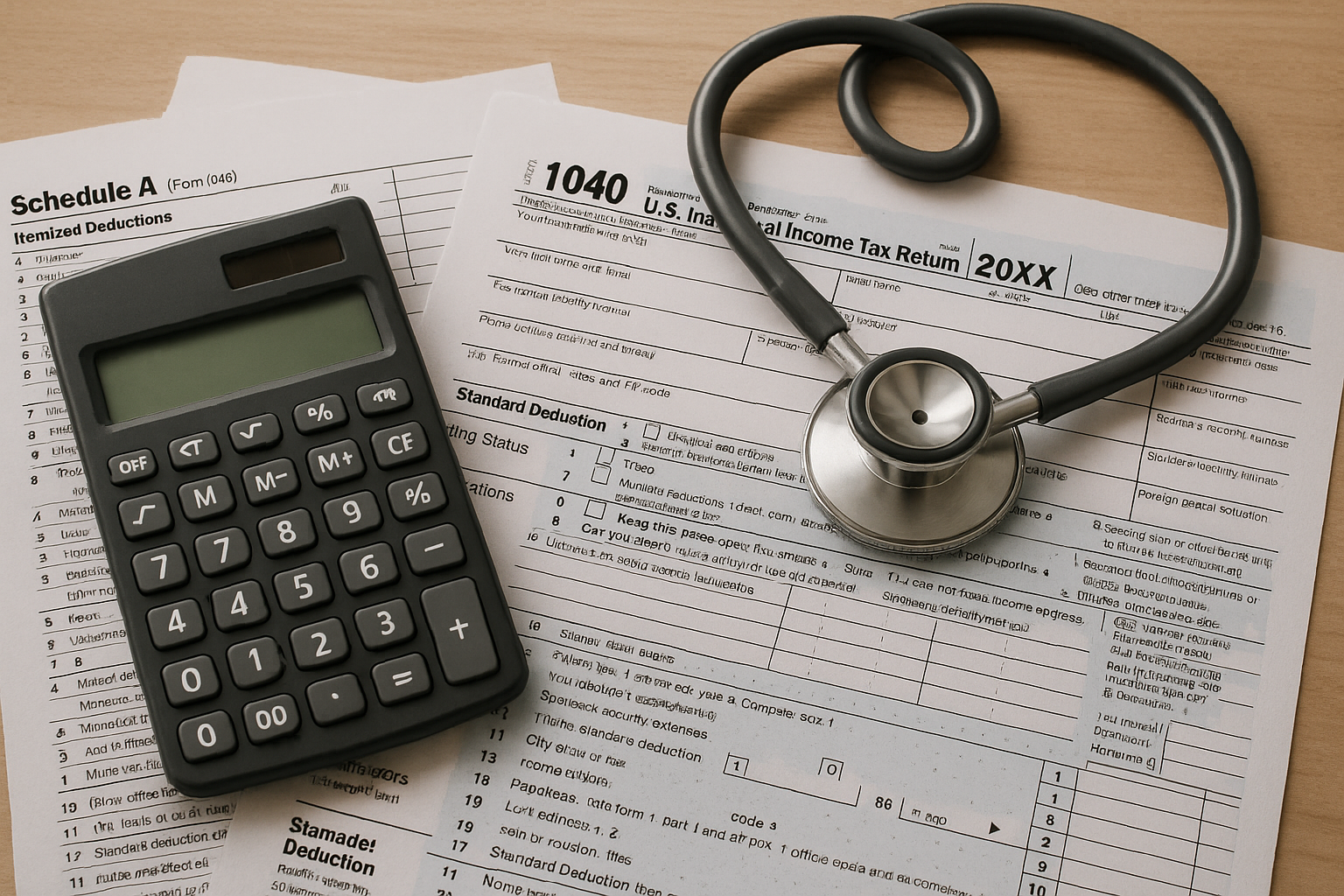
PRN nursing income can swing dramatically from month to month based on facility needs, seasonal patterns, and your availability. This variability requires completely different financial planning approaches than traditional employment. You need budgeting strategies that account for income fluctuations, tax planning that maximizes deductions, and investment approaches that work with irregular cash flow.
The financial landscape for PRN nurses continues to evolve. According to Nurse.org, “The US Bureau of Labor Statistics (BLS) reported the average salary for RNs as $93,600 per year, $45.00 per hour in May 2024. PRN nurses may be employed on a contract basis (1099) or as employees (W-2). A per diem nurse’s salary should be higher because the employer may not withhold taxes if you are 1099 and also will not get the benefits of status employees.”
Understanding whether you’re classified as 1099 or W-2 dramatically affects your tax strategy and financial planning approach. What is PRN classification? It varies by employer and can significantly impact your take-home pay and tax obligations.
Tax Optimization Strategies
PRN nurses often qualify for business expense deductions that staff nurses can’t claim. Mileage between facilities, continuing education costs, professional equipment, and even home office expenses might be deductible. However, navigating these tax benefits requires understanding the specific rules that apply to healthcare contractors and maintaining meticulous records.
I learned this the hard way when I missed thousands of dollars in legitimate deductions during my first year of PRN work. Now I track everything and work with a tax professional who understands healthcare contractors.
Steps to take:
-
Consult with a tax professional familiar with healthcare contractors
-
Track all professional expenses including mileage, continuing education, and equipment
-
Consider establishing a solo 401(k) or SEP-IRA for retirement planning
|
Tax Deduction Category |
PRN Nurse Eligibility |
Documentation Required |
|---|---|---|
|
Vehicle expenses |
High (multiple facilities) |
Mileage logs, fuel receipts |
|
Continuing education |
High (self-funded) |
Course fees, materials, travel |
|
Professional equipment |
Medium (stethoscope, shoes) |
Purchase receipts, usage logs |
|
Home office |
Medium (administrative work) |
Dedicated space measurement |
|
Professional memberships |
High (networking essential) |
Annual fees, conference costs |
|
Uniforms/scrubs |
High (multiple facilities) |
Purchase receipts, cleaning costs |
Healthcare Benefit Arbitrage
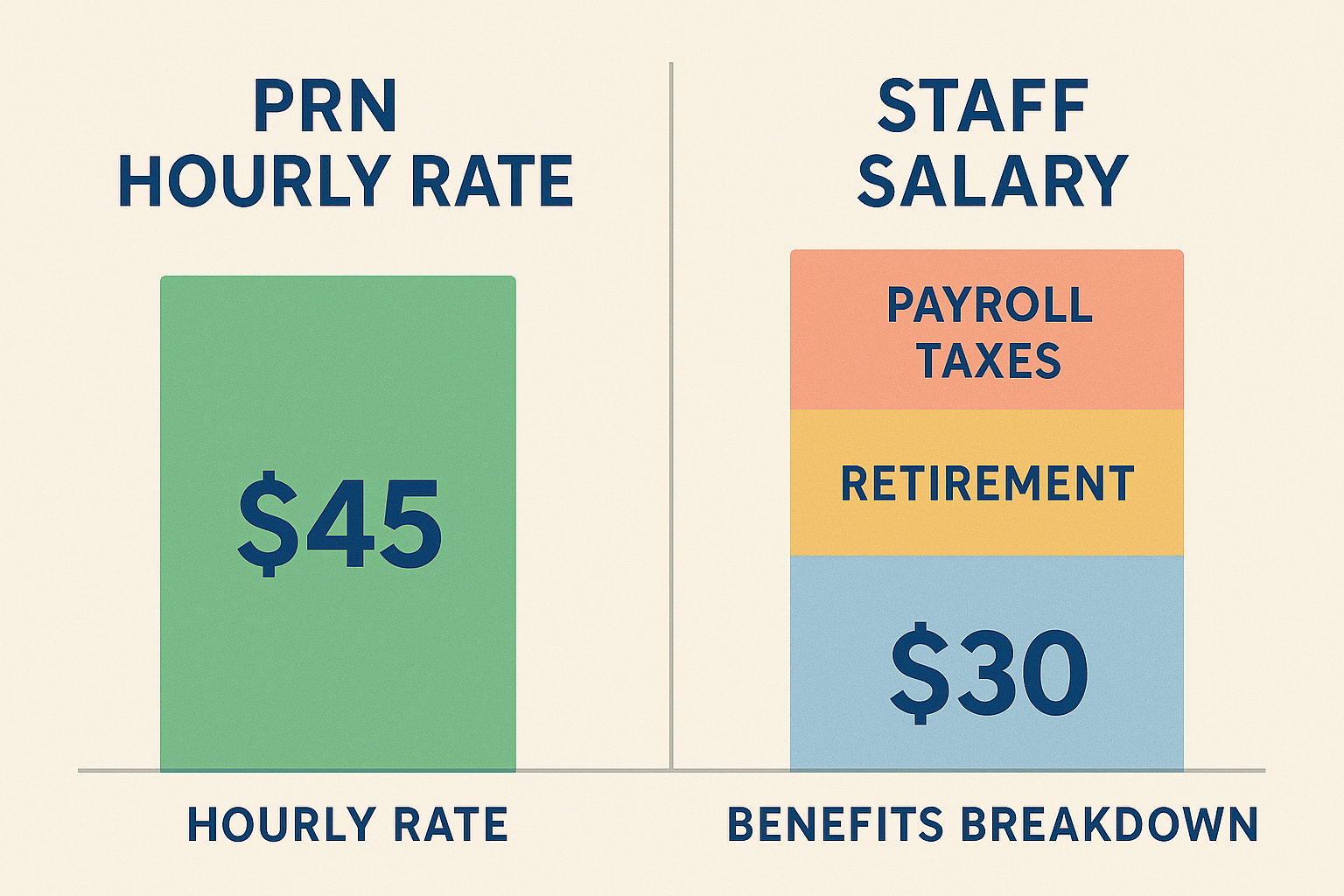
Understanding the true cost of benefits is crucial when evaluating PRN opportunities. That higher hourly rate might not be as attractive when you factor in health insurance premiums, retirement contributions, and paid time off.
Smart PRN nurses learn to calculate the total compensation package and find creative ways to access affordable benefits through professional associations or marketplace plans. I spend considerable time each year analyzing benefit options because the landscape changes frequently.
Steps to take:
-
Research healthcare marketplace options in your state
-
Calculate the true cost of benefits when comparing PRN rates to staff positions
-
Investigate professional associations that offer group insurance rates
Market Positioning and Rate Negotiation
PRN nurses who understand market dynamics can command premium rates by positioning themselves strategically. This isn’t just about having the right certifications – it’s about understanding supply and demand patterns, identifying high-value skill combinations, and negotiating from a position of strength.
The best PRN nurses think like consultants, not just temporary workers. They understand their market value and aren’t afraid to negotiate for rates that reflect their expertise and reliability.
Specialty Skill Premium Identification
Certain combinations of skills, certifications, and experience command significantly higher PRN rates. Critical care experience combined with ECMO certification, for example, or pediatric ICU skills with CCRN certification. Identifying these high-value competencies and strategically developing them can dramatically increase your earning potential.
Jennifer, a PRN nurse with OR experience, noticed that facilities consistently struggled to find weekend coverage for cardiac procedures. She obtained her CNOR certification and specialized in cardiac OR protocols. Within a year, she was earning 40% above standard PRN rates for weekend cardiac cases, often booking months in advance.
Geographic Arbitrage Opportunities
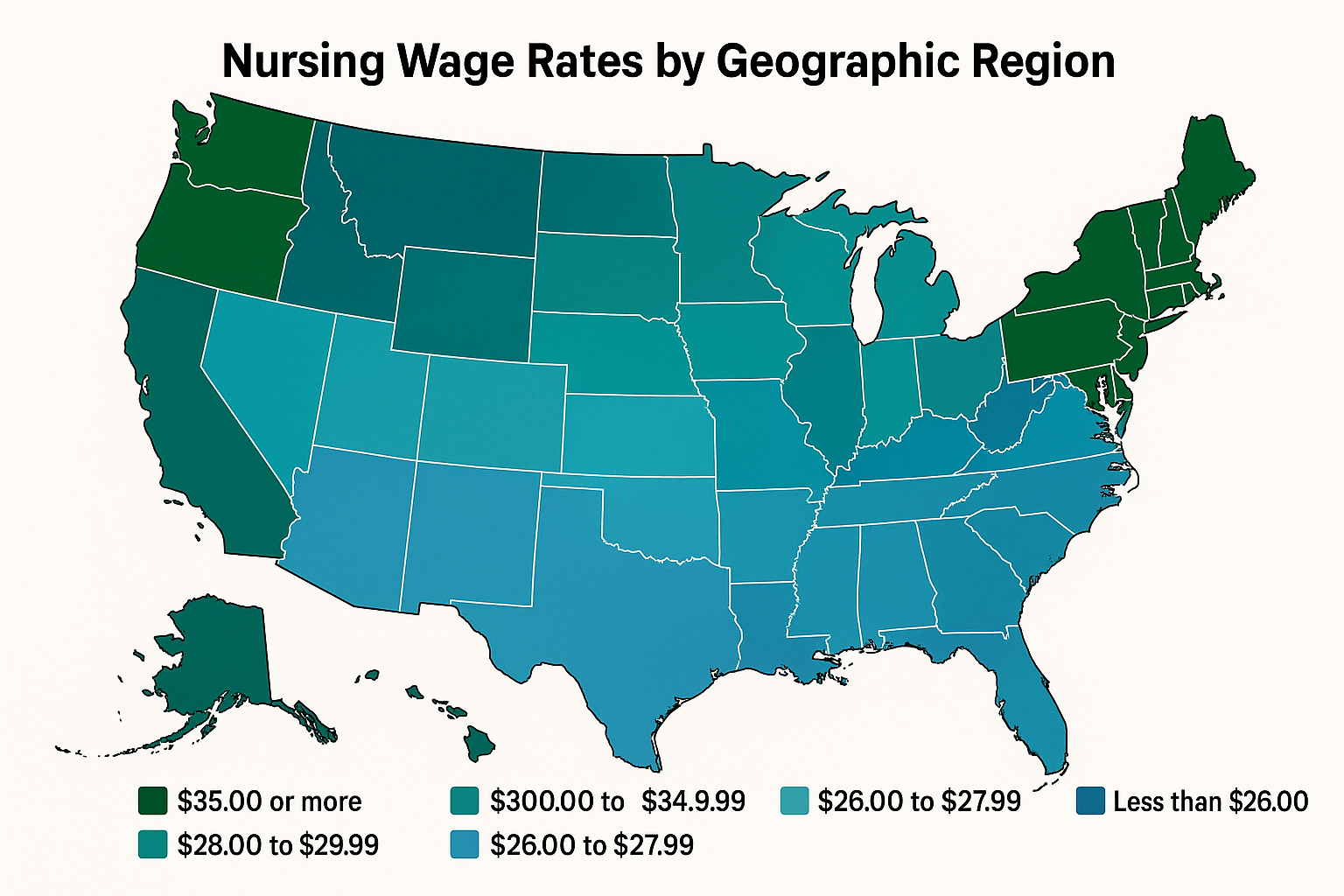
PRN nurses have unique opportunities to leverage geographic wage differences. You might live in a lower-cost area but work PRN shifts in higher-paying markets, or take advantage of seasonal demand patterns in different regions.
Understanding these geographic opportunities requires research and flexibility, but the financial rewards can be substantial. I know PRN nurses who plan their entire year around high-demand periods in different markets.
Steps to take:
-
Research wage differences between urban and rural markets
-
Identify seasonal demand patterns in different regions
-
Consider temporary relocation during high-demand periods
Technology Integration and Digital Presence
Modern PRN nursing demands tech skills that go way beyond basic computer literacy. You’re juggling multiple electronic health record systems, managing your professional online presence, and using scheduling platforms that didn’t exist five years ago.
The nurses who excel understand that technology mastery isn’t just about efficiency – it’s about professional survival in an increasingly digital healthcare landscape. I’ve seen excellent clinical nurses struggle with PRN work simply because they couldn’t adapt quickly enough to different technology platforms.
Multi-Platform EHR Mastery
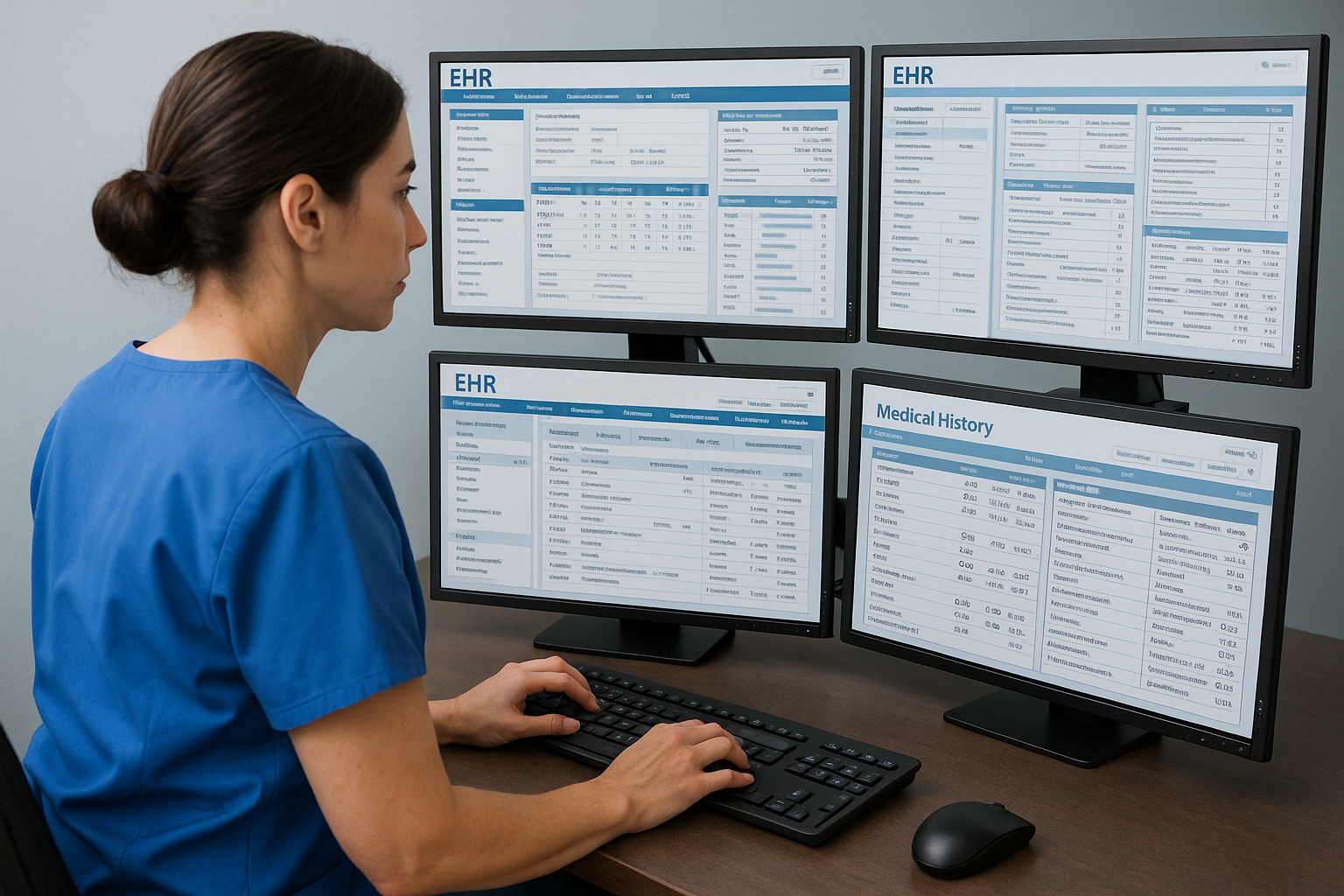
Walking into a new facility and facing an unfamiliar EHR system used to be intimidating. Now it’s just Tuesday. PRN nurses need to become system-agnostic, developing skills that translate across Epic, Cerner, Meditech, and whatever new platform hospitals decide to implement next.
This isn’t about memorizing every system – it’s about understanding the underlying logic that makes rapid adaptation possible. According to Maryville University, the NCLEX-RN consists of 75 to 265 questions, and this adaptive testing approach mirrors the variable complexity PRN nurses face when mastering different EHR systems – each requiring different levels of proficiency based on the specific facility’s needs.
System-Agnostic Clinical Documentation
Your documentation needs to be legally sound and clinically accurate regardless of which EHR you’re using. This means developing documentation habits that work across platforms while maintaining your personal standards for thoroughness and clarity.
The goal is creating notes that would make sense to any healthcare provider, regardless of which system they’re reading them in. I’ve developed personal templates that I can adapt to any EHR system within minutes of logging in.
Steps to take:
-
Create personal templates for common documentation scenarios
-
Study the most common EHR systems in your market area
-
Practice rapid system navigation techniques
EHR Adaptation Checklist:
-
☐ Identify patient search and selection methods
-
☐ Locate vital signs and assessment documentation
-
☐ Find medication administration records and protocols
-
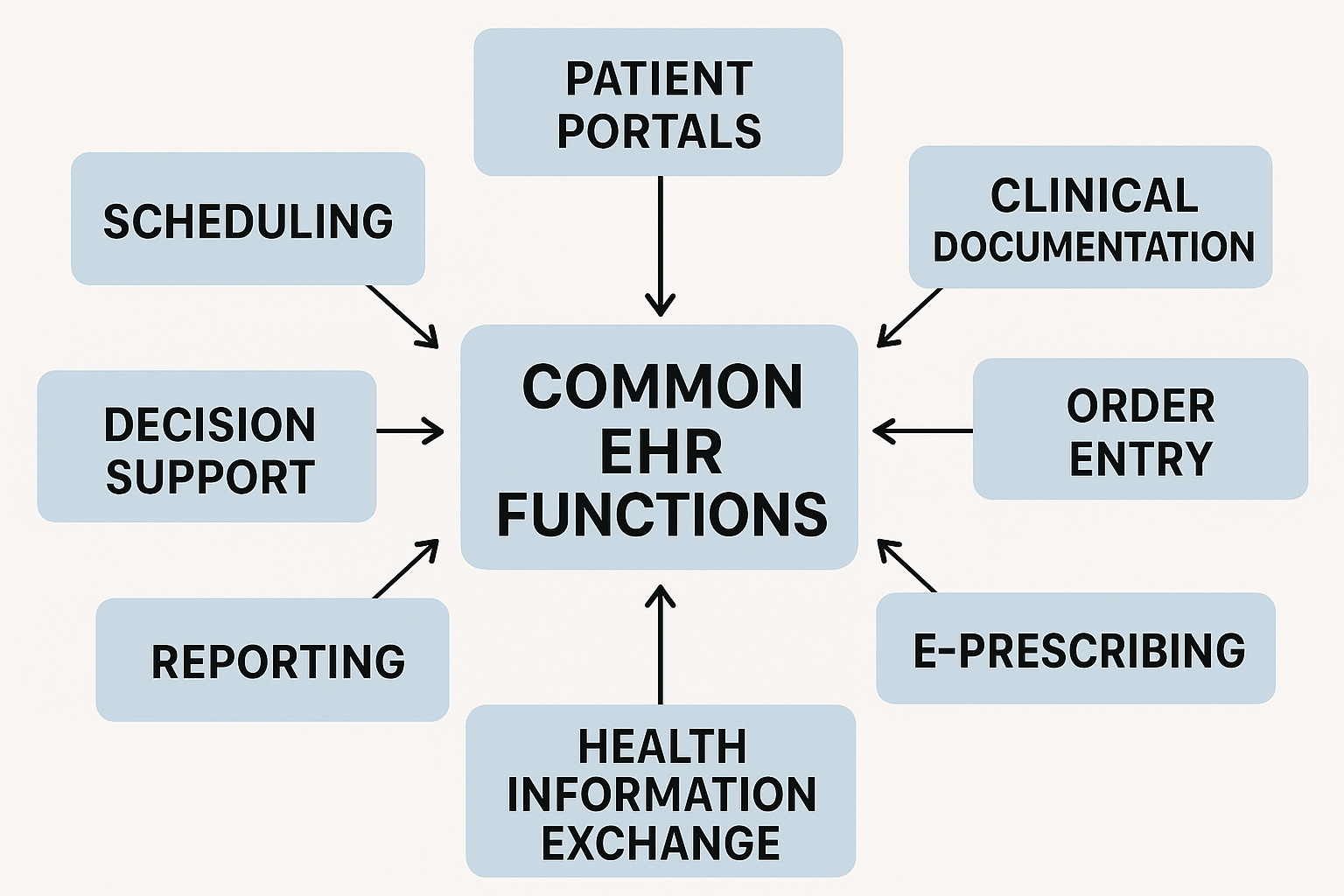
☐ Understand order entry and communication systems
-
☐ Practice charting and note documentation
-
☐ Test printing and report generation functions
Data Security and Privacy Across Multiple Systems
Working across multiple healthcare systems means navigating different privacy policies, security protocols, and compliance requirements. What’s acceptable at one facility might violate policy at another.
You need personal protocols for handling sensitive information that meet the highest standards across all your work environments. I maintain a security checklist that I review before starting at any new facility.
Steps to take:
-
Maintain separate, secure passwords for each system
-
Understand HIPAA implications of working across multiple institutions
-
Develop personal protocols for handling sensitive information
Professional Digital Presence Management
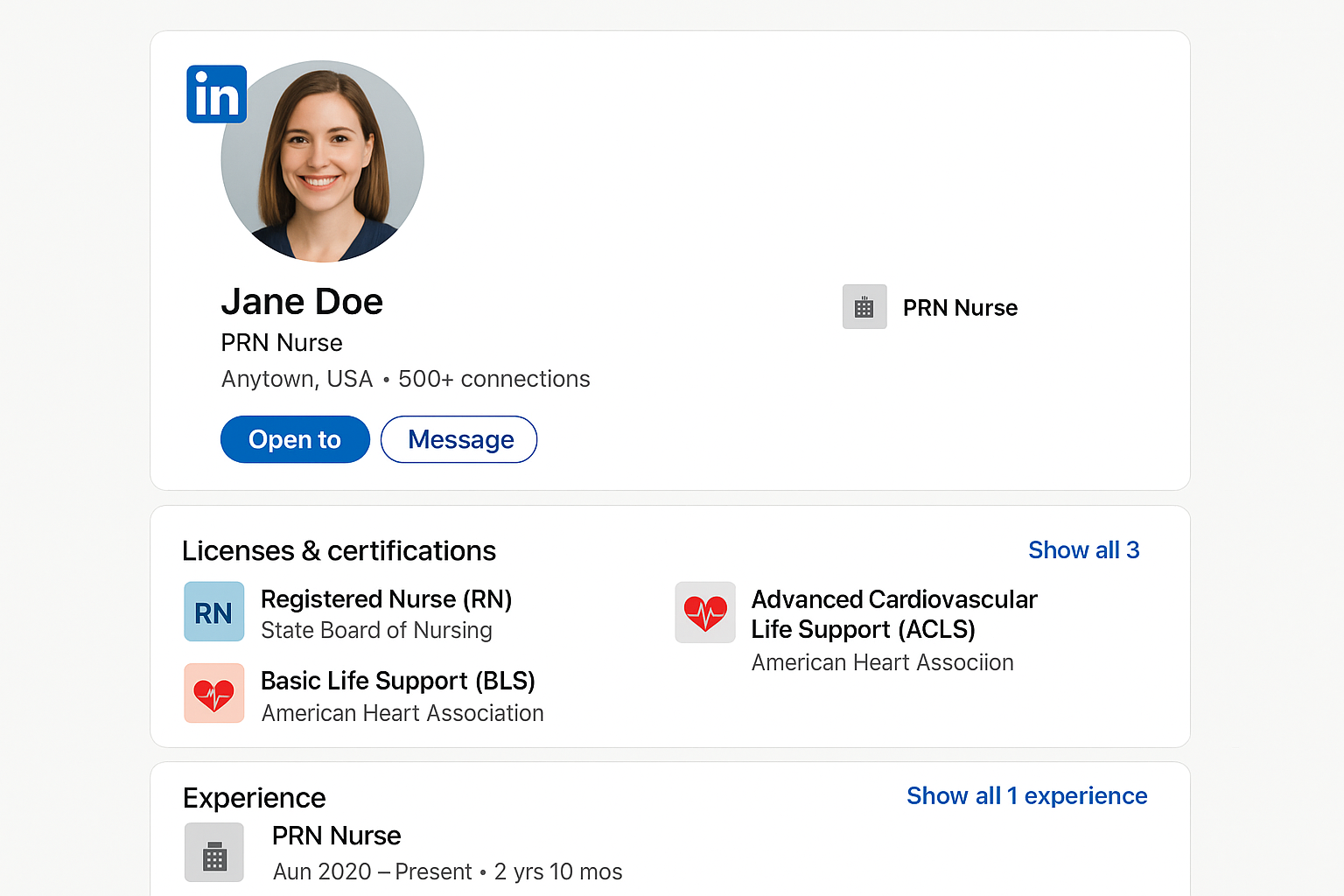
Your online presence matters more as a PRN nurse because you’re constantly meeting new people who might look you up. Nurse managers, colleagues, and recruiters are checking LinkedIn profiles and social media accounts.
Managing your digital presence strategically can open doors to better opportunities and higher-paying assignments. I’ve received direct job offers through LinkedIn that never would have happened if I hadn’t maintained a professional online presence.
LinkedIn Strategy for Healthcare Professionals
LinkedIn isn’t just for corporate professionals anymore. Healthcare recruiters and nurse managers use it to find qualified PRN nurses, and your profile might be the first impression you make.
A well-optimized LinkedIn presence can lead to direct job offers and networking opportunities that never would have happened otherwise. I’ve connected with nurse managers who later offered me premium PRN positions based solely on my LinkedIn activity.
Steps to take:
-
Optimize LinkedIn profile with relevant keywords and specialties
-
Engage with healthcare content to build professional visibility
-
Connect with nurse managers and healthcare recruiters in your target markets
Strategic Career Architecture
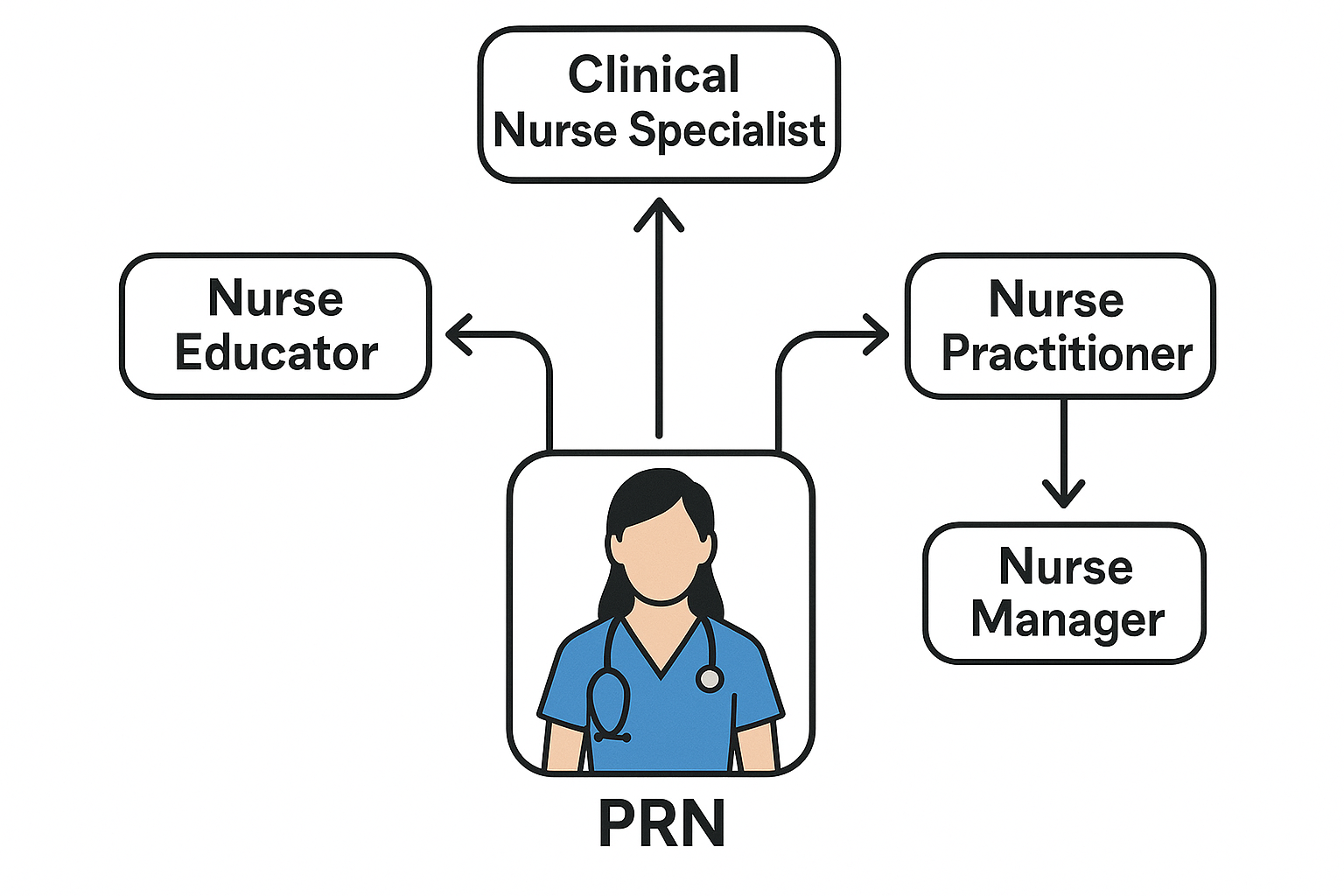
PRN nursing can be a strategic career move rather than just a scheduling preference. The key is approaching it with intentionality, using the diverse experiences and accelerated learning opportunities to build toward specific career goals.
Nurses who treat PRN work as a stepping stone rather than a destination often find themselves with more opportunities and faster career progression than their staff counterparts. How to become a PRN nurse strategically requires thinking beyond immediate scheduling needs to long-term career objectives.
Experience Diversification Strategy
PRN work offers something that traditional nursing careers can’t – rapid exposure to different specialties, patient populations, and clinical challenges. This accelerated experience can be incredibly valuable if you’re strategic about which assignments you accept and how you leverage the skills you develop.
I’ve seen PRN nurses gain more diverse experience in two years than staff nurses accumulate in a decade. The key is being intentional about which opportunities you pursue and how you document your growing expertise.
Targeted Skill Acquisition
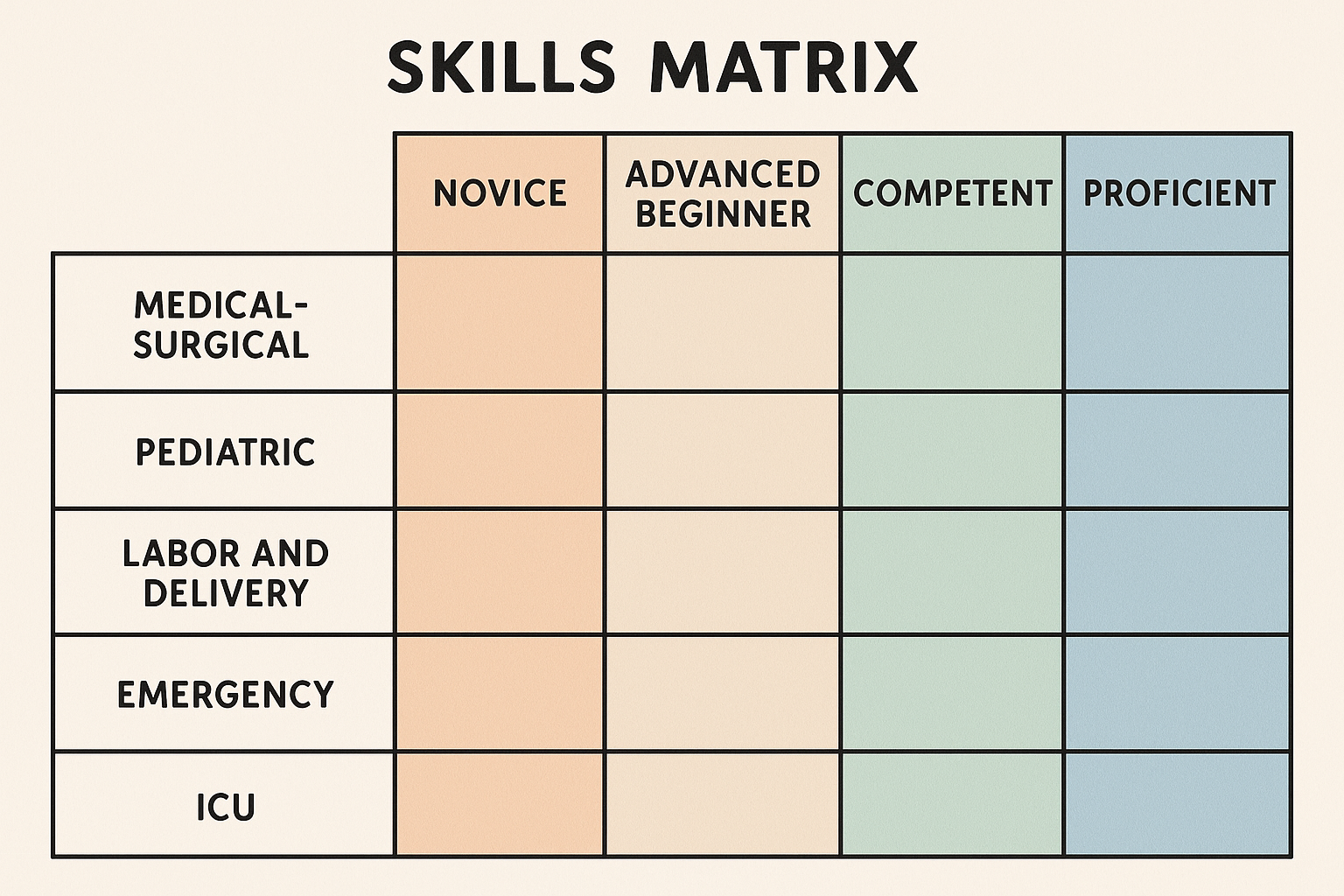
Instead of randomly accepting whatever PRN shifts are available, successful nurses identify specific competencies they want to develop and seek assignments that provide those learning opportunities. This targeted approach turns PRN work into an intensive professional development program that you design yourself.
I always have a list of skills I’m actively developing and seek PRN assignments that will give me exposure to those competencies. This strategic approach has accelerated my career development significantly.
Steps to take:
-
Identify skill gaps in your desired career trajectory
-
Seek PRN assignments that offer exposure to these specific skills
-
Document and quantify new competencies gained through diverse assignments
Skill Development Tracking Template:
-
Target Skill: [e.g., ECMO management]
-
Current Proficiency: [1-10 scale]
-
Target Facilities: [List hospitals with this technology]
-
Learning Resources: [Courses, certifications, mentors]
-
Timeline: [Specific dates and milestones]
-
Evidence of Mastery: [Certifications, supervisor feedback]
Leadership Development Through Adaptability
The constant adaptation required in PRN work develops leadership skills that are highly valued in healthcare management roles. You learn to quickly assess situations, build rapport with new teams, and perform under pressure – all essential leadership competencies.
These skills often develop faster in PRN nurses because they’re constantly being challenged in new environments. I’ve noticed that my leadership abilities improved dramatically after a year of PRN work because I was forced to step up in unfamiliar situations regularly.
Steps to take:
-
Volunteer for charge nurse responsibilities during PRN shifts
-
Offer to precept new staff or students when possible
-
Document leadership experiences across different settings
Transition Planning and Exit Strategies
Understanding how to transition from PRN work requires strategic planning and relationship management. Whether you’re moving toward a permanent position, advanced practice role, or completely different career path, the relationships and experiences you’ve built through PRN work can be powerful assets if you know how to leverage them effectively.
I’ve helped several PRN nurses transition into leadership roles by strategically leveraging the diverse experience and professional networks they built during their PRN careers.
Relationship Capital Conversion
The professional relationships you build through PRN work represent significant career capital, but only if you maintain and leverage them strategically. These connections can lead to job offers, references, and opportunities that aren’t advertised publicly.
Converting these relationships into career advancement requires intentional networking and follow-up. I maintain a database of professional contacts from every PRN assignment and regularly update them on my career progress.
Steps to take:
-
Maintain contact with supervisors and colleagues from PRN assignments
-
Seek recommendations and references from multiple institutions
-
Stay informed about permanent opportunities at facilities where you’ve worked PRN
Professional Network Maintenance System:
-
Quarterly Check-ins: Email updates to key contacts
-
Annual Holiday Cards: Maintain personal connections
-
LinkedIn Engagement: Like and comment on professional posts
-
Professional Events: Attend conferences and local nursing meetings
-
Reference Portfolio: Maintain updated list of professional references
Final Thoughts
Becoming a successful PRN nurse requires fundamentally reimagining how you approach your nursing career. The psychological, financial, and strategic challenges are real, but so are the opportunities for accelerated growth, higher earnings, and professional freedom that traditional employment rarely offers.
The nurses who thrive in PRN work are those who embrace the entrepreneurial aspects, develop sophisticated financial planning skills, master technology platforms, and approach their career with strategic intentionality. They understand that PRN nursing isn’t just a job – it’s a different way of practicing nursing that requires different skills and mindsets.
For nurses considering this path, remember that success requires preparation, adaptability, and a willingness to continuously learn and grow. The rewards – both financial and professional – can be substantial for those who approach PRN work with the right strategies and mindset.