
The veterinary technician profession offers surprising earning potential that most career guides completely miss. While many sources quote basic salary ranges, the real money comes from understanding market inefficiencies, geographic arbitrage, and strategic career positioning. According to recent Bureau of Labor Statistics data, veterinary technicians earn an average vet tech salary of $21.00 per hour or $43,740 annually, but this baseline figure barely scratches the surface of what’s actually possible when you know where to look and how to position yourself strategically.
Table of Contents
- Geographic Money Hacks That Double Your Buying Power
- The Certification Game: Which Credentials Actually Pay Off
- Negotiation Tactics That Actually Work in Vet Practices
- Future-Proofing Your Career Before Everyone Else Catches On
- How ValidGrad Supports Your Career Journey
- Final Thoughts
TL;DR
- Rural areas often provide better purchasing power than urban centers despite lower nominal salaries
- Emergency and exotic animal specialties can boost earnings by 20-40% through shift differentials
- Stackable certifications create compound salary increases over time
- Alternative revenue streams like telemedicine and freelance work offer geographic arbitrage opportunities
- Understanding practice economics helps you negotiate better compensation packages
- Technology integration skills position you for premium-paying emerging roles
- Benefits valuation can add thousands to your effective annual compensation
Geographic Money Hacks That Double Your Buying Power
Most vet techs focus solely on salary numbers without considering how location dramatically affects their actual purchasing power. I’ve seen too many talented technicians chase high-dollar positions in expensive cities, only to discover they’re actually worse off financially than they were in smaller markets.
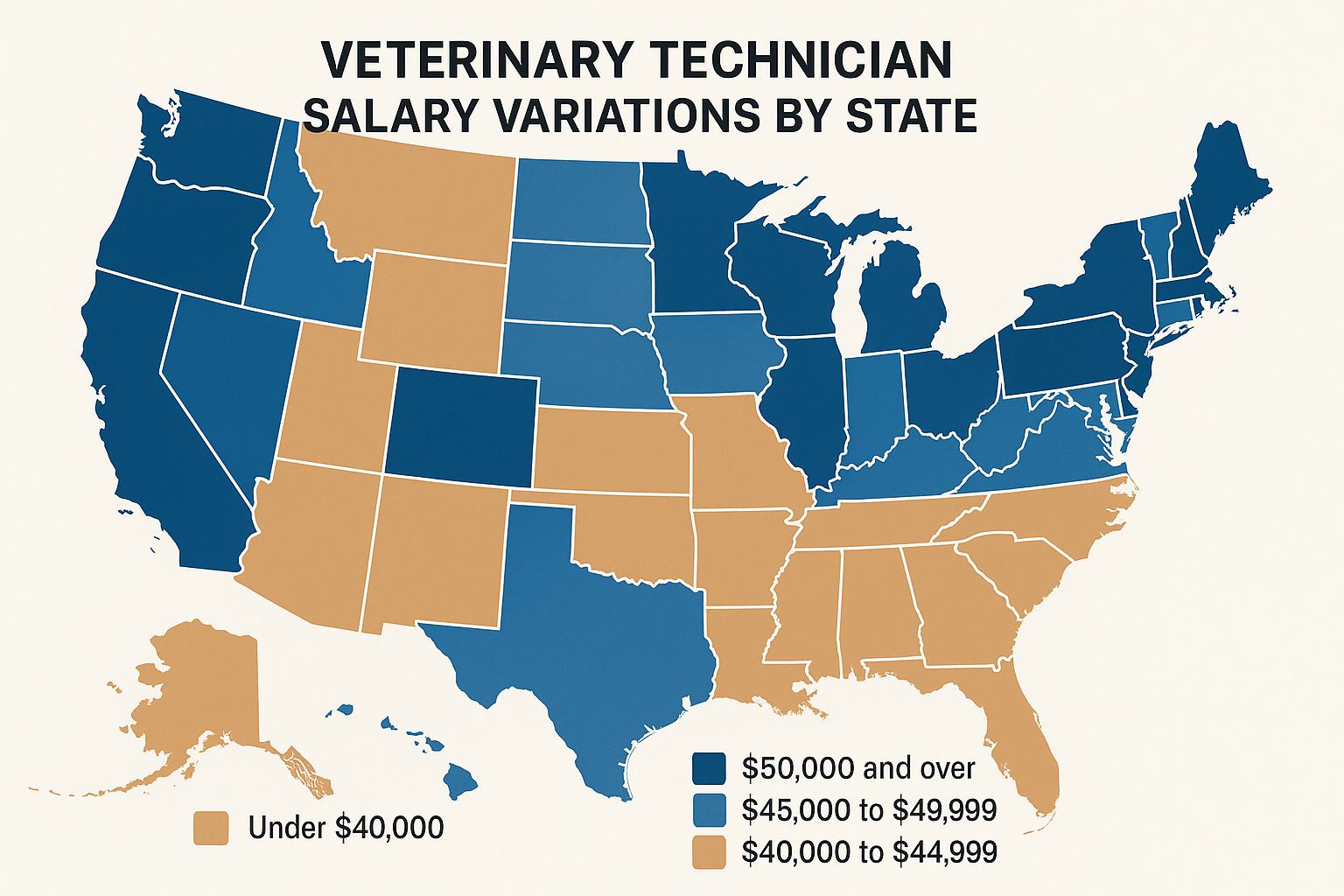
The vet tech pay landscape varies dramatically across the United States, but smart professionals look beyond the headline numbers. Understanding how much do vet techs make in different markets requires analyzing both nominal wages and real purchasing power – a calculation that reveals surprising opportunities for maximizing your financial position.
The Real Story Behind Location-Based Pay Differences
Why do identical jobs pay vastly different amounts across regions? The answer goes beyond simple cost of living calculations. Supply and demand create market inefficiencies that savvy technicians can exploit for significant financial advantage.
Understanding salary variations across locations requires strategic thinking about replacement certifications when relocating, as different states may require updated credentials to maintain your earning potential.
San Francisco now boasts the highest veterinary technician wages in the country at $30.51 per hour, with annual salaries averaging $63,470 per year according to Roo Veterinary’s 2024 wage analysis. This represents a significant premium over the national average, though the living wage in San Francisco has risen to $29.87, leaving just a $0.64 difference between the two.
That tiny margin tells you everything you need to know about chasing high-dollar urban positions without considering the full financial picture.
Why Rural Markets Might Be Your Secret Weapon
Rural veterinary practices often struggle to attract qualified technicians, creating a seller’s market for your skills. When you factor in housing costs that can be 60-70% lower than urban areas, that “lower” rural salary often translates to significantly higher purchasing power and quality of life.
The math becomes compelling when you run real numbers. Consider a veterinary technician earning $18 per hour in rural Montana versus $25 per hour in San Francisco. While the San Francisco salary appears 39% higher, the rural technician’s effective purchasing power is actually superior when you factor in housing costs of $800/month versus $3,500/month, plus lower costs for utilities, food, and transportation.
After accounting for these differences, the Montana technician has approximately $1,200 more in disposable income each month, despite earning $280 less in gross wages weekly. This financial advantage compounds over time, enabling faster debt payoff, higher savings rates, and improved quality of life.
Border States: The Compensation Sweet Spot Nobody Talks About
States bordering regions with different licensing requirements or salary standards create unique arbitrage opportunities. Living in a lower-cost state while working in a higher-paying neighboring state can maximize both your income and your expenses, though you’ll need to navigate the regulatory requirements carefully.
Consider technicians living in New Hampshire but working in Massachusetts, or those residing in Delaware while employed in Pennsylvania. These arrangements require careful attention to tax implications and licensing requirements, but the financial benefits can be substantial when executed properly.
Specialty Practices: Where the Real Money Hides
While general practice positions dominate job boards, specialty veterinary practices often pay 25-50% above market rates for qualified technicians. These positions require specific skills but offer compensation packages that can transform your financial outlook.
I’ve watched technicians double their earning potential by transitioning from general practice to emergency medicine or exotic animal care. The key is understanding which specialties pay the most and positioning yourself accordingly.

Emergency Medicine: Your Fast Track to Higher Pay
Emergency veterinary clinics operate on different economics than regular practices, often paying substantial shift differentials for nights, weekends, and holidays. A strategic approach to emergency medicine can increase your annual earnings by 20-40% while providing valuable experience that opens doors to even higher-paying opportunities.
The shift premium structure in emergency medicine creates multiple paths to higher earnings:
| Shift Type | Base Rate Multiplier | Typical Premium |
|---|---|---|
| Day Shift | 1.0x | $20-25/hour |
| Evening Shift | 1.15x | $23-29/hour |
| Night Shift | 1.25x | $25-31/hour |
| Weekend | 1.2x | $24-30/hour |
| Holiday | 1.5x | $30-38/hour |
Emergency clinics typically need coverage during less desirable hours, creating opportunities for technicians willing to work non-traditional schedules. A technician earning $22 per hour base rate can increase their effective hourly wage to $33 during holiday shifts, representing a 50% premium for the same work performed on different days.
Exotic Animal Expertise: The Niche That Pays
Veterinary technicians with exotic animal experience command premium salaries because the skill set is rare and the demand is growing. From reptile medicine to avian care, developing expertise in non-traditional pets creates a competitive advantage that translates directly to higher compensation.
Exotic animal practices often pay $3-8 per hour above general practice rates because finding qualified technicians with relevant experience is challenging. The learning curve for exotic medicine is steep, but technicians who invest in this specialization often find themselves in high demand with significant negotiating power.
The Certification Game: Which Credentials Actually Pay Off
I’ve seen technicians waste thousands of dollars and countless hours pursuing certifications that barely register with employers. The certification landscape is cluttered with programs that promise career advancement but deliver minimal salary impact.
Smart certification strategy requires understanding which credentials provide the highest return on investment. The average salary of a vet tech increases significantly with strategic certification choices, but the key is understanding which credentials actually move the compensation needle versus those that simply look good on paper.
Building Your Certification Portfolio Strategically
Smart vet techs don’t just collect random certifications – they build complementary skill sets that create unique value propositions. This approach to professional development ensures each new credential builds on the last, creating compound salary increases rather than marginal improvements.
Building a strong certification portfolio often requires understanding is a certificate a degree versus a degree, as employers value different credentials differently when determining compensation levels.
Strategic Certification Checklist:
- ☐ Assess current market demand in your area
- ☐ Identify certifications that complement your existing skills
- ☐ Calculate ROI based on certification cost vs. salary increase
- ☐ Plan certification timeline to maximize compound benefits
- ☐ Research employer reimbursement programs
- ☐ Consider online vs. in-person training options
- ☐ Evaluate continuing education requirements
High-Impact Certifications That Actually Move the Needle
Some certifications provide immediate salary bumps of $2-5 per hour, while others barely register with employers. Understanding which credentials carry real weight in salary negotiations helps you invest your time and money wisely.
According to NAVTA’s 2022 Demographic Survey, 10 percent of veterinary technicians are veterinary technician specialists, up from nine percent in 2016, and these specialists command significantly higher salaries than general practice technicians as reported by Veterinary Practice News.

The highest-impact certifications typically fall into these categories:
Anesthesia Monitoring Certification provides immediate $2-4 per hour increases and opens doors to surgical specialty practices. Veterinary Technician Specialist (VTS) Credentials represent the highest level of specialization and can increase earnings by $5-10 per hour depending on the specialty area.
Fear Free Certification is increasingly valued by practices focused on patient experience, often worth $1-3 per hour premium. Laboratory Diagnostics Certification is essential for technicians working in diagnostic laboratories or practices with extensive in-house testing capabilities.
Cross-Training: The Multiplier Effect Most People Miss
Combining skills from different areas of veterinary medicine creates unique value that’s hard to replace. Technicians who can handle both surgical assistance and diagnostic imaging, for example, become indispensable to practices and can command significantly higher compensation.
The multiplier effect occurs when your skill combinations make you capable of handling multiple roles within a practice. A technician certified in both anesthesia monitoring and dental prophylaxis can command premium compensation because they eliminate the need for multiple specialists during complex procedures.
Alternative Income Streams That Leverage Your Skills
Your veterinary technician training opens doors to income opportunities beyond traditional employment. From telemedicine consultations to corporate training roles, these alternative revenue streams can supplement your primary income while providing professional growth and geographic flexibility.
Telemedicine: Work From Anywhere, Earn Urban Wages
Remote veterinary consultation roles allow you to earn higher wages while living in lower-cost areas. These positions are growing rapidly as pet owners seek convenient access to professional advice, creating opportunities for experienced technicians to monetize their expertise without geographic constraints.
A veterinary technician living in rural Kentucky can earn $35-45 per hour providing telemedicine consultations for urban practices in California or New York, while maintaining living expenses that are 50-60% lower than those metropolitan areas.
This geographic arbitrage opportunity allows technicians to maximize both their earning potential and their quality of life by combining high urban wages with low rural living costs.
Freelance Surgical Assistance: Premium Hourly Rates
Independent contractor roles in surgical assistance often pay $25-40 per hour, significantly above employed positions. While these roles require strong skills and professional networks, they offer flexibility and earning potential that traditional employment can’t match.
Freelance surgical technicians typically work with multiple practices, providing specialized services during complex procedures. This model works particularly well in areas with multiple veterinary practices that need occasional specialized assistance but don’t require full-time specialized staff.
Negotiation Tactics That Actually Work in Vet Practices
Most vet techs accept whatever salary they’re offered because they don’t understand how veterinary practice economics work or how to value their total compensation package. I’ve watched talented technicians leave money on the table simply because they didn’t know how to ask for what they’re worth.
Understanding veterinary technician wage structures and how much do vet techs make across different practice types gives you the foundation for effective negotiation, but success comes from understanding the business metrics that drive compensation decisions.

Understanding the Business Side of Veterinary Medicine
Veterinary practices operate on specific financial models that directly impact how much they can pay technicians. Understanding these economics helps you negotiate from a position of knowledge rather than hope, showing employers how investing in your compensation benefits their bottom line.
Smart negotiation often requires presenting comprehensive documentation of your qualifications, and understanding business certification principles can help you articulate your value proposition more effectively to practice owners.
Recent industry analysis shows that “practices where veterinarians rarely perform tasks that credentialed techs can take on show an average revenue increase of 36%” according to AAHA’s research, highlighting how proper technician utilization directly impacts practice profitability and creates room for higher compensation.
Revenue-Based Pay: Aligning Your Success With Practice Success
Some progressive practices tie technician compensation to practice performance, creating opportunities for significantly higher earnings when you contribute to practice growth. These arrangements require understanding practice metrics but can result in compensation that far exceeds traditional salary structures.
Revenue-based compensation typically involves base salary plus performance bonuses tied to practice metrics like client satisfaction scores, procedure efficiency, or revenue per patient visit. Technicians who understand how to improve these metrics can significantly increase their total compensation.
Equity Opportunities: The Ultimate Long-Term Play
While rare, some veterinary practices offer technicians equity participation or ownership opportunities. These arrangements can provide substantial long-term wealth building, though they require careful evaluation of the practice’s financial health and growth prospects.
Equity participation typically involves profit-sharing arrangements or actual ownership stakes in exchange for below-market salaries initially. These arrangements work best with established practices showing consistent profitability and growth potential.
Total Compensation: The Numbers That Really Matter
Salary is just one component of your total compensation package. Understanding how to value benefits, continuing education support, and other perks helps you make better career decisions and negotiate more effectively.
Sometimes a lower salary with better benefits provides superior total value – but you need to know how to calculate that value accurately.
| Benefit Type | Annual Value Range | Negotiation Priority |
|---|---|---|
| Health Insurance | $6,000-$12,000 | High |
| Dental/Vision | $1,200-$2,400 | Medium |
| Continuing Education | $2,000-$5,000 | High |
| Retirement Match | $1,500-$4,000 | Medium |
| Paid Time Off | $2,000-$6,000 | High |
| Professional Memberships | $300-$800 | Low |
Health Insurance: The Hidden Salary Equivalent
Employer-provided health insurance can be worth $6,000-12,000 annually in equivalent salary, depending on the plan quality and your family situation. Learning to calculate these values accurately helps you compare job offers and negotiate more effectively.
When evaluating health insurance benefits, consider both the premium costs and the out-of-pocket maximums. A practice offering comprehensive coverage with low deductibles provides significantly more value than one with high-deductible plans, even if the base salary is slightly lower.
Professional Development: Investment in Your Future Earning Power
Employers who invest in your continuing education and certification aren’t just providing a nice perk – they’re increasing your market value and future earning potential. Understanding how to value and negotiate these benefits can accelerate your career growth significantly.
Professional development benefits typically include conference attendance, certification exam fees, and continuing education course costs. These benefits can be worth $2,000-5,000 annually and provide compound returns through increased earning potential.

Salary Negotiation Preparation Template:
- Current market rate research: $______/hour
- Your unique value propositions: ________________
- Practice revenue impact: ________________
- Certification premiums: $______/hour
- Total compensation current value: $______/year
- Target compensation goal: $______/year
- Negotiation timeline: ________________
- Alternative offers/leverage: ________________
Future-Proofing Your Career Before Everyone Else Catches On
The veterinary industry is evolving rapidly, with technology integration and new service models creating opportunities for higher-paying roles. I’ve watched technicians who positioned themselves early in emerging trends command premium compensation while their peers struggled with traditional career paths.
The average salary of a vet tech will continue evolving as technology reshapes veterinary medicine, but professionals who position themselves strategically can capture disproportionate value from these changes. Understanding where the industry is heading helps you build skills that will command premium compensation in the future job market.
The veterinary technology profession is projected to grow 19 percent from 2023 to 2033, much faster than the average for all occupations, with about 15,400 openings projected each year according to the Bureau of Labor Statistics, indicating strong demand for skilled professionals who position themselves strategically.
Technology Integration: Where Veterinary Medicine Meets Innovation
Veterinary practices are increasingly adopting advanced technologies, from AI-assisted diagnostics to robotic surgery systems. Technicians who develop expertise in these areas early can command premium compensation as practices compete for skilled operators of expensive equipment.

AI-Assisted Diagnostics: The Next Frontier
Artificial intelligence is transforming veterinary diagnostics, but these systems still require skilled technicians to operate effectively. Early adopters of AI diagnostic tools often see immediate salary increases as practices value their specialized knowledge and training.
AI diagnostic systems require technicians who understand both traditional diagnostic techniques and new technology interfaces. This combination of skills creates unique value that practices will pay premium rates to secure.
Robotic Surgery: High-Tech Skills, High-Tech Pay
Robotic surgical systems are entering veterinary medicine, requiring technicians with specialized training to operate and maintain complex equipment. These roles typically command 20-30% salary premiums due to the technical expertise required and the limited pool of qualified candidates.
Robotic surgery technicians need extensive training in both traditional surgical assistance and robotic system operation. The investment in this training typically pays off through significantly higher compensation and job security.
Entrepreneurial Paths: Building Your Own Success
Your veterinary technician skills provide the foundation for various entrepreneurial opportunities, from mobile services to product development. These paths require business acumen beyond technical skills but can provide unlimited earning potential and professional independence.
Entrepreneurial veterinary technicians often need to present professional credentials to clients and regulatory bodies, making services like cost of a college degree documentation essential for establishing credibility in new markets.

Mobile Veterinary Services: Meeting Demand Where It Exists
Mobile veterinary services are growing rapidly as pet owners seek convenience and practices look to expand their reach. Starting a mobile practice requires business skills and initial investment but can provide significantly higher income than traditional employment while serving underserved markets.
A veterinary technician who starts a mobile vaccination and wellness service can charge $75-150 per house call, potentially earning $40-60 per hour while providing convenience to pet owners who struggle with traditional clinic visits.
Mobile services work particularly well in rural areas or urban markets with limited veterinary access. The key is identifying underserved markets and developing service packages that provide value while maintaining profitability.
Product Development: Turning Experience Into Innovation
Your hands-on experience with veterinary products and procedures provides valuable insights for product development. Whether improving existing tools or creating new solutions, technicians who transition into product development can build substantial long-term wealth while contributing to industry advancement.
Industry experts predict that by 2032, there will be 132,200 veterinary nurses employed, with some projecting this could reach 220,000 if proper retention and recruitment strategies are implemented, as noted by Veterinary Practice News, indicating massive growth opportunities for forward-thinking professionals.
Product development opportunities range from improving existing veterinary tools to creating entirely new solutions for common practice challenges. Technicians with entrepreneurial inclinations often find success by identifying problems they encounter regularly and developing solutions that other practices would purchase.
Future-Proofing Skills Checklist:
- ☐ Digital health record systems proficiency
- ☐ Telemedicine platform experience
- ☐ AI diagnostic tool familiarity
- ☐ Data analysis and reporting skills
- ☐ Client communication technology
- ☐ Mobile service delivery methods
- ☐ Business development fundamentals
- ☐ Continuing education in emerging technologies

How ValidGrad Supports Your Veterinary Technician Career Journey
Career advancement in veterinary medicine often requires presenting multiple credentials to employers, licensing boards, and certification organizations. ValidGrad understands that veterinary technicians face unique documentation challenges when pursuing higher-paying opportunities or transitioning between specialties.
Whether you need replacement certificates for lost credentials, backup copies for multiple job applications, or professional documentation while building your certification portfolio, ValidGrad provides reliable solutions that keep your career momentum moving forward.
Missing or damaged credentials shouldn’t delay your pursuit of emergency medicine roles, specialty practice positions, or emerging technology-integrated opportunities. ValidGrad’s quick turnaround times and professional-quality documents ensure that administrative hurdles don’t become barriers to maximizing your earning potential in the evolving veterinary industry, especially when you need academic documents for career transitions.

Final Thoughts
The veterinary technician profession offers far more earning potential than most people realize, but accessing these opportunities requires strategic thinking about location, specialization, and career development. Success isn’t just about working harder – it’s about working smarter by understanding market dynamics, building valuable skill sets, and positioning yourself where demand exceeds supply.
The highest-paid veterinary technicians aren’t necessarily the most technically skilled; they’re the ones who understand the business side of veterinary medicine and make strategic career decisions based on market realities rather than conventional wisdom.
Your earning potential as a veterinary technician isn’t fixed by industry averages or regional standards. By applying geographic arbitrage, developing high-value specializations, and understanding practice economics, you can significantly exceed typical salary ranges while building a rewarding career that provides both financial security and professional satisfaction.
The strategies outlined in this guide provide a roadmap for maximizing your veterinary technician career potential. From understanding geographic salary variations to building strategic certification portfolios, each element contributes to a comprehensive approach to career development that can significantly increase your earning potential while providing professional fulfillment.
Remember that career success in veterinary medicine requires viewing your career as a business, making strategic decisions based on market realities rather than conventional wisdom. The veterinary technicians who achieve the highest compensation levels are those who continuously adapt to industry changes and position themselves where their skills command premium value.