

Let’s cut through the BS. Those “Make $100K Your First Year!” real estate ads? Total fantasy for most people. The Bureau of Labor Statistics says agents make around $56,320 on average, but here’s what they don’t tell you: some agents barely scrape together $20,000 while others are pulling in $200K+. It’s the wild west of income inequality.
I’ve watched countless starry-eyed newbies walk into this business thinking they’ll be rich by Christmas. Instead, they’re back at their old jobs by spring, wondering what the hell happened. The truth about real estate income isn’t pretty, but if you can handle reality, there’s still serious money to be made here.
Table of Contents
-
Understanding the Real Estate Commission Game
-
What Real Estate Agents Actually Make (The Numbers Don’t Lie)
-
Your Roadmap to Six-Figure Real Estate Income
-
Industry Shifts That’ll Make or Break Your Paycheck
-
Final Thoughts
TL;DR
-
You work on commission splits ranging from 50/50 to 95/5 – no sales, no paycheck
-
First-year agents usually make under $25K while top performers can hit $150K+, creating massive income gaps
-
Location is everything – California and New York agents average $100K+ while smaller markets yield $35K-$50K
-
Making real money requires systematic lead generation, relentless follow-up, and smart specialization
-
Technology and changing buyer expectations are reshaping how agents compete and earn
Understanding the Real Estate Commission Game
Here’s the deal: real estate isn’t a job where you show up and get paid. Your paycheck depends entirely on closing deals, not clocking hours. This commission-based reality creates both incredible earning potential and serious financial uncertainty.
I’ll never forget my first month – worked 60+ hours, showed dozens of properties, and earned exactly zero dollars. That’s when it hit me: effort doesn’t automatically equal income in this business. You get paid when transactions close, period.
The Commission Split Reality Check
Here’s the math that’ll crush your dreams real quick. You sell a $300,000 house and think “Sweet, $9,000!” Nope. That 6% total commission gets split between you and the buyer’s agent (3% each). Then your broker takes their cut – could be half if you’re new. So that $9,000 becomes $4,500. Before Uncle Sam, gas money, and all those fancy flyers you bought.
Commission splits aren’t your broker stealing from you – they’re providing office space, legal support, marketing tools, and hopefully some training. New agents typically start at 50/50 splits, but as you produce more, you can negotiate better terms. Top producers might keep 85-95% of their commissions.
What Your Paycheck Actually Looks Like
|
Experience Level |
Typical Commission Split |
Take-Home on $300K Sale |
|---|---|---|
|
New Agent (0-1 years) |
50/50 |
$4,500 |
|
Experienced (2-5 years) |
70/30 |
$6,300 |
|
Top Producer (5+ years) |
85/15 |
$7,650 |
|
Elite Producer |
95/5 |
$8,550 |
The Hidden Costs Nobody Warns You About
Transaction fees hit you on every deal – usually $200 to $500 per closing. Some brokerages charge monthly desk fees ($25-$50), and don’t get me started on marketing costs. Professional photos, flyers, online ads, and client gifts add up faster than you’d expect.
Sarah thought she’d hit the jackpot with her first Denver sale – a gorgeous $400K home. She was already planning how to spend that $12,000 commission. Reality check: after her broker’s cut, fees, marketing costs, and taxes, she walked away with $4,308. For six months of work. She literally made more per hour at Starbucks.
Market Conditions That Make or Break Your Year
Your income swings wildly based on local market conditions, seasons, and economic cycles. Recent market analysis shows that “housing affordability” has surpassed “difficulty in finding the right property” as the biggest hurdle buyers face according to NAR’s 2025 Member Profile, with 25% of REALTORS® citing affordability as the primary barrier to sales.
Location Determines Your Lifestyle
Working in Manhattan versus rural Kansas creates completely different earning realities. Manhattan agents might close fewer deals but earn $15,000+ per transaction, while Kansas agents need higher volume to reach similar income levels. The trade-off? Cost of living and competition intensity vary just as dramatically.
The Seasonal Income Roller Coaster
Spring and summer bring the money – that’s when families want to move and inventory peaks. But come December? Your phone stops ringing, and those commission checks dry up. Most agents earn 60-70% of their annual income during the warmer months, so you better save aggressively during busy season.

Your Earning Timeline: The Good, Bad, and Ugly
Year One: The Survival Phase
Your first year? Brutal. I’m talking ramen noodles and side hustles brutal. Most newbies make under $25K – if they’re lucky. You’re spending money on licenses, photos, business cards, gas driving around town, and learning expensive lessons. Meanwhile, your leads are going nowhere and you’re wondering why you left your day job.
According to the National Association of REALTORS®, 62% of members who have two years or less experience made less than $10,000 in 2023. Yeah, you read that right – under ten grand for a full year of work.
Years 2-5: Finding Your Groove
This is where things get interesting. You’ve got some experience, past clients start referring friends, and you understand your local market better. Your income becomes more predictable around $45,000-$75,000 annually, though it’s still tied to your hustle and market conditions.
What Real Estate Agents Actually Make (The Numbers Don’t Lie)
The median gross income of REALTORS® rose to $58,100 in 2024—up from $55,800 in 2023, according to NAR’s latest Member Profile. But here’s what those “average” numbers don’t tell you: real estate has massive income inequality.
Why Average Salaries Mislead Everyone
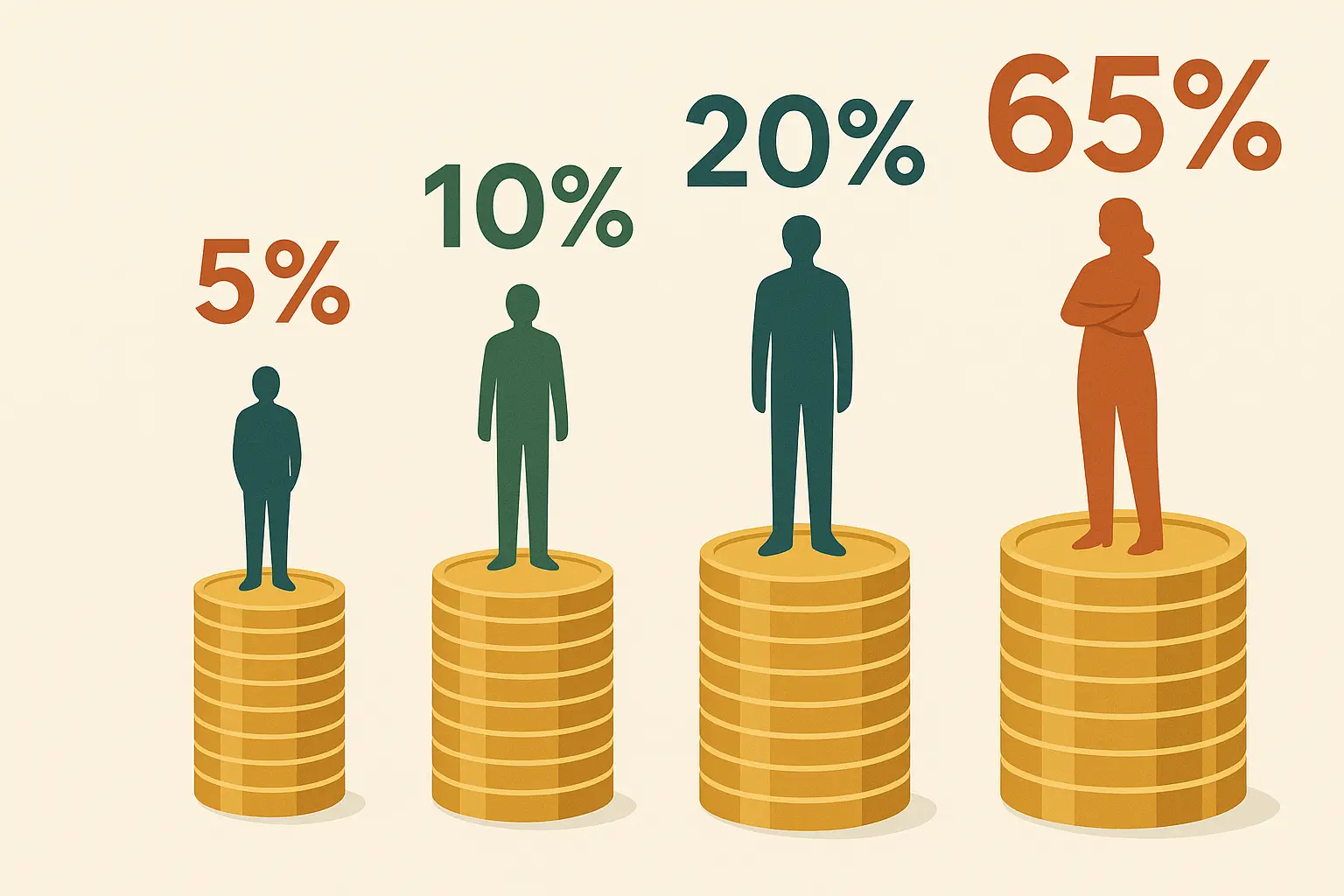
When you see “average” salaries around $60,000, remember that includes both the superstar closing 100 deals and the part-timer managing five transactions yearly. The top 10% of agents earn over $150,000 annually, while the bottom 25% struggle to make $25,000. It’s like saying the “average” person in a room with Jeff Bezos is a billionaire.
What Separates the Top Earners From Everyone Else
Luxury real estate agents have an average yearly salary of $119,296, and there’s a reason for that. Elite agents earning six figures share common traits: high transaction volumes, extensive referral networks, and smart specialization.
The Million-Dollar Producer Blueprint
Million-dollar producers aren’t just lucky – they’re strategic. They work markets where average home prices support higher commissions, maintain databases of thousands of contacts, and often specialize in luxury properties or specific neighborhoods. Most importantly, they’ve built systems that work without their constant involvement.
Marcus Thompson, a luxury agent in Scottsdale, generated $1.2 million in gross commission income by focusing exclusively on homes above $800,000. His strategy? Partnering with high-end interior designers, hosting exclusive client events, and maintaining relationships with 15 luxury builders. Result: 47 transactions averaging $25,532 in commission each.
Team Leaders vs. Solo Superstars
The highest earners eventually stop selling houses themselves. They build teams, generate leads for other agents, and take splits on their team’s production. It’s the difference between trading time for money and building a business that generates income beyond your personal efforts.
Your Roadmap to Six-Figure Real Estate Income
Building serious income in real estate isn’t about luck or natural sales ability. I’ve watched agents with zero sales experience outperform seasoned professionals simply because they followed proven systems and stayed consistent.

Getting Your Foundation Right
Step 1: Nail Your Education and Licensing
Don’t just pass your licensing exam – excel at it. The knowledge you gain directly impacts your credibility with clients and your ability to navigate complex transactions. Budget $500 to $1,500 for quality education, and schedule your state exam immediately after completing coursework.
Step 2: Choose Your Brokerage Wisely
New agents often chase the highest commission splits, but that’s backwards thinking. You need training, mentorship, and lead generation support more than an extra 10% on your first few deals. Look for brokerages offering comprehensive new agent programs, even if the splits start lower.
New Agent Brokerage Evaluation Checklist:
-
Training program duration and quality
-
Mentorship availability
-
Lead generation support
-
Technology platform access
-
Marketing material templates
-
Transaction support staff
-
Commission split progression plan
-
Office culture and collaboration
Step 3: Invest in Your Professional Image
Your professional image matters more in real estate than most industries. Clients are trusting you with their largest financial asset – they need to see competence and success. Invest in professional headshots, quality marketing materials, and a solid CRM system from day one. Budget $2,000-$5,000 for initial setup.
Building Your Client Pipeline
Creating Your Lead Generation Machine
You need multiple lead sources – never depend on just one. Here’s the real deal on lead generation costs:

-
Facebook ads: About $50 per decent lead, but only 1 in 20 actually buy
-
Google ads: Pricier but better quality – maybe 1 in 15 convert
-
Networking events: Cheaper per lead but you gotta work the room
-
Past client referrals: Gold mine if you’ve got ’em, but takes years to build
-
Direct mail: Old school but still works in certain markets
Aim for 10-15 quality leads monthly within your first year, and track where your best clients come from religiously.
The Follow-Up System That Actually Works
Most agents give up after two or three follow-ups, but real estate sales often require 6-8 touchpoints over 18 months. Your CRM system should automate much of this process while keeping interactions personal and valuable.
18-Month Follow-Up Campaign:
-
Day 1: Welcome email with market report
-
Day 7: Neighborhood insights and recent sales
-
Day 30: Home buying/selling tips guide
-
Day 90: Market update and success stories
-
Day 180: Seasonal market trends
-
Day 365: Annual market review
-
Day 540: Check-in with life updates inquiry
Advanced Strategies for Serious Income Growth
Specializing for Higher Paydays
Want to make real money? Stop competing with every agent in town. Pick your lane and own it. Luxury homes, historic properties, first-time buyers, whatever – just become THE person for that niche.
Jennifer in Charleston figured this out. She became the historic homes expert and tripled her income because nobody else wanted to deal with 200-year-old plumbing issues. Now she closes 35-40 deals annually at $8,500 average commission, earning over $280,000.

Building Income Beyond Commissions
Smart agents don’t rely solely on commission income. Rental property investments, real estate education courses, referral partnerships with lenders and contractors – these create income streams that work even when you’re not actively selling houses.
Many successful agents diversify by teaching or creating educational content. Understanding business certification requirements can help agents establish themselves as credible educators in real estate training programs.
Industry Shifts That
Industry Shifts That’ll Make or Break Your Paycheck
The industry is experiencing some interesting changes. 74% of real estate professionals who are REALTORS® are “very certain” they’ll remain active for the next two years, despite slower home sales in many markets. But the agents who thrive will be those who adapt to new realities.
Technology’s Impact on Your Bottom Line
Tech is eating this industry alive, and you can either surf the wave or get crushed by it. Those Zillow “instant offers” aren’t going anywhere. Your clients expect virtual tours, electronic signatures, and instant responses. If you’re still printing out contracts and using a flip phone, good luck competing with agents who embrace the digital world.

Competing With iBuyers and Tech Platforms
iBuyers and tech platforms aren’t going away – they’re changing how consumers think about real estate transactions. Your value proposition needs to evolve beyond just facilitating paperwork. Market expertise, negotiation skills, and personalized service become your competitive advantages.
Leveraging AI and Automation
AI and automation tools can multiply your productivity if you use them strategically. Lead scoring helps you focus on the most promising prospects, automated follow-up systems maintain contact without constant manual effort, and market analysis tools provide insights that impress clients.
Meeting New Consumer Expectations
Today’s clients expect digital-first experiences. Virtual tours, electronic document signing, instant communication, and online scheduling aren’t nice-to-have features anymore – they’re requirements. Agents who resist these changes will lose clients to those who embrace them.

Final Thoughts
Bottom line: Real estate can make you wealthy, but it’s not a get-rich-quick scheme. Your first year will suck – financially and emotionally. But if you can survive the learning curve, build real systems, and stop chasing shiny objects, you can build something substantial.
Just remember – those Instagram agents flashing Rolex watches? They’re selling you the dream, not the reality. The real money comes from boring stuff: following up with leads, knowing your market inside and out, and treating every client like they’re your only client.
The potential for significant income exists, but it requires strategic thinking, consistent effort, and realistic expectations about the timeline to success. Agents who persist through the initial challenges and implement proven strategies can build substantial, sustainable incomes.
For real estate professionals looking to maintain their credibility and professional image, ValidGrad offers valuable document management solutions. Whether you need backup copies of your real estate license for office display, replacement certificates for client presentations, or professional-looking credentials to build trust with potential clients, ValidGrad’s high-quality replica diploma services ensure you always present yourself professionally. In an industry where trust an d credibility directly impact your earning potential, having proper documentation readily available can make a meaningful difference in client relationships.
Ready to enhance your professional presentation? Visit ValidGrad today to learn how our document services can support your real estate career success.