
I’ve spent years watching friends struggle to understand what they can really make as medical assistants, and honestly, most salary guides miss the real story. After looking into what people are actually earning and talking with professionals across the field, I’ve discovered that your paycheck depends on factors most people never consider.
The Bureau of Labor Statistics projects employment of medical assistants to grow 12 percent from 2024 to 2034—much faster than the average for all occupations. With about 112,300 openings projected each year, now is an excellent time to understand how to position yourself for maximum earning potential in this expanding field.
Whether you’re considering this career path or already working as a medical assistant, I’ll break down exactly what you can expect to earn, which factors actually move the needle on your paycheck, and the strategic moves that separate high earners from those stuck at entry-level wages.
What You’ll Actually Make Right Now
Here’s the truth: medical assistants earn between $28,000-$50,000 annually, with most making $35,000-$40,000 depending on where they work and what they specialize in. But that’s just the starting point.
According to the Bureau of Labor Statistics, the median annual medical assistant salary in May 2024 was $44,200, or $21.25 per hour, with ZipRecruiter reporting that medical assistants in the US can earn annual salaries as high as $51,000. These numbers represent what employers are paying right now, not outdated statistics from years past.

The Real Numbers Behind Your Paycheck
Let’s get specific about what you can realistically expect based on your experience:
|
Experience Level |
Annual Salary Range |
Hourly Rate |
|---|---|---|
|
Entry-level (0-1 years) |
$28,000 – $32,000 |
$13.50 – $15.50 |
|
Mid-level (2-5 years) |
$35,000 – $42,000 |
$16.80 – $20.20 |
|
Experienced (5-10 years) |
$40,000 – $48,000 |
$19.25 – $23.10 |
|
Senior-level (10+ years) |
$45,000 – $55,000 |
$21.65 – $26.45 |
These ranges reflect real market conditions across different regions and healthcare settings. The people who reach the higher end? They’re the ones making strategic moves we’ll talk about throughout this guide.
Why Your ZIP Code Matters More Than You Think
Here’s something that’ll blow your mind: geographic location creates 20-30% salary differences. A medical assistant earning $32,000 in rural Alabama might make $42,000 doing the exact same job in Seattle. It’s not just cost of living—urban areas have more healthcare facilities competing for qualified people.

Clinical vs Administrative: The Pay Gap Nobody Talks About
Clinical medical assistants consistently out-earn administrative ones by $2,000-$5,000 per year. Why? Because they’re the ones drawing blood, taking vitals, and handling procedures—skills that come with more responsibility and, frankly, more stress.
Sarah, a certified medical assistant with 3 years of experience working in a busy cardiology practice in Denver, earns $19.50 per hour. Her administrative counterpart at the same practice, handling scheduling and insurance verification, earns $17.25 per hour. That $2.25 hourly difference adds up to about $4,680 more annually for Sarah’s clinical work.
What Clinical MAs Actually Do
Clinical medical assistants handle the hands-on stuff:
-
Take and record vital signs
-
Assist with patient examinations
-
Draw blood and collect specimens
-
Give immunizations
-
Perform EKGs
-
Prepare patients for procedures
-
Maintain clinical equipment
-
Document patient medical histories
These responsibilities require specialized training and carry more liability than administrative tasks. Employers recognize this difference and pay accordingly.
Where Administrative Roles Fit In
While administrative medical assistants earn less upfront, these positions often offer different advantages: more predictable schedules, less physical demands, and opportunities to develop business skills that can lead to management roles down the road.
Where You Work Changes Everything
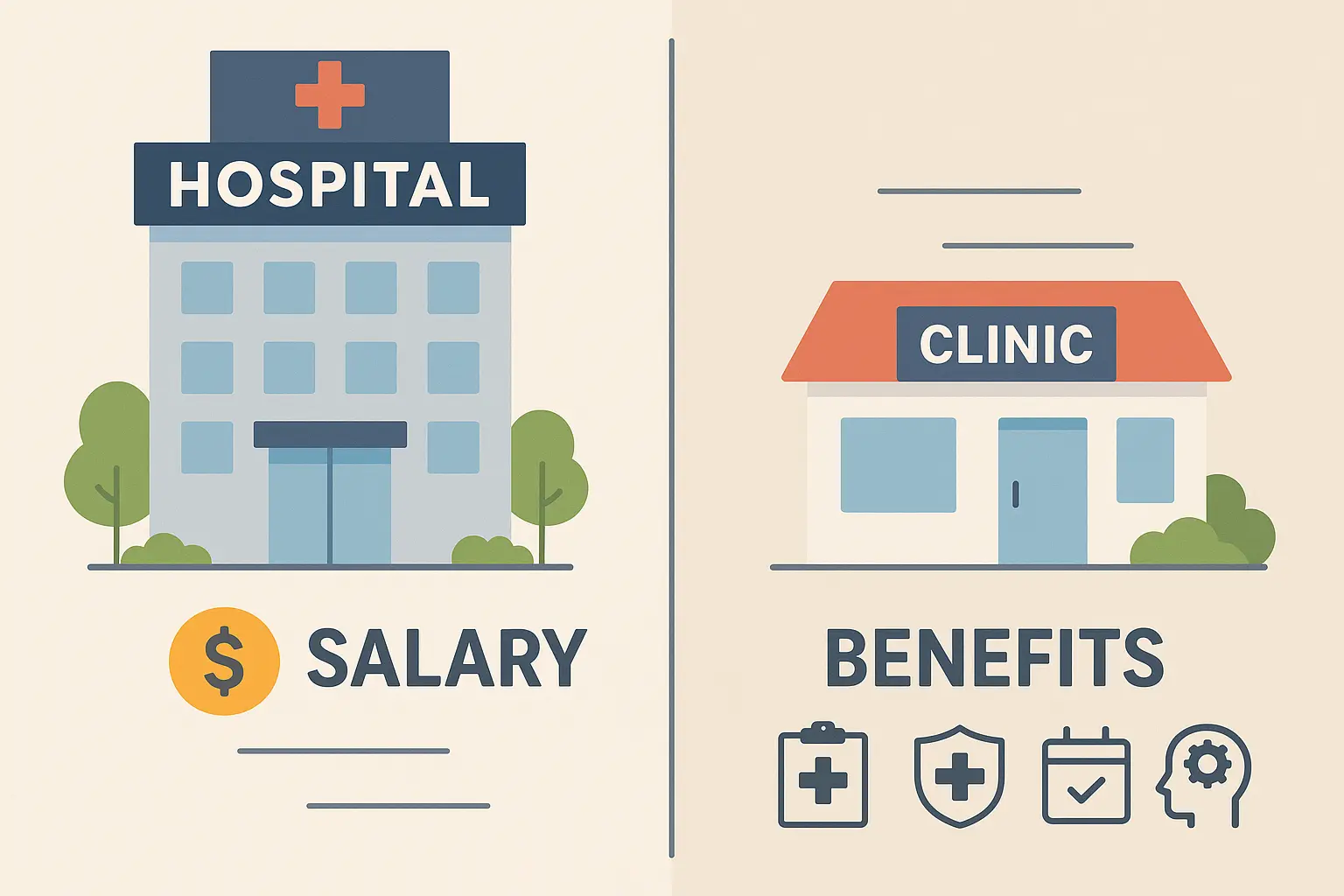
The type of place that employs you makes a huge difference in your pay and benefits. According to the Bureau of Labor Statistics, the highest-paying industries for medical assistants are outpatient care centers at $47,560, followed by hospitals at $45,930, and offices of physicians at $43,880.
Hospital vs Private Practice: The Real Trade-offs
Hospital jobs usually offer higher base pay plus comprehensive benefits—better health insurance, retirement plans, paid time off. Private practices might offer performance bonuses, flexible scheduling, and closer relationships with the doctors you work with.
Michael moved from a family medicine practice earning $36,000 annually to a dermatology clinic where he now makes $41,500. The 15% bump came with learning specialized procedures like assisting with skin biopsies, but the training was provided on-site.
Specialty Practices: Where the Money Lives
Dermatology, cardiology, and orthopedic practices typically pay 10-15% more than family medicine because they handle more specialized procedures and generate higher revenue per patient visit. The catch? You’ll need to learn specialty-specific skills, but most practices will train you.
Outpatient Clinics: Volume Equals Opportunity
Outpatient surgical centers and urgent care facilities often provide competitive hourly wages with overtime opportunities. These fast-paced environments handle high patient volumes, which can translate to performance bonuses and overtime pay.
What Actually Boosts Your Paycheck
Your salary isn’t random—specific factors consistently influence how much you’ll earn. Let’s break down what really matters.

Education: The $5,000 Difference
Medical assistants with formal certificate or diploma credentials typically start $3,000-$5,000 higher than those with only on-the-job training. Here’s the breakdown:
|
Education Type |
Starting Salary |
Program Cost |
Payback Time |
|---|---|---|---|
|
On-the-job training only |
$28,000 – $30,000 |
$0 |
N/A |
|
Certificate program |
$32,000 – $35,000 |
$3,000 – $10,000 |
12-18 months |
|
Associate degree |
$35,000 – $38,000 |
$8,000 – $30,000 |
18-24 months |
The investment pays for itself pretty quickly, and you’ll have better job security and advancement opportunities throughout your career.
Certifications That Actually Pay Off
Professional certifications provide some of the most reliable paths to higher pay. The CMA (Certified Medical Assistant) certification alone adds $2,000-$4,000 to your annual salary.
Getting your CMA means graduating from an accredited program, passing the exam, and keeping up with continuing education. It’s worth it—many employers offer tuition reimbursement or certification bonuses to help you get there.
Additional certifications in phlebotomy, EKG, or medical coding can add another $1,000-$3,000 to your annual pay while opening doors to specialized roles.
Your Path to Higher Earnings
Medical assistant careers offer multiple ways to grow your income beyond entry-level positions. The key is understanding which paths offer the best opportunities for your situation.
How Experience Translates to Real Money
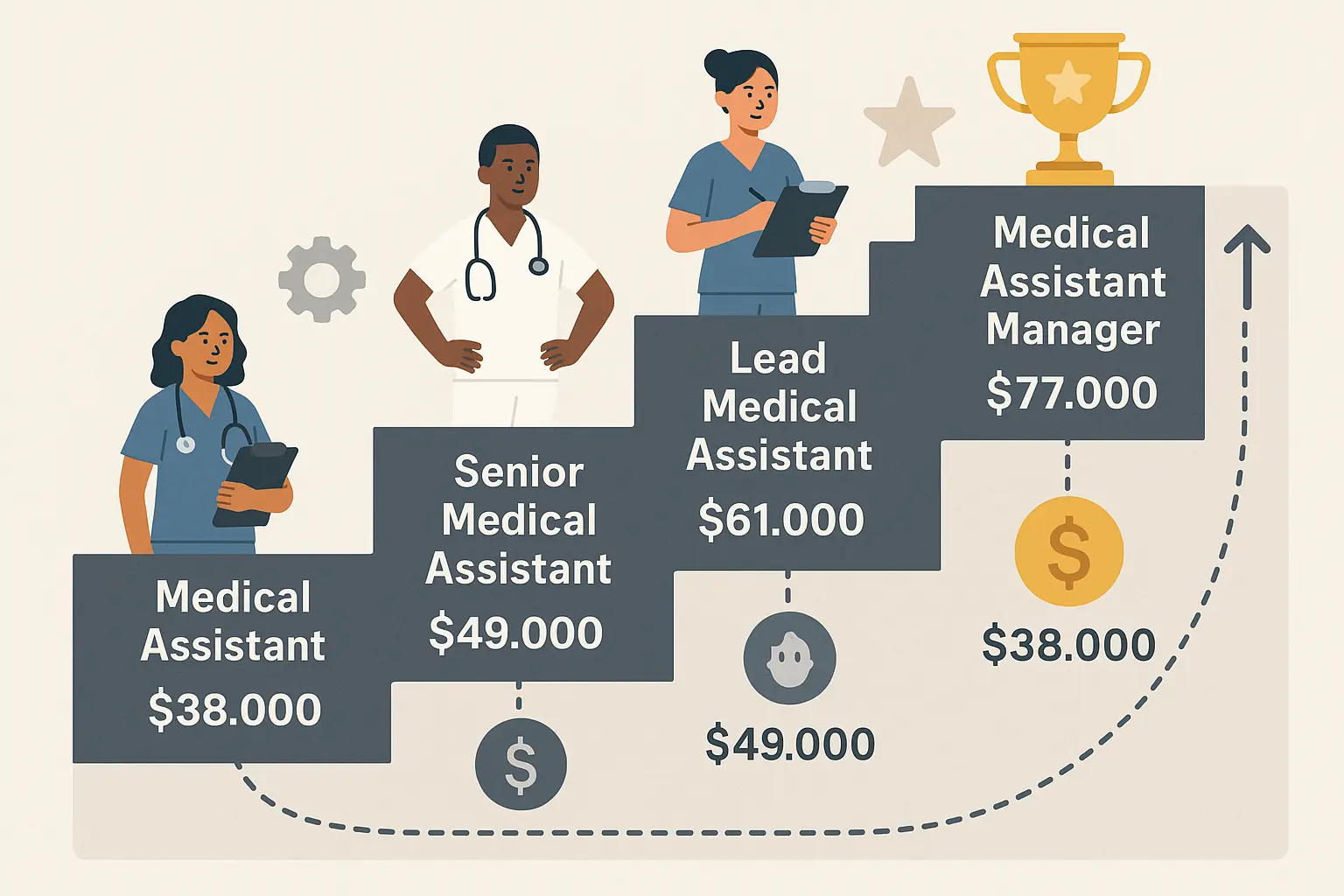
Your earning potential grows substantially at certain milestones. Medical assistants can expect 3-5% annual raises during their first five years, and mid-career professionals (5-10 years experience) earn 25-40% more than entry-level positions.
Jennifer started as an entry-level medical assistant at $29,000 annually. After five years of consistent performance, additional certifications, and two strategic job changes, she now earns $42,000—a 45% increase.
Breaking through the $50,000 barrier usually means taking on additional responsibilities beyond direct patient care. Senior medical assistants often manage schedules, oversee quality improvement initiatives, or coordinate between departments.
Beyond Medical Assisting: Your Next Move
Medical assistant experience provides excellent preparation for higher-paying healthcare roles. Many successful healthcare professionals started here and leveraged their experience for advanced careers.
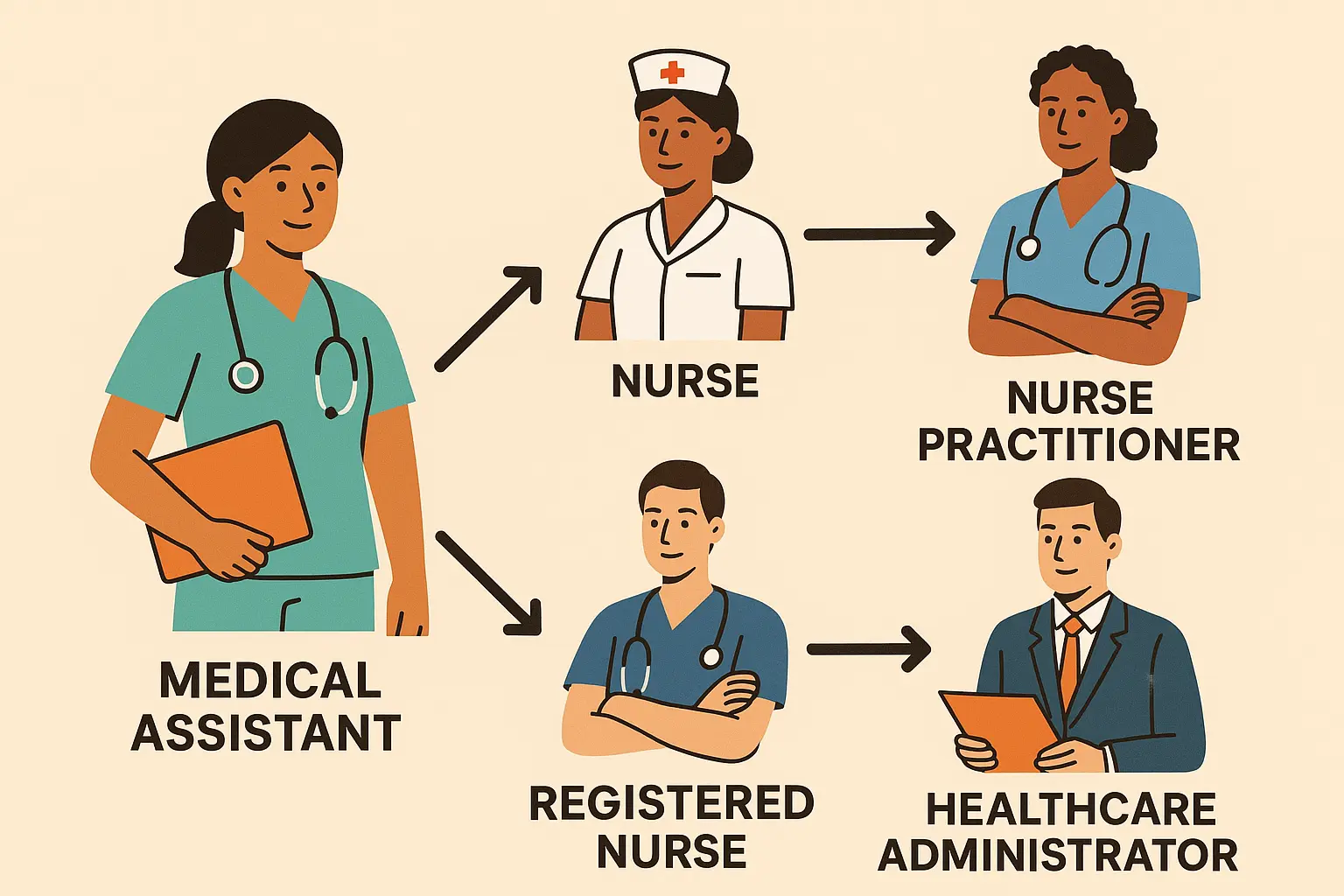
Nursing: Many medical assistants pursue nursing degrees, with LPN programs typically requiring 12-18 months and offering $10,000-$15,000 increases. Your clinical experience gives you a huge advantage in nursing school.
Healthcare Administration: Medical assistants with strong administrative skills often advance to practice management roles with salaries in the $50,000-$70,000 range.
Smart Moves to Boost Your Pay Right Now
You don’t have to wait years to increase your income. Here are strategies that can create immediate and long-term improvements.

Quick Wins for Immediate Results
Get certified within two years. This should be your top priority. Most employers support certification efforts through tuition reimbursement or study time, and you’ll often get an immediate raise or bonus upon passing.
Master multiple skills. Learning phlebotomy, vital signs, and basic lab procedures makes you more valuable and justifies higher pay. Cross-trained medical assistants can fill multiple roles, making them indispensable.

Consider relocation. Medical assistants willing to move to high-demand markets can increase their pay by 20-30%. Many healthcare systems offer relocation assistance and signing bonuses.
Long-Term Strategies for Sustainable Growth
Plan your education journey. Start simple: get certified within two years, then figure out if you want to specialize or move into something bigger like nursing. Having a 5-year plan prevents career stagnation and ensures continuous progress toward higher pay.
Build your professional network. Relationships often lead to better job opportunities, mentorship, and insider knowledge about high-paying positions. Join medical assistant associations and maintain connections with former colleagues.
Understanding how to properly display certificates becomes important as you advance—professional presentation of your credentials demonstrates attention to detail and pride in your accomplishments.
ValidGrad understands that medical assistants sometimes need replacement medical assistant certificates for career advancement opportunities. Whether you’ve lost your original medical assistant certificate, need backup copies for job applications, or want professional displays while keeping originals secure, our diploma replacement services provide quick, affordable solutions. Don’t allow missing credentials to hold back your salary negotiations or career advancement—get the documentation you need to showcase your qualifications confidently.
The Bottom Line
Your medical assistant salary doesn’t have to be limited by industry averages. The strategies I’ve shared represent real opportunities to increase your earning potential through smart career moves, skill development, and positioning yourself in the right places.
Remember: salary growth rewards proactive professionals who invest in their skills, pursue certifications, and position themselves strategically. Whether you’re just starting out or looking to maximize your current potential, these approaches can help you achieve your financial goals while building a rewarding healthcare career.
Your next raise might be just one certification, skill development program, or strategic job move away. The healthcare field continues growing, creating excellent opportunities for those who position themselves strategically and take deliberate steps to maximize their value.