
The massage therapy industry has grown into a massive $16.6 billion market with more opportunities than ever for skilled professionals. Employment of massage therapists is projected to grow 15 percent from 2024 to 2034, much faster than the average for all occupations, creating about 24,700 openings for massage therapists projected each year according to the Bureau of Labor Statistics.

Table of Contents
-
Understanding the Real Salary Picture
-
What Actually Drives Your Earning Power
-
Smart Moves to Boost Your Income
-
Employment vs. Going Solo: The Money Truth
-
Location Strategy for Maximum Earnings
-
Negotiating Your Worth Like a Pro
-
How ValidGrad Can Support Your Career Growth
-
Final Thoughts
TL;DR
-
Most massage therapists earn $35,000-$65,000 full-time, but location and specialization can dramatically change these numbers
-
Independent practitioners often earn more per session ($80-$150+) but handle business expenses that employees don’t
-
Specialized certifications can boost your rates by 25-50% compared to general massage
-
Building strong client relationships with 60-80% retention rates is crucial for long-term financial success
-
Healthcare integration and insurance billing can add $20,000-$40,000 annually to your income
-
Metropolitan areas offer higher rates but come with increased competition and living costs
Understanding the Real Salary Picture
Look, I need to be straight with you about massage therapy income. Those national averages you see online? They’re basically useless for planning your actual life. When my friend Lisa graduated massage school three years ago, she thought she’d be making $60K right away. Reality hit hard when her first spa job paid $32K. But here’s what she learned that changed everything.
The real story is way more interesting than “massage therapists make $45K a year.” Your location, who you work for, and what you specialize in can literally double or triple your income. Understanding these differences is crucial before you make any career decisions that could impact your financial future.
What You’ll Actually Take Home
Here’s the breakdown nobody talks about in school. Breaking down earnings reveals significant variations between full-time and part-time work structures, but the numbers don’t tell the whole story – your actual take-home depends heavily on whether you’re building a sustainable practice or just filling appointment slots.
|
Employment Type |
Annual Salary Range |
Hourly/Session Rate |
Benefits |
Business Expenses |
|---|---|---|---|---|
|
Spa Employee |
$30,000-$50,000 |
$25-$45/hour |
Health, PTO, 401k |
Minimal |
|
Healthcare Setting |
$40,000-$70,000 |
$35-$55/hour |
Full benefits |
Minimal |
|
Independent Practice |
$40,000-$120,000+ |
$60-$150/session |
Self-funded |
20-30% of revenue |
|
Mobile Therapist |
$35,000-$80,000 |
$70-$120/session |
None |
Equipment, travel |
Spa employee: You’re looking at $30K-$50K with benefits, but you’ll be doing a lot of relaxation massages at $25-$45 per hour. The upside? Steady paycheck and someone else handles the business stuff.
Healthcare setting: This is where the money gets better – $40K-$70K because you’re dealing with insurance and actual medical issues. Way more respect, better pay, but you need extra training.
Going solo: The wild west of massage therapy. You could make $40K or $120K+, charging $60-$150 per session. But here’s the catch – you’re running a business now, which means about 30% of what you make goes right back into expenses.
Mobile therapist: Great hourly rates ($70-$120) but you’re driving all over town and hauling equipment. Your car becomes your office.
Full-Time vs. Part-Time: The Income Reality Check
The part-time vs. full-time thing is trickier than it looks. Sure, part-time gives you flexibility and potentially higher hourly rates, but try budgeting when your income swings from $2,800 one month to $4,200 the next. Full-time therapists enjoy steady paychecks and benefits but often face appointment quotas and limited control over pricing.
Some people love that uncertainty and build six-figure practices working fewer hours than their employed counterparts. Others need the security of a regular paycheck and find the inconsistent bookings make budgeting nearly impossible.

Why Your Zip Code Matters More Than Your Skills
This might sting, but where you live affects your income more than how good you are at massage. A decent therapist in Manhattan can charge $120 for what would be $60 in Oklahoma. But before you pack your bags, remember that Manhattan rent isn’t Oklahoma rent either.
Metropolitan areas and high-cost-of-living states generally offer higher compensation, but they also bring increased competition and operating expenses. Understanding regional market dynamics helps you make informed decisions about where to establish your practice for optimal financial returns.
Session-Based Income: The Real Money Breakdown
Most massage therapists work on hourly or per-session compensation, making it essential to understand how different rate structures affect your overall income. The gap between basic relaxation massage rates and specialized therapeutic treatments can be substantial – knowing how to position yourself in the higher-paying segments makes a significant difference in your annual earnings.
Independent Practice vs. Working for Someone Else
Independent practitioners often command higher per-session rates and keep 100% of their earnings, but they also handle business expenses, marketing, and client acquisition. Employed therapists receive steady income with benefits but typically earn lower per-session rates and have less control over their pricing.
The employment model you choose fundamentally shapes your income potential and financial responsibilities. Some therapists make successful transitions in both directions – leaving employment for independence, others returning to employment for stability.
Premium Services That Actually Pay More
Specialized massage services command significantly higher rates than basic relaxation treatments. Deep tissue, hot stone, medical massage, and other specialized modalities can justify $80-$150+ per session, compared to $50-$80 for general massage. Developing expertise in these areas requires additional training but can increase your earning potential by 25-50% or more.
My former classmate Sarah was barely scraping by at $15/hour at a chain spa. Then she got pregnant and realized other expecting moms needed someone who really understood what they were going through. She invested $1,200 in prenatal massage certification and now charges $95 per session in Denver, increasing her annual income from $28,000 to $52,000.
Client Retention: Your Secret to Consistent Income
Your best clients aren’t one-time visitors – they’re people who book with you every month for years. These relationships take time to build, but they’re worth their weight in gold. A client who sees you monthly for three years is worth about $3,600 in revenue, plus referrals. Established therapists with 60-80% client retention rates spend less time and money on marketing while enjoying predictable income streams.
Client Retention Checklist:
-
Follow up within 24 hours after each session
-
Send birthday and holiday greetings
-
Offer package deals for regular clients
-
Remember personal details and preferences
-
Provide home care recommendations
-
Maintain consistent scheduling availability
-
Track client progress and celebrate improvements
What Actually Drives Your Earning Power
After watching countless therapists succeed and struggle, the ones making real money share certain traits. It’s not just about being good with your hands. Your income isn’t determined by chance – specific factors consistently separate high earners from those struggling to make ends meet.
Education, certifications, work environment, and business skills all play crucial roles in determining whether you’ll earn at the lower or upper end of the salary spectrum. Understanding these drivers helps you make strategic decisions about where to invest your time and money for maximum financial return.

Education and Certifications That Actually Matter
Your state might only require 500 hours of training, but the therapists making bank usually have way more. While basic massage therapy training gets you licensed, additional education and specialized certifications significantly impact your earning potential and career advancement opportunities. The massage therapy field rewards continued learning, and clients are willing to pay premium rates for therapists with advanced skills and recognized credentials.
Professional documentation plays a vital role in career advancement, and understanding is a certificate a degree helps clarify the different types of credentials that can boost your earning potential in the massage therapy field.
Licensing Requirements That Affect Your Credibility
State licensing requirements vary dramatically, from 300 to over 1,000 training hours, and these differences directly affect your professional credibility and earning potential. Therapists who exceed minimum requirements often command higher rates because clients perceive them as more qualified and trustworthy.
Understanding licensing standards also helps if you’re considering practicing in multiple states. Some therapists relocate and discover their home state training didn’t meet new requirements, forcing expensive additional education.
Specialized Certifications Worth Your Investment
Here’s what’s actually worth your time and money:
Medical massage: Costs $2K-$4K to learn, but you can charge $20-$40 more per session. Plus, insurance sometimes covers it.
Sports therapy: Athletes pay premium rates and often become loyal, long-term clients. Advanced certifications in sports therapy can increase your hourly rates by 25-50% compared to general practice.
Prenatal massage: Pregnant women will pay extra for someone who really knows what they’re doing. These credentials open doors to specialized client populations willing to pay premium rates for expert care.
According to the National Certification Board for Therapeutic Massage & Bodywork (NCBTMB), board-certified massage therapists earned an average of $33,139 per year—$7,000 more than the average reported for AMTA members, whether certified or not.
Work Environment Impact on Your Bottom Line
Where you practice massage therapy significantly influences your salary structure, benefits, and long-term earning potential. Different work environments offer distinct advantages and challenges, from steady employment with benefits to high-earning independent practice opportunities.
Spa and Wellness Center Employment Reality
Spas: Steady work, benefits, but you’re often rushed through clients and can’t build real relationships. Tips help, but don’t count on them being consistent. Spa-based massage therapists typically earn $30,000-$50,000 annually with opportunities for tips and commission-based bonuses.
The trade-off between security and earning potential varies significantly between different spa environments. High-end resort spas offer better compensation than strip mall locations, but competition for these positions is fierce.
Healthcare Integration: Where the Real Money Is
Healthcare offices: This is where massage therapy gets respect. You’re part of a treatment team, rates are higher, and you’re actually helping people heal, not just relax. Medical massage therapists working in healthcare settings often earn $40,000-$70,000+ annually due to insurance billing capabilities and specialized treatment protocols.
Recent industry surveys show healthcare integration opportunities expanding. A 2025 chiropractic practice survey revealed that “the average reported licensed massage therapist salary was $34,314” when working within chiropractic offices, highlighting the growing demand for integrated healthcare services.
Smart Moves to Boost Your Income
The therapists making six figures aren’t just lucky – they’re strategic. Successful massage therapists don’t just wait for their income to grow – they actively implement strategies to increase their earning potential through business development, specialized training, and client relationship management.
The key is understanding which strategies offer the best return on investment for your specific situation and career goals. These approaches require initial investment of time and money, but they consistently separate high-earning therapists from those earning basic wages.

Building Your Own Thing
Going independent isn’t for everyone, but it’s the fastest path to higher income. You’ll need to learn marketing (ugh, I know), handle your own booking, and deal with taxes. But you can also charge what you’re worth and fire difficult clients.
Transitioning to independent practice offers the highest earning potential in massage therapy, but it requires developing business skills, marketing expertise, and making significant initial investments in equipment and space. Successful independent practitioners often earn 50-100% more than employed therapists, but they also take on financial risks and business responsibilities that employed therapists don’t face.
Start small – maybe one day a week at a shared office space while keeping your regular job. Test the waters before diving in completely.
Business Development That Actually Works
Successful independent massage therapists invest 10-20% of their time in marketing activities, including maintaining social media presence, developing referral programs, and networking within their communities. These activities might not generate immediate income, but they’re essential for building the client base that supports long-term financial success.
The most effective marketing strategies focus on building relationships rather than just advertising services. Therapists who treat marketing as relationship-building rather than selling see much better results.
Monthly Business Development Template:
-
Week 1: Create 4 social media posts showcasing services
-
Week 2: Send follow-up emails to inactive clients
-
Week 3: Network at 2 local healthcare or wellness events
-
Week 4: Update website with client testimonials and new services
-
Monthly: Analyze booking patterns and adjust pricing/scheduling
Growing Your Client Base Strategically
Effective client acquisition goes beyond basic advertising to include offering introductory packages, implementing referral incentives, and maintaining professional relationships with healthcare providers. The goal isn’t just getting new clients but attracting the right clients who value your services and are willing to pay appropriate rates.
Marcus, an independent massage therapist in Austin, grew his client base from 15 to 45 regular clients in 18 months by partnering with three local chiropractors and offering a 20% referral discount. His monthly income increased from $3,200 to $7,800 through strategic relationship building rather than expensive advertising.
Developing Premium Services That Command Higher Rates
Creating signature treatments or specialized services allows massage therapists to differentiate themselves in competitive markets and justify premium pricing. These services often combine multiple techniques, use specialized equipment, or address specific client needs that general massage doesn’t cover.
Developing premium services requires additional training and investment but can significantly increase per-session earnings. The key is identifying unmet needs in your market and developing expertise to address them.
Professional Development That Pays Off
Ongoing education and skill development are crucial for salary growth in massage therapy, with many states requiring continuing education for license renewal. However, strategic professional development goes beyond meeting minimum requirements to focus on skills and credentials that directly increase earning potential and open new career opportunities.
Professional advancement often requires maintaining proper documentation of your qualifications, and knowing how to display certificates on wall can enhance your professional credibility and help justify higher rates to clients.
|
Specialization |
Additional Training Cost |
Rate Increase |
ROI Timeline |
Market Demand |
|---|---|---|---|---|
|
Medical Massage |
$2,000-$4,000 |
+$20-$40/session |
6-12 months |
High |
|
Sports Therapy |
$1,500-$3,000 |
+$15-$30/session |
4-8 months |
Medium-High |
|
Prenatal Massage |
$800-$1,500 |
+$10-$25/session |
3-6 months |
Medium |
|
Lymphatic Drainage |
$1,200-$2,500 |
+$15-$35/session |
6-10 months |
Medium |
|
Oncology Massage |
$1,000-$2,000 |
+$20-$30/session |
8-12 months |
Low-Medium |
Specialized Training Programs Worth Your Time
General relaxation massage is fine, but it’s not where the money is. The real cash comes from solving specific problems:
-
Helping office workers with chronic neck pain
-
Working with athletes who need regular maintenance
-
Supporting cancer patients through treatment (requires special training but incredibly rewarding)
Advanced training in modalities such as myofascial release, craniosacral therapy, or lymphatic drainage can increase earning potential by $15-30 per session. These specialized techniques often require significant training investments, but they allow therapists to work with specific conditions, charge premium rates, and attract clients who can’t find these services elsewhere.
The return on investment varies by specialization and market demand. Research your local market before investing in expensive training programs to ensure demand exists for the specialty you’re considering.

Teaching and Mentorship Income Opportunities
Experienced massage therapists can supplement their income through teaching at massage schools, conducting workshops, or mentoring new practitioners. These opportunities can add $15,000-$25,000 annually while building professional reputation and expanding networks. Teaching also keeps you current with industry developments and can lead to other professional opportunities.
Many therapists overlook this income stream, but it’s particularly valuable for those who enjoy sharing knowledge and want to diversify their revenue sources beyond hands-on client work.
Technology and Systems That Increase Efficiency
Modern massage therapists increase their efficiency and client satisfaction through online scheduling platforms, payment processing systems, and client management software. These tools can potentially increase revenue by 15-25% through improved booking rates, reduced administrative time, and better client communication.
The initial investment in technology pays off through increased productivity and professional image. Clients appreciate the convenience of online booking and automated reminders, which also reduces no-shows and last-minute cancellations.
Insurance Billing: The Game-Changer for Medical Massage
Therapists trained in medical massage and insurance billing procedures can significantly increase their earning potential, with some practitioners adding $20,000-$40,000 annually through insurance reimbursements. This requires additional training in documentation, billing procedures, and working with healthcare providers, but it opens access to clients who can afford regular treatments through insurance coverage.
The healthcare integration trend is expanding globally, with Thailand recently establishing specialized training programs. The Thai Massage College aims to train 20,000 Thai traditional medicine assistants in specialized massage techniques, highlighting the growing recognition of massage therapy’s medical applications and potential for higher compensation.
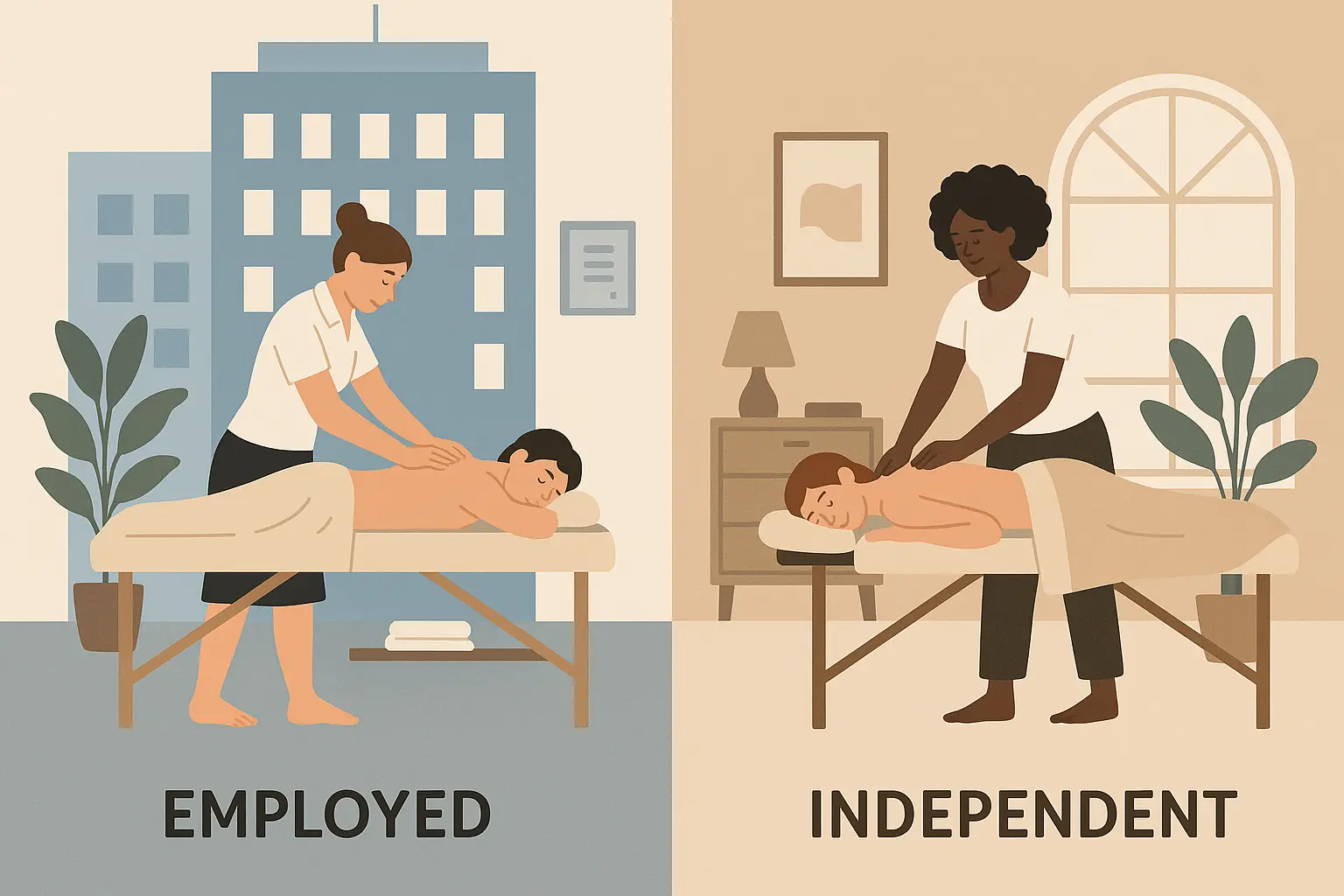
Employment vs. Going Solo: The Money Truth
This is the big decision every massage therapist faces eventually. Both paths can work, but they’re completely different lifestyles. The decision between employment and independent practice represents one of the most significant factors affecting your income. Each path offers distinct financial advantages and challenges that go beyond simple hourly rate comparisons.
Understanding the total financial picture, including hidden costs, benefits, and long-term earning potential, helps you make informed decisions about your career direction and financial goals. The financial realities are more complex than they initially appear – the “freedom” of independent practice comes with responsibilities that employed therapists never consider.
Employment pros: Steady paycheck, benefits, someone else deals with marketing and taxes, predictable schedule.
Employment cons: Lower per-session rates, less control over your work, harder to build personal client relationships.
Solo practice pros: Higher rates, total control, ability to specialize, unlimited earning potential.
Solo practice cons: Irregular income, no benefits, you’re responsible for everything from booking to bookkeeping.
Look, going independent sounds amazing until you realize you’re spending Sunday nights doing bookkeeping instead of relaxing. But for those who can handle the business side, the earning potential is significantly higher.
Location Strategy for Maximum Earnings
Moving for better massage therapy income can work, but do your homework first. High-paying cities often have high everything else too. Geographic location dramatically affects earning potential, but the relationship between location and income isn’t always straightforward. High-paying metropolitan markets often come with increased competition and living costs, while smaller markets may offer less competition but lower overall rates.
Successful location strategy considers market demand, competition levels, cost of living, and demographic factors. Some therapists make location decisions based solely on session rates, only to discover their net income actually decreased due to higher expenses.
High-Paying Metropolitan Markets
Big cities: Higher rates but brutal competition and expensive rent. You need to be really good and probably specialized to make it work. Cities such as San Francisco, New York, and Seattle offer higher average session rates ($80-$120) due to higher disposable income and greater demand for wellness services. However, these markets also present increased competition, higher operating costs, and more demanding clients.
Jennifer relocated her massage practice from rural Montana to Seattle and increased her session rates from $65 to $110. However, her monthly expenses jumped from $800 to $2,400, and it took 14 months to rebuild her client base. Her net income ultimately increased by $28,000 annually, but the transition required substantial planning and financial reserves.
Rural vs. Urban Practice Considerations
Smaller towns: Less competition but lower rates and fewer potential clients. You might become the go-to person, which is great for steady income. Rural areas typically offer less competition and lower overhead costs but feature lower session rates ($40-$70) and smaller potential client pools. Urban practices benefit from larger populations and higher rates but face increased competition and operating expenses.
The choice between rural and urban practice depends on your financial goals, lifestyle preferences, and willingness to compete in saturated markets. Some therapists thrive in small communities where they become the go-to wellness provider, while others need the energy and opportunities of urban environments.
Tourism and Seasonal Market Opportunities
Tourist areas: Can be goldmines during peak season, but you need a plan for the off-season unless you want to be broke half the year. Seasonal tourist destinations can provide lucrative opportunities during peak periods, with some massage therapists earning 40-60% of their annual income during high-tourism seasons.
These markets require flexibility, seasonal business planning, and often supplemental income sources during off-seasons. However, they can offer excellent earning potential for therapists willing to adapt to seasonal demand patterns. Resort areas during ski season or beach destinations in summer can command premium rates that make the seasonal nature worthwhile.

Negotiating Your Worth Like a Pro
Whether you’re employed or setting your own rates, knowing your value is crucial. Don’t just look at hourly rates – consider the whole package. Understanding how to negotiate compensation packages and evaluate total compensation beyond base salary is crucial for maximizing your earning potential in employed positions.
Many massage therapists focus only on hourly rates or base salaries without considering the full value of benefits, commission structures, and professional development opportunities. Effective negotiation requires understanding your market value and the total compensation package.
Understanding Total Compensation Packages
Health insurance is worth $6K-$12K per year. Paid vacation matters. Professional development budgets can save you thousands. Evaluating job offers requires looking beyond base salary to consider commission structures, benefits, professional development opportunities, and work-life balance factors.
The total value of a compensation package often differs significantly from the advertised salary, and understanding these components helps you make better career decisions and negotiate more effectively.
Professional credibility is essential during salary negotiations, and understanding certificates vs diplomas helps you articulate your qualifications and justify higher compensation during employment discussions.
Health Insurance and Benefits Value
Employed massage therapists should factor in the value of health insurance ($6,000-$12,000 annually), retirement contributions, and paid time off when comparing employment opportunities to independent practice. These benefits represent significant financial value that independent practitioners must provide for themselves, affecting the true comparison between employment and self-employment income.
Commission and Tip Structures That Add Up
When negotiating employment packages, remember that everything is potentially negotiable – your schedule, commission rates, continuing education allowances, even your room assignments if you’re in a spa setting. Many spa and wellness center positions offer commission-based compensation (10-30% of service revenue) plus base salary, potentially increasing total earnings by $5,000-$15,000 annually.
Understanding how these structures work and what factors influence commission earnings helps you evaluate opportunities and develop strategies to maximize your total compensation.
Industry data shows that nearly two-thirds of massage therapists report earning tips roughly 60% of the time, adding significant value to base compensation packages across all employment settings.
Performance-Based Compensation Models
Understanding how productivity metrics, client satisfaction scores, and retail sales affect compensation helps massage therapists maximize their earning potential in employment settings. Many employers offer performance incentives that can significantly increase total compensation for therapists who understand and work within these systems effectively.
Client Satisfaction and Retention Bonuses
Some employers offer bonuses for high client satisfaction scores or retention rates, with top performers earning additional $2,000-$8,000 annually through performance incentives. These programs reward therapists who focus on client relationships and service quality, aligning employee incentives with business goals while providing opportunities for increased earnings.
Salary Negotiation Checklist:
-
Research local market rates for your experience level
-
Document your certifications and specializations
-
Calculate total compensation value including benefits
-
Prepare examples of client retention and satisfaction
-
Know your scheduling flexibility requirements
-
Understand commission and tip structures
-
Request professional development allowances
-
Negotiate trial periods for new compensation structures

The importance of proper licensing and professional standards has been highlighted by recent legal cases. In 2025, “an Atlanta spa business has been hit with a $13 million verdict in a civil case brought by two female clients who say they were sexually assaulted by an unlicensed male massage therapist”, emphasizing how proper credentialing protects both practitioners and clients while maintaining industry standards.
How ValidGrad Can Support Your Career Growth
Lost your massage therapy diploma or certification? It happens more than you’d think, and it can seriously mess with job opportunities or license renewals. Professional documentation plays a crucial role in massage therapy career advancement, from initial employment negotiations to establishing independent practice credibility.
When original certificates and diplomas are lost or damaged, having proper replacement documentation becomes essential for maintaining professional credibility and pursuing higher-paying opportunities. ValidGrad’s professional replacement services help massage therapists maintain their credentials and continue advancing their careers without documentation gaps affecting their earning potential.
Professional documentation is crucial for career advancement, and when credentials are lost or damaged, understanding replacing a lost diploma process ensures you can maintain your professional standing and continue pursuing higher-paying opportunities in the massage therapy field.

Are you missing important professional documentation that could be holding back your massage therapy career? ValidGrad offers professional replacement services for massage therapy diplomas, specialized certifications, and continuing education certificates. Whether you’re negotiating employment terms, establishing independent practice credibility, or pursuing advanced career opportunities, having proper documentation readily available is crucial for maximizing your earning potential in the massage therapy field.
Maintaining proper credentials is essential for career growth, and if you need to understand how to get a diploma replacement, ValidGrad provides professional services to help massage therapists maintain their documentation without career interruptions.
Final Thoughts
Your income three years from now depends on the decisions you make today. The field is growing, people value wellness more than ever, and there’s room for therapists who approach this professionally. Your massage therapy salary doesn’t have to be limited by industry averages or local market conditions. The therapists earning at the top of the income spectrum consistently invest in their education, develop specialized skills, and approach their practice strategically rather than just showing up for appointments.
Whether you choose employment or independent practice, focus on building genuine client relationships, developing expertise in high-demand specializations, and understanding the business side of massage therapy. The financial rewards in this field go to those who treat it as a professional career rather than just a job.
Remember that your earning potential grows over time as you build experience, develop specializations, and establish your reputation. The strategies that work best for your situation depend on your location, goals, and willingness to invest in professional development, but the opportunities for financial success in massage therapy are definitely there for those who pursue them strategically.