
Most people think becoming a Kentucky notary is about filling out forms and paying fees. I’m here to tell you that’s where most people get it wrong. The real money and satisfaction come from understanding the psychology of trust-building, finding hidden networking opportunities, and developing specialized skills that separate you from the crowd.
Kentucky requires all notaries to maintain a $1,000 notary bond as mandated by state statutes KRS Ch. 423 and 30 KAR 8:005, with only 30 days to get sworn in at your county clerk’s office after receiving your commission notification. But here’s what they don’t tell you – success starts way before you even submit that application.

Table of Contents
- The Pre-Certification Mindset That Changes Everything
- Strategic Networking: Accessing Kentucky’s Hidden Job Market
- The Real Economics of Notary Work
- Geographic Intelligence for Maximum Opportunities
- Technology Integration for Competitive Advantage
- Advanced Specialization and Niche Markets
- Kentucky’s Legal Landscape and Commission Process
- Risk Management and Practice Protection
- Final Thoughts
TL;DR
- Success as a Kentucky notary starts with developing professional gravitas and trust-building skills before you even apply for your commission
- The most lucrative opportunities come through strategic networking with real estate professionals, corporate contacts, and service provider alliances rather than job postings
- Understanding your true costs (including hidden expenses) is crucial for profitable pricing and sustainable business growth
- Remote online notarization capabilities combined with traditional services maximize your market reach and earning potential
- Specializing in industries like healthcare, estate planning, or loan signing can dramatically increase your income compared to general notary work
- Proper documentation protocols and comprehensive insurance coverage protect your practice from costly legal exposure
The Pre-Certification Mindset That Changes Everything
Here’s something most aspiring notaries miss completely – they focus on paperwork while ignoring the psychological transformation required for success. I’ve watched countless people get their Kentucky notary commission only to struggle finding consistent work because they skipped this crucial foundation.
Professional gravitas isn’t something you can fake. It’s the quiet confidence that comes from understanding your responsibilities as a fiduciary. Before you even think about submitting your application, you need to study successful professionals in your community and understand the subtle signals that communicate trustworthiness.

Developing Professional Gravitas Before You Start
Walk into any successful law office or real estate agency and observe how the professionals carry themselves. They speak with authority, dress appropriately for their environment, and command respect through their presence. This isn’t about being stuffy – it’s about understanding that people trust you with their most important documents.
I recommend spending time in professional environments before you get commissioned. Attend chamber of commerce meetings, visit title companies, and observe how successful Kentucky notary professionals interact with clients. You’ll notice they never rush through explanations, they maintain eye contact, and they treat every document with the same level of care.
The Trust Equation That Drives Client Decisions
Trust equals credibility plus reliability plus intimacy, divided by self-orientation. In notary work, this translates to demonstrating knowledge, showing up consistently, making clients feel heard, and focusing on their needs rather than your profit. Practice this equation in every interaction, even before you’re commissioned.
Pre-Certification Preparation Checklist:
- Research successful notaries in your area and observe their professional presentation
- Practice explaining notary services in simple, confident terms
- Develop a professional wardrobe appropriate for various client settings
- Create business cards and basic marketing materials
- Set up a dedicated phone number and email for your notary business
- Practice your signature and develop consistent handwriting
- Study Kentucky notary laws beyond basic requirements
Strategic Networking: Accessing Kentucky’s Hidden Job Market
The most lucrative notary work never appears in job postings. It flows through professional networks and established relationships that most Kentucky notary professionals never discover. I’m going to show you exactly how to position yourself within these networks.
The Real Estate Connection Strategy
Real estate transactions generate the bulk of notary work in Kentucky, but most new notaries approach this market completely wrong. They cold-call real estate offices and wonder why they get nowhere. Instead, focus on building relationships with mortgage brokers, title companies, and real estate attorneys who control the flow of signing appointments.
Sarah, a new Kentucky notary, attended her local real estate association’s monthly mixer as a guest. Instead of pitching her services, she listened to conversations about closing delays and document challenges. When she later introduced herself to a mortgage broker struggling with weekend closings, she offered to be on-call for emergency signings. This single relationship generated over $3,000 in revenue her first quarter.

The key is becoming indispensable rather than just available. When you solve specific problems for these professionals, they remember you when opportunities arise.
Professional Service Provider Alliances
Form strategic alliances with accountants, lawyers, insurance agents, and financial planners who regularly need notary services for their clients. Offering emergency notary services for their urgent client needs creates memorable impressions that lead to consistent referrals.
The Corporate Backdoor Strategy
Large corporations need notary services regularly but rarely advertise these opportunities. Connect with administrative assistants, facilities managers, and executive assistants who handle notary scheduling and appreciate having reliable professionals on their contact lists.
| Professional Service Type | Typical Notary Needs | Best Contact Person | Referral Potential |
|---|---|---|---|
| CPA Firms | Tax documents, business formations | Office manager | High – ongoing clients |
| Law Offices | Affidavits, depositions, contracts | Legal assistant | Very High – urgent needs |
| Insurance Agencies | Policy documents, claims | Customer service manager | Medium – seasonal peaks |
| Financial Planners | Estate documents, investment forms | Administrative assistant | High – wealthy clientele |
| Medical Practices | HIPAA forms, advance directives | Practice manager | Medium – steady volume |
The Real Economics of Notary Work
Most new notaries underestimate the true costs of their business and end up working for far less than they realize. I’ve seen Kentucky notary professionals charge $10 per signature while spending $15 in actual costs to complete the job. This section will save you from that mistake.
True Cost Analysis for Profitable Pricing
Beyond obvious expenses like your commission and bond, you need to factor in vehicle depreciation, insurance implications, travel time, and opportunity costs. Understanding these hidden expenses allows you to price your services appropriately from the beginning.
| Cost Category | Annual Estimate | Monthly Impact | Hidden Factors |
|---|---|---|---|
| Commission & Bond | $150 | $12.50 | Renewal fees, late penalties |
| Vehicle Expenses | $2,400 | $200 | Depreciation, maintenance, fuel |
| Insurance Adjustments | $300 | $25 | Business use riders, liability |
| Supplies & Equipment | $400 | $33 | Stamps, journals, briefcase |
| Technology & Software | $600 | $50 | RON platform, scheduling apps |
| Professional Development | $500 | $42 | Training, certifications, networking |
| Total Hidden Costs | $4,350 | $362.50 | Often overlooked by new notaries |

When you factor in these costs, that $10 notarization suddenly looks a lot less attractive. This is why successful Kentucky notary professionals focus on premium service models rather than competing on price alone.
The Premium Service Model
Instead of competing on price, compete on service quality and convenience. Offering document preparation assistance, multilingual capabilities, or extended hours justifies higher fees and attracts clients who prioritize quality over cost.
Mark, a Louisville notary, differentiated himself by offering bilingual services and evening appointments. While competitors charged $10 per notarization, Mark charged $25 for his premium service package, which included document review, translation assistance, and flexible scheduling. His higher rates attracted busy professionals and non-English speakers who valued convenience over cost savings.
Geographic Strategy for Kentucky Notaries
Not all locations offer equal opportunities for notary work. Urban areas provide more opportunities but increased competition, while rural areas might have less competition but fewer opportunities. Finding your geographic sweet spot is crucial for success.
Suburban areas around Louisville, Lexington, and other Kentucky cities often provide the perfect balance of opportunity and competition. These areas have enough business activity to support multiple notaries without market saturation.
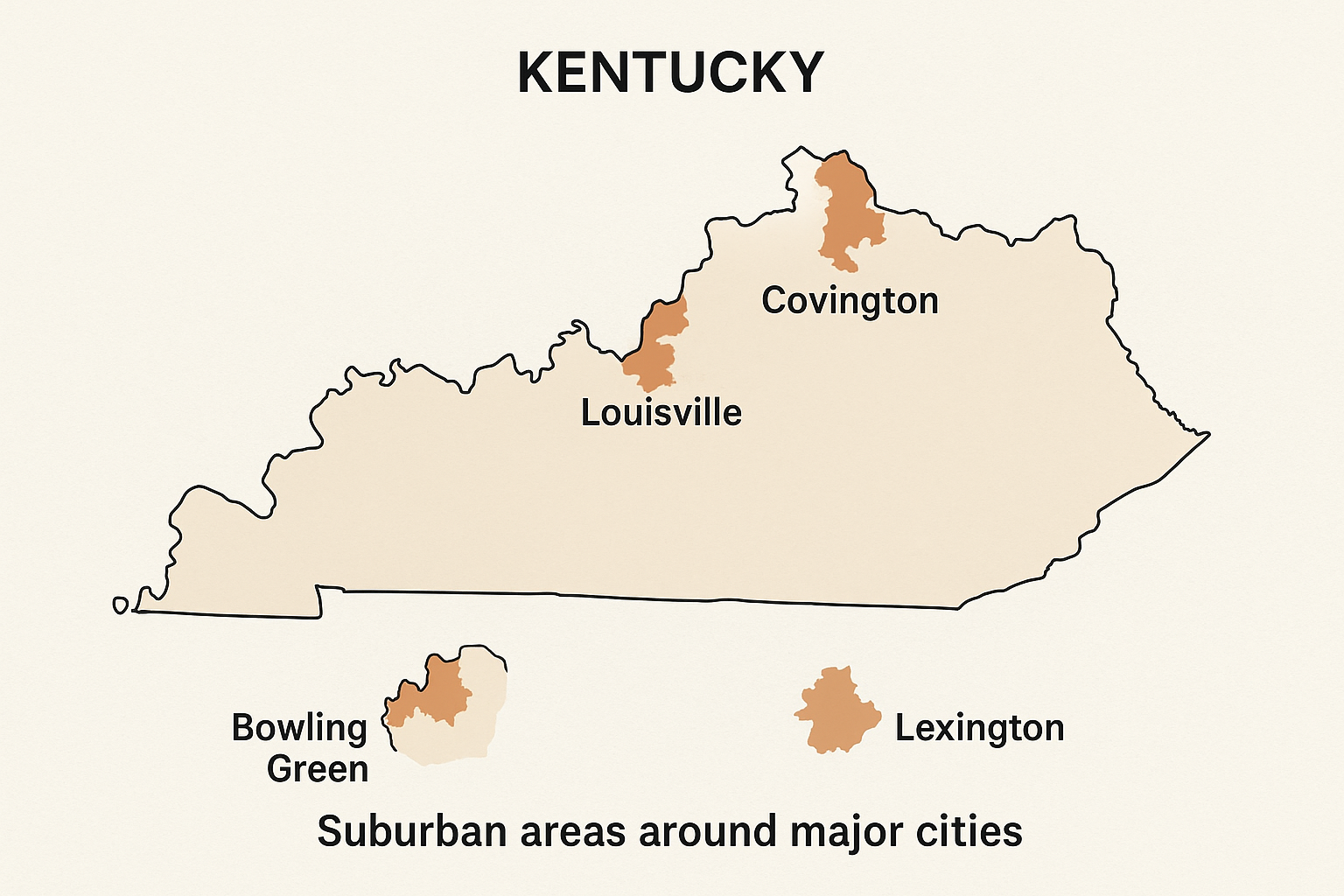
Real estate activity peaks in spring and summer, estate planning increases near year-end, and tax season brings unique opportunities. Mapping these patterns and adjusting your marketing accordingly maximizes your earning potential throughout the year.
Technology Integration for Competitive Advantage
Kentucky’s embrace of remote online notarization creates new opportunities for tech-savvy notaries. I’ve watched Kentucky notary professionals double their income by leveraging technology to scale beyond traditional geographic limitations while maintaining traditional service offerings.
The Remote Online Notarization Revolution
Remote online notarization isn’t just about convenience – it’s about accessing clients beyond your geographic limitations and providing services during non-traditional hours. Understanding Kentucky’s evolving digital landscape positions you ahead of competitors who stick to traditional methods only.

Different RON platforms serve different market segments, with some focusing on real estate transactions and others on general notarization. Becoming proficient in multiple systems makes you more valuable to signing services and direct clients.
The Hybrid Service Model
Combining traditional and digital services maximizes your market coverage. Many clients still prefer in-person services for high-value transactions, so offering both options provides clients with choices that match their comfort levels.
Client Relationship Management Systems
Most notaries treat each job as a one-time transaction, missing opportunities for repeat business and referrals. Implementing a simple CRM system to track client interactions, preferences, and referral sources creates invaluable data for targeted marketing and relationship building.

Technology Integration Checklist:
- Research and select RON platform(s) appropriate for your target market
- Set up professional video conferencing equipment and lighting
- Implement scheduling software with automated reminders
- Create digital templates for common documents
- Establish secure cloud storage for client records
- Set up automated invoicing and payment processing
- Install mobile apps for mileage tracking and expense management
Advanced Specialization and Niche Markets
While general notary work provides a foundation, specializing in specific industries can dramatically increase your earning potential and job satisfaction. I’ve seen Kentucky notary professionals triple their income by focusing on specialized areas rather than trying to serve everyone.
Industry-Specific Expertise Development
Healthcare, legal services, and financial services each have unique notarization needs and pay premium rates for knowledgeable providers. Developing deep knowledge in these areas sets you apart from general notaries who handle whatever comes their way.
Healthcare facilities need notaries for advance directives, HIPAA authorizations, and administrative documents. This work requires understanding medical terminology and privacy regulations but offers steady income and professional relationships with healthcare administrators.
Kentucky law requires living will directives to be witnessed by two adults or notarized, with specific restrictions on who can serve as witnesses. Healthcare employees can notarize these critical documents but cannot sign as witnesses, creating specialized opportunities for independent notaries in medical settings.

Estate Planning and Elder Law Focus
Kentucky’s aging population creates increasing demand for estate planning notarizations involving high-value documents and clients who appreciate professional, respectful service. Building relationships with elder law attorneys provides access to this lucrative market.
These clients often need multiple documents notarized and value professionals who understand the emotional weight of estate planning decisions. The work pays well and creates lasting professional relationships.
Certification and Training Beyond Minimum Requirements
Kentucky’s basic notary requirements are just the starting point. Additional certifications and training differentiate you from competitors and justify higher fees for specialized services.
Loan signing agents handle mortgage closings and refinancing, typically earning $75-150 per appointment. This requires additional training and certification but provides access to consistent, high-paying work through signing services and direct lender relationships.
Jennifer completed her Loan Signing Agent certification through the National Notary Association and immediately began marketing to local mortgage companies. Within six months, she was handling 15-20 loan signings per month at an average of $125 each, generating over $2,000 monthly from this specialization alone while maintaining her general notary practice.

Kentucky’s Legal Landscape and Commission Process
Understanding how to become a notary in KY involves more than meeting basic certification requirements. Kentucky’s unique regulatory environment and commission process nuances can expedite your approval and position you for long-term success as a Kentucky notary.
Commission Application Nuances
Kentucky’s notary commission process involves more than filling out forms correctly. Understanding factors that can accelerate or delay approval gives you a competitive advantage in starting your practice quickly.

Even minor infractions can complicate your application if not handled properly. Complete transparency and context are key – the commission board values honesty and personal growth over perfect records.
While Kentucky requires a $10,000 bond, the insurance company you choose affects premium rates and claim handling. Researching providers’ financial stability and customer service records prevents future headaches.
Kentucky notary bonds and errors and omissions insurance policies are underwritten by established companies including Western Surety Company, Universal Surety of America, or Surety Bonding Company of America, which are subsidiaries of CNA Surety, providing reliable coverage options for new notaries.
All Kentucky notaries must provide their full legal name for their surety bond as per state statutes KRS Ch. 423 and 30 KAR 8:005, with the full legal name required on both the commission certificate and any stamp or seal to be used.
Continuing Education Imperatives
Kentucky doesn’t mandate continuing education for notaries, but successful practitioners proactively update their knowledge through professional development. Staying current in an evolving field maintains your competitive edge and helps you serve as a more effective Kentucky notary.

Kentucky Commission Application Checklist:
- Complete application with full legal name exactly as it will appear on commission
- Obtain $1,000 surety bond from approved provider
- Submit application within 30 days of bond issuance
- Schedule oath ceremony at county clerk’s office
- Order official notary stamp with exact commission name
- Purchase record-keeping journal and supplies
- Register for any additional certifications or training
Risk Management and Practice Protection
Building safeguards prevents costly mistakes and legal exposure while protecting both your practice and clients. I’ve seen too many notaries learn these lessons the hard way, so I’m sharing the protection strategies that go beyond basic bond requirements.
Documentation Protocols and Digital Management
Meticulous record-keeping protects both you and your clients through standardized procedures for every aspect of your practice. Cloud-based systems provide secure storage, easy retrieval, and compliance with Kentucky’s record retention requirements.

Every interaction should be documented with timestamps, client identification details, and service specifics. This documentation becomes invaluable if questions arise later about your services.
Comprehensive Insurance Strategy
Professional liability insurance protects against claims your surety bond doesn’t cover. Errors and omissions insurance, cyber liability coverage, and general business insurance create comprehensive protection beyond basic requirements.
With increasing document fraud and identity theft concerns, Kentucky notaries face growing liability risks that extend beyond traditional bonding coverage. Recent trends show the importance of comprehensive insurance protection, especially as registration sticker theft and document fraud become more sophisticated.
Many personal insurance policies exclude business activities, leaving gaps in coverage for equipment, liability, and business interruption. Understanding these limitations helps you build complete protection for your practice.

Sometimes clients you work with as a notary need replacement educational documents for employment verification or professional certification. ValidGrad provides professional diploma and transcript replacement services that complement your notary practice perfectly. You can refer clients who need replacement credentials while focusing on your core notarization services, creating an additional revenue stream through referral partnerships.
Risk Management Protocol Checklist:
- Implement standardized client identification procedures
- Create secure document storage and retrieval systems
- Establish clear fee schedules and payment terms
- Develop emergency contact procedures for after-hours issues
- Maintain detailed transaction logs with time stamps
- Set up regular insurance coverage reviews
- Create client communication templates for common scenarios
Final Thoughts
Becoming a successful Kentucky notary requires more than meeting basic certification requirements. It demands a strategic approach to building professional relationships, understanding true business costs, leveraging technology, and developing specialized expertise. The notaries who thrive are those who think beyond the commission and build comprehensive practices that serve specific market needs.

Your journey as a Kentucky notary starts with the right mindset and strategic foundation. The techniques I’ve outlined separate profitable practices from those that struggle to find consistent work.
Success comes from understanding that notary work is fundamentally about trust and relationships, not just stamping documents. When you focus on building genuine professional connections and providing exceptional service, the financial rewards follow naturally.
Remember that specialization often leads to higher earnings and greater job satisfaction than trying to serve everyone. Whether you focus on real estate, healthcare, or estate planning, developing deep expertise in your chosen niche creates sustainable competitive advantages.
Key Takeaways:
- Start building your professional network before you receive your commission – relationships take time to develop
- Calculate your true hourly rate including all hidden costs before setting your pricing structure
- Consider geographic positioning carefully – suburban areas often offer the best opportunity-to-competition ratio
- Invest in both traditional and remote online notarization capabilities to maximize market reach
- Choose one or two specialization areas rather than trying to serve every possible client type
- Implement proper documentation and insurance strategies from day one to protect your practice
- Monitor Kentucky legislative changes that could impact your business or create new opportunities
- Focus on providing exceptional service quality rather than competing solely on price