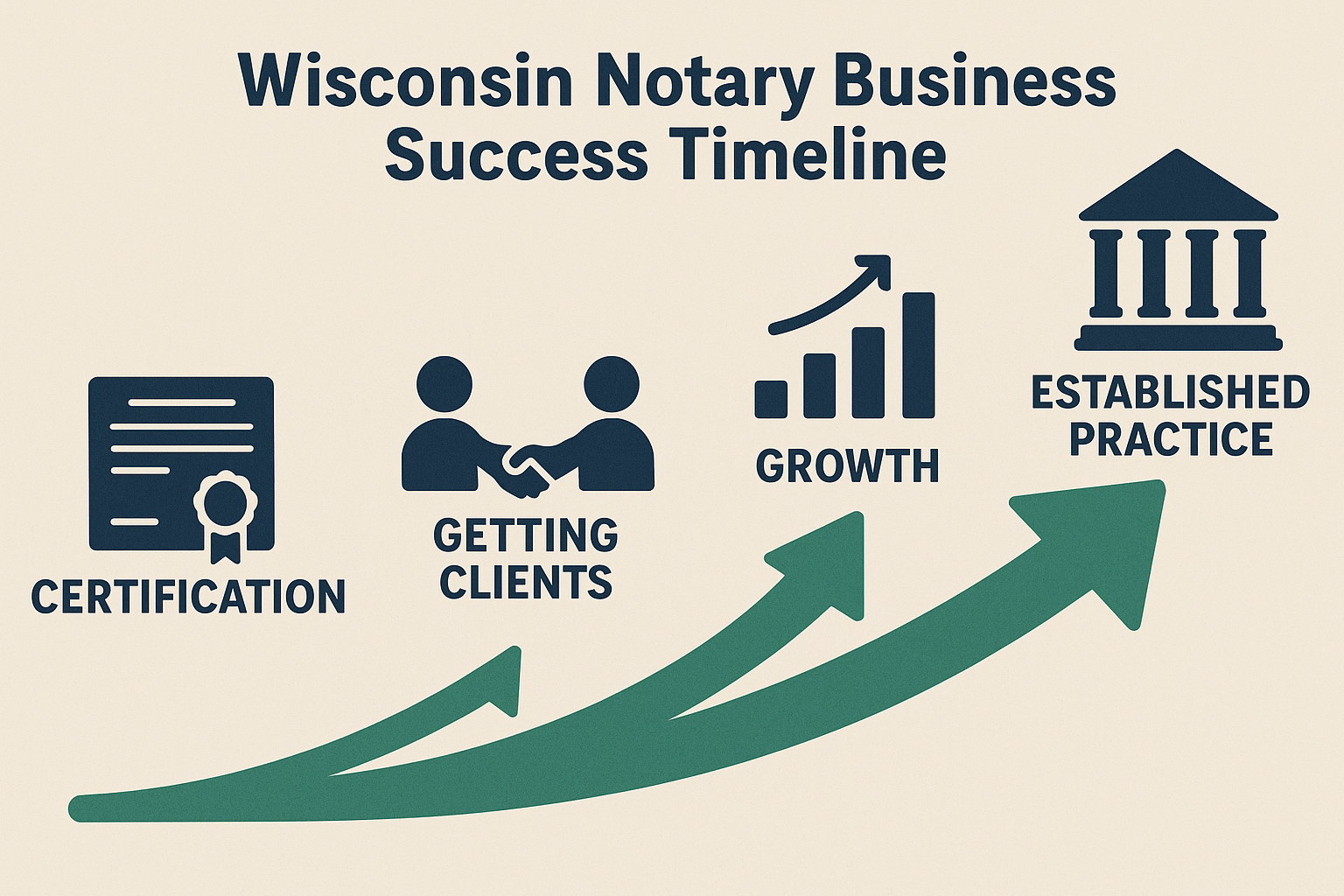
Wisconsin’s notary market presents unique opportunities for those who understand the business strategy beyond basic certification requirements. While most aspiring notaries focus solely on meeting the state’s minimum requirements – including the $500 surety bond requirement – successful notaries recognize that real profit comes from strategic positioning and specialized service offerings that command premium rates.

Table of Contents
- Understanding Wisconsin’s Hidden Notary Opportunities
- The Real Money-Making Strategies Most People Miss
- Building Your Professional Network for Steady Income
- Technology Tools That Actually Matter
- Advanced Compliance That Protects Your Business
- Developing Specialized Skills That Command Premium Rates
- Wisconsin-Specific Rules You Need to Master
- Scaling Your Notary Business Beyond Basic Services
TL;DR
- Wisconsin’s notary market has hidden opportunities most people overlook – rural areas and specialized services can pay 3-5x standard rates
- Your real income comes from strategic partnerships with attorneys, real estate professionals, and healthcare facilities, not random walk-ins
- Mobile notary services targeting senior communities and medical facilities generate the highest profits
- Digital marketing and local SEO are essential for consistent client flow in competitive urban markets
- Professional liability insurance and proper business structure protect your assets and create tax advantages
- Specializing in complex documents like estate planning or international authentication sets you apart from basic notaries
- Wisconsin’s unique marital property laws and real estate requirements create opportunities for specialized knowledge
- Scaling involves adding complementary services like document preparation and training other notaries
Understanding Wisconsin’s Hidden Notary Opportunities
Most people think becoming a notary in Wisconsin means getting certified and waiting for clients to show up. I’ve learned that approach leads to frustration and minimal income. The real money comes from understanding market dynamics that most notaries completely miss.
Wisconsin’s notary landscape operates differently than most states, with unique market dynamics that create lucrative opportunities for those who understand the underlying business strategies. The financial commitment goes beyond just meeting basic requirements – you need to think strategically about positioning yourself in underserved markets throughout the state.
The Economics Behind Wisconsin Notary Services
Understanding the financial commitment is crucial before you decide to pursue this career path. Similar to how professionals need to understand business certification requirements, becoming a notary in Wisconsin requires strategic planning beyond just meeting basic requirements.
The financial reality of being a Wisconsin notary public extends far beyond collecting stamp fees. I’ve seen too many new notaries focus on the wrong metrics. They count how many documents they stamp instead of analyzing which services generate the highest profit margins.
Market timing plays a huge role in your success. The pandemic significantly changed voting and document authentication patterns nationwide. According to the Brennan Center for Justice, at least 182 voting rights cases were filed between January 1 and September 15, 2020, highlighting the increased demand for notarization services during times of regulatory change.
| Service Type | Standard Rate | Premium Rate | Market Demand |
|---|---|---|---|
| Basic Document Notarization | $5-10 | $15-25 | High |
| Mobile Notary (Rural) | $25-50 | $75-150 | Medium |
| Estate Planning Documents | $50-100 | $150-300 | High |
| Real Estate Closings | $100-200 | $300-500 | High |
| International Authentication | $75-150 | $200-400 | Low |

Creating Multiple Income Streams Beyond Basic Notarizations
Smart Wisconsin notaries build diversified revenue streams by identifying niche markets and specialized services that justify premium pricing. You can’t survive on $5 document stamps – that’s a recipe for burnout and financial disappointment.
Mobile notary services targeting high-value clients represent one of the most profitable opportunities. Real estate professionals, healthcare facilities, and senior living communities will pay 3-5x standard fees for convenience and reliability. These clients value your time and expertise, making them ideal for building sustainable income.
Document preparation consulting creates another revenue stream while reducing your appointment time. Many clients struggle with proper document formatting before notarization, and offering guidance on preparation saves everyone time while adding value to your service.
Sarah, a Milwaukee-based notary, built her business around serving three assisted living facilities. By offering scheduled weekly visits at $200 per facility, she generates $2,400 monthly in guaranteed income before any additional services. Her reliability and understanding of healthcare documentation requirements made her indispensable to these facilities.
Geographic Market Analysis for Territory Development
Wisconsin’s rural-urban divide creates distinct notary in Wisconsin service opportunities that require different approaches and pricing strategies. I’ve found that understanding these geographic differences helps you position your services effectively and identify the most profitable areas to serve.
Rural Wisconsin has significant service gaps where convenient notary access is limited. This creates opportunities for circuit-based services and premium pricing for travel. Many rural residents will pay extra for reliable, professional service that comes to them.
Urban areas like Milwaukee and Madison have more competition, making specialization crucial. You’ll need to differentiate yourself through specific document types, industry focus, or superior service quality to stand out from other notaries.
Seasonal demand patterns in Wisconsin follow predictable cycles tied to real estate activity, tax seasons, and academic calendars. Understanding these patterns helps you plan marketing efforts and adjust pricing strategies throughout the year.

The Real Money-Making Strategies Most People Miss
The most successful Wisconsin notary public professionals build strategic relationships with complementary professionals who regularly need notary services for their clients. These partnerships create steady referral streams that generate consistent income, unlike the unpredictable nature of random client requests.
I’ve watched countless notaries struggle because they wait for business to come to them. The real money comes from proactive relationship building with professionals who need reliable notary services for their clients on a regular basis.
Legal Professional Partnerships That Pay
Just as professionals need to understand essential documents for their careers, building relationships with legal professionals requires understanding their specific documentation needs.
Establishing relationships with attorneys, paralegals, and legal aid organizations creates steady referral streams for specialized document types. These professionals need reliable notaries who understand legal document requirements and can work efficiently within their workflows.
Estate Planning Attorney Relationships
Estate planning attorneys regularly need notaries for wills, trusts, and power of attorney documents. These relationships are particularly valuable because estate planning involves multiple documents per client and often requires follow-up services as circumstances change.
Building trust with estate planning attorneys means understanding the sensitive nature of these documents and the emotional state of their clients. You’re often working with people during difficult times, so professionalism and empathy are crucial.
Tom partnered with five estate planning attorneys in the Green Bay area by offering same-day service for urgent documents and maintaining flexible evening hours. This reliability earned him exclusive referral agreements worth over $8,000 monthly in consistent business.
Real Estate Professional Networks
Real estate agents, title companies, and mortgage brokers need reliable notary services for closings and related documents. These professionals work on tight timelines and need notaries who can accommodate last-minute scheduling changes and complex document requirements.
The real estate market in Wisconsin has specific timing requirements and seasonal patterns. Understanding these cycles helps you position yourself as an essential partner rather than just another service provider.
Healthcare Industry Connections
Medical facilities, senior care centers, and healthcare attorneys frequently need notary in Wisconsin services for patient documents and legal forms. This market segment offers consistent demand and premium pricing due to the specialized nature of healthcare documentation.
Wisconsin is among the 34 states that allow all registered voters to vote by absentee ballot, creating increased demand for notarization services during election periods, particularly in healthcare facilities where patients need assistance with ballot authentication.

Hospital and Clinic Partnerships
Healthcare facilities need on-site notary services for patients who cannot travel. These contracts provide steady income and often involve premium rates due to the specialized environment and HIPAA compliance requirements.
Working in healthcare settings requires understanding medical privacy laws and facility protocols. You’ll need to be comfortable working around medical equipment and with patients who may be in distress or have limited mobility.
Building Your Professional Network for Steady Income
Technology integration goes beyond remote notarization capabilities to include business management, client communication, and service differentiation. Modern notary in Wisconsin professionals leverage digital tools to streamline operations, reach specific client demographics, and establish themselves as industry experts.
Most notaries underestimate how much technology can transform their business. I’m talking about systems that actually generate leads and streamline operations, not just fancy gadgets that look impressive.
Digital Marketing and Client Acquisition
Building a professional online presence is as important as having diploma display credentials visible in your office – both establish credibility with potential clients.
Successful notaries use targeted digital marketing strategies to reach specific client demographics and establish thought leadership in their service areas. This involves more than just having a website – it requires strategic content creation and local market positioning.
Local SEO Optimization
Optimizing your online presence for location-specific searches like “notary near me” and “mobile notary [city name]” captures local demand when people need services immediately. Most notary searches are urgent, so appearing in local results is crucial.
Google My Business optimization, local directory listings, and location-specific content help you dominate local search results. Reviews and ratings become particularly important since people often choose notaries based on convenience and reputation.

Social Media Professional Branding
LinkedIn and Facebook provide platforms to showcase expertise, share educational content, and build trust with potential clients. Social media works particularly well for notaries because it allows you to demonstrate knowledge and professionalism before people need your services.
Educational content about document requirements, notarization processes, and legal compliance positions you as an expert while providing value to your audience. This approach builds trust and keeps you top-of-mind when people need notary services.
Client Management and Scheduling Systems
Professional scheduling and client management systems streamline operations and create a premium service experience that justifies higher pricing. These systems also provide valuable business intelligence for growth planning and client relationship management.
Digital scheduling tools reduce phone tag and allow clients to book appointments at their convenience. Automated reminders and follow-up communications improve client satisfaction while reducing no-shows and last-minute cancellations.
Client history tracking enables personalized service and identifies opportunities for additional services. Understanding client patterns and preferences helps you anticipate needs and provide proactive solutions.
| Technology Tool | Monthly Cost | Key Benefit | ROI Timeline |
|---|---|---|---|
| Scheduling Software | $20-50 | Reduced admin time | 2-3 months |
| CRM System | $30-100 | Client retention | 3-6 months |
| Digital Marketing | $100-300 | Lead generation | 6-12 months |
| Accounting Software | $15-40 | Tax compliance | Immediate |
| Insurance Management | $50-150 | Risk protection | Immediate |
Maria invested $200 monthly in a comprehensive business management system that automated scheduling, client communications, and invoicing. Within six months, she reduced administrative time by 15 hours weekly while increasing client satisfaction scores by 40%.

Technology Tools That Actually Matter
Modern notary businesses require strategic technology integration that goes beyond basic remote notarization capabilities. Wisconsin notary public professionals who leverage the right digital tools create competitive advantages through improved efficiency, enhanced client experience, and scalable operations.
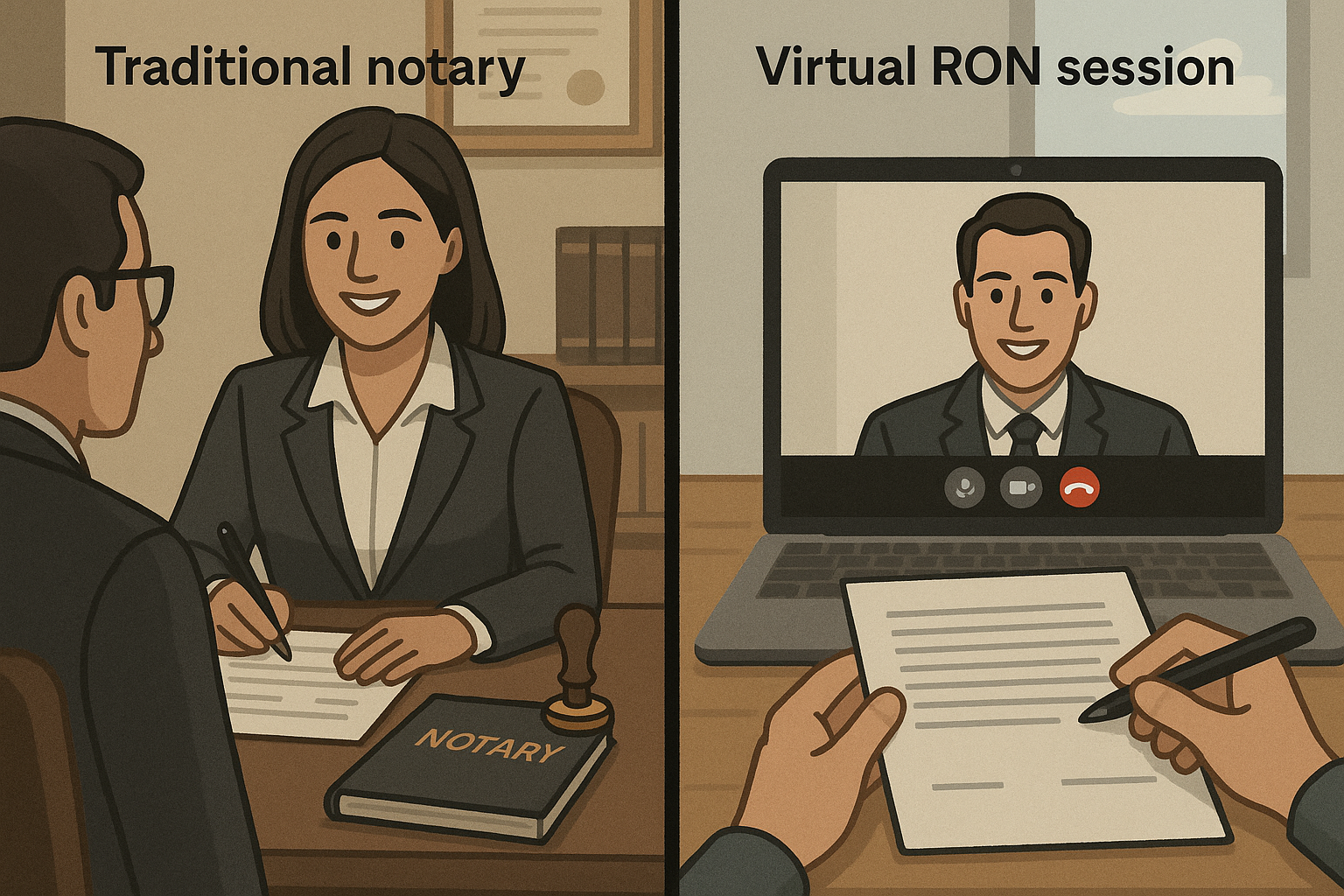
Wisconsin has implemented remote online notarization (RON) capabilities, with startup costs beginning at $120, creating new opportunities for notaries to serve clients virtually while expanding their geographic reach.
Remote Online Notarization Platforms
RON technology allows Wisconsin notaries to serve clients anywhere while maintaining security and compliance standards. Understanding platform differences and implementation strategies determines success in this growing market segment.
The shift toward digital documentation has accelerated since 2020, when “28 states took action to send absentee ballots or ballot request forms to most or all registered voters during the primaries” according to the Brennan Center for Justice, creating increased demand for remote notarization services and digital document authentication.
Platform Selection and Setup
Choosing the right RON platform affects everything from client experience to profit margins. Different platforms offer varying features, pricing structures, and integration capabilities that impact your business model.
Security features, user interface design, and technical support quality differentiate platforms significantly. Your choice affects client retention and referral rates, making platform evaluation crucial for long-term success.
Business Management Software Integration
Integrated business management systems streamline operations while providing analytics that drive strategic decisions. These tools become essential as your business scales beyond individual appointments.
Financial Tracking and Analytics
Comprehensive financial tracking reveals profit patterns, seasonal trends, and client value metrics that inform pricing and marketing strategies. This data becomes crucial for tax planning and business growth decisions.
Automated invoicing and payment processing reduce administrative burden while improving cash flow. Integration with accounting systems ensures accurate record-keeping for tax compliance and business analysis.
Advanced Compliance That Protects Your Business
Beyond basic legal requirements, sophisticated Wisconsin notaries implement comprehensive risk management strategies that protect their business and enhance their professional reputation. This involves strategic insurance planning, proper business structure, and systematic record-keeping that exceeds state minimums.
Most new notary in Wisconsin professionals think the state-required $500 bond covers everything. That’s a dangerous misconception that can destroy your business if something goes wrong.
Professional Liability and Insurance Optimization
Just as professionals need to maintain replacement certifications as backup documentation, notaries must have comprehensive insurance coverage beyond state minimums.
Strategic insurance planning goes beyond minimum requirements to protect against various liability scenarios while maintaining cost-effectiveness. Different service types and client demographics create different risk profiles that require tailored coverage approaches.
Wisconsin requires a $500 surety bond for all notary applicants, but successful notaries understand this minimum protection is insufficient for comprehensive business protection.
Wisconsin requires notaries to be at least 18 years of age and Wisconsin residents, with additional background check requirements under Wisconsin Statutes 111.335.
Comprehensive Coverage Analysis
Evaluating different insurance options based on your specific service mix, client types, and risk exposure helps you choose coverage that actually protects your business without overpaying for unnecessary protection.
Errors and omissions protection varies significantly between policies. Understanding how different E&O policies cover various scenarios – from document errors to client disputes – ensures you choose coverage that matches your actual service profile rather than generic notary work.

Business Structure and Asset Protection
Forming an LLC or corporation provides additional liability protection and creates tax advantages for your notary business. The right business structure separates your personal assets from business liabilities while potentially reducing your tax burden.
Record Keeping and Documentation Excellence
Systematic record-keeping practices that exceed Wisconsin requirements provide valuable business intelligence for growth planning while protecting you legally. Digital systems make this easier and more effective than traditional paper-based approaches.
Digital Record Management Systems
Cloud-based systems maintain secure, searchable records that facilitate client service and business analysis. These systems also provide backup protection and easy access from multiple locations, which is crucial for mobile notary services.
Client history and preference tracking enables personalized service while identifying opportunities for additional services. Detailed records help you understand client patterns, seasonal trends, and which services generate the most profit.
Performance analytics track key metrics like service types, pricing effectiveness, and client satisfaction to optimize business operations. This data helps you make informed decisions about pricing, marketing, and service expansion.

Developing Specialized Skills That Command Premium Rates
Wisconsin notary public professionals who invest in ongoing education and skill development position themselves as premium service providers and stay ahead of regulatory changes. Specialization creates opportunities for higher-value services and expert positioning in specific markets.
The difference between a $10 notarization and a $300 one often comes down to specialized knowledge. I’ve seen notaries transform their income by mastering complex document types that most people avoid.
Advanced Notarization Techniques and Specializations
Mastering specialized notarization types and complex document scenarios creates opportunities for higher-value services and expert positioning. These skills differentiate you from basic notaries and justify premium pricing.
International Document Authentication
Learning apostille processes and international document requirements allows you to serve clients with overseas business or immigration needs. This specialized knowledge commands premium rates and creates a niche market with less competition.
Apostille service coordination involves developing relationships with Secretary of State offices and understanding the complete authentication chain for international documents. This process can be complex and time-consuming, which is why clients pay premium rates for expertise.

Complex Estate and Trust Documents
Specializing in sophisticated estate planning documents that require multiple notarizations and careful attention to legal requirements creates a high-value niche. These documents often involve significant assets and require absolute precision.
Industry-Specific Expertise Development
Building specialized expertise is similar to how professionals pursue business certification to enhance their credentials and command higher fees.
Developing deep knowledge in specific industries allows notaries to command premium pricing and build specialized client bases. Industry expertise makes you indispensable to professionals who need reliable, knowledgeable notary services.
Healthcare Documentation Specialization
Mastering HIPAA compliance, medical directive requirements, and healthcare facility protocols opens up a high-demand market with premium pricing. Healthcare documentation requires specialized knowledge and careful attention to privacy requirements.
Medical power of attorney expertise involves understanding the nuances of healthcare directives and the sensitive nature of medical decision-making documents. These situations often involve family dynamics and emotional stress, requiring exceptional professionalism.
Senior care facility protocols require learning specific procedures and timing requirements for notarizations in assisted living and nursing home environments. These facilities have unique challenges and often pay premium rates for reliable service.
Financial Services Document Mastery
Developing expertise in loan documents, investment paperwork, and financial planning documents that require precise notarization creates another specialized niche. Financial documents often involve large sums of money and require absolute accuracy.
Wisconsin Notary Specialization Checklist:
- Complete advanced notary education courses
- Obtain industry-specific certifications
- Develop relationships with specialized attorneys
- Create marketing materials highlighting expertise
- Establish premium pricing for specialized services
- Build portfolio of successful complex notarizations
- Maintain continuing education requirements

Wisconsin-Specific Rules You Need to Master
Understanding Wisconsin’s unique notary laws and administrative procedures provides competitive advantages and ensures full compliance. Wisconsin has particular requirements that differ from other states, creating opportunities for specialized knowledge.
When you know how to become a notary in WI properly, you understand that mastering state-specific requirements gives you credibility that generic notaries can’t match. Clients notice when you understand the nuances of Wisconsin law.
State-Specific Document Requirements
Wisconsin has particular requirements for certain document types that create opportunities for specialized knowledge. Understanding these nuances helps you serve clients more effectively while avoiding compliance issues.
Wisconsin notaries must complete their application with a score of 90% or higher on the notary exam, demonstrating the state’s commitment to ensuring qualified professionals serve the public.
Wisconsin Real Estate Transaction Specifics
Mastering the unique aspects of Wisconsin real estate law that affect notarization requirements and timing gives you an edge in this lucrative market. Wisconsin’s marital property laws create specific requirements that many notary in Wisconsin professionals don’t understand.
Marital property considerations in Wisconsin affect document notarization requirements for married couples. Understanding these laws helps you guide clients properly and avoid potential legal issues that could arise from improper notarization.
Wisconsin Business Formation Documents
Learning the specific notarization requirements for Wisconsin LLC formations, corporate documents, and business registration paperwork creates another specialization opportunity. Business formation involves multiple documents and often requires quick turnaround times.
Regulatory Relationship Management
Building positive relationships with Wisconsin’s notary regulatory bodies provides advantages in compliance and professional development. These relationships keep you informed about changes and demonstrate your commitment to professional excellence.
Secretary of State Office Connections
Maintaining regular communication with the Wisconsin Secretary of State’s office keeps you informed about regulatory changes and best practices. This proactive approach helps you stay compliant while positioning yourself as a knowledgeable professional.
Continuing education opportunities through state-sponsored training programs enhance your skills while demonstrating professional commitment. These programs often provide networking opportunities with other professionals and regulatory officials.
Professional association involvement through Wisconsin notary associations provides networking opportunities, access to resources, and current industry information. Active participation demonstrates your commitment to professional excellence.
Wisconsin Compliance Requirements:
- Maintain current $500 surety bond
- Update address changes within 5 days
- Keep seal/stamp samples on file with Secretary of State
- Follow proper identification procedures
- Maintain compliant notary journal
- Understand Wisconsin marital property laws
- Stay current on regulatory updates

Scaling Your Notary Business Beyond Basic Services
Successful Wisconsin notaries plan for growth by developing scalable systems, expanding service offerings, and building sustainable business models. This involves identifying complementary services and systematic market expansion strategies.
The biggest mistake I see notaries make is thinking small. They get comfortable with their current income and stop pushing for growth. Real success comes from building systems that work without your constant involvement.
Service Expansion Strategies
Expanding services requires the same strategic thinking professionals use when considering replacement diplomas – understanding what credentials and documentation clients truly need.
Identifying complementary services that leverage your notary expertise creates additional revenue streams while providing more value to clients. These services often have higher profit margins than basic notarization work.
Document Preparation Services
Offering form completion and document preparation services naturally leads to notarization work while adding value for clients. Many people struggle with legal forms and will pay for assistance with proper completion.
Legal form assistance helps clients properly complete legal forms before notarization, reducing errors and appointment time while adding significant value. This service often commands higher rates than basic notarization.
Training and Consultation Services
Developing expertise in training other notaries or consulting with businesses on notarization processes creates high-value service opportunities. Your experience and knowledge become products that can generate substantial income.

Market Expansion and Territory Development
Systematically expanding your service territory and market reach through strategic planning and resource allocation allows for sustainable growth. This involves efficient routing, pricing optimization, and partnership development.
Multi-County Service Areas
Developing efficient routes and scheduling systems to serve multiple Wisconsin counties profitably requires careful planning and cost analysis. Travel cost optimization creates pricing models that account for time and expenses while remaining competitive.
Franchise and partnership models leverage your notary expertise through relationships with other service providers or franchise opportunities. These arrangements can provide passive income while expanding your market reach.

ValidGrad understands the importance of having proper documentation readily available when you need it most. Just as you’re building a notary business to help others with their important documents, ValidGrad helps professionals maintain secure backup copies of their educational credentials. Whether you need replacement diplomas for your office display or official transcripts for professional licensing, ValidGrad’s efficient, technology-driven approach ensures you have the documentation you need when opportunities arise. Don’t let missing educational documents hold back your professional growth – secure your backup credentials today.
Final Thoughts
Becoming a successful Wisconsin notary involves much more than meeting basic certification requirements. The real opportunities lie in understanding market dynamics, building strategic relationships, and developing specialized skills that command premium pricing. Wisconsin’s unique regulatory environment and geographic diversity create numerous niches for those willing to invest in professional development and strategic positioning.
Your success depends on treating this as a legitimate business rather than a side hustle. This means investing in proper insurance, business structure, technology systems, and ongoing education. The notaries who thrive are those who solve specific problems for targeted client groups rather than trying to serve everyone with basic services.
The path forward requires patience, strategic thinking, and consistent effort to build relationships and expertise. But for those who approach it professionally, Wisconsin’s notary market offers substantial opportunities for both service and profit. Focus on becoming indispensable to your clients rather than just another notary, and you’ll build a sustainable business that grows over time.