
Breaking into data analysis can feel overwhelming, especially when you’re trying to figure out what you should actually be earning. I’ve been in this field for years and watched countless colleagues navigate salary negotiations, career transitions, and the sometimes confusing world of analyst compensation. With data analyst jobs projected to grow 23 percent between 2023 and 2033 according to the US Bureau of Labor Statistics, understanding pay in this rapidly expanding field is more crucial than ever. This guide cuts through the noise to give you the real story about what you can actually expect to make – from your first job to how you can strategically boost your earnings over time.

Table of Contents
-
Understanding the Real Numbers Behind Pay
-
What Actually Drives Your Salary
-
Building Your Path to Higher Earnings
-
Mastering the Art of Salary Negotiation
-
Final Thoughts
TL;DR
-
Entry-level analysts typically start between $45,000-$60,000, but location and industry make huge differences
-
Your tech skills (especially Python, R, and SQL) can bump your pay up by 15-25% compared to Excel-only folks
-
Geographic location matters more than you think – tech hubs pay 20-40% above national averages
-
The jump from analyst to data scientist can increase your salary by 30-50%
-
Professional certifications from Google, Microsoft, or Tableau can boost your earning potential by 10-20%
-
Finance, tech, and healthcare industries consistently offer the highest pay
-
Senior analysts with specialized skills can earn $90,000-$130,000+ annually
Understanding the Real Numbers Behind Pay
Remember when you first Googled “data analyst salary” and got a million different answers? Yeah, me too. Everyone talks about “competitive salaries” but what does that actually mean? After years in the field and countless conversations with fellow analysts, I’ve learned that understanding compensation isn’t just about knowing an average number – it’s about grasping the full picture of what influences those paychecks.
According to Glassdoor, the average salary for a data analyst in the United States is $86,531, while the US Bureau of Labor Statistics reports a median annual salary of $83,640, significantly higher than the mean annual salary across all occupations in the United States at $65,470. [Source: Coursera]
But here’s the thing – these numbers tell only part of the story. Your actual pay depends on factors that most generic salary websites completely ignore.

The Ranges That Actually Matter
Forget the generic salary websites that give you one number and call it a day. Real analyst pay exists on a spectrum that’s influenced by dozens of factors. I’ve seen entry-level analysts making $45,000 struggle to pay rent in expensive cities, while others with the same experience level earn $75,000 in different markets or industries.
Starting out? You’re looking at $45K-$65K, but don’t get hung up on that range. I’ve seen new grads make $75K in San Francisco and $42K in smaller cities for identical work. After a few years, you’ll hit $65K-$90K if you play your cards right. The senior folks pulling $90K-$130K? They didn’t get there by accident.
|
Experience Level |
Salary Range |
Key Factors |
|---|---|---|
|
Entry Level (0-2 years) |
$45,000 – $65,000 |
Location, industry, technical skills |
|
Mid-Level (3-5 years) |
$65,000 – $90,000 |
Specializations, leadership experience |
|
Senior Level (5+ years) |
$90,000 – $130,000+ |
Management roles, advanced analytics |
|
Leadership/Management |
$100,000 – $180,000+ |
Team size, strategic impact |
The variation within each range can be staggering. I know mid-level analysts earning $68,000 in smaller markets who have peers making $95,000 in tech hubs with similar skills and experience.
What You Can Expect Starting Out
Most new analysts earn between $45,000-$60,000 annually, but this range can feel misleading without context. Your first paycheck depends heavily on where you’re located, what industry you’re entering, and honestly, how well you can sell your skills during the interview process. I’ve watched fresh graduates land $65,000 starting offers by demonstrating strong SQL skills and business understanding.
Data analysts across all levels of experience are expected to earn between $71,000 and $119,000 per year in 2025, with higher pay found in industries like finance, IT, and scientific services. [Source: Coursera]
Understanding is it worth it to get a college degree becomes crucial when considering entry-level positions, as most employers require formal education credentials for competitive starting pay. The degree requirement isn’t just a checkbox – it often determines whether you’ll start at the bottom or middle of that range.
Sarah, a recent computer science graduate, started her career at a fintech startup in Austin. Despite having no prior work experience, she negotiated a $62,000 starting offer by showcasing a portfolio of Python projects and demonstrating her ability to translate complex data into business insights during her interview process. Her preparation made the difference between a standard $48,000 offer and the higher compensation she ultimately received.
How Geography Changes Everything
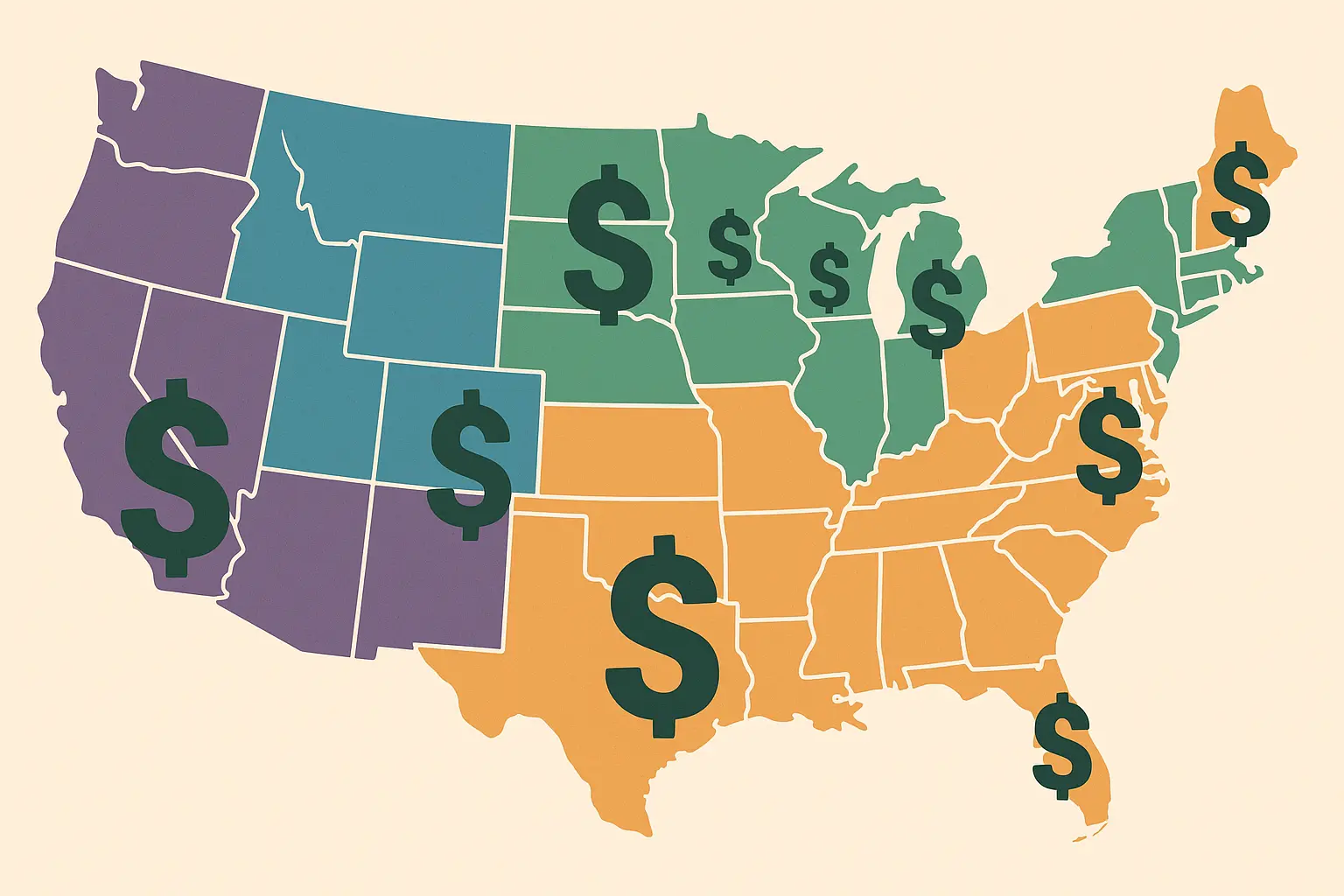
Want to double your pay overnight? Move to San Francisco. Just kidding (sort of). But seriously, location can make or break your paycheck. San Francisco, New York, and Seattle consistently offer 20-40% higher pay than the national average, but you’ll also pay significantly more for housing and living expenses. Remote work has started to blur these lines, creating opportunities to earn big-city money while living in lower-cost areas.
I’ve seen analysts double their earnings simply by relocating from smaller cities to major tech hubs. The catch? Your rent might triple too.
Industry Differences You Need to Know
Different industries treat analyst pay very differently. Finance pays well but expects you to live in Excel hell. Tech companies throw money at you but want you to know Python inside and out. Healthcare is steady but bureaucratic. Non-profits… well, you’re not doing it for the money.
Here’s how average pay breaks down by industry:
|
Industry |
Average Salary |
Specialization Requirements |
|---|---|---|
|
Financial Services |
$72,112 |
Risk analysis, regulatory compliance |
|
Technology |
$90,827 |
Programming, cloud platforms |
|
Scientific Services |
$98,859 |
Statistical modeling, research methods |
|
Healthcare |
$75,000 – $85,000 |
HIPAA compliance, clinical data |
|
Retail/E-commerce |
$65,000 – $75,000 |
Customer analytics, A/B testing |
|
Non-profit |
$55,000 – $70,000 |
Grant reporting, impact measurement |
The specialization requirements aren’t suggestions – they’re often mandatory for landing these higher-paying roles.
Career Progression and What It Means for Your Wallet
One thing that surprised me early in my career was how quickly analyst pay can grow with the right strategy. Unlike some fields where you’re stuck at similar pay levels for years, data analysis offers clear pathways to significant increases – if you know how to navigate them.
The progression isn’t automatic though. I’ve watched analysts plateau at $65,000 for years because they didn’t understand which skills and experiences actually drive raises.

Mid-Career Earning Potential
Analysts with 3-5 years of experience typically see their pay jump to the $65,000-$90,000 range. This isn’t automatic though – it requires demonstrating increased expertise, taking on project leadership roles, and often expanding your technical skill set beyond basic analytics tools.
The analysts who successfully navigate this transition focus on becoming indispensable to their organizations. They automate processes, lead cross-functional projects, and develop expertise that directly impacts business outcomes.
Mike transitioned from a junior analyst role at $52,000 to a senior position earning $78,000 within four years by specializing in machine learning applications for customer segmentation. His key strategy was taking on cross-functional projects that showcased his ability to drive business decisions through advanced analytics. The raise came naturally once he proved his expanded value to the organization.
Senior Level and Specialized Roles
Senior analysts and those with specialized skills command pay of $90,000-$130,000+, but getting there requires strategic career planning. Many analysts at this level start transitioning into data science roles, management positions, or become subject matter experts in specific industries or technical areas.
Analytics managers earn an average of $131,202 in the US, while directors of analytics earn $184,828, representing significant earning potential for those who move into leadership roles. [Source: Coursera]
The jump from individual contributor to management represents one of the biggest leaps in earning potential. However, it requires developing entirely new skills beyond technical analysis. You’ll need to learn people management, strategic planning, and budget oversight – skills that many analysts find challenging to develop.
Pay at the senior level also depends heavily on your ability to influence business strategy rather than just provide reports and dashboards.
What Actually Drives Your Salary
After watching dozens of colleagues negotiate raises and make career moves, I’ve noticed that certain factors consistently lead to higher pay. It’s not just about being good at your job – it’s about understanding which skills, credentials, and experiences employers value most highly.
The analysts earning top dollar share common characteristics that go beyond technical competence. They understand business context, communicate effectively with non-technical stakeholders, and continuously adapt to new technologies and methodologies.

Education and Certifications That Pay Off
While you don’t need a PhD to succeed as an analyst, your educational background and certifications can significantly impact your starting pay and advancement opportunities. I’ve seen the difference firsthand between analysts who invest in their credentials and those who don’t.
Many professionals discover they need to replace a lost diploma when applying for higher-paying positions, as employers often require verification of educational credentials during the hiring process. Missing documentation can delay job offers or eliminate you from consideration entirely.
The credential verification process has become more rigorous as pay ranges have increased and competition for top positions has intensified.
Degree Impact on Starting Pay
Most analyst positions require a bachelor’s degree, but your field of study can influence your starting pay by $5,000-$15,000 annually. Statistics, computer science, and business degrees tend to command higher starting offers than general liberal arts backgrounds, though relevant experience can often bridge this gap.
Pay with a quantitative degree typically starts $8,000-$12,000 higher than someone with an unrelated educational background. This gap often persists throughout early career progression, making your initial degree choice surprisingly important for long-term earning growth.
Salary Negotiation Checklist:
-
Research industry benchmarks for your role and location
-
Document your key achievements and quantifiable impacts
-
Prepare examples of projects that drove business value
-
Practice articulating your unique value proposition
-
Gather competing offers or market data to support your request
-
Plan your timing around performance reviews or project completions
-
Prepare for potential counteroffers or alternative compensation
Professional Certifications Worth Pursuing
Industry certifications from Google, Microsoft, or Tableau can increase your earning potential by 10-20%. These certifications demonstrate practical skills to employers and often provide the technical credibility needed to justify higher compensation during negotiations.
I’ve watched analysts increase their pay by $8,000-$15,000 within months of earning relevant certifications. The key is choosing certifications that align with your target roles and industries rather than collecting credentials randomly.
Technical Skills That Command Premium Pay
Your technical toolkit directly correlates with your earning potential. I’ve consistently seen analysts with advanced technical skills out-earn their peers, sometimes by substantial margins. The key is knowing which skills employers value most and are willing to pay premium rates for.
The pay gap between basic Excel users and those proficient in programming languages can reach $20,000-$30,000 annually. This difference compounds over time as advanced technical skills open doors to senior roles and specialized positions.

Programming Languages That Boost Your Value
Learn Python, and watch your pay jump. I’m not exaggerating – every analyst I know who picked up coding saw their earnings increase within a year. Excel skills are table stakes now. Analysts proficient in Python, R, or SQL typically earn 15-25% more than those relying solely on Excel or basic analytics tools. These programming skills open doors to more complex projects and higher-level positions that simply aren’t available to analysts without coding abilities.
Average pay increases significantly once you can automate processes, work with large datasets, and perform advanced statistical analysis. These capabilities make you eligible for roles that Excel-only analysts simply cannot perform.
Jennifer increased her earnings from $58,000 to $72,000 within 18 months by learning Python and automating her team’s monthly reporting processes. Her ability to reduce a 40-hour manual process to just 2 hours of automated work made her indispensable and justified the raise. The time savings alone generated enough value to cover her increase multiple times over.
Advanced Analytics Capabilities
Skills in machine learning, statistical modeling, and predictive analytics can increase pay by $10,000-$20,000 annually. These capabilities position you for data science transitions and specialized analyst roles that command premium compensation.
Advanced analytics skills represent the bridge between traditional analyst pay ranges and the higher compensation available in data science roles. Developing these capabilities strategically can accelerate your career progression significantly.
Building Your Path to Higher Earnings
Maximizing your pay isn’t about luck or hoping for the best during annual reviews. It requires strategic career planning, continuous skill development, and understanding the market opportunities that lead to significant compensation increases.
The analysts I know who’ve achieved the highest pay growth followed deliberate strategies rather than hoping their hard work would be noticed and rewarded automatically.
Skills Development That Actually Moves the Needle
I’ve learned to focus my professional development on areas that consistently lead to higher compensation rather than just learning whatever seems interesting at the moment. Understanding types of degrees becomes essential when planning your educational path to maximize earning potential, as different degree levels can significantly impact salary negotiations.
Here’s how I’d approach skill building: Pick one thing the job postings keep mentioning, spend three months getting decent at it, then find a project at work to show it off. Rinse and repeat. This systematic approach ensures your skill development directly translates to pay increases rather than just expanding your knowledge base.

High-Value Technical Skills to Prioritize
Cloud platforms (AWS, Azure), advanced visualization tools (Tableau, Power BI), and database management systems represent the highest-paying skill areas for analysts. These technologies are in high demand and relatively few analysts have deep expertise in them, creating pay premiums for those who do.
The scarcity of these skills in the market drives up compensation for those who master them. I’ve seen analysts increase their earnings by $15,000-$25,000 by becoming the go-to expert for cloud-based analytics in their organizations.
Business Skills That Set You Apart
Understanding business strategy, developing industry-specific knowledge, and improving communication skills can differentiate you from other analysts and justify higher pay. Employers pay more for analysts who can translate data insights into business recommendations.
Your earning potential increases dramatically when you can speak the language of executives and department heads. Technical skills get you in the door, but business acumen gets you promoted.
Career Transition Opportunities Worth Considering
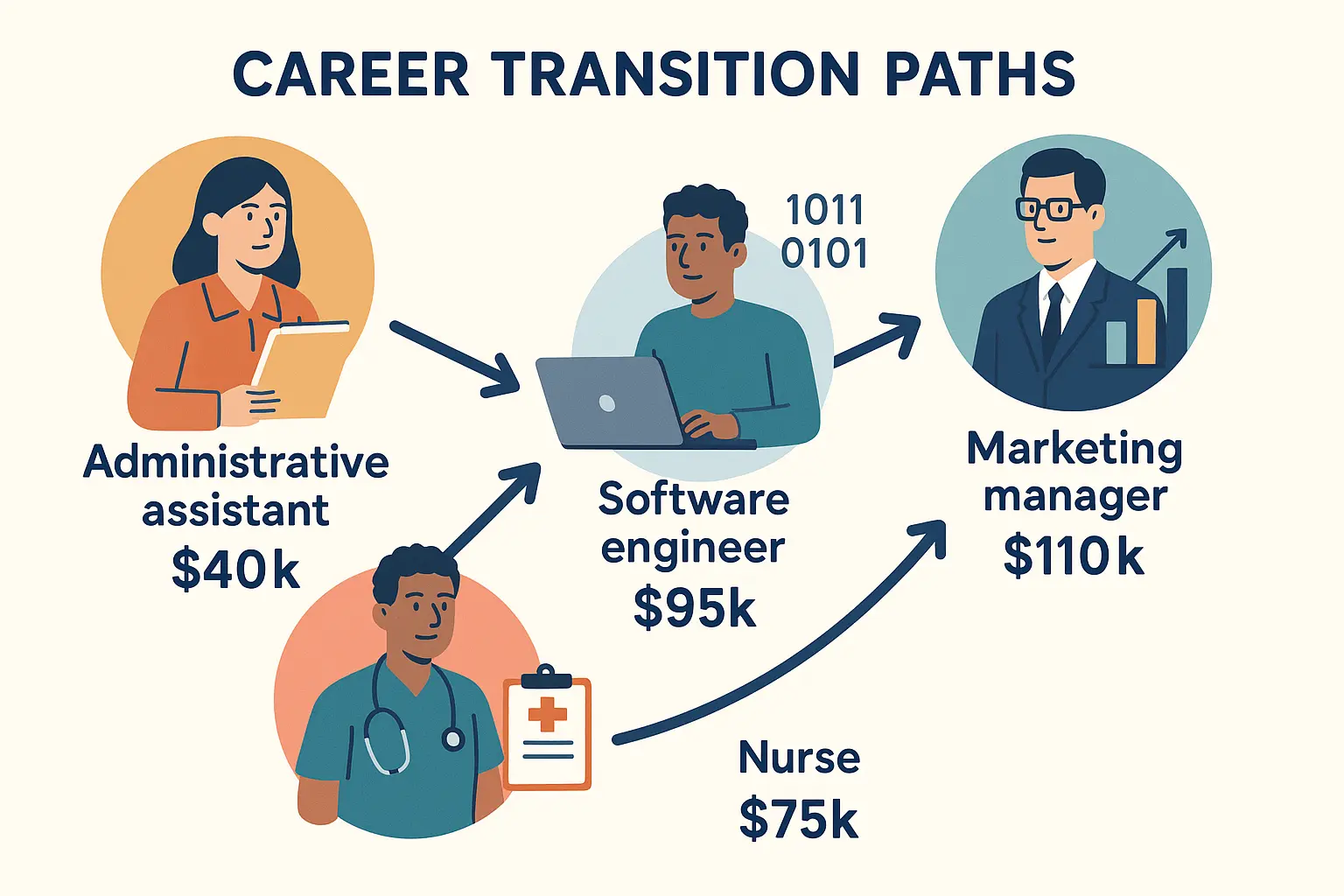
Analyst roles serve as excellent stepping stones to higher-paying positions. The key is understanding which transitions offer the best pay growth potential and how to position yourself for these opportunities.
Many professionals transitioning to higher-paying roles need to understand how to get a college diploma replacement when their original credentials are required for advanced positions with significantly better compensation packages.
Making the Jump to Data Science
Moving from analyst to data scientist roles can increase pay by 30-50%, but it requires additional skills in machine learning and advanced statistics. This transition isn’t automatic – it requires strategic skill building and often additional education or certification.
Employment of data scientists is projected to grow 34 percent from 2024 to 2034, much faster than the average for all occupations, with about 23,400 openings projected each year. [Source: Bureau of Labor Statistics]
The earning ceiling becomes much higher once you successfully transition into data science roles. However, the skill requirements are substantially more demanding than traditional analytics work.
Management and Leadership Paths
Analytics management positions offer pay ranging from $100,000-$150,000+, combining technical expertise with team leadership responsibilities. These roles require developing people management skills alongside your technical abilities.
Average pay for management roles reflects the additional responsibilities and strategic impact these positions require. You’re no longer just analyzing data – you’re guiding organizational decision-making and developing other analysts.
Mastering the Art of Salary Negotiation
Knowing what you should earn is only half the battle – you also need to know how to actually get that money. Effective negotiation requires preparation, market research, and understanding how to position yourself during these crucial conversations.
Your negotiations will determine your earning trajectory for years to come. Small increases compound over time, making these conversations incredibly valuable investments in your future.
Research and Benchmarking Strategies
Successful negotiation starts long before you sit down with your manager or potential employer. It requires comprehensive market research and understanding compensation benchmarks across different contexts.

Tools and Resources for Research
Platforms like Glassdoor, PayScale, and LinkedIn Salary Insights provide valuable data for understanding market rates and negotiating effectively. However, these tools work best when you know how to interpret their data and account for regional and industry variations.
Pay varies so widely that generic data can actually hurt your negotiations if you don’t understand the context behind the numbers.
Building Your Negotiation Case
Comparing pay across similar companies, roles, and geographic regions helps establish realistic expectations and negotiation targets. Maintaining records of your achievements, project impacts, and skill development provides concrete evidence for increase discussions.
Your negotiation success depends on demonstrating value rather than just asking for more money. Employers need to see why paying you more makes financial sense for their organization.
Timing and Market Opportunities
Understanding market cycles and timing your career moves strategically can significantly impact your pay growth potential. The analyst job market has unique patterns that savvy professionals can leverage.
Average increases are often tied to broader economic conditions and industry trends that create windows of opportunity for substantial raises.

Market Demand and Economic Factors
Analyst demand continues growing across industries, with remote work opportunities expanding your geographic earning potential. Understanding these trends helps you time job searches and negotiations for maximum impact.
Economic conditions directly affect hiring budgets and priorities. Timing your career moves during periods of high demand can result in significantly better compensation packages.
Negotiating feels scary, but here’s the thing – most managers expect it. Do your homework, know what others make, and don’t be afraid to ask. The worst they can say is no.
While pursuing higher pay in data analysis, many professionals face an unexpected challenge when their original diplomas are lost, damaged, or need replacement for career advancement opportunities. Understanding replacement diplomas addresses this common pain point by providing high-quality diploma replacement services that help analysts maintain professional credibility during job searches and negotiations.
Whether you’re applying for higher-paying positions or transitioning to senior roles, having proper documentation of your educational credentials is essential. ValidGrad’s replica diploma service ensures you can confidently pursue career opportunities without delays caused by missing or damaged original documents.
Final Thoughts
Bottom line: This field pays well if you’re smart about it. Understanding analyst pay isn’t just about knowing numbers – it’s about recognizing the strategic decisions that lead to higher compensation over time. Your earning potential depends on the technical skills you develop, the industries you choose to work in, and how effectively you can communicate your value to employers.
The job market continues evolving, with new opportunities emerging regularly and pay ranges expanding for those with the right combination of technical expertise and business acumen. Focus on building skills that command premium pay, understand your local market conditions, and don’t sell yourself short.
Remember that pay is just one component of total compensation. Consider benefits, work-life balance, learning opportunities, and career advancement potential when evaluating opportunities. The highest-paying job isn’t always the best choice for your long-term career goals.
Your earning trajectory depends on the choices you make today. Invest in the right skills, position yourself strategically, and approach negotiations with confidence backed by solid market research and demonstrated value. Learn the right skills, pick your spots, and don’t be afraid to ask for what you’re worth. Your future wallet will thank you.