
Arkansas requires all notaries to maintain a $7,500 surety bond and complete a 30-question exam with a passing score of 24 correct answers, but most aspiring notaries don’t realize these basic requirements are just the foundation for building a profitable notary business. The real opportunities lie in understanding the strategic positioning, market specialization, and relationship-building techniques that separate successful Arkansas notaries from those who barely break even.
When I first started researching how to become a notary in Arkansas, I thought I’d be stuck making $10 per signature for the rest of my career. Boy, was I wrong.

Table of Contents
- The Real Money-Making Opportunities Beyond Basic Notarization
- Strategic Geographic Positioning for Maximum Profit
- Technology Integration That Actually Matters
- Building Professional Networks That Pay Off
- Healthcare and Elder Care: The Goldmine Market
- Advanced Certifications Worth Your Time
- Arkansas-Specific Legal Requirements You Can’t Ignore
- Untapped Market Segments in Agriculture and Manufacturing
- Professional Documentation and Credibility Building
TL;DR
- Arkansas notaries can earn way more than the $10 maximum fee by creating complementary service offerings and targeting underserved markets
- Rural areas and specialized sectors like agriculture and healthcare offer premium pricing opportunities most notaries miss
- Remote online notarization (RON) capabilities give you a massive competitive edge when implemented correctly
- Building relationships with county clerks, real estate professionals, and healthcare facilities creates steady referral streams
- Additional certifications like NSA and specialized training in Arkansas-specific documents justify higher rates
- Understanding Arkansas’s unique legal requirements and record-keeping standards protects you from liability while building client trust
The Real Money-Making Opportunities Beyond Basic Notarization
Most people think Arkansas notaries are stuck with that $10 maximum fee per notarization, but that’s just scratching the surface. I’ve discovered that successful Arkansas notary professionals build entire business ecosystems around their commission, creating multiple revenue streams that can generate substantial income.
The key is understanding how to leverage your notary status while staying within legal boundaries and offering genuine value to clients who desperately need these services. You’re solving real problems for people who can’t easily access notary services otherwise.
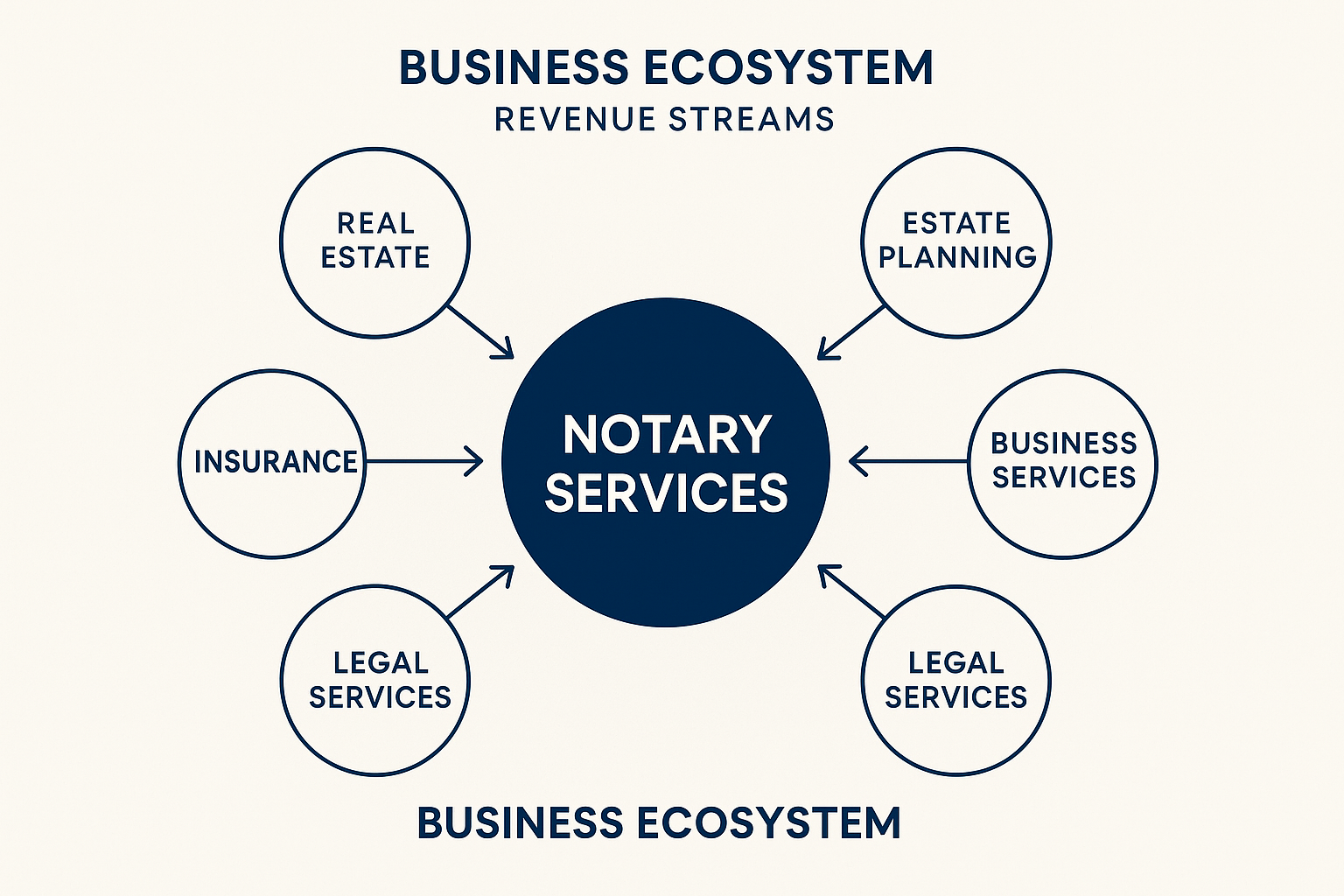
Sarah, a Little Rock Arkansas notary, started with basic notarizations earning $300/month. She added mobile services to rural Pulaski County, document preparation for real estate transactions, and specialized in healthcare directives. Within 18 months, she was generating $2,800/month by combining her Arkansas notary commission with complementary services that solved real problems for underserved markets.
Mobile Notary Services in Underserved Areas
Arkansas has tons of rural communities where people struggle to find convenient notary services. I’ve seen mobile Arkansas notary professionals charge premium rates in these areas because they’re solving a real problem – saving people hours of driving to find a notary.
The Arkansas Delta, Ozark Mountains, and smaller farming communities are goldmines for mobile notaries who position themselves strategically. You’re providing a service that people genuinely need and appreciate.
Mobile Notary Service Checklist:
- Identify counties with fewer than 5 active notaries per 10,000 residents
- Map driving distances between rural communities and nearest notary services
- Establish relationships with local banks, real estate offices, and law firms
- Create service packages for common document types (real estate, healthcare, business)
- Develop reliable transportation and backup equipment systems
- Set premium pricing structure that reflects travel time and convenience value
Mapping Your Territory for Maximum Impact
You can’t just randomly drive around hoping to find clients. Smart Arkansas notary professionals use county clerk databases to identify areas with limited notary access, then build relationships with local businesses that regularly need notary services.
Banks, law offices, and real estate agencies in these areas become your best referral sources when you prove you’re reliable and professional. They’ll start calling you first when clients need notary services.
| Arkansas County | Population | Active Notaries | Notary-to-Population Ratio | Opportunity Level |
|---|---|---|---|---|
| Phillips County | 16,568 | 12 | 1:1,381 | High |
| Lee County | 8,781 | 8 | 1:1,098 | High |
| Monroe County | 6,829 | 9 | 1:759 | Medium |
| Pulaski County | 399,125 | 847 | 1:471 | Low |
| Washington County | 245,871 | 423 | 1:582 | Medium |
Document Preparation Services That Complement Notarization
Arkansas law lets notaries offer document preparation as a separate business activity, which opens up huge opportunities. You’re helping people prepare the documents they need notarized, which requires proper business licensing and clear separation between your notarial duties and preparation services.
This can significantly boost your income per client interaction. Instead of just collecting $10 for a signature, you’re providing comprehensive document services that clients desperately need.
When establishing your Arkansas notary business, maintaining proper documentation of your credentials is crucial for client trust, and if you ever need to replace lost educational credentials to support your professional image, services like ValidGrad can help you obtain high-quality replacements quickly.

Strategic Geographic Positioning for Maximum Profit
Location strategy makes or breaks Arkansas notary businesses. I’ve learned that understanding local economic patterns, demographic trends, and service gaps helps you position yourself where demand is highest and competition is lowest.
Different regions of Arkansas have completely different notary service needs, and successful Arkansas notary professionals adapt their offerings accordingly. What works in Little Rock won’t necessarily work in rural Arkansas County.
Premium Pricing in Rural Markets
Rural Arkansas presents unique opportunities where scarcity drives value. When you’re the only mobile Arkansas notary willing to drive 30 minutes to someone’s farm for an equipment financing document, you can charge accordingly.
These clients understand the value of convenience and are willing to pay for it, especially when dealing with time-sensitive transactions. They’re not shopping around for the cheapest option – they need someone reliable who will show up.
Arkansas has more than 252,000 veterans calling the state home, and recent legislation including Act 215 allows spouses of military service members who are not Arkansas residents to become notary publics, expanding the potential market for specialized military document services. “Military Appreciation in Arkansas” Arkansas House of Representatives

Agricultural Document Specialization
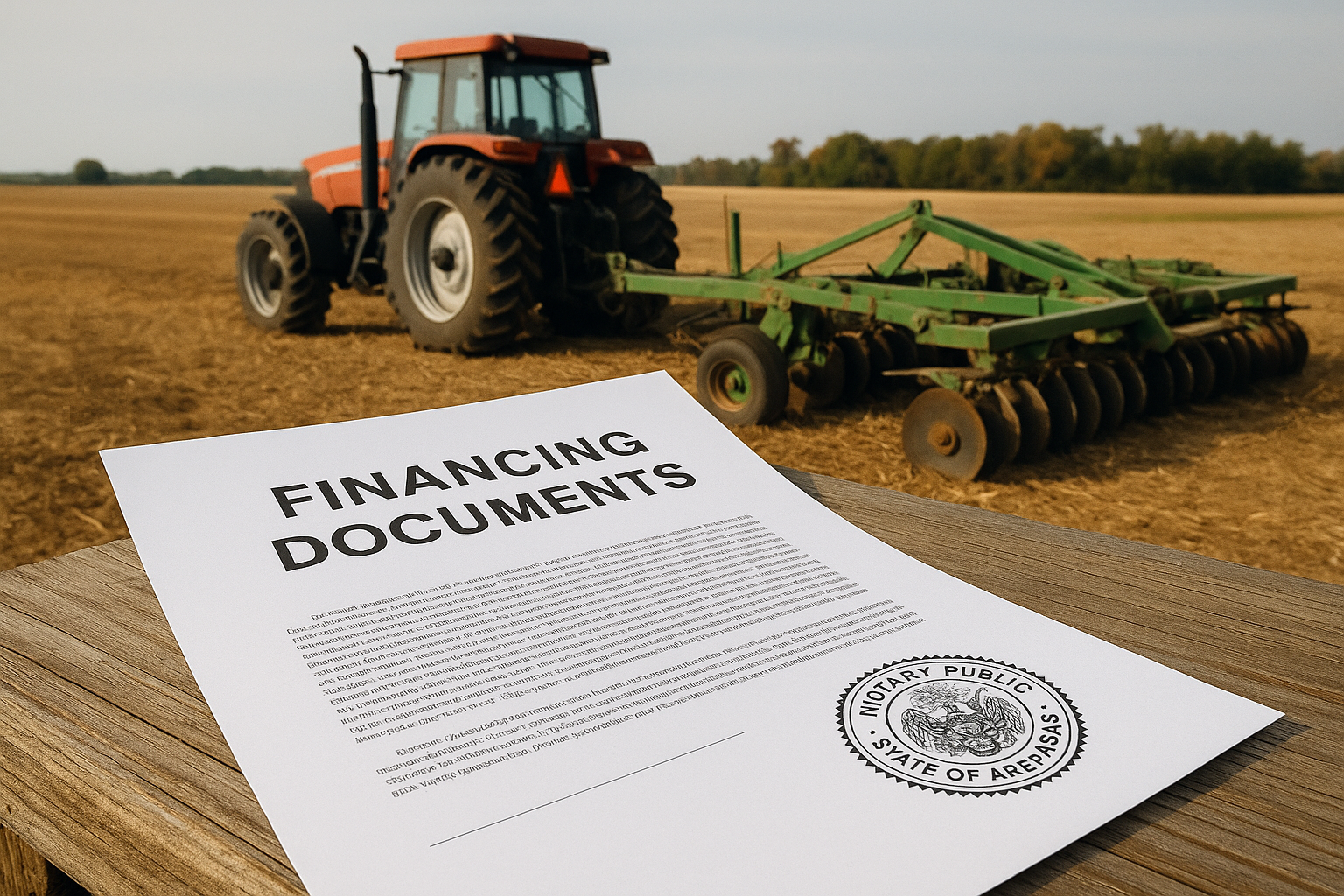
Arkansas’s $19 billion agricultural economy generates constant notary demand through equipment financing, land transactions, and cooperative agreements. Farmers need Arkansas notary professionals who understand their schedules, can work around harvest times, and know the difference between a crop lien and a mineral rights lease.
This specialization commands premium rates because general notaries often can’t handle the complexity. You become the go-to person for agricultural documents in your area.
Tom specializes in agricultural documents in Arkansas County, where rice farming dominates. He learned the seasonal patterns of rice production, built relationships with equipment dealers, and developed expertise in USDA loan documents. During planting and harvest seasons, he charges $150 per farm visit (covering multiple documents) because farmers value his understanding of their time constraints and document complexity.
Urban Market Penetration Strategies
Cities like Little Rock and Fayetteville have different opportunities focused on volume and convenience. Real estate transactions, corporate services, and healthcare facilities provide steady work, but you need different positioning strategies.
Urban success comes from efficiency, reliability, and building systems that handle higher transaction volumes. You’re competing on speed and convenience rather than scarcity.

Technology Integration That Actually Matters
Arkansas adopted remote online notarization, but most Arkansas notary professionals haven’t figured out how to use it effectively. The technology expands your market reach and creates competitive advantages, but implementation requires understanding both the technical requirements and the client experience aspects that determine success or failure.
I’ve seen too many notaries jump into RON without proper preparation and end up frustrated with technical issues and unhappy clients.
Remote Online Notarization Platform Selection
Choosing the right RON platform significantly impacts your business success. Arkansas has specific compliance requirements that not all platforms handle well, and the user experience varies dramatically between providers.
I’ve found that evaluating platforms based on Arkansas-specific features, reliability, and client onboarding processes helps you avoid costly mistakes. You want something that works smoothly for both you and your clients.
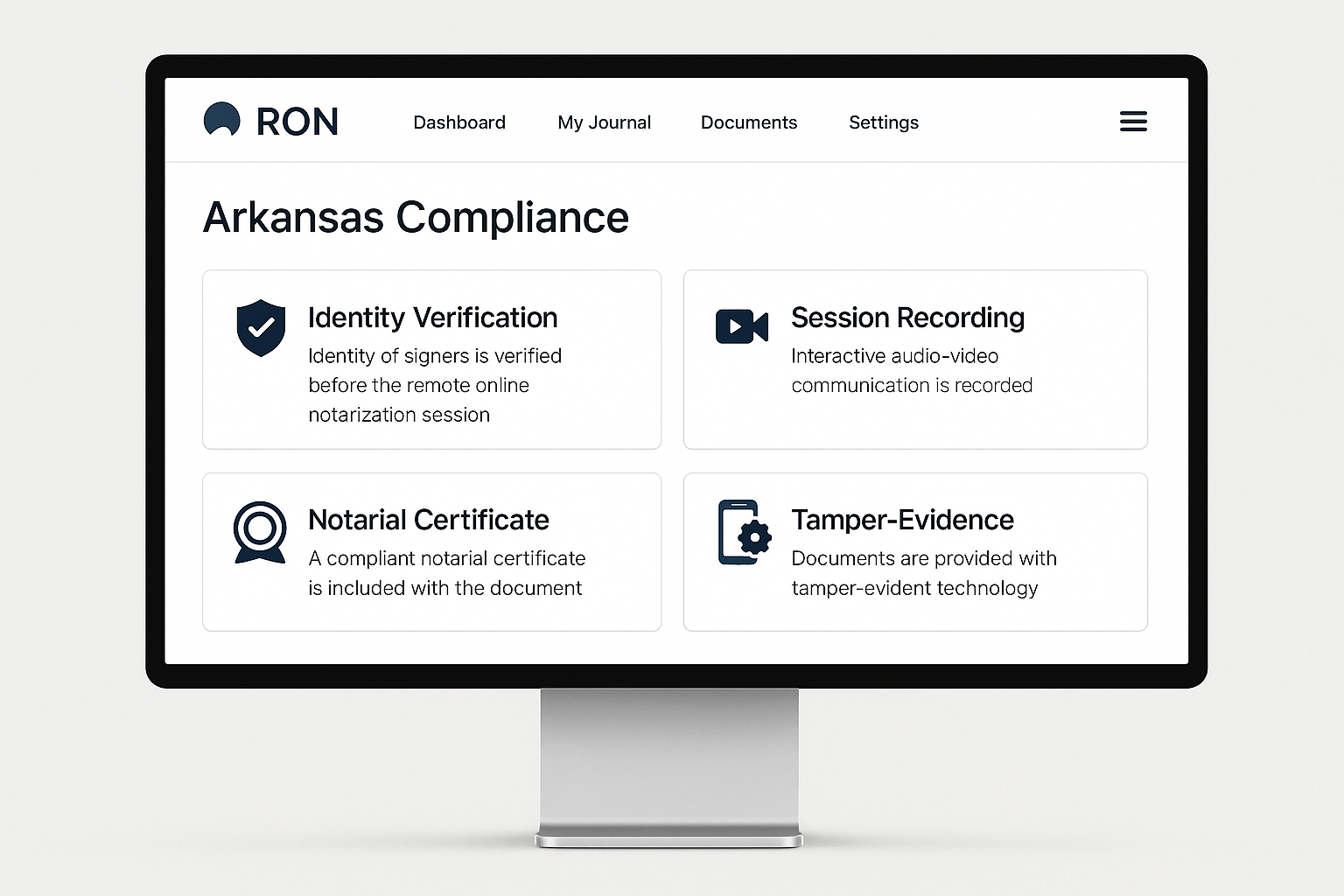
| RON Platform Feature | Importance Level | Arkansas Compliance | Client Experience Impact |
|---|---|---|---|
| Identity Verification | Critical | Must meet state standards | High – affects trust |
| Document Security | Critical | Encryption required | Medium – background process |
| Session Recording | Critical | Required by law | Low – transparent to client |
| Mobile Compatibility | High | Not required but valuable | High – convenience factor |
| Integration Capabilities | Medium | Varies by business needs | Medium – workflow efficiency |
Technical Infrastructure Requirements
RON requires reliable internet, backup power systems, and troubleshooting protocols for when things go wrong (and they will). Clients get frustrated quickly with technical issues, so having redundant systems and clear procedures for handling problems protects your reputation and ensures smooth transactions.
RON Technical Setup Checklist:
- Primary internet connection with minimum 5 Mbps upload speed
- Backup internet connection (mobile hotspot or secondary provider)
- Uninterruptible power supply (UPS) for computer and router
- High-quality webcam and microphone for clear communication
- Backup computer or tablet for emergency situations
- Document troubleshooting procedures for common technical issues
- Client communication scripts for technical delays
Data Security and Client Trust Building
Handling sensitive documents digitally requires security measures that exceed minimum requirements. This becomes a competitive differentiator because clients increasingly worry about identity theft and document security.
Implementing superior security practices and communicating them effectively builds trust and justifies premium pricing. Your clients need to know their information is safe with you.

Building Professional Networks That Pay Off
Arkansas notary success depends heavily on relationships within specific professional communities. You can’t just hang out a shingle and expect clients to find you.
Building strategic networks requires understanding how different professional ecosystems work and positioning yourself as a valuable resource rather than just another service provider. People refer business to people they know and trust.
Legal Professional Integration
Arkansas legal professionals represent your highest-value clients, but they have specific expectations about quality, timing, and professionalism. Building relationships with attorneys, paralegals, and court staff creates referral opportunities, but you need to prove you understand their world and can deliver consistently under pressure.
These folks deal with deadlines and demanding clients all day. They need to know you won’t let them down when they refer someone to you.

County Clerk Relationship Development
Each Arkansas county operates differently, with distinct procedures and personalities. County clerks and their staff can become incredible referral sources when you take time to understand their specific requirements and offer to help during busy periods.
These relationships also provide insights into local document requirements that help you serve clients better. The clerks know what documents people struggle with most in their area.
While most states have constitutional requirements about religious beliefs for public office, the Supreme Court ruled in the 1961 case Torcaso v. Watkins (involving a Maryland man attempting to become a notary public) that such requirements are “unconstitutionally invades his freedom of belief and religion guaranteed by the First Amendment.” This landmark case established that notaries cannot be discriminated against based on religious beliefs. “Atheist Ban Public Office US Missing Context” Full Fact
Real Estate Market Penetration
Arkansas real estate markets vary dramatically between urban centers and rural areas, each requiring different service approaches. Title companies and real estate agents need Arkansas notary professionals who understand transaction timelines, can handle last-minute changes, and know Arkansas-specific property documents.
Building these relationships takes time but creates steady income streams. Real estate transactions happen consistently, and agents remember notaries who make their lives easier.

Healthcare and Elder Care: The Goldmine Market
Arkansas has a significant aging population requiring specialized notary services for healthcare directives, estate planning, and elder care documents. This market is underserved because many Arkansas notary professionals don’t understand the complexity of healthcare documents or feel comfortable working with elderly clients.
However, families desperately need these services and will pay well for notaries who handle them professionally. You’re providing peace of mind during stressful times.
Advanced Directive Expertise
Arkansas healthcare directives have specific legal requirements that many notaries don’t fully understand. Developing expertise in this area creates opportunities for specialized service offerings because families need guidance navigating complex healthcare decisions.
This requires studying Arkansas healthcare directive statutes and building relationships with elder law attorneys and healthcare facilities. The investment in education pays off through higher fees and steady referrals.

Healthcare Document Specialization Checklist:
- Study Arkansas healthcare directive statutes and requirements
- Build relationships with elder law attorneys and estate planners
- Develop expertise in power of attorney documents
- Create mobile service packages for assisted living facilities
- Understand HIPAA compliance requirements for healthcare settings
- Establish referral relationships with healthcare social workers
Mobile Services for Healthcare Facilities
Assisted living facilities, hospitals, and nursing homes regularly need notary services, but many Arkansas notary professionals avoid these environments. Developing mobile services for healthcare facilities creates steady income because these institutions have ongoing needs and appreciate reliable service providers who understand their unique requirements and patient privacy concerns.
Maria built a specialized practice serving three assisted living facilities in Northwest Arkansas. She charges $75 per visit plus $15 per document, scheduling regular weekly visits and emergency calls. Her understanding of healthcare privacy requirements and gentle approach with elderly clients generated $1,200 monthly from these facilities alone, with additional referrals to family members needing estate planning services.
Advanced Certifications Worth Your Time
Arkansas notary professionals can differentiate themselves through additional certifications that complement their basic commission. Strategic certification selection based on your target market creates competitive advantages and justifies premium pricing.
The key is choosing certifications that align with your business goals and local market demands. Don’t just collect certificates – get ones that actually help you serve clients better and charge more.
National Notary Association Certifications
NNA certifications provide credibility and specialized knowledge that Arkansas clients value, but success requires understanding which certifications match your market focus. The Certified Notary Signing Agent certification opens doors to real estate services, while other specializations target different market segments.
Professional certifications often require educational prerequisites, and if you need to obtain your high school diploma or replace lost academic credentials to meet certification requirements, ValidGrad can help you secure the necessary documentation quickly.
Loan Signing System Mastery
Arkansas mortgage markets have unique characteristics influenced by agricultural lending and rural development programs. Mastering these nuances creates opportunities for specialized service offerings because many Arkansas notary professionals don’t understand USDA rural development loans or agricultural lending requirements common in Arkansas.
You become the expert that lenders and real estate agents call when they have complex transactions that other notaries can’t handle properly.
Arkansas-Specific Legal Requirements You Can’t Ignore
Arkansas notary law contains specific nuances that differentiate it from other states, creating both opportunities and potential legal pitfalls. Understanding these distinctions is crucial for long-term success and risk mitigation.
Most generic notary guides miss these Arkansas-specific requirements that can make or break your business. You need to know what makes Arkansas different.
Surety Bond and Insurance Optimization
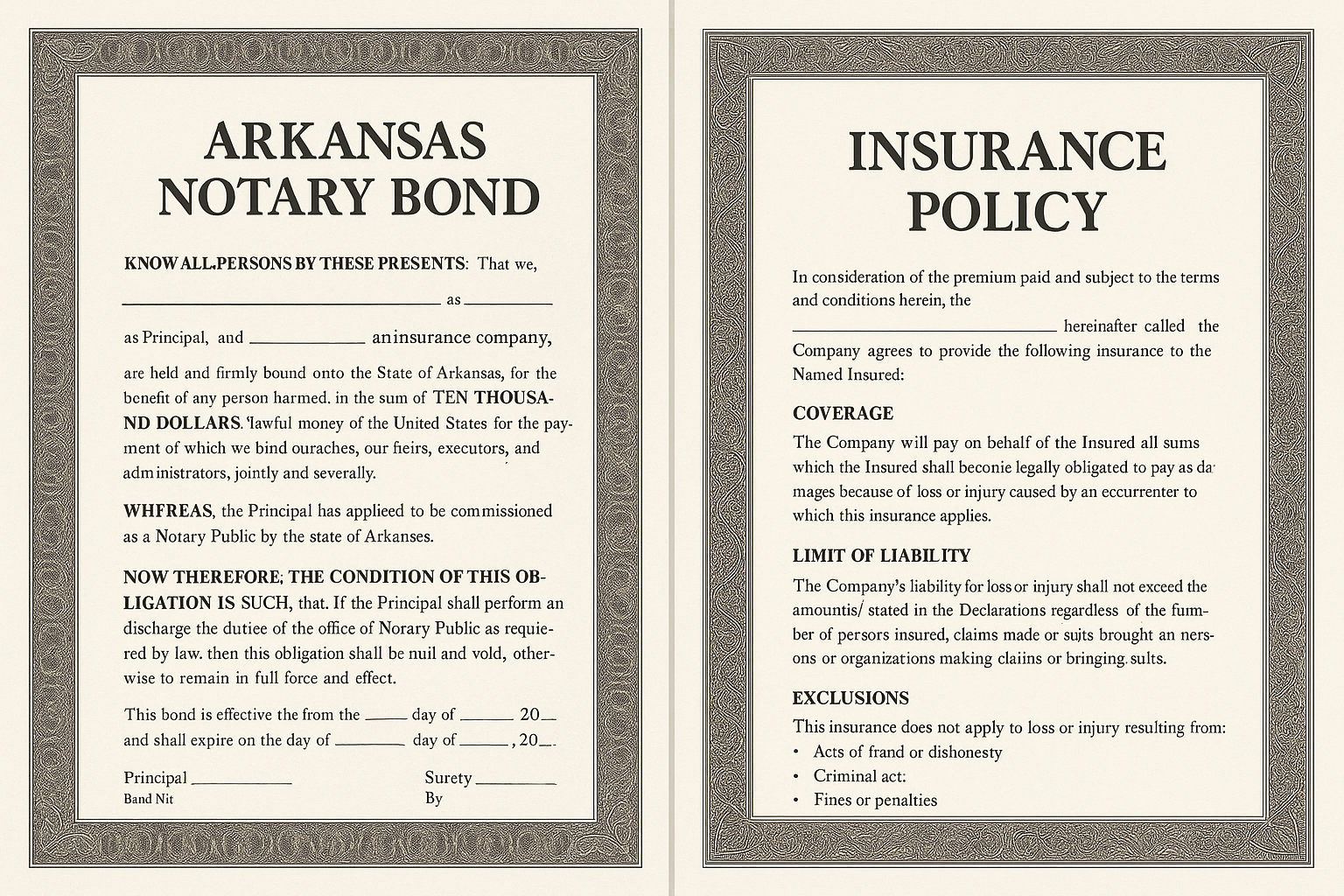
Arkansas requires a $7,500 surety bond, but most Arkansas notary professionals don’t understand how bond selection impacts their practice. Different providers offer varying claim procedures and premium structures that affect long-term costs.
Understanding the difference between bond coverage and errors & omissions insurance helps you make informed decisions about protecting your business. You want coverage that actually protects you when you need it.
All Arkansas notaries require a $7,500 notary bond as mandated by state law, and the state does not provide these bonds directly – they must be obtained through private providers. “Become Arkansas Notary” Notaries.com
Record Keeping Excellence Systems
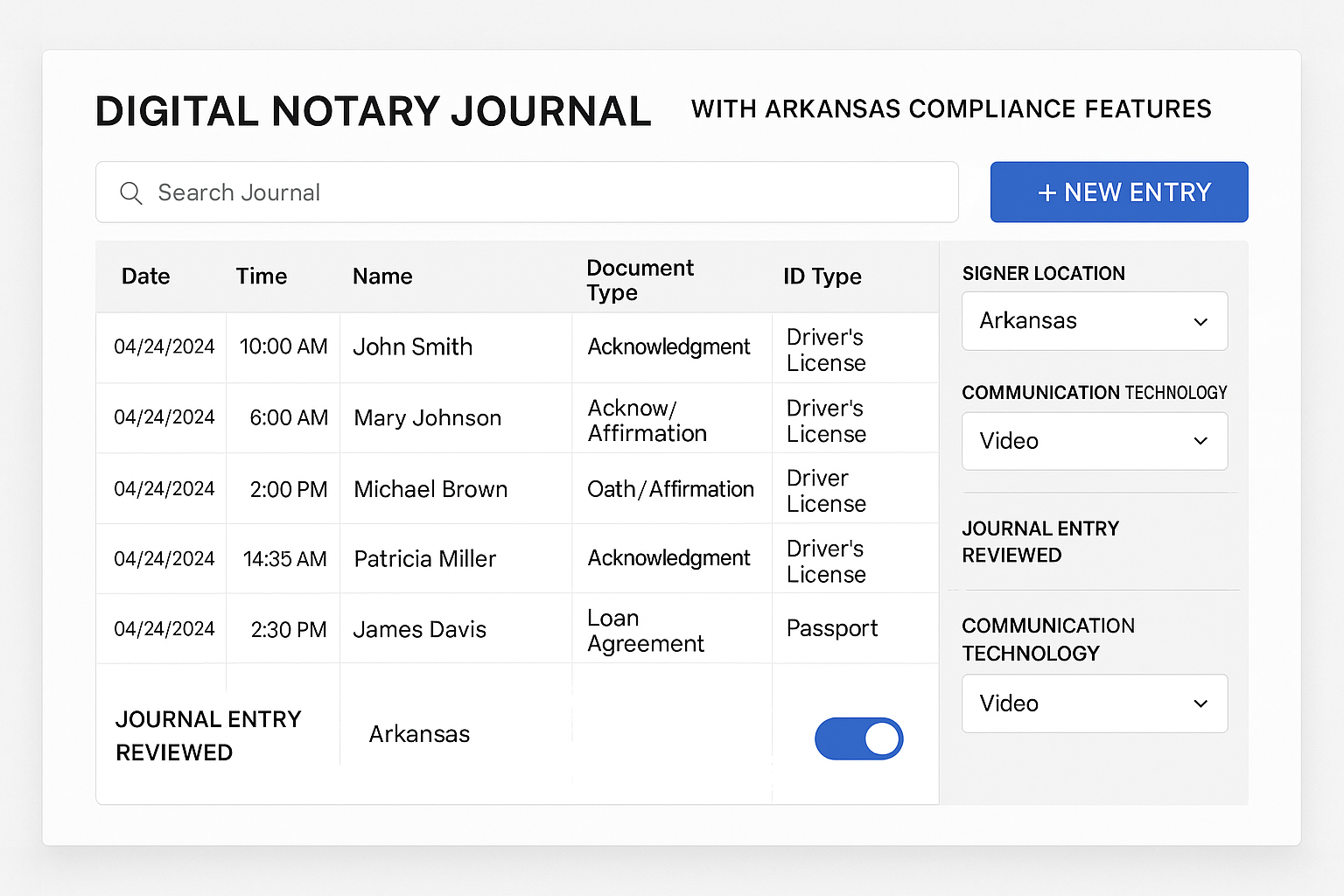
Arkansas notaries must maintain detailed records, but the state doesn’t specify exact formats. This creates opportunities to develop superior record-keeping systems that provide competitive advantages and legal protection.
Digital journal systems that exceed state requirements while providing operational efficiencies can become significant business assets. Good records protect you legally and help you serve clients better.
Arkansas Notary Record Keeping Checklist:
- Maintain detailed journal entries for every notarization
- Record client identification method and document type
- Document any unusual circumstances or client concerns
- Store records securely with backup systems
- Implement digital scanning for important documents
- Create monthly record review and organization procedures
- Establish secure storage for completed journal books
Untapped Market Segments in Agriculture and Manufacturing
Arkansas contains numerous underserved market segments that traditional notary marketing doesn’t address. The state’s agricultural economy and growing manufacturing base create consistent demand for specialized notary services.
Identifying and penetrating these markets requires understanding local demographics, economic patterns, and industry-specific document requirements. These sectors need notaries who understand their unique challenges.
Agricultural Sector Specialization
Arkansas agriculture generates substantial notary service demand through equipment financing, land transactions, and mineral rights agreements. This sector requires specialized knowledge because agricultural documents often involve complex terms and timing requirements that general Arkansas notary professionals struggle to handle effectively.
Farmers appreciate notaries who understand their world and can work around their schedules. Harvest time doesn’t wait for convenient office hours.
Manufacturing and Corporate Services
Arkansas manufacturing companies need notary services for contracts, compliance documents, and employee-related paperwork. This represents a stable, high-volume market segment that many Arkansas notary professionals overlook.
Corporate clients value reliability and professional presentation, often leading to ongoing service relationships. They need someone who shows up on time and handles their documents professionally.

Professional Documentation and Credibility Building
Your professional credibility as an Arkansas notary depends on presenting complete, accurate documentation of your qualifications. Clients want to work with Arkansas notary professionals who demonstrate professionalism through proper credentials display and comprehensive service offerings.
Sometimes you need to replace lost educational documents to maintain professional presentation standards, and services like ValidGrad can help you quickly obtain high-quality diploma and transcript replacements that support your professional image.
Professional presentation matters significantly in the notary business, and if you need to display your credentials professionally or obtain replacement diplomas to support your Arkansas notary practice, ValidGrad provides high-quality solutions for maintaining your professional image.

Final Thoughts
Becoming a successful Arkansas notary goes far beyond meeting basic state requirements. The real opportunities lie in understanding your local market, building strategic relationships, and positioning yourself as more than just someone who stamps documents.
Whether you’re targeting rural agricultural communities, urban real estate markets, or specialized sectors like healthcare, success comes from solving real problems for people who need your services. The Arkansas notary professionals who thrive are those who see their commission as a foundation for building comprehensive service businesses that serve their communities while generating sustainable income.
Success as an Arkansas notary often depends on maintaining complete professional documentation, and if you need to replace lost educational credentials or obtain copies of your transcripts to support your professional standing, ValidGrad can help you maintain the credibility essential for long-term success in the Arkansas notary market.
Arkansas notary commission statistics show significant income potential beyond basic fees – mobile notaries in rural counties can earn 3-5x more per transaction due to travel premiums, healthcare facility specialists average $1,200+ monthly from institutional clients, and notaries with RON capabilities report 40% higher client satisfaction rates leading to increased referral business.
Key Takeaways:
- Arkansas notary success requires strategic thinking beyond basic commission requirements
- Geographic positioning and market specialization create sustainable competitive advantages
- Technology integration through RON capabilities expands your potential client base significantly
- Professional relationships with legal, real estate, and healthcare communities generate consistent referral streams
- Additional certifications and Arkansas-specific expertise justify premium pricing structures
- Understanding state-unique legal requirements protects your business while building client confidence
- Underserved markets in agriculture, manufacturing, and elder care offer substantial growth opportunities
- Professional presentation and credibility building support long-term business development