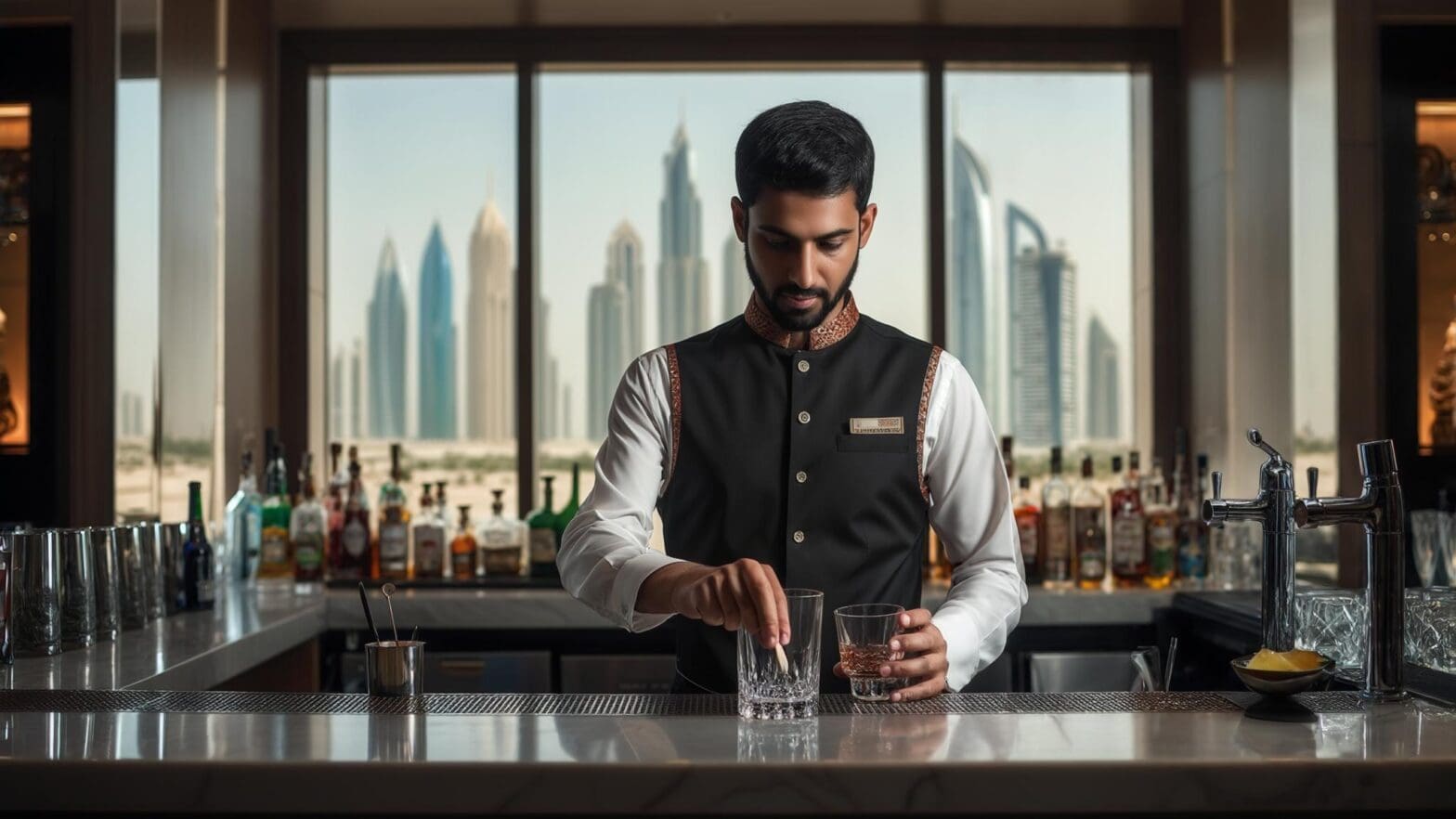
Three years ago, I thought bartending in Saudi Arabia was impossible. No alcohol, strict laws – what’s the point, right?
Turns out, I was completely wrong.
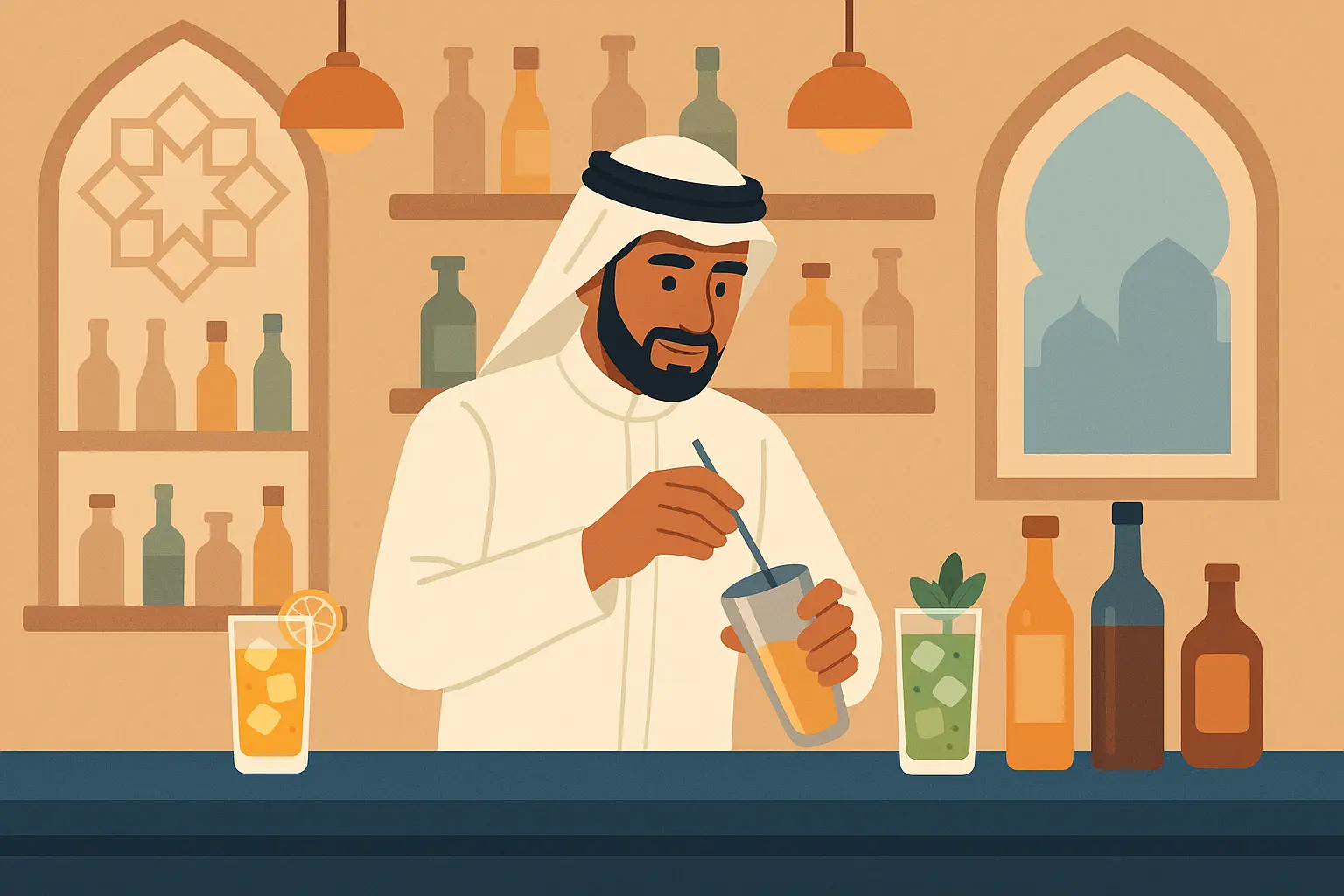
The hospitality scene here is booming, and skilled beverage professionals are making serious money. According to ERI Economic Research Institute, bartenders in Saudi Arabia earn an average of SAR 65,227 annually – that’s tax-free money with comprehensive benefits packages. But here’s the catch: everything you know about traditional bartending goes out the window.
What Nobody Tells You About Saudi’s Hospitality Market
Forget everything you think you know about bartending. In Saudi Arabia, you’re not mixing cocktails – you’re crafting elaborate virgin mojitos with fresh mint and pomegranate juice, designing coffee experiences that rival any specialty shop, and creating non-alcoholic beverages that still wow international guests.
My former colleague made this transition beautifully. He went from Dubai cocktail bars to the Ritz-Carlton Riyadh, saw his salary jump 40%, and now he’s the go-to guy for creating Instagram-worthy mocktails that guests prefer to alcoholic versions.
Working Within the Cultural Framework
The opportunities lie in diplomatic compounds, international hotels with special permits, and private venues serving international clientele. You’re adapting your skills to serve sophisticated non-alcoholic beverages that require the same level of expertise and presentation as traditional cocktails.
Cultural sensitivity isn’t optional – it’s essential. The most successful professionals here embrace the challenge of creating sophisticated alcohol-free experiences. You’ll master mocktail creation, understand halal dietary restrictions, and learn to read cultural cues that affect guest interactions.
Cultural Reality Check:
Master “Ahlan wa sahlan” (welcome) and “Shukran” (thank you) – you’ll use them 50 times a day. During Ramadan, adjust your service timing around Iftar. And yes, you’ll need to understand why some guests won’t shake hands – it’s not personal.
Where the Real Money Is
The real opportunities are hiding in:
-
International hotel chains (Marriott, Hilton, Four Seasons)
-
Private events and corporate functions
-
New entertainment complexes from Vision 2030
-
Diplomatic compounds and exclusive venues
International hotel chains are your best bet. These establishments cater to business travelers and international guests who expect high-quality beverage service. They’re willing to pay premium salaries for professionals who can deliver five-star experiences while respecting local customs.
|
Hotel Chain |
Average Monthly Salary (SAR) |
Benefits Package |
Typical Requirements |
|---|---|---|---|
|
Four Seasons |
8,000-12,000 |
Housing + Transport + Medical |
5+ years international experience |
|
Marriott |
6,000-10,000 |
Housing allowance + Medical |
3+ years hospitality experience |
|
Hilton |
5,500-9,500 |
Furnished accommodation + Transport |
Hospitality certification + English fluency |
|
InterContinental |
6,500-11,000 |
Housing + Car allowance + Medical |
International experience + Arabic basics |
The private event market is exploding. Corporate events, high-end weddings, and private parties need skilled professionals who can create memorable beverage experiences. The pay is often higher than hotel work, and you’re dealing with clients who appreciate exceptional service.

Vision 2030 is creating entirely new entertainment venues – theme parks, resorts, and entertainment complexes that need beverage professionals. These positions often come with the highest salaries because they’re establishing new service standards in a rapidly evolving market.
Location Makes a Huge Difference
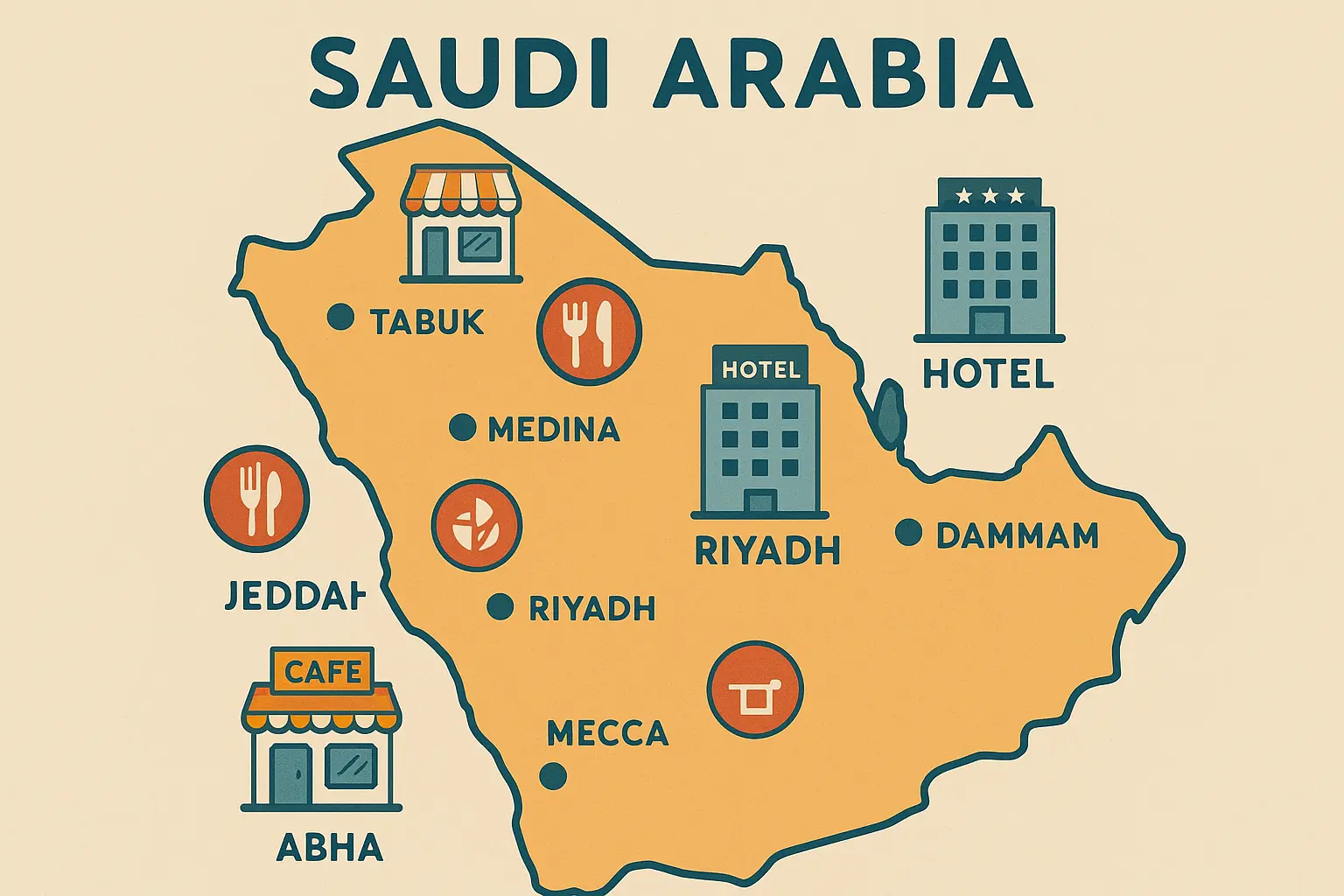
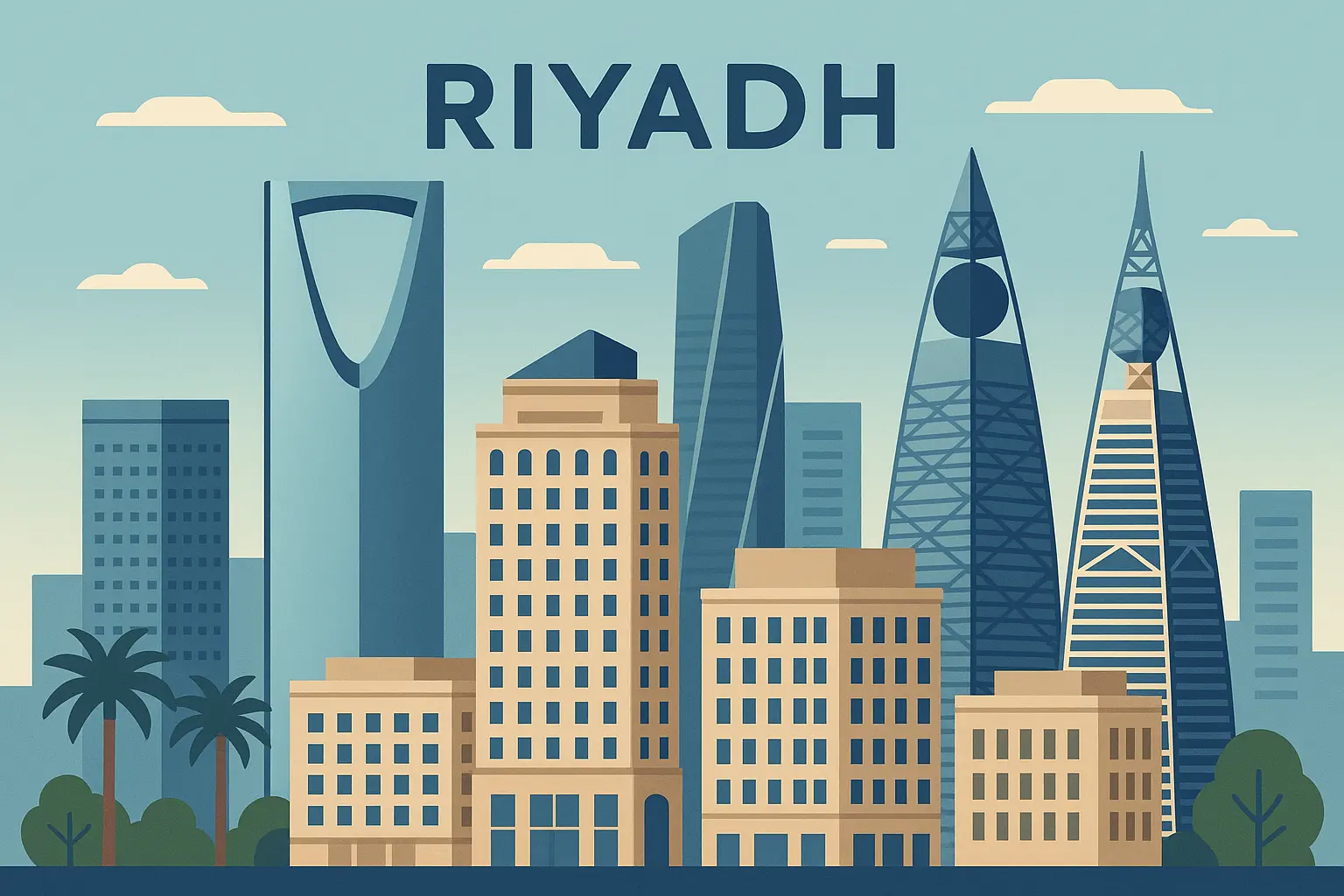
Riyadh is where you’ll find the highest salaries. As the capital, it has the most international hotels, corporate headquarters, and diplomatic presence. Bartenders here earn 20-30% more than their counterparts in other cities because demand is higher and clientele expects premium service.
Jeddah offers different opportunities. It’s the commercial gateway to Saudi Arabia, with a more cosmopolitan atmosphere and established international business community. Salaries might be slightly lower than Riyadh, but the cost of living is more reasonable, and there’s steady demand for skilled hospitality professionals.
What You’ll Actually Make
Understanding compensation goes far beyond base salaries. The total package can be worth significantly more than what you’d earn in most other markets, especially when you factor in tax-free status and comprehensive benefits.
According to ERI Economic Research Institute, bartenders in Saudi Arabia earn an average of SAR 31 per hour, which translates to significant monthly earnings when combined with typical 48-hour work weeks common in hospitality.
Starting out: 3,000-5,000 SAR/month (plus housing and transport)
With experience: 5,000-8,000 SAR/month
Senior roles: 8,000-15,000 SAR/month
Remember, this is tax-free money with your housing covered. Do the math – you’re keeping way more than you would elsewhere.
Sarah, a hospitality graduate from the Philippines, started at a Marriott property in Jeddah earning 3,500 SAR monthly. After completing Arabic language classes and obtaining her barista certification, she was promoted to senior beverage attendant within 14 months, increasing her salary to 6,200 SAR plus performance bonuses.

The Benefits That Change Everything
The housing and transportation benefits can add 2,000-4,000 SAR to your monthly compensation. Many employers provide fully furnished apartments or housing allowances, plus company transportation or car allowances. When you factor this in, your effective salary is much higher than the base amount.
|
Benefit Type |
Typical Value (SAR/month) |
What’s Included |
|---|---|---|
|
Housing Allowance |
1,500-3,000 |
Furnished apartment or housing stipend |
|
Transportation |
500-1,200 |
Company shuttle or car allowance |
|
Healthcare |
800-1,500 |
Comprehensive medical, dental, vision |
|
Food Allowance |
300-800 |
Meal vouchers or cafeteria access |
|
Annual Leave |
1,000-2,000 |
Paid vacation plus flight allowance |
|
Total Additional Value |
4,100-8,500 |
Combined monthly benefit value |
The healthcare benefits are genuinely impressive. We’re talking comprehensive medical, dental, and vision coverage – not just for you, but often for your family too. Premium employers offer international health insurance that covers treatment anywhere in the world. This benefit alone can be worth 1,000-2,000 SAR monthly if you were paying for it yourself.
Building Your Skills and Boosting Your Income
Career advancement requires strategic thinking and continuous skill development. The market rewards professionals who understand both international standards and local preferences.

Certifications That Pay Off
The growing importance of barista skills is evident globally, as noted in “The Telegraph India” report highlighting that “the average salary of a barista in Saudi Arabia is 234 SAR” per day for specialized coffee service roles, demonstrating the premium placed on certified beverage preparation skills.
International bartending certifications can increase your earning potential by 15-25%. Employers see these as proof that you’re serious about your craft and can deliver consistent, professional service.
High-Value Certifications:
-
International Bartenders Association (IBA) Certification
-
Specialty Coffee Association (SCA) Barista Certification
-
Wine & Spirit Education Trust (WSET) Level 2
-
ServSafe Food Handler Certification
-
American Hotel & Lodging Educational Institute Certification
-
Tea Sommelier Certification
Arabic fluency is non-negotiable for the best positions, but don’t stop there. French, German, or other European languages can set you apart in international hotels. Each additional language you speak professionally can add 500-1,000 SAR to your monthly salary.
Coffee expertise is huge in Saudi Arabia. Barista skills, specialty tea knowledge, and the ability to create sophisticated non-alcoholic beverages are incredibly valuable. Consider getting certified in coffee roasting, tea sommelier programs, or molecular mixology techniques adapted for non-alcoholic drinks.
Based on data from SalaryExpert, bartenders with specialized skills in non-alcoholic beverage preparation can command significantly higher compensation within the SAR 50,225 to SAR 75,142 salary range, particularly those who can demonstrate expertise in coffee service and mocktail creation.
Building Connections That Matter
The Saudi hospitality industry is smaller than you’d think, which makes networking incredibly powerful. Attend the Saudi International Tourism and Travel Exhibition, hospitality conferences in Riyadh and Jeddah, and F&B trade shows. These events are where hiring managers scout for talent and where you’ll hear about opportunities before they’re publicly posted.

Mentorship often happens informally, but it’s incredibly valuable. Senior F&B managers and hotel executives are usually willing to guide promising professionals. Don’t be afraid to ask for advice or request informational interviews. Many of the best positions are filled through internal recommendations.
Ahmed, a beverage manager at the St. Regis Riyadh, mentored three junior bartenders over two years. All three received promotions within 18 months – one became an assistant F&B manager earning 12,000 SAR monthly, another moved to a luxury resort in NEOM earning 14,500 SAR, and the third opened his own beverage consulting business for private events.
Getting Hired: The Practical Stuff
Successfully entering the Saudi Arabian market requires more preparation than most people realize. The bureaucracy can be overwhelming, but understanding the process upfront saves months of frustration later.
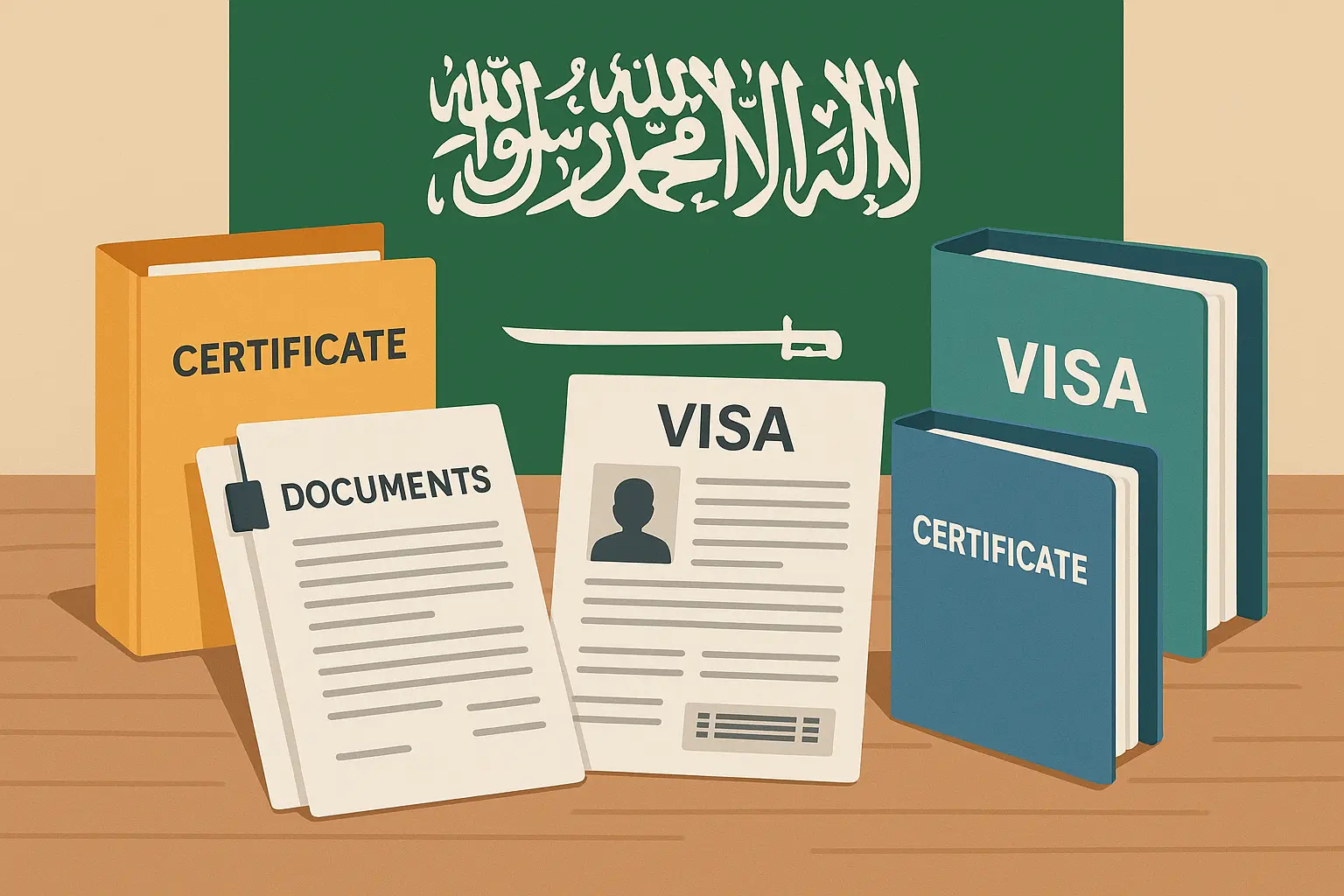
Getting Your Paperwork Right
Saudi Arabia’s sponsorship system means your employer vouches for you with the government. You’ll need authenticated educational certificates, detailed experience letters from previous employers, medical clearances, and police background checks from every country you’ve lived in for more than six months. The process can take 2-3 months, so start early.
Essential Documentation:
-
Educational certificates (authenticated by Saudi embassy)
-
Professional certifications (translated to Arabic if required)
-
Experience letters from previous employers (minimum 2 years)
-
Medical clearance certificate
-
Police background check (from all countries of residence)
-
Passport with minimum 6 months validity
-
Professional photographs (passport size)
-
Employment contract signed by sponsor
Job Search Strategies That Work
Bayt.com and GulfTalent are the go-to platforms for hospitality jobs in Saudi Arabia. LinkedIn is increasingly important, especially for senior positions. But here’s the key: tailor your profile and applications to emphasize cultural adaptability, non-alcoholic beverage expertise, and any Middle East experience.

Sometimes the best approach is going directly to hotel HR departments. International chains like Marriott, Hilton, and InterContinental often prefer direct applications because it shows initiative and genuine interest. Research the hotels you want to work for, identify the F&B managers or HR directors on LinkedIn, and reach out professionally.
The Bottom Line
Saudi Arabia’s bartending scene isn’t traditional, but it’s profitable. You’ll make good money, gain unique experience, and help build something new in hospitality. Just come prepared to adapt, respect the culture, and see opportunity where others see obstacles.
The money is definitely there, especially when you factor in tax-free salaries and comprehensive benefits packages. But success requires more than just technical skills. You need cultural intelligence, adaptability, and the vision to see opportunities where others see limitations.
The market is growing fast with Vision 2030 driving massive hospitality expansion.
Get your documentation ready, start learning Arabic basics, and begin networking now. The opportunities are there – you just need to be smart about how you approach them.
Most importantly, don’t let documentation issues derail your plans. Whether it’s getting your credentials authenticated or having proper paperwork ready, make sure you have everything sorted before you start applying. The Saudi hospitality market is evolving rapidly, and there’s never been a better time to establish yourself as a professional who can bridge international service standards with local cultural expectations.