
Ever wonder if you’re getting paid fairly? Or maybe you’re job hunting and have no idea what to ask for? You’re not alone. Most Canadians have a fuzzy idea of what they should be earning, and the conflicting numbers thrown around online don’t help.
Let’s cut through the noise. The typical Canadian worker earns around $58,000 a year (that’s the median), while the mathematical average sits closer to $65,000. That $7,000 gap? It’s because high earners skew the numbers upward.
With average weekly earnings hitting $1,302 in June 2025 according to Statistics Canada – that’s roughly $67,704 annually – understanding where you stand has never been more crucial. Whether you’re negotiating a raise, switching jobs, or planning your next career move, these numbers can make or break your financial future.
Table of Contents
-
The Real Numbers: What Canadians Actually Earn Right Now
-
Where You Live Matters: Regional Salary Breakdowns
-
Industry Deep Dive: Which Sectors Pay the Most
-
Your Background’s Impact on Your Paycheck
-
Proven Strategies to Boost Your Earning Power
-
Final Thoughts
TL;DR
-
The average salary in Canada sits around $65,000 annually, but median income of $58,000 better represents what most people actually earn
-
Location dramatically affects your paycheck – Toronto and Vancouver offer higher salaries but come with steep living costs
-
Tech, healthcare, and finance consistently pay above national averages, while service industries typically fall below
-
Your education level, gender, age, and immigration status all influence earning potential in measurable ways
-
Strategic career moves, skill development, and effective negotiation can increase your salary by 15-50% above market rates
-
New graduates start below average but can reach above-average compensation within 5-7 years with proper planning
The Real Numbers: What Canadians Actually Earn Right Now
So what does $67,282 a year actually look like? About $5,600 a month before taxes, or roughly $4,000-4,200 take-home. But here’s the thing – that number means very different things depending on where you live.
Most people get confused when they see salary statistics thrown around. One report says the average wage is $65,000, another claims it’s $70,000, and you’re left wondering what any of this actually means for your career.
The confusion stems from how these numbers get calculated. Different organizations use different methods, time periods, and sample sizes. Some include part-time workers, others focus on full-time employees only. Some factor in bonuses and overtime, while others stick to base salaries.

Why Average vs. Median Actually Matters
Here’s why that $7,000 gap between average ($65,000) and median ($58,000) matters for your career planning. High earners skew the average upward. When a few people in your dataset earn $200,000+ while most earn $50,000-$60,000, the mathematical average gets pulled higher than what typical workers actually experience.
According to Dundas Life’s comprehensive analysis, the average annual salary in Canada in 2025 was $67,282. Break that down monthly and you get $5,607 before taxes. But remember – this gives you a baseline, not the whole story.
If you’re earning $58,000, you’re right at the median – meaning half of Canadian workers earn less than you do. That’s a different perspective than thinking you’re $7,000 below the “average.”
Your Monthly Reality Check
Let’s talk about what this means for your actual life. That $5,400 monthly gross income becomes roughly $4,000-$4,200 take-home pay after taxes, CPP, EI, and other deductions. Your actual purchasing power depends heavily on where you live and what your fixed expenses look like.
Consider Sarah, a marketing coordinator in Toronto earning $58,000 annually. Her monthly gross income is $4,833, but after taxes, CPP, and EI deductions, her take-home pay is approximately $3,600. When factoring in Toronto’s average rent of $2,500 for a one-bedroom apartment, she has $1,100 remaining for all other expenses. This shows why location matters so much, regardless of earning the national average.
The Inflation Reality Nobody Talks About
Here’s where it gets frustrating. Recent inflation has been brutal, eroding the value of salary increases that seemed generous just a few years ago. When inflation runs at 4% and you get a 3% raise, you’re actually taking a pay cut in real terms.
Recent data from Statistics Canada reveals that in 2024, the average hourly wage hit $35.20 for employees aged 15 and older. That’s an increase of $5.47 (+18.4%) compared with 2006 levels, though wages remained lower among women, younger employees, Indigenous people, and several racialized groups.
When you’re evaluating job offers or asking for raises, think about real purchasing power, not just the dollar amount on your paystub. This means pushing for increases that exceed inflation rates, or finding other ways to boost your total compensation package.
Where You Live Matters: Regional Salary Breakdowns
Location is everything. That $60,000 job in Halifax? You might actually live better than someone making $80,000 in Vancouver once you factor in housing costs. Let’s break down what really matters.
Canadian salaries exhibit massive geographic disparities that can make or break your financial goals. Provinces like Alberta and Ontario typically offer higher compensation due to resource industries and major urban centers, but the cost of living equation complicates the picture.
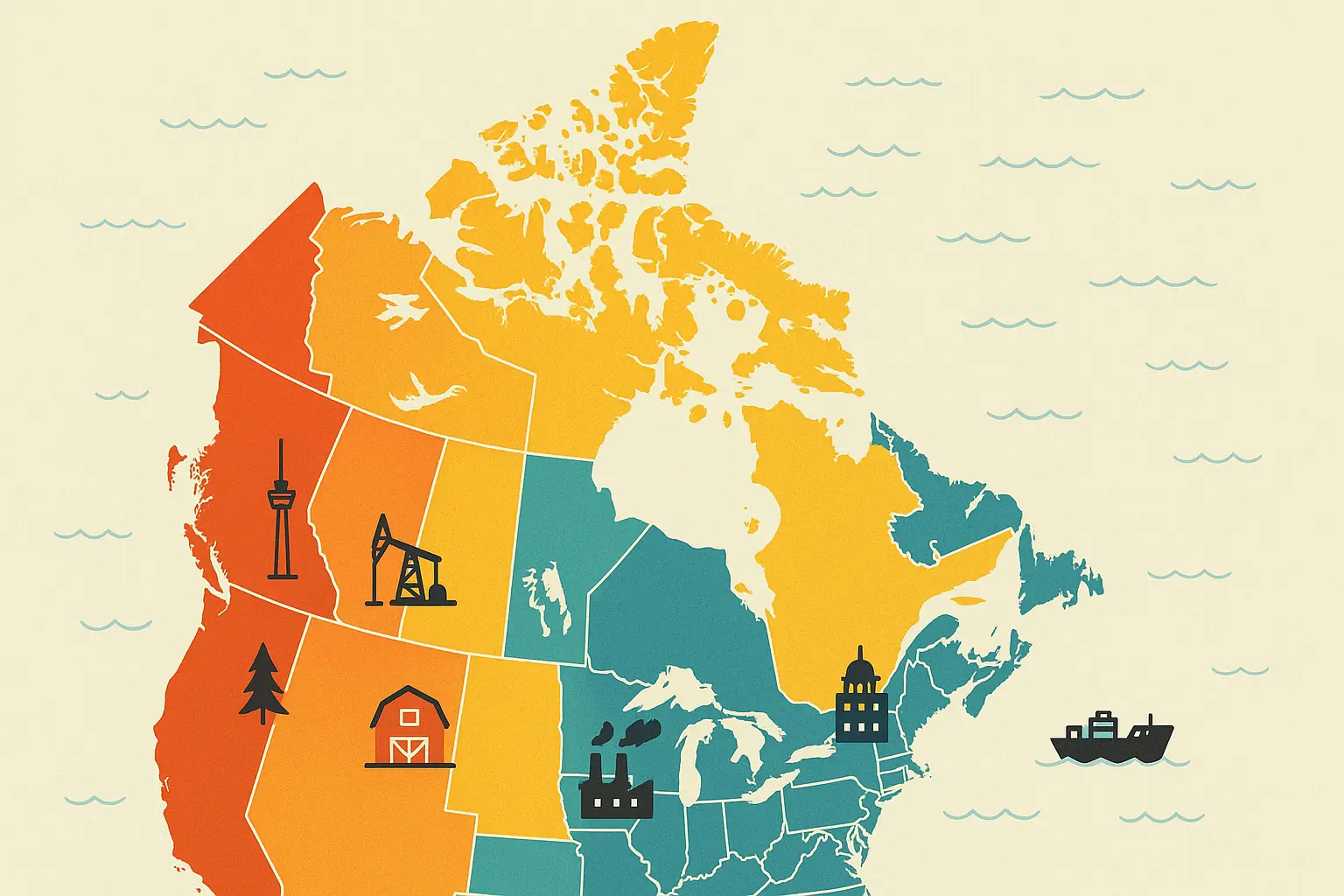
Here’s the breakdown of average weekly earnings and annual salaries by province and territory:
|
Province/Territory |
Average Weekly Earnings |
Annual Salary |
Year-over-Year Change |
|---|---|---|---|
|
Nunavut |
$1,762.13 |
$91,631 |
+6.2% |
|
Northwest Territories |
$1,737.69 |
$90,360 |
+0.3% |
|
Yukon |
$1,499.51 |
$77,975 |
+3.7% |
|
Alberta |
$1,369.72 |
$71,225 |
+2.8% |
|
Ontario |
$1,334.55 |
$69,397 |
+3.5% |
|
British Columbia |
$1,304.22 |
$67,819 |
+2.6% |
|
Saskatchewan |
$1,264.31 |
$65,744 |
+3.7% |
|
Quebec |
$1,258.30 |
$65,432 |
+5.1% |
|
Newfoundland and Labrador |
$1,270.69 |
$66,076 |
+2.9% |
|
New Brunswick |
$1,194.63 |
$62,121 |
+5.4% |
|
Nova Scotia |
$1,147.28 |
$59,659 |
+2.8% |
|
Prince Edward Island |
$1,144.78 |
$59,529 |
+7.9% |
|
Manitoba |
$1,170.07 |
$60,844 |
+2.3% |
The Urban Premium vs. Rural Reality
Metropolitan areas command premium salaries, often 20-30% higher than rural counterparts, but here’s the catch – housing costs can quickly eat up that extra income. The urban salary premium might look attractive on paper, but do the math carefully.
Rural areas offer their own advantages beyond lower living costs. Shorter commutes, stronger community connections, and often better work-life balance can offset lower nominal salaries. Some remote workers have figured out how to earn urban salaries while enjoying rural living costs – the best of both worlds.
Toronto, Vancouver, and Calgary offer the highest nominal salaries in Canada, driven by concentrated industries and competition for talent. However, these cities also demand the highest living costs, particularly for housing.
The math gets interesting when you dig into the details. A software developer earning $95,000 in Toronto might have less disposable income than someone earning $75,000 in Winnipeg after accounting for housing, transportation, and other urban costs.
According to Benefits Canada, Canadian employers are planning salary budget increases averaging 3.1% in 2026, with pharmaceutical and construction sectors projecting the highest increases at 3.8%, followed by telecommunications and IT consulting at 3.7%. These increases vary significantly by region, with major urban centers typically seeing higher percentage increases.
Where Your Dollar Goes Furthest
Some Canadian cities offer the sweet spot of decent salaries combined with reasonable living costs. Montreal stands out for its relatively affordable housing and strong job market. Calgary offers energy sector salaries with more reasonable housing costs than Vancouver or Toronto.
Halifax and other Maritime cities provide quality of life advantages that can offset lower nominal salaries. The key is calculating your total financial picture, including housing, transportation, taxes, and lifestyle costs.
Compare two software developers: Alex earning $85,000 in Vancouver pays $2,800/month for a one-bedroom apartment, while Jordan earning $75,000 in Montreal pays $1,400/month for similar housing. Despite earning $10,000 less annually, Jordan has $16,800 more disposable income after housing costs. This shows how regional cost differences can outweigh salary premiums.
Industry Deep Dive: Which Sectors Pay the Most
Want to know the fastest way to boost your salary? Pick the right industry. Some sectors consistently pay 50-100% above average, while others struggle to hit even median income. Here’s what you need to know.
Your career choice might be the single biggest factor determining your lifetime earnings. Some sectors consistently pay well above national averages, while others struggle to reach even median income levels.

Research from Dundas Life shows that mining, quarrying, and oil and gas extraction leads as the highest-paying sector with average weekly wages of $2,303, while sectors like retail recorded an average annual income of only $36,970 or $3,080 per month, barely keeping pace with inflation rates around 3%.
The High-Paying Sectors Everyone Should Know About
Certain industries consistently offer compensation well above the average salary in Canada, driven by specialized skill requirements, regulatory barriers, and market demand. These sectors represent your best opportunities for above-average earning potential, though they often require specific educational backgrounds or skill development.
|
Industry Sector |
Average Annual Salary |
Weekly Wage |
Growth Rate |
|---|---|---|---|
|
Mining, Quarrying, Oil & Gas |
$119,756 |
$2,303 |
+4.2% |
|
Professional Services |
$87,500 |
$1,683 |
+5.2% |
|
Finance & Insurance |
$82,000 |
$1,577 |
+5.2% |
|
Technology & IT |
$78,000 |
$1,500 |
+4.8% |
|
Healthcare |
$75,000 |
$1,442 |
+3.9% |
|
Construction |
$65,000 |
$1,250 |
+3.8% |
|
Manufacturing |
$58,000 |
$1,115 |
+2.1% |
|
Retail Trade |
$36,970 |
$711 |
+3.8% |
|
Food Services |
$32,000 |
$615 |
+2.5% |
Tech and Engineering: Where the Money Really Is
Software developers, data scientists, and engineers command salaries ranging from $80,000 to $150,000+, significantly exceeding the average Canadian salary due to high demand and specialized skills. The tech sector continues to drive salary growth across multiple roles, from coding to project management to technical sales.
What makes tech particularly attractive is the career progression potential. Junior developers might start at $60,000-$70,000, but senior roles
and specialized positions can reach $120,000-$200,000+ within 5-10 years. The industry also offers stock options, flexible work arrangements, and other benefits that boost total compensation.
For professionals in tech, understanding software engineer education requirements becomes crucial for maximizing earning potential in this high-paying sector. The field values skills and results over credentials in many cases, creating opportunities for non-traditional career paths.
Healthcare and Professional Services Premium
Medical professionals, lawyers, and specialized consultants often earn $100,000-$300,000+ annually, though these figures require extensive education and professional development investments. These careers represent the upper tier of Canadian earning potential, but they demand significant upfront commitments in time and money.
The healthcare sector offers particular stability and growth potential as Canada’s population ages. Nursing, physiotherapy, and other healthcare roles provide solid middle-class incomes with strong job security. Specialized medical roles command premium compensation but require years of additional training.

Your Background’s Impact on Your Paycheck
Here’s the uncomfortable truth: personal characteristics including education level, gender, age, and immigration status significantly influence earning potential. While some factors are beyond your control, understanding these dynamics helps you navigate career challenges and develop strategies to maximize your earning potential.
These demographic factors create measurable wage gaps that persist across industries and regions. Recognizing these patterns helps you make strategic decisions about education, career development, and job search approaches.

Education’s Return on Investment
Higher education generally correlates with increased earning potential, though the relationship varies by field and market conditions. The key is understanding which educational investments pay off and which might leave you with debt but limited earning improvement.
According to Statistics Canada, employees aged 25 and older with a bachelor’s degree or higher earned $44.67 per hour on average in 2024, a figure 55.0% higher than the average wage of those with a high school diploma or less ($28.82), while those with postsecondary education below a bachelor’s averaged $34.38 per hour.
Workers with only high school education typically earn 20-30% below the average Canadian salary, while university graduates often start 10-20% above average with greater long-term growth potential. However, the type of degree and field of study dramatically affect these outcomes.
Engineering, computer science, and business degrees typically offer strong returns on investment. Liberal arts degrees might provide valuable skills but often require additional career planning to translate into higher earnings. Trade programs can offer excellent earning potential with shorter training periods and lower debt loads.
When considering educational pathways, many professionals explore high school diploma or GED options as stepping stones toward higher education and improved earning potential.
Industry certifications and professional designations can increase earning potential by 15-25%, often providing more immediate returns than additional formal education. For many careers, targeted certifications offer better ROI than expensive degree programs, especially for mid-career professionals.
Career Stage Impact on Your Earning Trajectory
Here’s the reality check nobody talks about: your first job probably won’t pay great. Most new grads start around $40,000-55,000, below the national average. But don’t panic – with smart moves, you can hit above-average pay within 5-7 years.
Your first decade in the workforce typically sees the steepest salary increases. After that, growth often plateaus unless you make strategic moves into management, specialized roles, or high-demand industries.
Recent graduates typically start below the national average, but with proper career development can reach above-average compensation within 5-7 years. Your first job sets the foundation for future earning potential, making it crucial to choose opportunities that offer growth rather than just immediate compensation.
Got 10-15 years under your belt? You should be earning 50-100% more than when you started. If ‘re not, it’s time to make some strategic moves. This career stage offers the biggest opportunities for salary jumps through job changes, promotions, or industry transitions.
Mid-career professionals have built enough expertise to command premium compensation while still having decades of earning potential ahead. This is when strategic career pivots can pay off dramatically – moving from a lower-paying industry to a higher-paying one, or transitioning from individual contributor roles to management positions.
Senior managers and specialized professionals frequently earn $100,000-$200,000+, representing the upper tier of Canadian salary distributions outside executive levels. Peak earning years typically occur between ages 45-55, when professionals combine deep expertise with leadership responsibilities.
New graduates often face challenges with credential verification when applying for higher-paying positions, making services for replacing a lost diploma essential for career advancement opportunities.
Demographic Realities That Affect Your Salary
Despite progress toward equality, significant wage gaps persist across demographic groups. Understanding these disparities helps you navigate career challenges and advocate for fair compensation.
These gaps aren’t just statistics – they represent real financial impacts that compound over entire careers. A 10% wage gap might seem small annually, but over 30-40 years of work, it represents hundreds of thousands of dollars in lost earnings and retirement savings.
Women in Canada earn approximately 87 cents for every dollar earned by men, with gaps varying by industry, position level, and work arrangements. The gap widens at senior levels and in certain industries. Tech and finance show some of the largest disparities, while healthcare and education tend to have smaller gaps.
Peak earning years typically occur between ages 45-55, with younger workers often earning below average while building experience and older workers sometimes facing age-related employment challenges. Younger workers should focus on skill building and career positioning rather than maximizing immediate compensation.
New immigrants often earn 20-40% below average initially due to credential recognition challenges and Canadian experience requirements, though gaps typically narrow over 5-10 years. Professional licensing bodies and credential recognition processes vary by province and profession.
Maria, a 28-year-old marketing professional earning $52,000, strategically invested in digital marketing certifications and changed companies twice over five years. By age 33, she reached $78,000 as a senior marketing manager, demonstrating how strategic career moves during peak learning years can accelerate earning potential above national averages.

Proven Strategies to Boost Your Earning Power
The difference between passive and active career management can mean hundreds of thousands of dollars over your working lifetime. Most people leave money on the table by accepting whatever raises their employers offer rather than actively pursuing higher compensation.
Maximizing earning potential requires strategic career planning, continuous skill development, and understanding how to leverage market conditions to achieve above-average compensation. The strategies below can increase your salary by 15-50% above market rates through smart career moves and skill investments.

High-Demand Skills That Command Premium Pay
Skills with the highest ROI typically combine technical competency with business application. Pure technical skills become commoditized over time, but combining technical expertise with business understanding, communication skills, or industry knowledge creates lasting value.
Proficiency in data analysis, digital marketing, programming, and emerging technologies can increase earning potential by 25-50% above average Canadian salaries. These skills are increasingly valuable across industries, not just in traditional tech companies.
Data analysis skills are particularly valuable because every industry generates data but few professionals can extract actionable insights. Learning SQL, Python, or advanced Excel can boost your value regardless of your primary role.
High-Value Skills Development Template:
-
Current Skill Assessment: Rate your proficiency (1-10) in:
-
Data analysis and visualization
-
Digital marketing and SEO
-
Programming languages (Python, SQL, etc.)
-
Project management methodologies
-
Cloud computing platforms
-
-
Market Research Phase:
-
Identify 3-5 job postings in your target role
-
List required skills appearing in 70%+ of postings
-
Research average salary premiums for each skill
-
-
Learning Plan Creation:
-
Choose 2-3 skills with highest ROI potential
-
Set 90-day learning milestones
-
Identify free/low-cost learning resources
-
Plan practical application projects
-
-
Validation and Application:
-
Complete certification programs where available
-
Build portfolio demonstrating new skills
-
Update LinkedIn and resume with competencies
-
Apply new skills in current role for visibility
-
Negotiation and Career Advancement Tactics That Work
Effective negotiation can increase salary offers by 10-20%, but it requires research into market rates, clear value proposition communication, and understanding of employer constraints and motivations. Most people avoid negotiation or make career moves without strategic planning, leaving money on the table.
Timing matters enormously in salary negotiations. Annual review periods, after completing major projects, or when taking on additional responsibilities provide natural opportunities. Avoid negotiating during budget freezes or company restructuring periods.
Research comparable salaries using multiple sources – job postings, salary surveys, and professional networks. Present your case based on market data, your contributions, and future value rather than personal financial needs.
Changing employers every 3-5 years, pursuing internal promotions, and transitioning to higher-paying industries can accelerate salary growth beyond typical annual increases. External job changes typically offer 15-25% salary increases, while internal promotions might provide 8-15% bumps.
Industry transitions require careful planning but can dramatically boost earning potential. Moving from non-profit to corporate roles, or from traditional industries to tech, often provides significant salary jumps for professionals with transferable skills.
Building strong professional relationships often leads to better job opportunities and higher compensation, with networked job searches typically resulting in 15-25% higher salaries than online applications. Quality matters more than quantity in professional networking.
Industry associations, professional meetups, and online communities provide structured networking opportunities. Alumni networks from your school or previous employers can be particularly valuable for career advancement.
Salary Optimization Checklist:
-
Research industry-specific salary benchmarks for your role
-
Identify high-demand skills in your field worth developing
-
Document your achievements and quantifiable results
-
Build a professional network within your target industry
-
Schedule annual salary reviews with your manager
-
Consider geographic arbitrage opportunities
-
Pursue relevant certifications or training programs
-
Practice salary negotiation techniques
-
Maintain an updated LinkedIn profile and resume
-
Track industry trends and emerging opportunities

Final Thoughts
Bottom line: knowing these numbers is just the starting point. Your actual earning potential comes down to the choices you make – where you work, what skills you build, and how well you advocate for yourself. The good news? Most of these factors are within your control.
The $65,000 average and $58,000 median provide useful benchmarks, but your individual earning potential depends on the strategic decisions you make about location, industry, skills development, and career progression.
The salary landscape continues evolving rapidly, with technology disrupting traditional career paths while creating new high-paying opportunities. Regional differences remain significant, but remote work is starting to blur some geographic salary advantages. What hasn’t changed is the importance of continuous learning, strategic career planning, and effective self-advocacy in salary negotiations.
Your earning potential isn’t fixed by your current situation. Whether you’re starting your career, considering a change, or looking to accelerate your progression, the strategies and insights in this guide can help you move toward the higher end of Canadian salary distributions. The key is taking action on the opportunities that align with your skills, interests, and life goals.
For professionals seeking career advancement, ensuring proper documentation through academic transcript services can be essential for accessing higher-paying opportunities and demonstrating qualifications to potential employers.