
Most people think they understand AI research scientist salaries. They see those neat little averages posted on job sites and assume that’s the whole story. I’m here to tell you that traditional salary metrics completely miss the real picture.
According to the University of San Diego’s analysis, “the average annual AI research scientist salary is $130,117. However, this figure can vary significantly based on several factors, with some positions earning as low as $50,000, while others reach impressive heights of up to $174,000 annually” – though these traditional metrics barely scratch the surface of what top AI researchers actually earn through equity and alternative compensation structures.
The reality? We’re dealing with a compensation landscape where equity packages, geographic arbitrage, academic premiums, and alternative career paths can make or break your financial future. I’ve spent years watching brilliant researchers navigate this complex world, and I’m going to walk you through everything the industry doesn’t want you to know about AI research compensation.
Table of Contents
- The Real Deal Behind AI Research Compensation
- Skills That Actually Pay the Bills in AI
- Building Wealth Beyond Your Day Job
- Playing the Global Salary Game
- Mastering the Art of AI Salary Negotiation
- Long-Term Wealth Strategies for AI Researchers
- How ValidGrad Supports Your AI Career Journey
- Final Thoughts
TL;DR
- AI research scientist salaries aren’t just about base pay – 40-70% of total compensation comes from equity that can swing wildly
- Remote work has created massive salary arbitrage opportunities, letting you earn Silicon Valley wages while living anywhere
- Your H-index and publication record directly translate to $15,000-$25,000 salary bumps per 10-point increase
- Hot skills like transformer architecture expertise can command $50,000-$100,000 premiums (but only temporarily)
- Top consultants earn $1,500-$5,000 per hour, making part-time work more lucrative than full-time employment
- Strategic startup timing can generate 10-100x returns compared to traditional career progression
- International opportunities offer 20-70% compensation increases through tax optimization and market premiums
The Real Deal Behind AI Research Compensation
The AI talent wars have reached unprecedented levels. Meta CEO Mark Zuckerberg is personally recruiting for a new 50-person ‘Superintelligence’ AI team, with reports of $10M+/yr offers in cold hard liquid money according to Fortune. This represents a fundamental shift in how AI research compensation is structured at the highest levels.
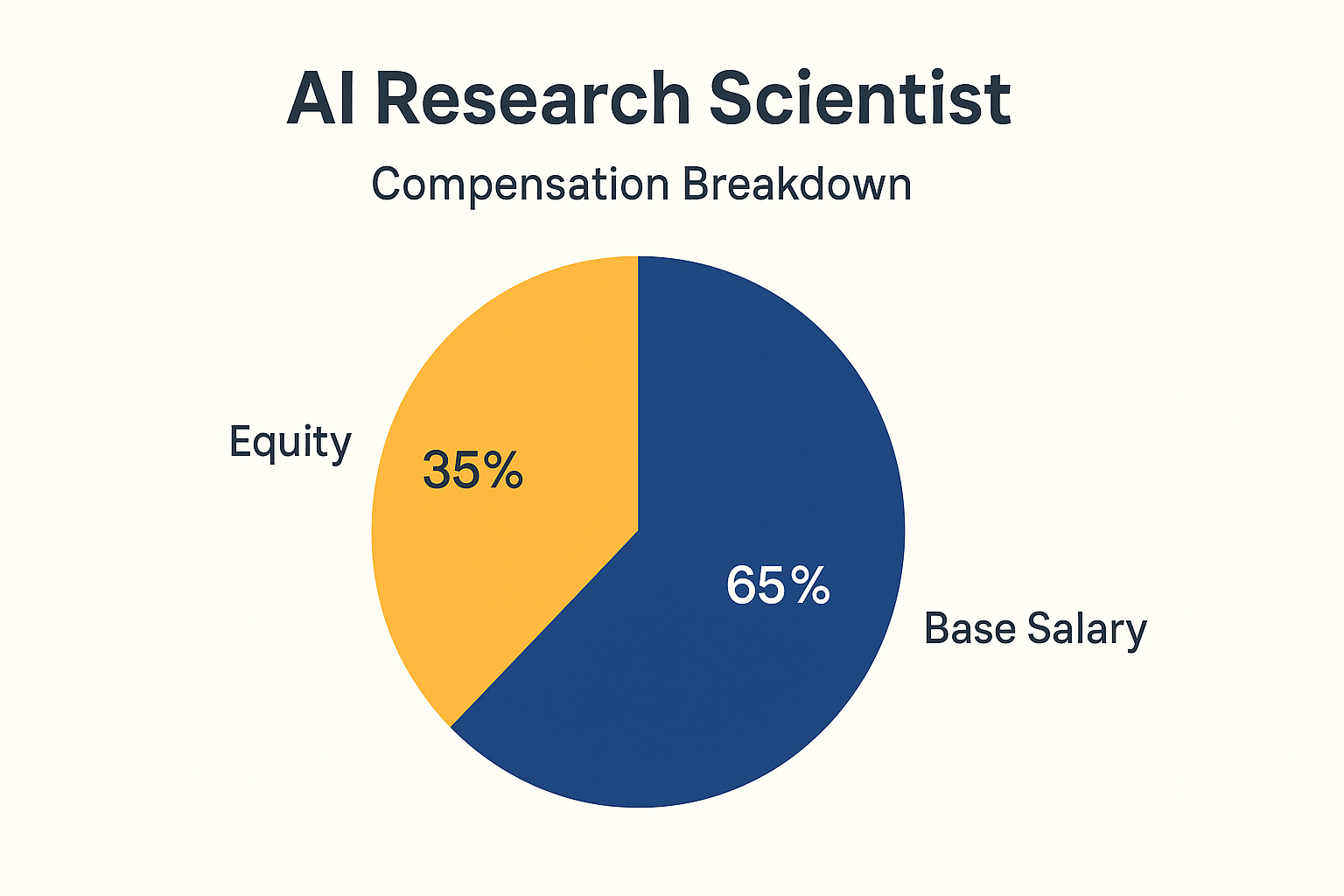
We’re witnessing something I’ve never seen before in tech. The compensation landscape for AI research scientists has become far more complex than simple salary figures suggest. Most professionals in this field receive the majority of their pay through equity packages that create both incredible opportunities and significant financial risks.
Understanding the true value of your credentials is crucial when negotiating these high-stakes packages, especially when considering whether your educational investment will pay off in this rapidly evolving field.
When Your Paycheck Becomes a Lottery Ticket
Equity compensation dominates AI research scientist packages, often representing 40-70% of total pay. This creates a volatile income stream where your financial success depends heavily on company performance and market conditions.
Your career essentially becomes a high-stakes investment game. I’ve watched researchers make decisions that seemed financially sound on paper, only to discover their equity packages were worth nothing when companies failed to exit successfully.
The Year-Long Wait That Changes Everything
Most AI companies structure equity with 4-year vesting schedules and 1-year cliffs. You won’t see a penny of equity compensation until you’ve stayed employed for a full year. This creates powerful retention mechanisms that can trap talented researchers in unsuitable positions.
I’ve seen brilliant researchers stick with toxic work environments simply because they couldn’t afford to lose their unvested equity. That first year becomes a psychological prison where you’re essentially working for free on the equity side of your compensation package.
Consider Sarah, a machine learning researcher who joined an AI startup with a $180K base salary plus $320K in equity over four years. After 11 months, she received a competing offer for $280K base salary elsewhere. Despite being miserable, she stayed for one more month to vest her first equity tranche worth $80K – a decision that ultimately cost her $100K in higher base salary but secured her equity upside.
When Million-Dollar Packages Turn Into Monopoly Money
Pre-IPO AI companies frequently offer stock options that look impressive on paper but may never convert to actual income. Many researchers discover their seemingly valuable equity packages become worthless when companies fail to go public or get acquired below their strike prices.
The harsh reality? I know researchers who turned down $300K cash offers for $500K “total compensation” packages that ended up being worth exactly zero dollars. Private company equity is essentially a bet on the company’s future success, and most bets don’t pay off.
The Smart Money’s Secret Strategy
Savvy AI researchers increasingly negotiate for shares in companies with established secondary markets, allowing them to liquidate portions of their equity before traditional exit events. This creates a new class of “equity-liquid” professionals who can access their compensation without waiting for IPOs or acquisitions.
Companies like Forge and EquityZen have created secondary markets where you can sell your private company shares. Smart researchers negotiate for shares that trade on these platforms, giving them liquidity options that most people don’t even know exist.
The Geography Hack That’s Changing Everything
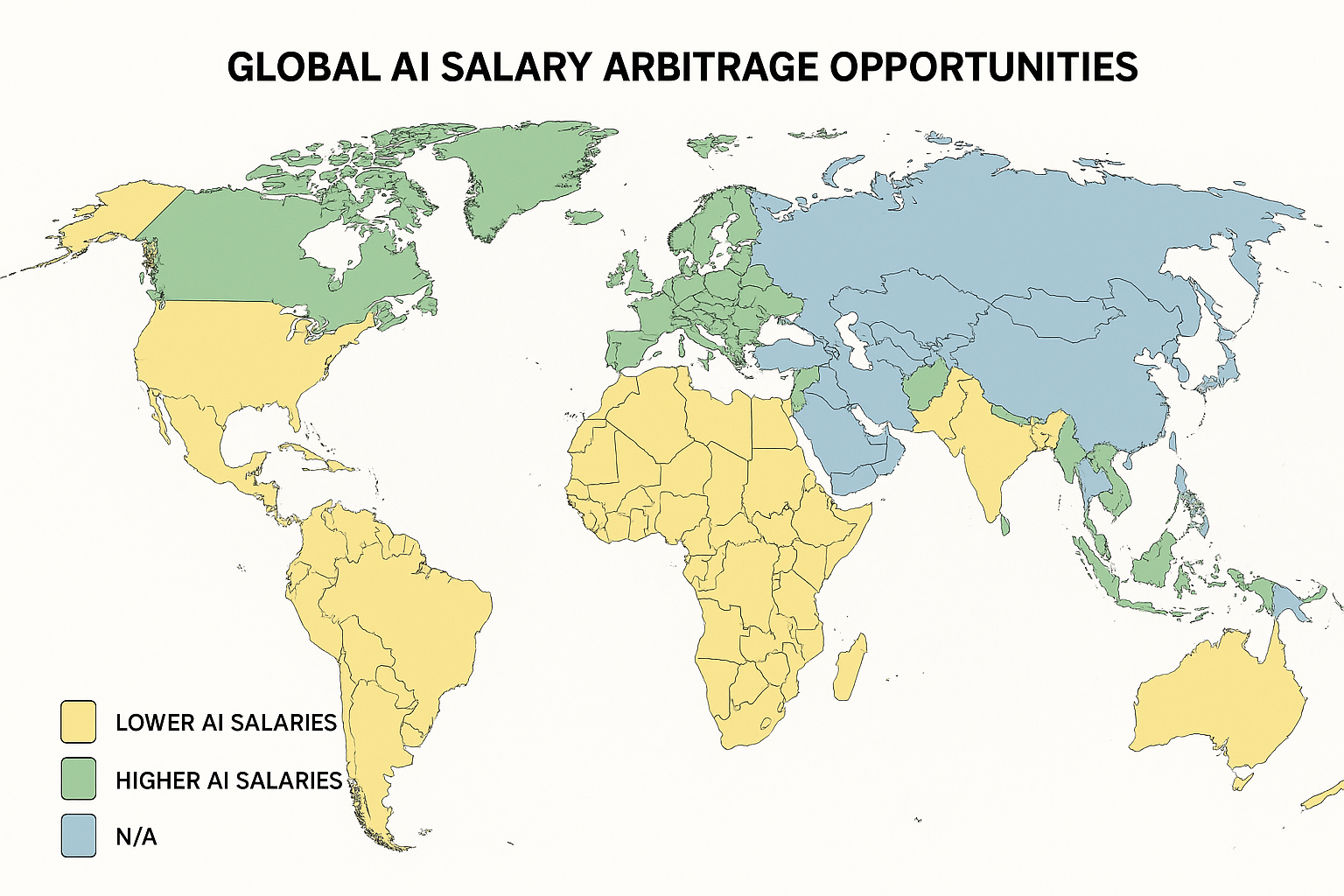
Remote work has fundamentally altered the economics of AI research careers by enabling geographic arbitrage. Researchers can now earn Silicon Valley-level compensation while living in significantly lower-cost areas, effectively increasing their real income by tens of thousands of dollars annually.
| Location | Average AI Research Salary | Cost of Living Index | Real Income Advantage |
|---|---|---|---|
| San Francisco, CA | $400,000 | 100 | Baseline |
| Austin, TX | $340,000 | 60 | +$20,000 |
| Raleigh, NC | $320,000 | 45 | +$40,000 |
| Remote (International) | $350,000 | 35 | +$65,000 |
The Austin Advantage That Nobody Talks About
AI researchers relocating from San Francisco to Austin can maintain 85-95% of their total compensation while reducing living costs by 40-50%. This geographic arbitrage effectively increases real income by $50,000-$80,000 annually without changing jobs or negotiating raises.
Here’s the math that’ll blow your mind: A $400K total comp package in SF becomes worth about $340K in Austin, but your living expenses drop from roughly $120K to $70K annually. You’re suddenly $20K richer just by changing your zip code.
The Global Talent Gold Rush
Top-tier AI researchers in countries like Canada, the UK, and Germany can now access US-level compensation through remote positions. This global talent redistribution is driving up salaries worldwide while creating new tax optimization strategies for international professionals.
Canadian researchers are particularly well-positioned here. They can earn US salaries while benefiting from favorable exchange rates and different tax structures. Some are effectively doubling their purchasing power compared to local market rates.
Your Academic Street Cred Actually Pays
Unlike traditional tech roles, AI research positions maintain strong academic components where publication records, conference presentations, and peer recognition directly translate to significant salary premiums and negotiation leverage.
According to the University of San Diego’s research, “the US Bureau of Labor Statistics projects an expected growth rate of 23% in roles related to Computer and Information Research Scientists by 2032” – significantly outpacing most other professions and creating unprecedented demand for credentialed AI researchers.
The Citation Game That Pays Real Money
Research demonstrates that each 10-point increase in H-index correlates with approximately $15,000-$25,000 in additional base salary. This makes academic productivity a quantifiable career investment with measurable financial returns.
Your H-index isn’t just academic vanity – it’s literally money in the bank. I’ve watched researchers negotiate higher salaries by pointing to their citation metrics. Companies understand that hiring someone with a strong publication record brings credibility and marketing value.
The Speaking Circuit Side Hustle
Established AI researchers can earn $10,000-$50,000 per keynote presentation, with top researchers commanding $100,000+ for exclusive corporate workshops. This creates substantial supplementary income streams that can exceed base salaries.
The speaking circuit is where the real money lives for established researchers. Once you’ve built a reputation, companies will pay premium rates for your insights. Some researchers I know make more from speaking than their day jobs.
Open Source Fame Equals Cold Hard Cash
Major contributions to popular AI frameworks like TensorFlow, PyTorch, or Hugging Face can increase salary offers by 20-30%. Companies recognize the marketing and technical value of employing recognized open-source contributors.
Contributing to major open-source projects isn’t just good karma – it’s career insurance. Companies love hiring people whose GitHub profiles demonstrate real impact. Your open-source contributions become part of your personal brand and negotiation leverage.
Your Patents Are Your Pension Plan
AI researchers with patent portfolios can negotiate retention bonuses of $50,000-$200,000 when changing companies. Their intellectual property becomes part of the hiring package negotiation, creating additional value beyond traditional compensation.
Patents in AI are like having a secret weapon in salary negotiations. Companies don’t just hire you – they’re also getting access to your intellectual property portfolio. This dual value proposition can significantly boost your negotiation position.
Skills That Actually Pay the Bills in AI
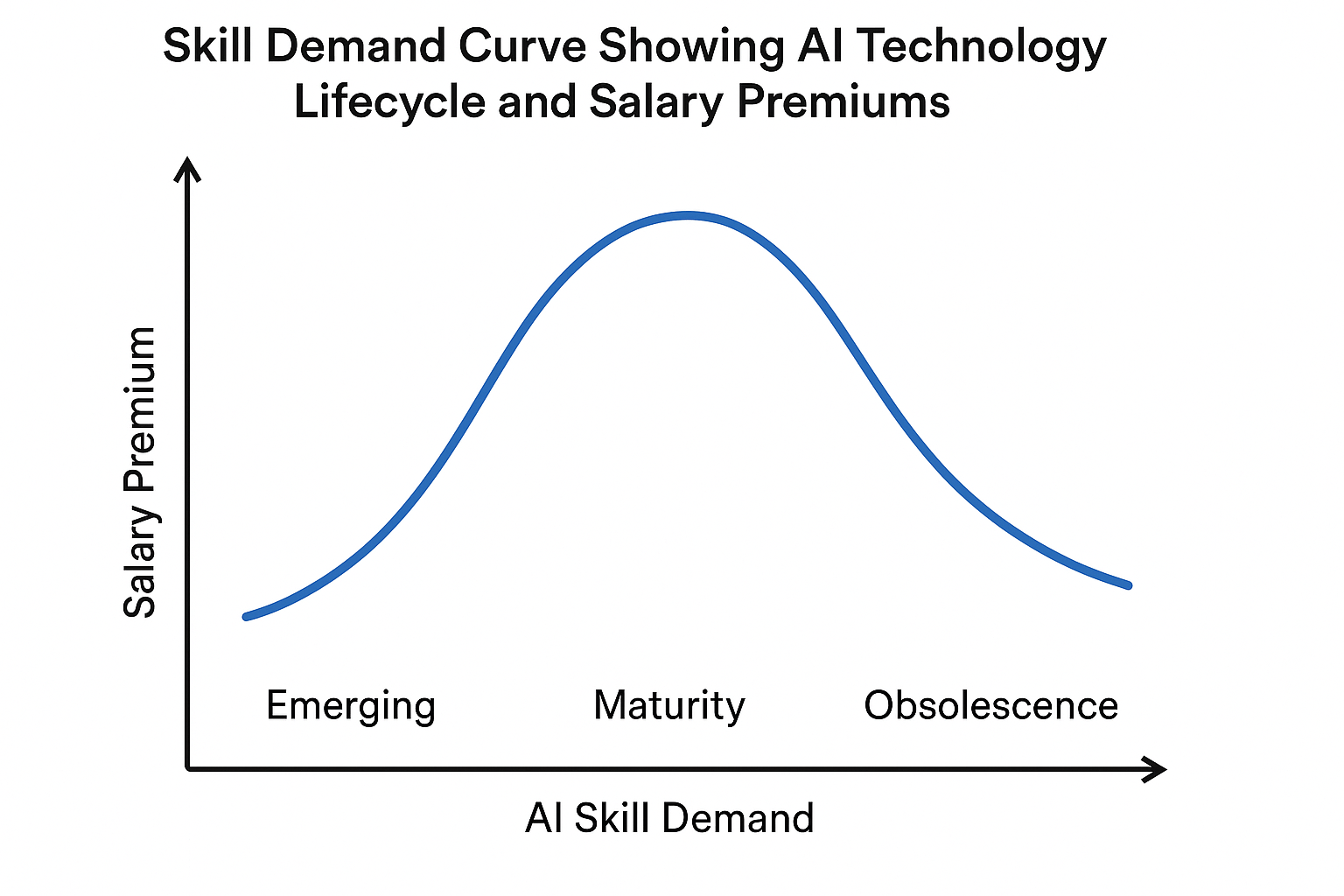
The AI field’s rapid evolution creates dynamic market conditions where specific technical skills can command premium salaries for brief windows. Success requires strategically timing career moves and skill development to maximize earning potential during these premium periods.
Riding the Technology Wave Before It Crashes
AI research skills follow predictable lifecycle patterns where emerging technologies command 50-100% salary premiums during their adoption phase, before normalizing as the skills become commoditized. Timing your expertise development is crucial for maximizing these premium windows.
The Transformer Gold Rush (While It Lasts)
Researchers with deep transformer model expertise currently command $50,000-$100,000 premiums over general ML roles. However, this premium is expected to normalize within 2-3 years as the technology becomes more widespread and accessible.
Transformer expertise is today’s hot ticket, but the window is closing fast. Companies are desperately seeking people who truly understand attention mechanisms and can optimize these models. But remember – today’s premium skill becomes tomorrow’s baseline requirement.
The Next Big Thing: Multimodal AI
Scientists working on vision-language models and multimodal architectures represent the current “hot skill” category, with specialized roles offering $200,000-$400,000 base salaries plus significant equity packages.
Multimodal AI is where the smart money is placing bets right now. If you can build systems that understand both images and text, you’re looking at serious compensation premiums. Companies like OpenAI and Google are throwing massive money at this problem.
Dr. James Chen transitioned from traditional computer vision to multimodal AI in early 2023. His salary jumped from $180K to $350K base plus equity when he joined a startup focused on vision-language models. His specific expertise in cross-modal attention mechanisms made him one of only 50 people globally with deep hands-on experience in this area.
Industry Specialization: Where the Real Money Hides
AI researchers who develop domain expertise in specific industries can command significant premiums, with healthcare AI, autonomous vehicles, and financial services offering the highest specialized compensation packages.
The specialized nature of these roles often requires advanced credentials, making it essential to understand which type of degree will position you best for these premium opportunities.
Healthcare AI: Where Regulation Meets Compensation
AI researchers with FDA approval experience and medical device knowledge can earn 40-60% premiums over general AI roles, with total compensation packages reaching $500,000-$800,000 at leading healthtech companies.
Healthcare AI isn’t just about building models – it’s about navigating regulatory frameworks that most AI researchers don’t understand. If you can guide a medical AI product through FDA approval, you’re worth your weight in gold to healthcare companies.
Autonomous Vehicles: High Stakes, High Pay
Researchers focused on AV safety systems and regulatory compliance command premium salaries due to the critical nature of their work, with senior roles offering $400,000-$600,000 total compensation plus significant liability insurance packages.
The autonomous vehicle space pays premium salaries because the stakes are literally life and death. Companies need researchers who understand both the technical challenges and the safety implications. Your work directly impacts human safety, and the compensation reflects that responsibility.
Financial Services: Where AI Meets Money
AI researchers who understand financial regulations and can build compliant ML systems earn substantial premiums, with roles at major banks and fintech companies offering $350,000-$500,000 packages plus regulatory risk bonuses.
Financial services AI is a specialized game where regulatory compliance is everything. If you understand both machine learning and financial regulations, you can write your own ticket. Banks are desperate for people who can build AI systems that won’t get them in trouble with regulators.
| Industry Specialization | Average Salary Premium | Key Skills Required | Regulatory Complexity |
|---|---|---|---|
| Healthcare AI | 40-60% | FDA knowledge, Medical devices | High |
| Autonomous Vehicles | 35-50% | Safety systems, ADAS | Very High |
| Financial Services | 30-45% | Compliance, Risk modeling | High |
| General AI | Baseline | Standard ML/DL | Low |
Building Wealth Beyond Your Day Job
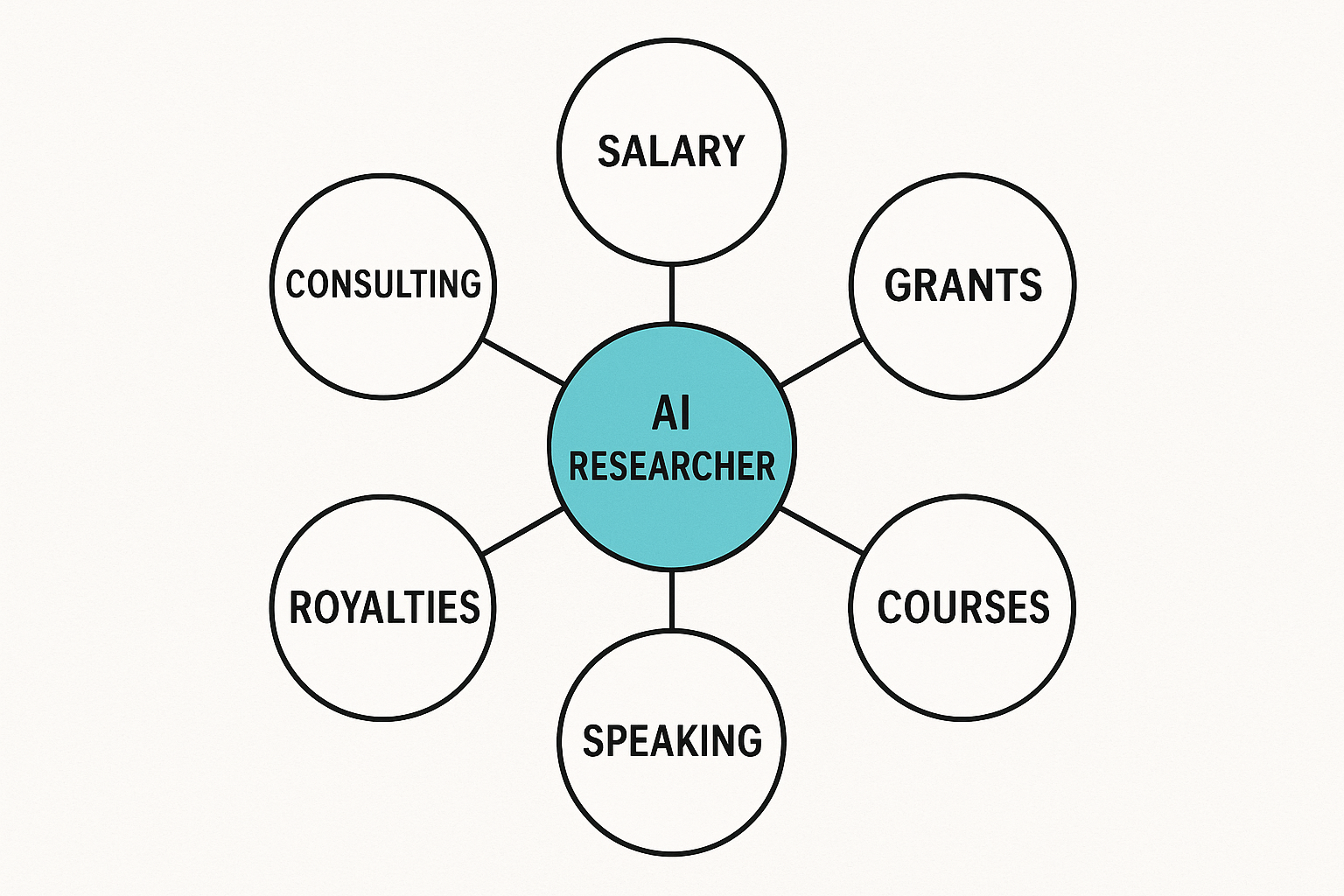
Traditional employment represents just one path to wealth building for AI researchers. Portfolio careers combining consulting, advisory roles, and entrepreneurial ventures often generate income streams that exceed traditional salaries while providing greater autonomy and equity upside potential.
The Consulting Game That Pays Better Than Employment
Strategic consulting in AI allows researchers to build relationships with multiple companies, often leading to advisory positions, equity stakes, and eventual acquisition opportunities that can generate wealth far exceeding traditional salaries.
Breaking the $2000/Hour Barrier
Elite AI researchers can command $1,500-$3,000 per hour for specialized consulting, with some achieving $5,000+ hourly rates for critical problem-solving engagements. This makes part-time consulting more lucrative than full-time employment for many professionals.
The math on high-end consulting is absolutely wild. Working just 10 hours per week at $2,000/hour generates $1M annually. I know researchers who’ve built entire businesses around solving specific AI problems for multiple clients simultaneously.
The Advisory Equity Collection Strategy
Serving as technical advisor to 3-5 AI startups can generate 0.1-0.5% equity stakes in each company, creating a diversified portfolio that can yield millions in returns if even one company succeeds.
Advisory roles are like collecting lottery tickets, except the odds are much better. You’re not betting everything on one company – you’re spreading small equity stakes across multiple startups. Even if four out of five fail, that one success can make you wealthy.
AI Researcher Advisory Checklist:
- Identify 3-5 startups in your area of expertise
- Negotiate 0.1-0.5% equity for 2-4 hours monthly commitment
- Ensure vesting schedules align with your availability
- Maintain clear boundaries between advisory and employment
- Track equity value and exit potential quarterly
- Build relationships with startup founders and VCs
The Academic-Industry Double Dip
Leading AI researchers increasingly maintain dual affiliations with universities and companies, creating unique compensation structures that combine academic freedom with industry-level compensation.
Many researchers discover that their academic credentials become even more valuable in industry settings, particularly when they need to replace lost diplomas for corporate display or international opportunities.
The Sabbatical Salary Multiplication Trick
Professors on industry sabbaticals can earn 3-5x their academic salaries while maintaining tenure, with some arrangements allowing permanent part-time industry roles that effectively double lifetime earnings.
Academic sabbaticals have become the ultimate arbitrage opportunity. You keep your tenure security while earning industry salaries for a year or two. Some professors have negotiated permanent part-time arrangements that let them maintain both income streams indefinitely.
Research Lab Funding: The Ultimate Wealth Builder
AI researchers who successfully secure multi-million dollar research grants can structure their compensation to include significant consulting fees and equity participation in spinoff companies, creating wealth-building opportunities beyond traditional academic or industry paths.
Grant funding isn’t just about research – it’s about building wealth. Smart researchers structure their grants to include consulting fees, equipment purchases they can later use for commercial projects, and partnerships that lead to equity opportunities in spinoff companies.
Professor Maria Rodriguez secured a $2.8M NSF grant for robotics research. She structured the grant to include $150K annually in consulting fees, purchased equipment that she later used for a commercial spinoff, and partnered with industry collaborators who offered her equity in their companies. Her total wealth generation from this single grant exceeded $1.2M over five years.
Playing the Global Salary Game
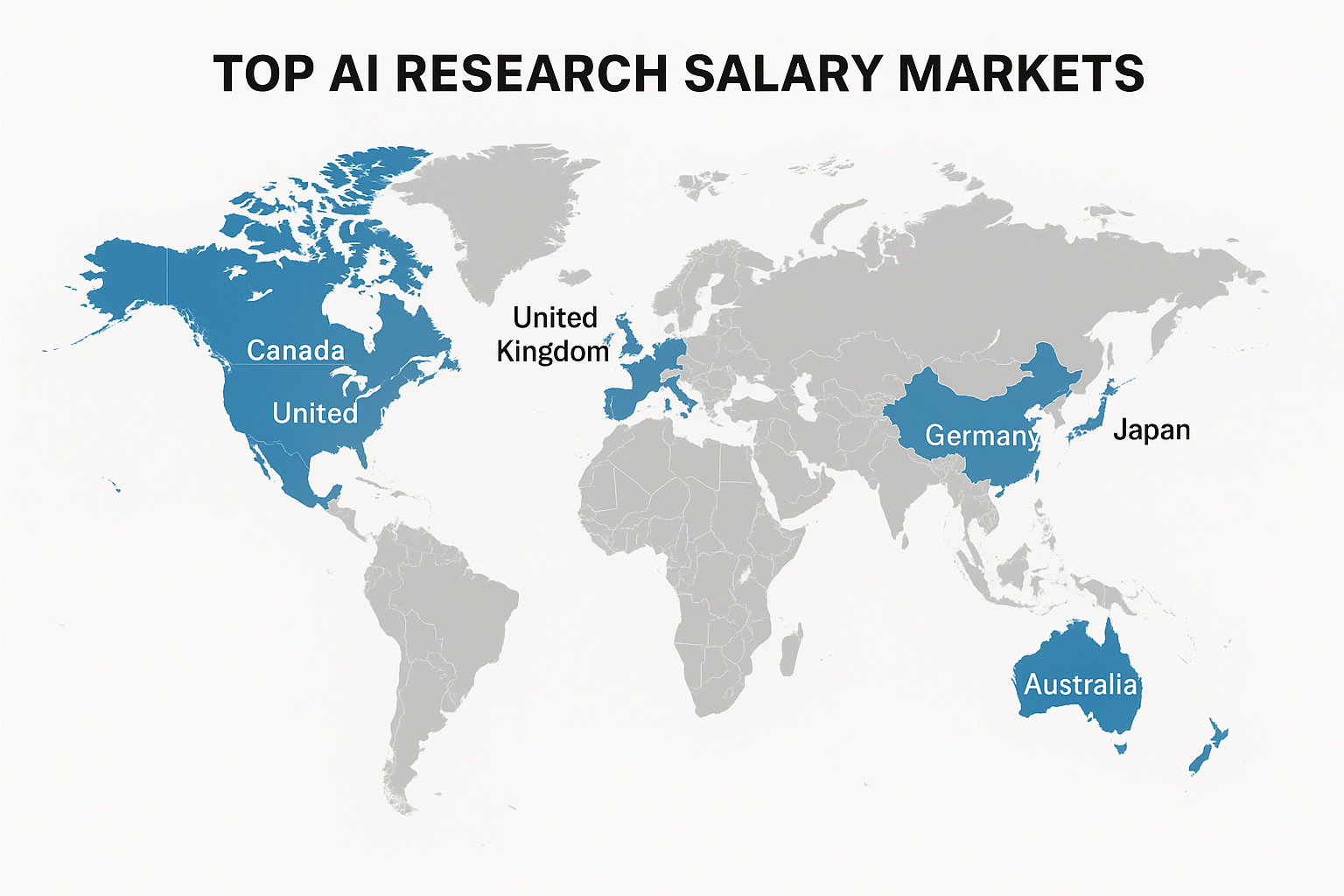
AI research salaries vary dramatically across global markets, creating opportunities for strategic geographic positioning and international career arbitrage that can optimize both compensation and quality of life simultaneously.
The Emerging Market Premium Play
AI researchers willing to work in emerging markets often receive expatriate premiums while building foundational AI capabilities in underserved regions, creating unique career and compensation opportunities.
Singapore: The Asian AI Hub Premium
AI researchers in Singapore receive 20-30% salary premiums over US base salaries plus tax advantages, housing allowances, and stock option benefits, effectively increasing net compensation by 50-70% while accessing Asian market opportunities.
Singapore has positioned itself as the AI hub of Asia, and they’re paying premium salaries to attract top talent. The combination of higher base salaries, tax advantages, and housing allowances can increase your net compensation by 50-70% compared to similar US roles.
European Research Excellence Programs
EU research programs offer AI scientists unique compensation packages combining high salaries with extensive benefits, sabbatical opportunities, and citizenship pathways, creating long-term value beyond immediate compensation.
European research programs offer something US companies can’t: a path to citizenship and long-term security. The compensation packages include benefits that extend far beyond salary, including healthcare, education benefits, and retirement security.
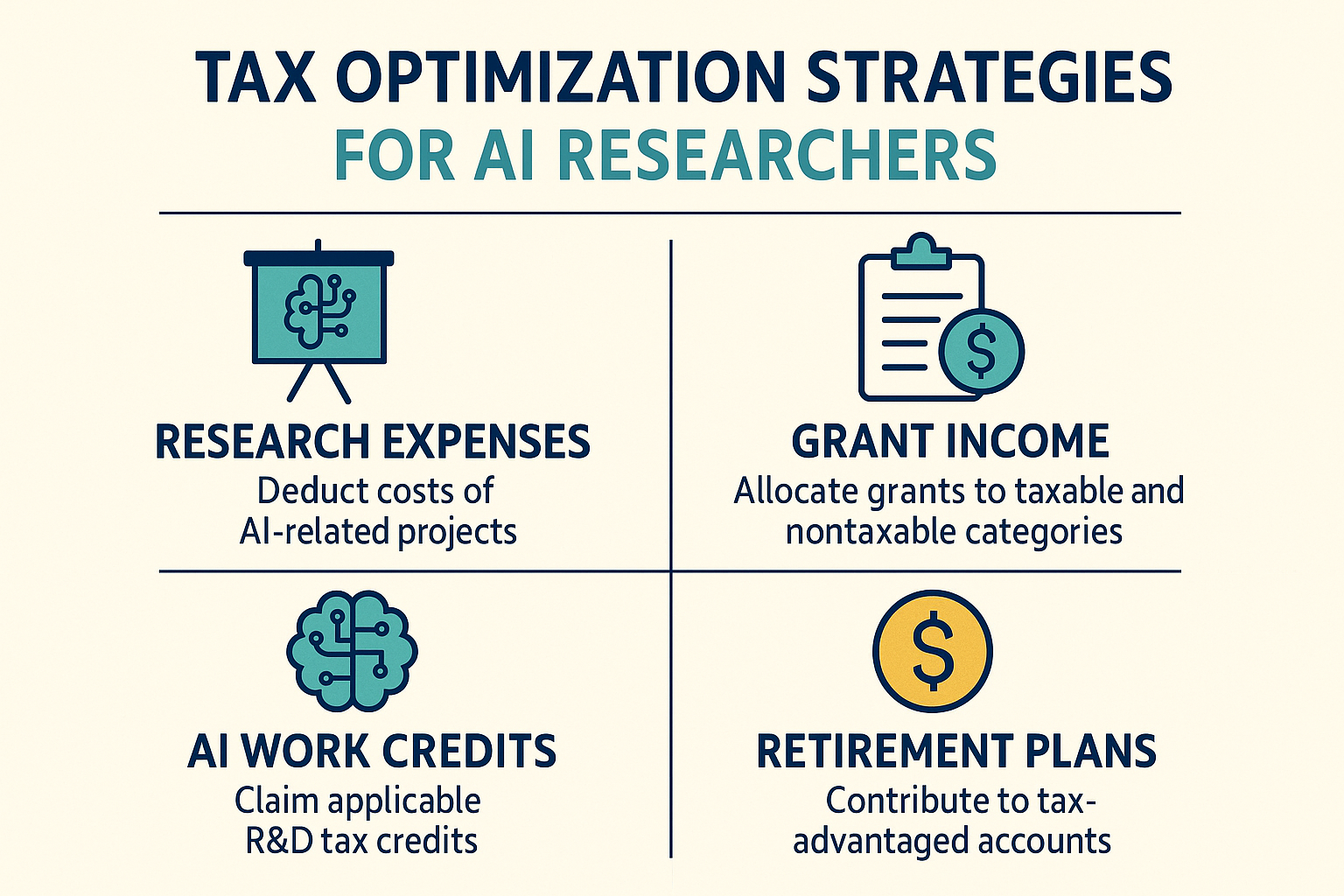
The Tax Optimization Game
International AI researchers can optimize their tax burden through strategic residency and employment structuring, potentially saving $50,000-$200,000 annually in taxes while maintaining high compensation levels.
The Dubai AI Free Zone Strategy
AI researchers establishing consultancies in Dubai’s AI free zones can achieve 0% personal income tax on international consulting income while maintaining residency flexibility, optimizing global tax efficiency.
Dubai’s AI free zones offer 0% personal income tax for consultants working with international clients. If you can structure your work as consulting rather than employment, you can potentially eliminate your tax burden while maintaining access to world-class infrastructure.
Estonia’s Digital Nomad Advantage
Estonia’s digital nomad visa combined with its AI research initiatives allows researchers to maintain EU residency while working for global companies, optimizing both tax efficiency and career opportunities.
Estonia has created one of the most favorable environments for digital nomad AI researchers. Their e-residency program combined with favorable tax treatment for international income creates unique opportunities for location-independent professionals.
Mastering the Art of AI Salary Negotiation
The intensity of AI talent competition has reached new heights, with “Meta offering eight-figure compensation packages – at least $10,000,000 a year – with CEO Mark Zuckerberg personally emailing job offers to elite talent” The Register reports. This unprecedented level of direct CEO involvement demonstrates how valuable top AI researchers have become.
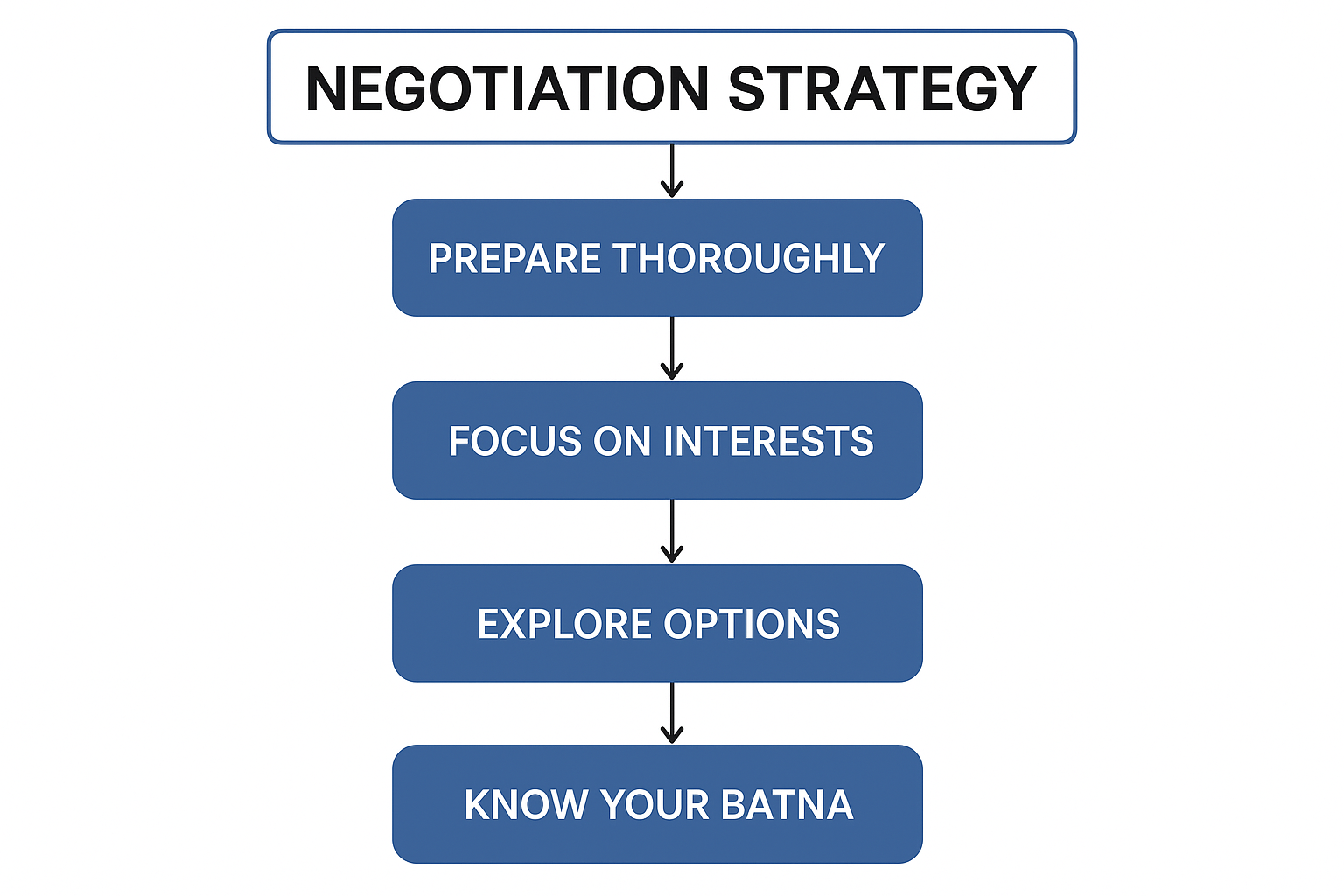
AI research scientist salary negotiations operate in an information-scarce environment where companies guard compensation data more closely than their algorithms. Understanding the hidden negotiation dynamics and leverage points can dramatically improve your compensation outcomes.
The Talent Scarcity Leverage Game
Unlike other tech roles, AI research positions exist in a market where demand exponentially exceeds supply, creating unique negotiation dynamics where researchers hold unprecedented leverage if they understand how to deploy it strategically.
The Counter-Offer Cascade That Changes Everything
When top AI researchers receive competing offers, companies often enter bidding wars that can increase total compensation by 40-80% above initial offers, with some cases reaching 200% increases when multiple FAANG companies compete for the same candidate.
The counter-offer game in AI is absolutely insane. I’ve watched researchers see their offers double when multiple companies start competing. The key is having multiple legitimate offers on the table simultaneously – that’s when the real bidding wars begin.
The Acqui-Hire Premium Strategy
AI researchers who build small teams or startups can position themselves for acqui-hire deals worth $2-5 million per team member, effectively turning research projects into acquisition premiums that dwarf traditional salary negotiations.
Acqui-hires are the ultimate negotiation strategy. Instead of negotiating for a higher salary, you’re negotiating for your entire team to be acquired. The per-person premiums in acqui-hire deals often exceed what you could earn in years of traditional employment.
The Underground Compensation Intelligence Network
Despite company secrecy, AI researchers have developed informal networks and data-sharing mechanisms that provide unprecedented salary transparency, fundamentally shifting negotiation power dynamics.
Smart negotiators understand that their educational credentials serve as powerful leverage points, especially when they can professionally display their achievements through proper diploma presentation during virtual interviews and office visits.
The Blind Spot Advantage
Platforms like Blind and private Discord servers allow AI researchers to share real compensation data, revealing that actual total compensation often differs by 30-50% from publicly reported figures, with equity acceleration and signing bonuses creating hidden value.
The real compensation data lives in private channels and anonymous platforms. Companies hate this transparency, but it’s given researchers unprecedented negotiation power. The actual numbers are often 30-50% higher than what gets reported publicly.
The Reverse Reference Check Strategy
Experienced AI researchers use their professional networks to conduct “reverse reference checks” on potential employers, discovering budget ranges and compensation philosophies before entering negotiations, increasing their offer success rate by 60-80%.
Smart researchers don’t just wait for companies to check their references – they check the company’s references too. Talking to current and former employees gives you insider knowledge about budget ranges and negotiation strategies that can dramatically improve your success rate.
AI Salary Negotiation Preparation Template:
- Research 3-5 comparable roles at similar companies
- Document your H-index, publications, and citations
- List your open-source contributions and GitHub stars
- Prepare examples of business impact from your research
- Identify 2-3 competing offers or interest signals
- Calculate total compensation including equity and benefits
- Plan your negotiation timeline and decision deadlines
Long-Term Wealth Strategies for AI Researchers
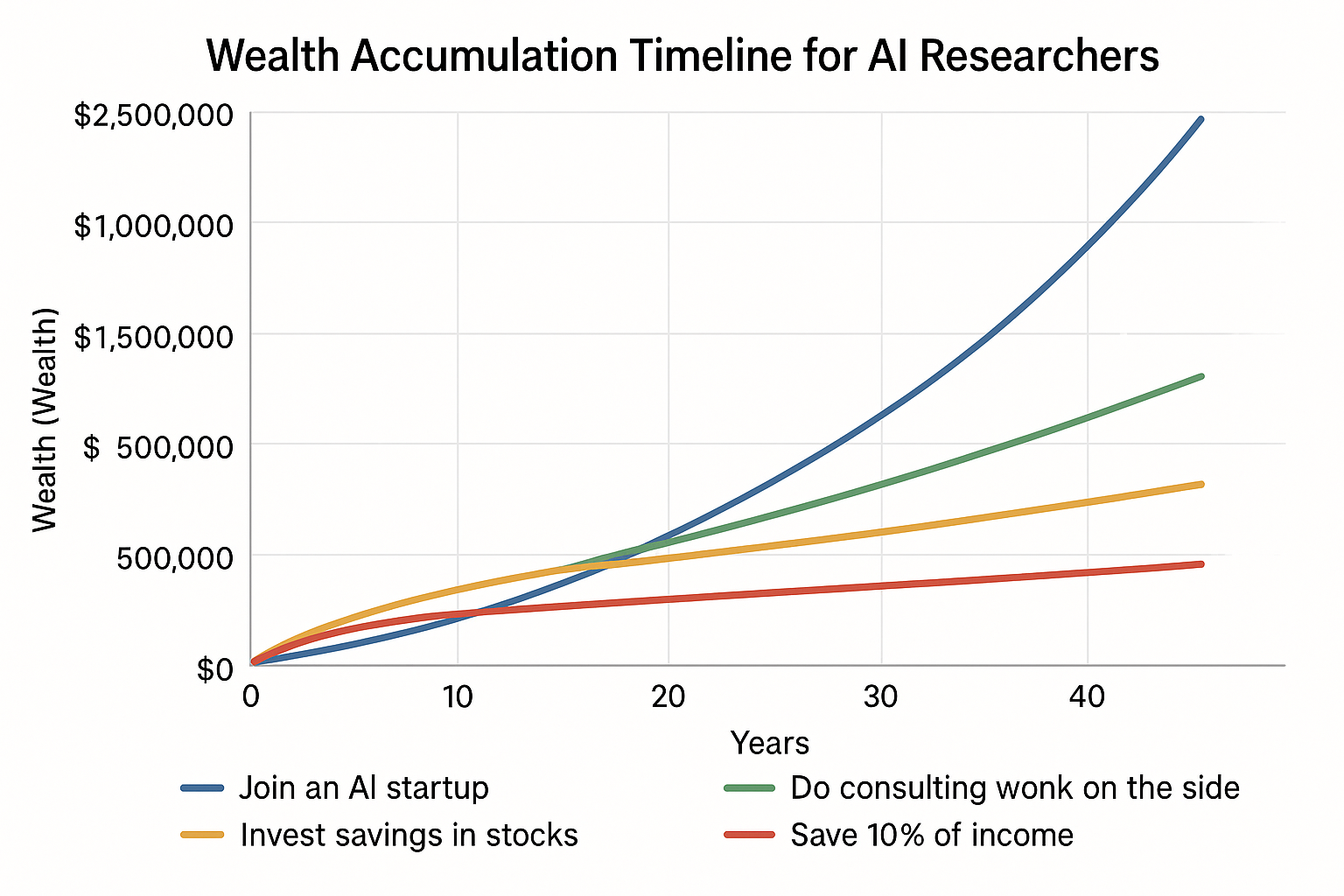
AI research careers follow non-linear wealth accumulation patterns where strategic career moves at specific inflection points can generate 10-100x returns compared to traditional linear career progression, requiring sophisticated long-term planning and market timing.
The Startup Timing Arbitrage
AI researchers who join startups at optimal funding stages can capture equity value that exceeds decades of traditional salary accumulation, but timing and company selection require deep market intelligence and risk assessment.
The Series A Sweet Spot
Joining AI startups between seed and Series A rounds typically offers 0.5-2% equity stakes that can be worth $5-50 million at exit, compared to 0.1-0.5% for later-stage joiners, making timing worth potentially $10-40 million in lifetime earnings.
The Series A timing is everything in startup equity. Join too early and you’re taking massive risk with minimal validation. Join too late and the equity upside is limited. That sweet spot between seed and Series A offers the best risk-adjusted returns.
The Technical Co-Founder Path
AI researchers who transition from employee to technical co-founder can capture 10-25% equity stakes, with successful exits generating $50-500 million in personal wealth, though success rates remain below 5% for venture-backed startups.
Becoming a technical co-founder is the ultimate wealth-building strategy, but it’s also the highest risk. You’re trading salary security for equity upside. The potential returns are massive, but the failure rate is equally high.
The broader data science market provides context for AI research growth potential, with “the global Generative AI market projected to reach $667.9 billion by 2030, with a 24.4% CAGR from 2023-2030, and expected to add $4.4 trillion in value to the global economy annually” according to Simplilearn’s analysis.
The IP Monetization Strategy
AI researchers can build long-term wealth through intellectual property creation and licensing, developing revenue streams that continue generating income long after traditional employment ends.
The Patent Licensing Pipeline
Researchers who develop patentable AI innovations can negotiate IP assignment deals worth $100,000-$1 million per patent, with ongoing royalty streams generating $50,000-$500,000 annually for breakthrough technologies.
Patents in AI can become annuity streams that pay for decades. The key is developing truly novel approaches that companies need to license. One breakthrough patent can generate more wealth than years of salary increases.
The Algorithm Licensing Model
Proprietary algorithms developed by AI researchers can be licensed to multiple companies simultaneously, creating recurring revenue streams of $200,000-$2 million annually while maintaining full-time employment elsewhere.
Algorithm licensing is like creating intellectual property royalties. You develop a novel approach, patent it, and then license it to multiple companies. The beauty is that the same algorithm can generate revenue from multiple sources simultaneously.
How ValidGrad Supports Your AI Career Journey
The AI research field’s emphasis on credentials and educational pedigree creates unique challenges for professionals whose academic documents may be lost, damaged, or need replacement for various legitimate purposes. ValidGrad provides professional-quality replacement documents that maintain the dignity and recognition your achievements deserve.
AI professionals often work in environments where their educational credentials are prominently displayed – from corporate offices to conference speaking engagements. Whether you’re an AI researcher who needs to replace a lost diploma for office display, create backup copies for international visa applications, or require duplicate transcripts for career transitions, ValidGrad’s customizable diploma and transcript services ensure that your academic achievements are properly represented.
Many AI researchers working internationally discover they need multiple copies of their credentials for visa applications and work permits, making services like academic document replacement essential for maintaining career mobility in the global AI market.
With the AI field’s rapid evolution and frequent career transitions, having reliable access to replacement academic documents becomes an essential professional tool for maintaining career momentum and professional presentation. ValidGrad allows you to focus on advancing AI research rather than dealing with bureaucratic document replacement processes.
Ready to ensure your credentials match your expertise? Visit ValidGrad today to explore our professional document replacement services designed for AI professionals who demand excellence in every aspect of their career presentation.
Final Thoughts
The AI research scientist salary landscape is far more complex and opportunity-rich than most people realize. We’re living through a unique moment in history where the demand for AI expertise has created unprecedented compensation opportunities, but only for those who understand how to navigate this complex ecosystem.
The traditional model of climbing a corporate ladder for incremental salary increases doesn’t apply in AI research. Instead, success comes from understanding equity dynamics, leveraging geographic arbitrage, building academic credibility, and strategically timing career moves to capture maximum value during technology adoption cycles.
What strikes me most about this field is how quickly the rules change. Skills that command premium salaries today become commoditized within 2-3 years. Geographic advantages shift as remote work policies evolve. Startup valuations fluctuate wildly, making equity compensation a high-stakes gamble.
The researchers who build lasting wealth in this field aren’t just technically excellent – they’re strategically sophisticated. They understand that their career is a portfolio of investments: skills, relationships, equity stakes, intellectual property, and geographic positioning. They make decisions based on long-term wealth building rather than short-term salary maximization.
If you’re considering a career in AI research or looking to optimize your current position, remember that compensation is just one piece of a much larger puzzle. The real opportunity lies in building a career architecture that can adapt to rapid technological change while capturing value from multiple sources simultaneously.
The AI revolution is still in its early stages, and the compensation opportunities we see today are likely just the beginning. Position yourself strategically, stay adaptable, and remember that in this field, the biggest risks often come from playing it too safe.