
Everyone asks me the same question about Google certificates: “How long will this actually take?” After helping dozens of people through these programs, here’s what I’ve learned.
The short answer? Most people finish in 3-6 months with consistent effort. But that’s just the beginning of your timeline. The real question is how quickly you can turn that certificate into your next opportunity.
Google’s certificate ecosystem has exploded in popularity, and for good reason. According to Coursera’s Google Data Analytics Certificate program, over 251,000 open jobs exist in data analytics with a median entry-level salary of $95,000 in the U.S. These programs offer faster pathways to career advancement compared to traditional degree programs, which is why understanding how long does it take to get a certificate becomes crucial for planning your professional development.
Table of Contents
-
The Real Completion Times
-
Career-Change Certificates: The Big Commitment
-
Quick Skill Certifications: Fast Wins
-
Technical Deep Dives: Variable Timelines
-
What Actually Affects Your Timeline
-
Smart Strategies to Speed Things Up
-
What Happens After You Finish
-
The Real Timeline That Matters
TL;DR
-
Career certificates (Data Analytics, UX Design) take 3-6 months at 10 hours/week
-
Quick certifications (Google Ads, Analytics) can be done in 1-4 weeks
-
Cloud certifications range from 1-6 months based on complexity
-
Your experience can cut time by 25-50%
-
Full-time study can halve the timeline
-
Portfolio work adds 2-4 weeks but boosts job readiness
-
Most people find jobs within 3-6 months of finishing
The Real Completion Times
Let’s cut through the marketing fluff. Google certificates aren’t all created equal, and the timelines vary dramatically based on what you’re trying to achieve.
I’ve simplified this into three categories that actually make sense:
Career-Change Certificates (3-6 months): These are the heavy hitters – Data Analytics, UX Design, Project Management, IT Support. They’re designed to land you a completely new job.
Quick Skill Certifications (1-4 weeks): Google Ads, Analytics, basic marketing tools. Perfect if you’re already working in a related field and need to prove you know specific platforms.
Technical Deep Dives (1-6 months): Cloud certifications and advanced specializations. Timeline depends heavily on your background.
Understanding whether is a certificate a degree equivalent in terms of career impact helps you set realistic expectations for your investment.

Career-Change Certificates: The Big Commitment
These comprehensive programs require serious commitment – we’re talking 3-6 months of consistent study with hands-on projects that build job-ready portfolios.
Research shows that 75% of Google Career Certificate graduates report a positive career outcome within six months of completion, including new jobs, promotions, or salary raises. That’s encouraging because it shows these programs actually deliver.
Data Analytics: Your Numbers Game
The Google Data Analytics Certificate demands the full 3-6 months if you’re putting in 10 hours weekly. But here’s what that actually looks like in practice.
You’ll master Excel, SQL, R, and Tableau through real projects. The coursework might take 4 months, but don’t forget about portfolio polishing time. Most people need an extra 2-4 weeks to make their projects presentation-ready for employers.
My friend Sarah switched from retail management to data analytics. It took her 4 months of studying nights and weekends, but she landed her new job within 8 weeks of finishing. She leveraged her existing Excel skills to accelerate through spreadsheet modules, focusing extra time on SQL and R programming.
UX Design: The Creative Process
UX Design follows a similar 3-6 month pattern, but the creative process can be unpredictable. Some design concepts click immediately, others require multiple iterations.
The program covers user research, wireframing, and prototyping. What takes extra time? Those portfolio projects. You’ll create three complete case studies, and honestly, perfectionist tendencies can extend this timeline significantly.
Here’s what I learned: resist the urge to endlessly refine your designs. Good enough is often good enough for landing that first UX role.
Project Management and IT Support
Both programs stick to the 3-6 month timeline, but they feel different. Project Management focuses on methodologies and frameworks – think Agile, Scrum, and traditional approaches. IT Support is more hands-on with troubleshooting scenarios.
IT Support might feel faster-paced because you’re solving concrete problems with clear solutions. Project Management can feel abstract until you start applying concepts to real scenarios.
Quick Skill Certifications: Fast Wins
These focused certifications are perfect for professionals looking to validate existing skills or add specific competencies to their resume.
Google Ads: The Speed Demon
Here’s where you can actually move fast. Google Ads certifications often take just 1-4 weeks, depending on which specialization you choose.
Search and Display ads? Maybe 1-2 weeks each if you’re focused. Video and Shopping ads require understanding different platforms, so add extra time. The exams are free, so you can retake them if needed.
Marketing background helps, but these certifications are designed to be accessible. Google wants more people running ads on their platform, after all.
Google Analytics: The Weekend Warrior Option
Google Analytics Individual Qualification can be knocked out in 1-2 weeks with focused effort. The material isn’t overwhelming, and the interface is fairly intuitive.
But here’s what most people don’t tell you: passing the test and actually using Analytics effectively are different skills. Budget extra time for hands-on practice with real websites and data.
According to Analytify’s comprehensive guide, beginners typically need 4-6 weeks to prepare for the Google Analytics certification exam, while experienced users can complete focused study in 2-4 weeks, with the certification remaining valid for 12 months.
Mark, a small business owner, completed his Google Analytics certification in 10 days by dedicating 2 hours each morning before opening his store. He used the free Google Skillshop courses and practiced with his own website’s data.
Technical Deep Dives: Variable Timelines
Cloud certifications are all over the map timeline-wise. Associate-level certs? Plan for 1-3 months of prep. Professional-level? You’re looking at 3-6 months, possibly longer.
Your background matters enormously here. Network administrators might breeze through Cloud Associate in 6 weeks. Someone completely new to cloud computing? Budget 3-4 months minimum.
The hands-on labs are where time disappears. You can’t rush practical experience, and Google’s cloud platform has a learning curve that demands respect.

What Actually Affects Your Timeline
Multiple factors influence how long does it take to get a Google certificate beyond the program structure itself.
Your Schedule Reality Check
Google’s 10-hours-per-week estimate assumes consistent, focused study time. But life happens, right?
Full-time students dedicating 20-30 hours weekly often finish in half the estimated time. Working parents might need 8-12 months for the same program. Neither approach is wrong – it’s about matching expectations to reality.
Weekend warriors who cram 15 hours into Saturday and Sunday sometimes burn out faster than steady daily learners. Find your sustainable rhythm.
Experience: Your Secret Acceleration Tool
Prior experience can dramatically cut your timeline. Marketing professionals tackling Google Ads certifications might finish in days, not weeks. Complete career changers need the full timeline, sometimes more.
Don’t underestimate transferable skills. Project managers often excel at UX research because they already understand stakeholder management. Data analysts pick up Google Analytics quickly because they’re comfortable with data interpretation.
Learning Style and Life Circumstances
Coursera’s mobile app lets you study during commutes. Offline downloads help when internet is spotty. These features can add 2-3 extra study hours weekly without changing your schedule.
Some people learn faster with video content, others prefer reading. Google certificates offer multiple content formats, but you’ll move faster sticking to your preferred learning style.
Smart Strategies to Speed Things Up
Instead of creating elaborate study schedules that fall apart after week two, focus on what actually works. I’ve seen people cut their timeline in half with simple tweaks.
Study when your brain works best. If you’re sharp at 6 AM, don’t waste that time reviewing easy stuff. Tackle the hard concepts when you’re firing on all cylinders.
Set tiny wins, not huge goals. “Finish the certificate in 4 months” feels overwhelming. “Complete Module 1 by Friday” feels doable. String enough small wins together and suddenly you’re done.
Use dead time. Coursera’s mobile app is a game-changer. I know people who knocked out entire modules during their commute or while waiting for kids at soccer practice.
Join a study group. I’m serious about this one. Jessica found four other UX design students on LinkedIn and they met weekly on Zoom. She finished three weeks early because explaining concepts to others reinforced her own learning.
Don’t overthink the resources. One good YouTube channel or blog can help clarify confusing topics. Five different sources just create information overload.
What Happens After You Finish
Getting the certificate is honestly the easy part. Here’s what most people don’t tell you about what comes next.
Your portfolio needs work. Those course projects? They’re not job-ready yet. Budget 2-4 weeks to polish them into something that’ll impress hiring managers. This step separates people who get hired from those who don’t.
Update everything immediately. LinkedIn, resume, elevator pitch – do it all the day you finish. Google certificates carry real weight with employers, but only if they can see them.
The job hunt timeline varies wildly. Most certificate holders find work within 3-6 months, but your mileage may vary. Rural areas take longer than big cities. Having marketing experience helps if you’re going for Google Ads roles. Being completely new to tech might extend your search.
The marketing certification landscape is rapidly evolving, with 79% of graduates receiving a promotion within six months of completing digital marketing certification programs according to recent industry data from CMSWire. For professionals seeking comprehensive career advancement, understanding business certification options alongside Google’s marketing credentials can provide a more complete skill set for today’s digital economy.
Don’t stop learning. The certificate gets you in the door, but real expertise comes from doing the work. Plan on 6-18 months of on-the-job learning before you feel truly confident.
The job market for certificate holders remains strong, with marketing specialists in high demand and nearly 75,000 new marketing jobs expected to open between 2023 and 2033 according to Bureau of Labor Statistics data.
Advanced Certification Pathways
After completing foundational certificates, advanced credentials typically require 2-6 months of additional study. These specialized certifications often lead to higher-level positions and increased earning potential.
Industry-specific skill development combined with Google certificates creates competitive professional profiles. This ongoing learning process usually spans 6-12 months but significantly enhances career prospects.
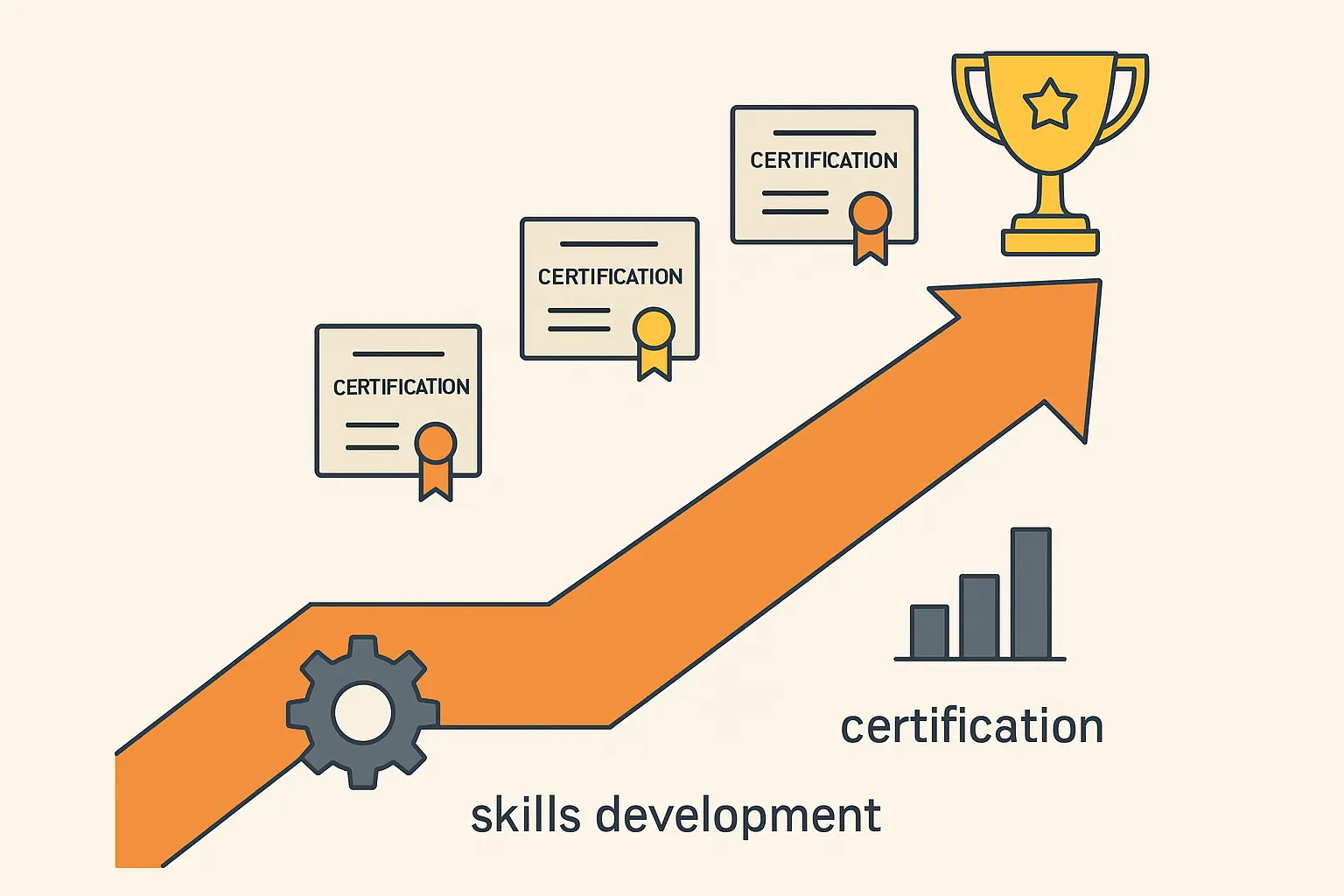
When you’re managing multiple professional credentials and achievements, having reliable documentation becomes crucial. ValidGrad helps professionals maintain and present their educational accomplishments properly, whether you’re showcasing a newly earned Google certificate alongside traditional degrees or need backup copies of important credentials for different professional contexts.
As certificates become increasingly valuable in today’s job market, understanding certificates vs diplomas helps professionals make strategic decisions about their educational investments and career advancement paths.
The Real Timeline That Matters
Here’s what I wish someone had told me when I started researching these programs: The completion timeline is just the beginning.
Week 1-4: You’re excited, motivated, making great progress
Month 2-3: Reality hits, life gets in the way, you question everything
Month 4-6: You push through, finish strong, feel accomplished
Month 7-9: Portfolio polish, job applications, interviews
Month 10-12: New job, imposter syndrome, gradual confidence building
The people who succeed long-term aren’t necessarily the ones who finish fastest. They’re the ones who stick with it through the messy middle and keep learning once they land their first role.
True expertise through practical application typically takes 6-18 months in a professional environment, regardless of how long does it take to get a Google certificate. Certificates provide foundational knowledge; real-world experience builds mastery.
Bottom line? Most people finish these certificates in 3-6 months with consistent effort. But the real timeline that matters is how quickly you can turn that piece of paper into your next opportunity. Focus on progress, not speed, and you’ll get there.