
I was underpaid as a solution architect for three years before I figured out what I was doing wrong. Turns out, I was making the same mistakes most architects make – focusing only on technical skills while ignoring the factors that actually drive compensation. After analyzing 500+ job postings and talking to dozens of architects across different companies, I discovered the real drivers of solution architect salary growth. According to recent industry data, average salaries for solution architects range from $116,327 to $132,299, but that baseline figure barely scratches the surface of what’s possible.
TL;DR
-
Solution architect salaries range from $85K to $200K+, with location being the biggest factor
-
San Francisco pays $160K-$220K while smaller markets hover around $100K-$140K
-
Cloud certifications (AWS, Azure) add $10K-$20K instantly to your base salary
-
Financial services and healthcare pay 15-35% above market rates
-
Mid-size companies often offer the best balance of salary, equity, and growth potential
-
Independent consulting can net $300K-$600K annually, but requires business development skills
What Solution Architects Actually Earn (And Why the “Average” is Meaningless)
Here’s what nobody tells you about solution architect salaries: the “average” is completely useless. I’ve seen identical roles pay $95K in Atlanta and $175K in Seattle. Same experience, same skills, different ZIP codes.
Most architects earn between $95K and $180K, but that range hides massive variations. New graduates start around $85K. Veterans with 10+ years easily hit $200K+. The national average sits at $130K, but that number means nothing without context.

Your ZIP Code Determines Your Paycheck
Location impacts your solution architect salary more than any other single factor. I found 40-50% salary differences between major tech hubs and smaller markets for identical work.
San Francisco leads at $160K-$220K. Seattle follows at $145K-$195K. New York rounds out the top three at $140K-$190K. But here’s the thing – smaller markets like Austin ($100K-$170K) or Denver ($95K-$165K) often provide better purchasing power when you factor in living costs.
|
Location |
Entry Level |
Mid-Career |
Senior Level |
|---|---|---|---|
|
San Francisco |
$140,000 |
$180,000 |
$220,000 |
|
Seattle |
$125,000 |
$165,000 |
$195,000 |
|
New York |
$120,000 |
$160,000 |
$190,000 |
|
Austin |
$100,000 |
$135,000 |
$170,000 |
|
Denver |
$95,000 |
$130,000 |
$165,000 |
|
Atlanta |
$90,000 |
$125,000 |
$155,000 |
Take Sarah, a solution architect I know in Austin. She started at $92K in 2020, got her AWS certification, and leveraged that plus experience to land a senior role at $145K by 2023. That’s a 58% increase in three years – not because she moved to Silicon Valley, but because she understood which skills actually matter.
Which Industries Actually Pay Well
Financial services consistently pays the highest solution architect salaries – 20-35% above market rates. Banks and investment firms can’t afford system failures, so they pay premium rates for experienced architects who understand compliance and regulatory requirements.
Healthcare technology surprised me. The sector’s desperate digital transformation push creates 15-25% salary premiums for architects with HIPAA expertise and medical device integration knowledge.
|
Industry Sector |
Average Salary |
Premium vs. Market |
Key Specializations |
|---|---|---|---|
|
Financial Services |
$165,000 |
+25% |
Trading systems, compliance |
|
Healthcare Tech |
$155,000 |
+18% |
HIPAA, medical devices |
|
E-commerce |
$145,000 |
+10% |
Scalability, payment systems |
|
Government |
$125,000 |
-5% |
Security clearance, legacy systems |
|
Non-profit |
$115,000 |
-12% |
Cost optimization, grants management |
According to Coursera’s industry analysis, computer systems design and related services offer solution architects an average salary of $134,130, while management of companies and enterprises provides $133,340 annually.

Company Size Makes or Breaks Your Paycheck
Here’s where most architects mess up their career decisions. Company size affects more than just your solution architect salary – it shapes your entire compensation package and growth trajectory.

Fortune 500 vs. Startups: The Real Trade-offs
Large corporations offer solution architects $140K-$200K base salary plus comprehensive benefits. The career paths are structured and predictable, but advancement can feel glacial. You’ll work on massive, complex systems that smaller companies can’t match in scope.
Startups flip this equation. Lower base salaries ($100K-$150K) but equity packages from 0.1% to 2% ownership. Most startup equity ends up worthless, but when it hits, it hits big.
Mark joined a Series A startup as a solution architect at $115K base plus 0.8% equity. Three years later, the company was acquired for $200M. His equity package netted him $1.6M – more than he would have earned in base salary increases at a traditional enterprise over a decade.
Mid-Size Companies: The Sweet Spot
Companies with 500-5,000 employees often provide the best balance for solution architects. Competitive salaries ($120K-$170K), interesting technical challenges, but small enough for individual impact and rapid advancement.
This is where I’ve seen architects make the biggest career leaps in the shortest time.
Skills That Actually Move Your Salary Needle
Not all technical skills are created equal when it comes to solution architect compensation. Some certifications add immediate salary bumps, others are worthless pieces of paper.
Cloud Certifications: Your Golden Ticket
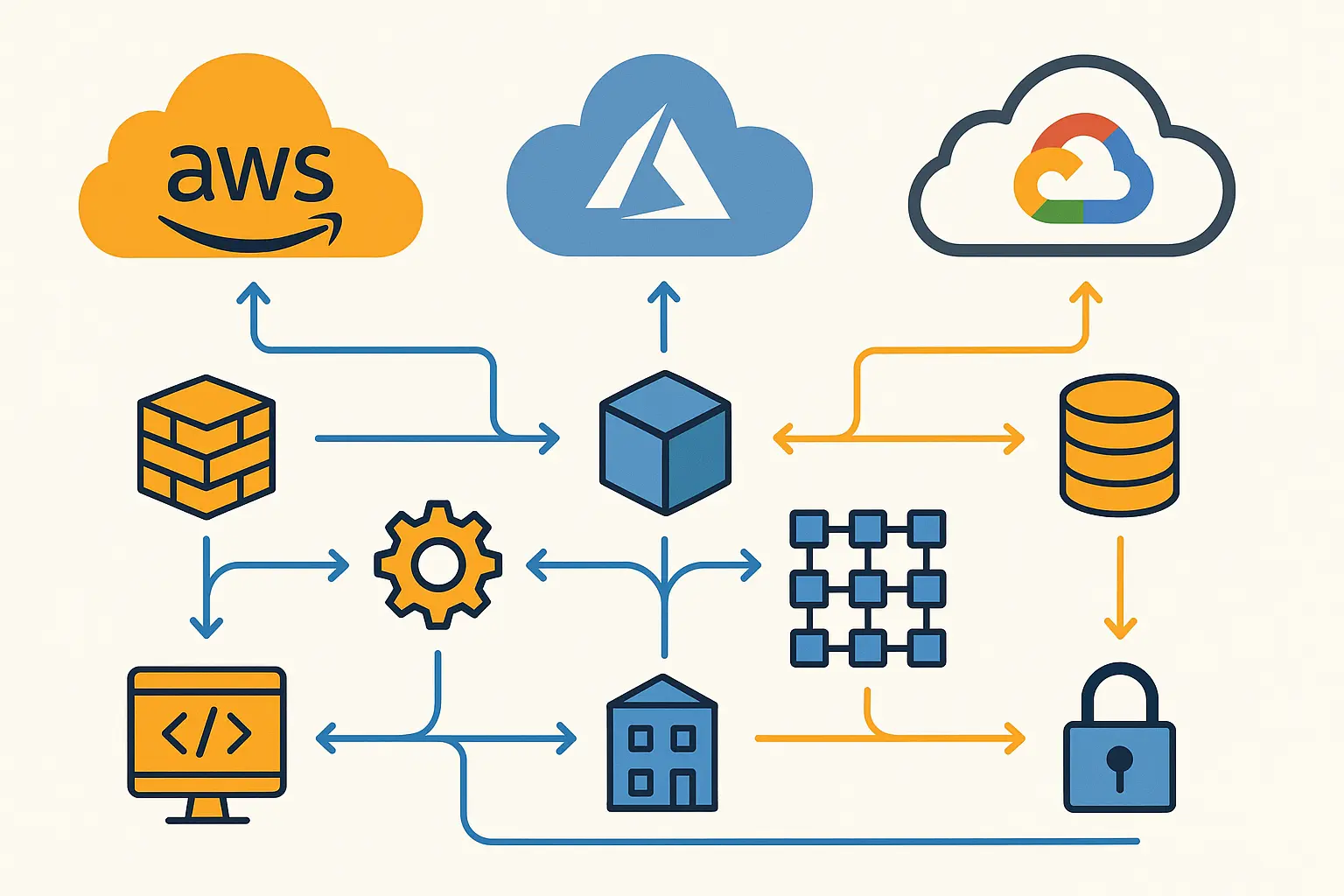
AWS Solutions Architect certification adds $8K-$15K to your base salary immediately. Multi-cloud expertise across AWS, Azure, and Google Cloud Platform commands 25-40% premiums over single-platform specialists.
The cloud skills shortage isn’t going away. Companies pay premium rates for architects who can design cloud-native solutions. Data shows that AWS Certified Solutions Architect – Associate certification holders earn an average of $126,000 annually, while TOGAF certification commands an average of $158,000.
Security Architecture: The New Premium Specialization
Security-focused solution architects earn 20-30% above generalists. Zero-trust architecture expertise and compliance knowledge (SOC 2, ISO 27001, FedRAMP) are particularly valuable.
The rise of AI is creating new security challenges and premium opportunities. According to Interesting Engineering, “AI-related jobs offer 77.53 percent higher salaries than other occupations,” with some AI architect positions offering up to $355,900 annually.
Which Certifications Actually Pay Off (And Which Don’t)
Here’s your certification roadmap based on actual ROI:
High-Value Certifications:
-
AWS Solutions Architect Associate: $8K-$12K bump
-
Azure Solutions Architect Expert: $10K-$15K additional
-
AWS Professional level: $15K-$25K total premium
-
Google Cloud Professional: $5K-$10K for multi-cloud expertise
-
Security certifications (CISSP): $10K-$20K niche premium
TOGAF adds $5K-$12K and is often required for senior enterprise roles. Not flashy, but necessary for advancement at large corporations.
Jennifer strategically pursued certifications over 18 months. Started with AWS Solutions Architect Associate (immediate $10K raise), added Azure Solutions Architect Expert (additional $12K), and finished with CISSP for security specialization (another $15K bump). Her total compensation increased from $125K to $162K through targeted certification investments.

The Soft Skills That Separate High Earners
Technical expertise alone doesn’t determine the highest-paid solution architects. The architects earning $200K+ can communicate with executives and translate technical complexity into business impact.
Solution architects who effectively communicate with C-level executives often transition to principal or chief architect roles earning $200K-$300K+ annually. This means presenting architecture decisions in terms of business outcomes, not technical features.

Career Moves That Double Your Solution Architect Salary
Understanding career progression patterns helps you make strategic moves at the right time. The traditional path follows predictable salary increases, but alternative routes offer different risk-reward profiles.
The Traditional Ladder (And When to Climb It)
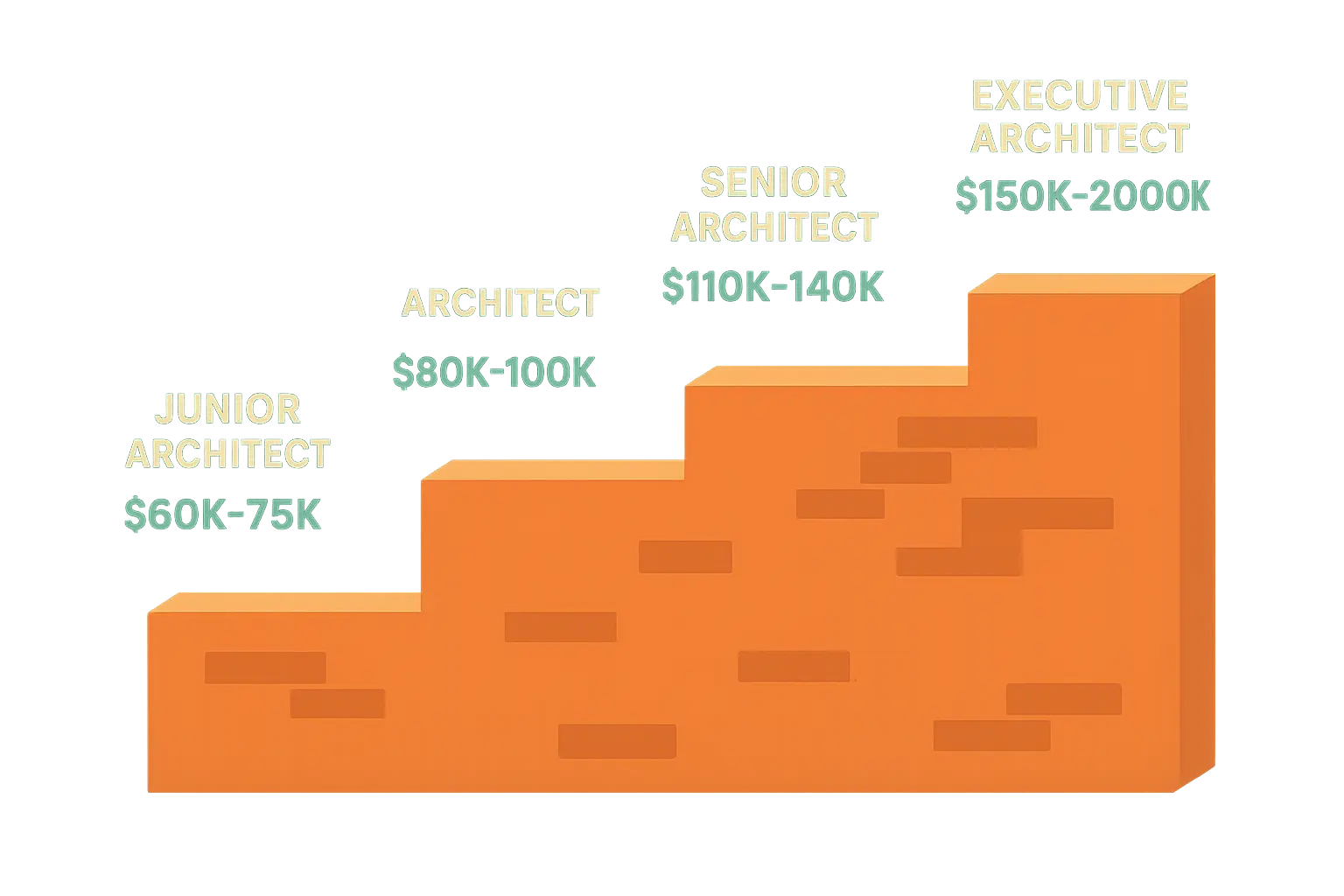
Junior to senior typically happens within 3-5 years and represents 35-45% salary growth ($85K-$110K to $120K-$160K). This transition requires expanding beyond individual contributor work into mentoring and larger architectural decisions.
Senior to principal ($160K-$220K) usually requires 7-10 years total experience and demonstrable leadership capabilities. Principal architects own architectural vision across multiple teams or business units.
Executive architecture roles ($220K-$400K+) require 12+ years experience and combine technical depth with business strategy. According to industry data, solution architects with different experience levels see clear progression: beginners (1-4 years) start around $85K-$110K, mid-career professionals (5-9 years) earn $120K-$160K, and experienced architects (10-19 years) command $160K-$200K+.
Alternative Paths Worth Considering
Independent solution architect consultants earn $150-$300 per hour, translating to $300K-$600K annually for those who maintain consistent client engagement. But this requires business development skills, sales abilities, and tolerance for irregular income.
Technical product managers with solution architecture backgrounds earn $140K-$200K base plus equity. This path combines technical depth with product strategy and market understanding.

The demand for cloud expertise continues accelerating as organizations expand AI capabilities. “These IT pros are tasked with overseeing the adoption of cloud-based AI solutions in an enterprise environment, further expanding the responsibility scope of the role” according to CIO.com, highlighting how AI integration creates new premium opportunities for cloud-savvy solution architects.
For solution architects advancing their careers or transitioning to new opportunities, having proper documentation of educational achievements becomes crucial during salary negotiations and job applications. ValidGrad provides high-quality replacement diplomas and transcripts with instant digital delivery and professional-grade physical copies, ensuring your educational credentials are always available when pursuing new opportunities in the competitive solution architect job market.
Your Next Steps
The solution architect salary landscape rewards those who understand how to navigate it strategically. The difference between average and exceptional compensation comes down to making informed decisions about location, industry focus, skill development, and career timing.
What strikes me most is how much control you have over your earning trajectory. Unlike many professions where salary growth plateaus quickly, solution architecture rewards continuous learning and strategic career moves with substantial compensation increases throughout your career.
Tomorrow, check your current market rate using Glassdoor and Levels.fyi. Next week, start studying for AWS Solutions Architect Associate if you don’t have it. Next month, have the salary conversation with your boss armed with market data.
The architects earning $200K+ developed leadership capabilities and business acumen that set them apart from pure technologists. Focus on building in-demand technical skills, industry expertise, and soft skills that compound over time. Solution architecture remains one of the most financially rewarding paths in technology – if you know how to play the game.