
Prompt engineering has quickly become one of tech’s hottest careers, with salaries ranging from $75K to $300K+ as companies scramble to implement AI. But what do these roles actually pay, and how can you position yourself for the highest compensation?
After tracking this market for two years, I’ve noticed something interesting: while the field keeps evolving, demand still far outpaces supply. Here’s what the numbers really look like and how to maximize your earning potential.

Table of Contents
-
What Prompt Engineers Actually Earn
-
Skills That Actually Drive High Salaries
-
Career Paths That Lead to Six-Figure Salaries
-
Negotiation Tactics for Maximum Compensation
-
Building Professional Credibility for High-Stakes Roles
TL;DR
-
Entry-level prompt engineers start at $75K-$120K, while senior specialists can earn $300K+ annually
-
Geographic location impacts salary by 20-40%, with Silicon Valley and NYC leading compensation
-
Domain expertise in healthcare, finance, or legal AI can boost earnings by 25-50%
-
Remote work opportunities offer competitive pay without geographic constraints
-
Equity compensation often represents 20-40% of total package value
-
Consulting and freelance work can generate $150-$500 per hour for specialists
-
Technical skills combined with business acumen create the highest-paid professionals
What Prompt Engineers Actually Earn
Let’s cut through the hype and look at real numbers. According to Glassdoor, prompt engineers average $136,141 in base salary, with additional compensation adding $35K-$66K annually. But the prompt engineering salary landscape is more nuanced than these averages suggest.
Despite recent discussions about the role’s evolution, the demand for prompt engineering expertise remains strong across industries. AI prompt engineers are suddenly in high demand in the UK reports that job listings for prompt engineers have jumped 180% in the past year, with ITJobsWatch showing an even steeper 209% year-on-year surge in job advertisements mentioning “prompt engineering.”
Experience level determines your earning potential more than any other factor. Unlike traditional tech roles where progression takes years, prompt engineering rewards results over tenure. I know engineers who jumped from junior to senior-level pay within 18 months by demonstrating clear business impact.
Breaking Down the Numbers by Experience Level
|
Experience Level |
Salary Range |
Additional Pay |
Total Compensation |
|---|---|---|---|
|
Entry-Level (0-1 years) |
$75,000 – $120,000 |
$10,000 – $25,000 |
$85,000 – $145,000 |
|
Mid-Level (2-4 years) |
$120,000 – $180,000 |
$15,000 – $40,000 |
$135,000 – $220,000 |
|
Senior-Level (5+ years) |
$180,000 – $300,000 |
$50,000 – $100,000 |
$230,000 – $400,000 |
|
Principal/Staff |
$300,000 – $450,000 |
$75,000 – $150,000 |
$375,000 – $600,000 |
Starting Strong: Entry-Level Reality
Fresh graduates and career changers entering prompt engineering can expect salaries between $75,000-$120,000 annually. Tech giants like Google, Microsoft, and OpenAI typically offer the highest starting packages, often including signing bonuses worth $10,000-$25,000.
The entry-level market rewards potential over experience. I’ve worked with bootcamp graduates who landed $95,000 starting positions by demonstrating strong portfolio projects and understanding of business applications. Companies value practical skills and learning agility over traditional credentials.
According to NetCom Learning’s analysis, the average base salary for a beginning prompt engineer with zero to one year of experience is $98,214 annually, demonstrating strong entry-level earning potential in this emerging field.
Understanding whether a college degree is worth it becomes crucial when evaluating the ROI of transitioning into high-paying prompt engineering roles.

Mid-Career Growth: Where Experience Pays Off
Mid-level prompt engineers with proven track records earn $120,000-$180,000 annually. Companies value professionals who can bridge technical implementation with business requirements. Performance bonuses ranging from $15,000-$40,000 become common at this level.
This career stage offers the best balance of compensation growth and learning opportunities. Equity compensation grows substantially for mid-career professionals. Public companies typically grant $75,000-$150,000 in annual stock awards, while high-growth startups might offer 0.25-0.75% equity stakes.
Sarah, a mid-level prompt engineer at a fintech startup, negotiated a package including $145,000 base salary, $25,000 annual bonus potential, and 0.4% equity stake. When the company raised Series B funding at a $500M valuation, her equity became worth over $2 million on paper, demonstrating the wealth-building potential of strategic career positioning.
Senior Specialist Territory: Premium Compensation
Senior prompt engineers and domain specialists earn $180,000-$300,000+ annually. Healthcare AI specialists, financial services experts, and autonomous systems engineers command the highest premiums due to regulatory complexity and specialized knowledge requirements.
Principal-level roles at major tech companies can reach $400,000+ in total compensation. These positions require deep technical expertise combined with strategic thinking and cross-functional leadership capabilities.
Location Still Matters (But Less Than Before)
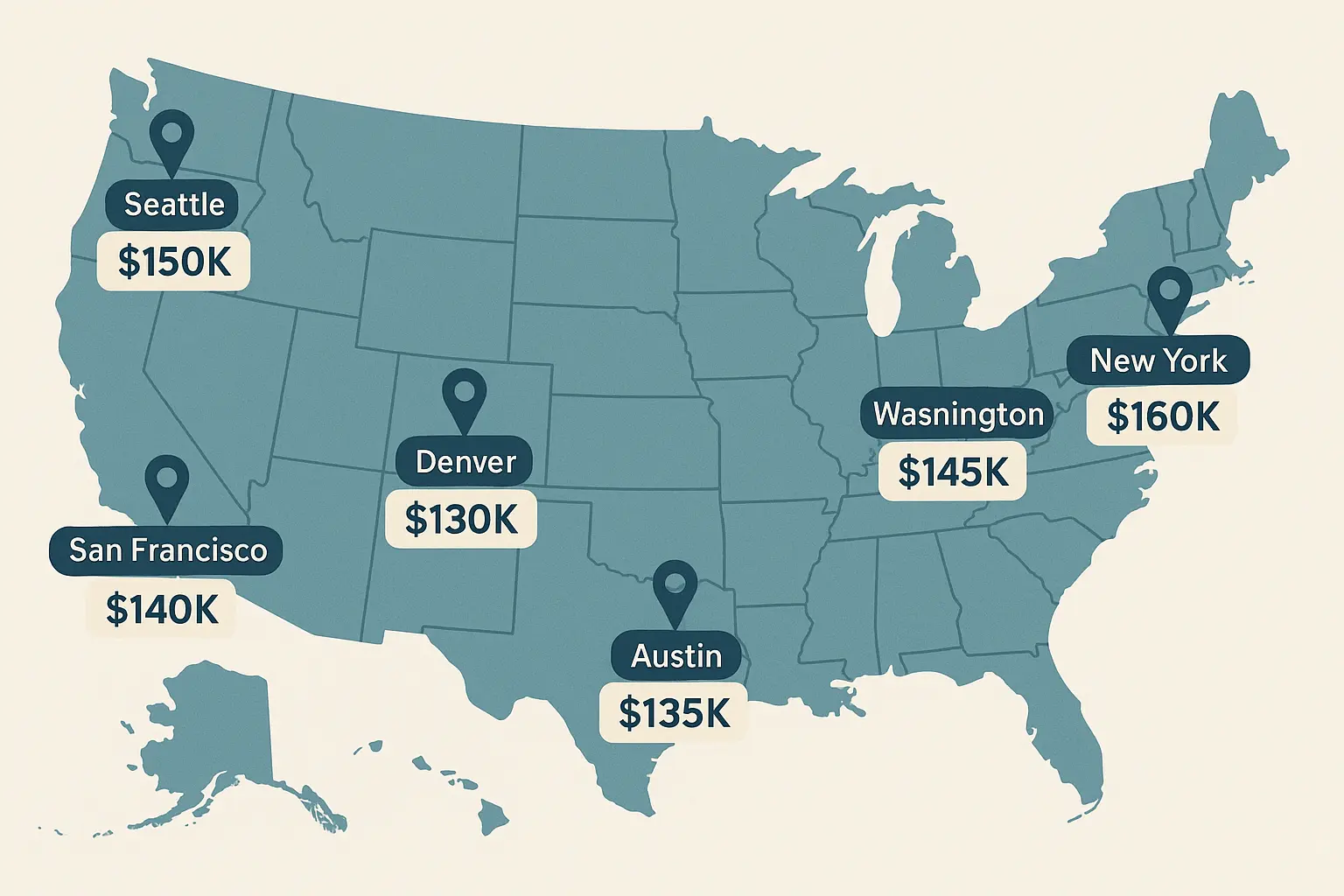
Silicon Valley leads prompt engineering compensation, with average salaries 30-40% above national levels. A mid-level prompt engineer earning $120,000 nationally might command $160,000-$170,000 in the Bay Area. New York and Seattle follow closely, offering 20-30% premiums over national averages.
The cost of living in these markets eats into the salary premium, but the networking opportunities and career advancement potential often justify the trade-off. Austin, Denver, and Boston have emerged as competitive alternatives, offering 10-20% salary premiums with lower cost of living.
Remote Work Revolution: Location Independence
Fully remote prompt engineering positions typically offer 90-100% of market rate compensation regardless of location. Companies like Anthropic, Hugging Face, and many AI startups embrace location-agnostic pay scales.
Remote work has democratized access to high-paying roles. I know prompt engineers in smaller cities earning Silicon Valley salaries while enjoying significantly lower living costs. The key is finding companies that prioritize talent over location.
Industry Specialization: Where Premium Pay Lives
Healthcare AI companies offer 25-40% salary premiums for prompt engineers with medical domain knowledge. Regulatory compliance, patient safety requirements, and clinical workflow understanding justify higher compensation.
Financial services firms pay similar premiums for professionals who understand trading systems, risk management, and regulatory frameworks. Fintech companies often combine high base salaries with substantial equity packages.
Legal technology represents an emerging high-pay vertical, with specialized prompt engineers earning $150,000-$250,000 annually. The complexity of legal reasoning and document analysis creates demand for domain-specific expertise.
The global artificial intelligence market is projected to surpass $1.3 trillion by 2030, according to Coursera’s analysis, indicating sustained demand for AI professionals and supporting long-term salary growth in prompt engineering roles.
Skills That Actually Drive High Salaries
The highest earners aren’t just technically proficient—they bridge the gap between AI capabilities and business needs. Building a high-paying prompt engineering career requires strategic skill development across multiple domains.
Technical Must-Haves That Pay the Bills
Core technical competencies separate top earners from average performers in prompt engineering. Companies pay premiums for professionals who can implement production-ready AI solutions that scale across organizations.
Language Model Mastery: Your Foundation
Don’t just know GPT-4. Master Claude, Llama, and other leading language models. Companies pay premiums for professionals who understand model capabilities, limitations, and optimal use cases. The ability to select the right model for specific business applications separates senior practitioners from junior colleagues.
Fine-tuning expertise can increase your market value by 20-30%. Organizations need specialists who can customize models for specific business applications while maintaining performance and safety standards.
Understanding prompt optimization techniques, including few-shot learning, chain-of-thought reasoning, and retrieval-augmented generation, separates senior practitioners from junior colleagues.
Programming Skills: Building Scalable Solutions
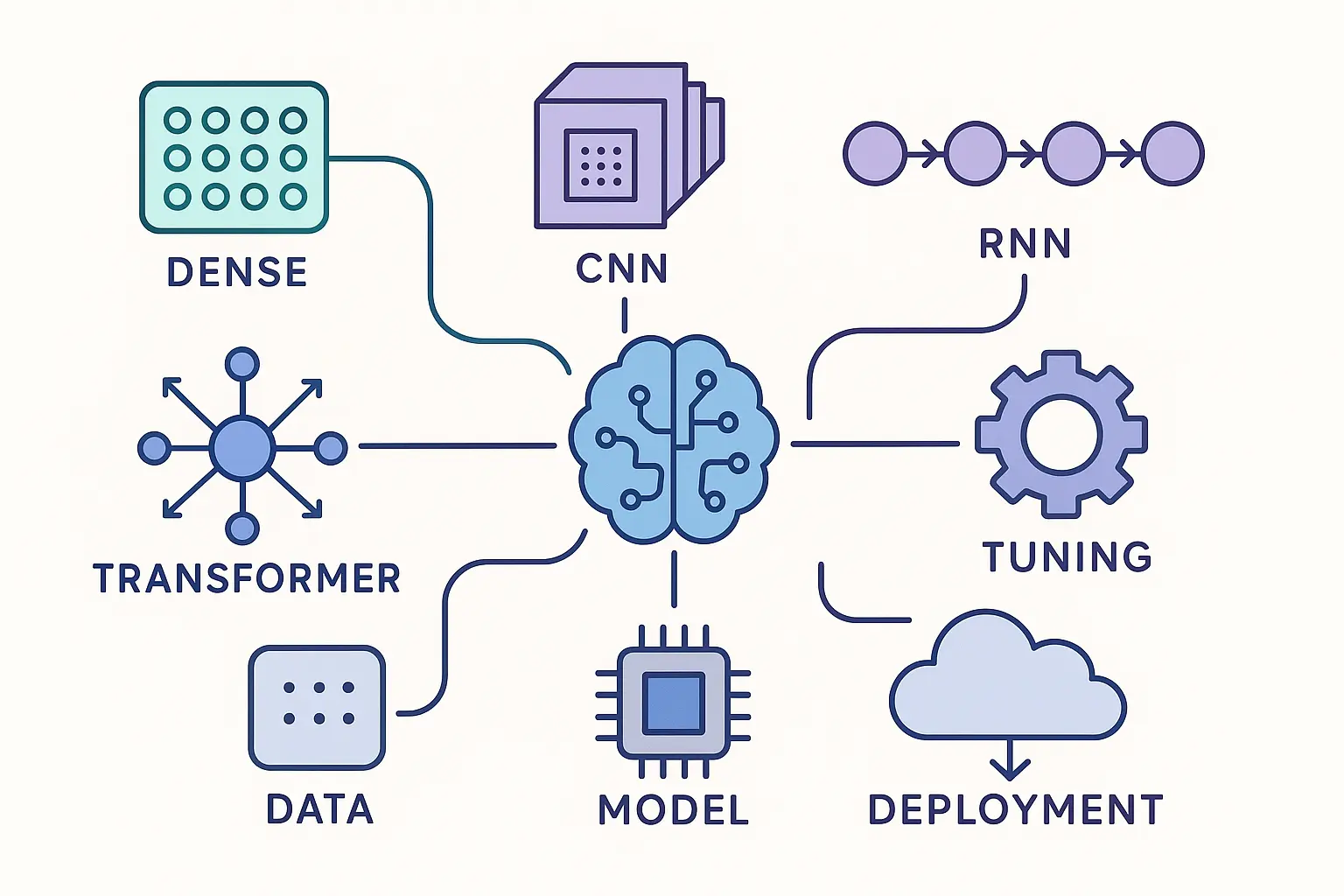
Python proficiency is non-negotiable for high-paying roles. You’ll need expertise in libraries like LangChain, Transformers, and OpenAI’s API to build production systems.
The ability to translate prompts into robust applications significantly increases earning potential. Companies value professionals who can move beyond proof-of-concept demonstrations to production-ready implementations.
API integration skills become crucial as organizations deploy AI across multiple platforms. Understanding REST APIs, webhooks, and authentication protocols enables you to build comprehensive solutions.
Essential Technical Skills Checklist:
-
Python programming with AI/ML libraries
-
Large language model fine-tuning
-
API integration and webhook management
-
Prompt optimization frameworks
-
Version control with Git
-
Cloud platform deployment (AWS, GCP, Azure)
-
Data analysis and visualization
-
A/B testing methodologies
The Business Side: Where Real Value Lives
Here’s what separates six-figure earners from the rest: they speak business language. The ability to explain AI ROI to executives, understand workflow implications, and quantify business impact is crucial.
Learning about different types of degrees can help prompt engineers identify educational pathways that complement their technical expertise and boost earning potential.
Industry Specialization: Your Competitive Edge
Healthcare AI specialization requires understanding clinical workflows, medical terminology, and regulatory requirements like HIPAA. This knowledge can boost salaries to $200,000-$300,000 for experienced professionals.
Domain expertise in specific industries can increase earning potential by 25-50% due to specialized knowledge requirements and regulatory complexity. Healthcare AI specialists command premium rates because they understand both the technical implementation and clinical workflow requirements.
Legal technology expertise involves understanding case law, document analysis, and legal reasoning patterns. Prompt engineers with legal backgrounds or deep legal tech experience command $180,000-$280,000 annually.
Financial services specialization requires knowledge of trading systems, risk management, and regulatory compliance. Fintech companies often pay $160,000-$250,000 for professionals who understand both AI and financial markets.
Marcus transitioned from healthcare administration to prompt engineering, combining his clinical workflow knowledge with AI expertise. He now earns $275,000 annually at a medical AI startup, specializing in diagnostic assistance prompts that must comply with FDA regulations and clinical best practices.
Communication Skills: Translating AI for Business Leaders
Executive communication skills can accelerate your career progression significantly. Being able to explain AI capabilities, limitations, and ROI to C-level executives opens doors to senior roles paying $250,000+.
Strong communication abilities enable prompt engineers to advance into leadership roles and consulting opportunities. The ability to explain complex AI concepts to non-technical stakeholders is essential for senior positions.
Cross-functional collaboration skills become essential as AI projects involve multiple departments. Your ability to work with product managers, designers, and business analysts influences project success and career advancement.

However, the field continues to evolve rapidly. Prompt engineering $200K six-figure role now obsolete thanks to AI from Fortune suggests that while standalone prompt engineering roles may be shifting, the skills remain highly valuable as integrated capabilities across AI-focused positions.
Career Paths That Lead to Six-Figure Salaries
The beauty of prompt engineering is that there’s no single path to high earnings. Multiple career trajectories offer paths to high compensation, from traditional corporate advancement to entrepreneurial ventures.
The Corporate Route: Steady Climbing
Traditional corporate career paths offer predictable advancement opportunities with structured salary progression and comprehensive benefits. Large technology companies provide clear promotion tracks from individual contributor to leadership roles.
Individual Contributor Track: Technical Excellence
If you love solving complex problems but don’t want to manage people, the IC track can take you far. Principal prompt engineer roles at companies like Google, Microsoft, and Meta offer $300,000-$450,000 in total compensation. These positions focus on solving the most complex technical challenges while mentoring junior team members.
Staff-level positions typically range from $250,000-$350,000, requiring 5-7 years of experience and demonstrated expertise in AI system design and implementation.
Distinguished engineer roles represent the pinnacle of individual contributor careers, with compensation packages exceeding $500,000 at top-tier companies. These positions require industry recognition and significant technical contributions.
|
Corporate Level |
Base Salary |
Equity/Bonus |
Total Comp |
Years Experience |
|---|---|---|---|---|
|
Senior Engineer |
$180K-$250K |
$70K-$120K |
$250K-$370K |
5-7 years |
|
Staff Engineer |
$250K-$300K |
$100K-$150K |
$350K-$450K |
7-10 years |
|
Principal Engineer |
$300K-$400K |
$150K-$250K |
$450K-$650K |
10+ years |
|
Distinguished Engineer |
$400K-$500K |
$200K-$300K |
$600K-$800K |
15+ years |
Management Track: Leading Teams and Strategy
Engineering managers overseeing AI teams earn $200,000-$400,000 depending on team size and company scale. These roles require balancing technical decision-making with people management and strategic planning.
Transitioning from individual contributor to manager requires developing people skills alongside technical expertise. Management positions often include substantial equity components and performance bonuses that can significantly boost total compensation.
Director-level positions managing multiple AI teams can reach $350,000-$600,000 in total compensation. Success requires understanding both technical implementation and business strategy.
VP of AI or Chief AI Officer roles at mid-size companies offer $400,000-$800,000+ packages, combining base salary, equity, and performance bonuses. These positions require proven track records of scaling AI initiatives across organizations.

Going Independent: Higher Risk, Higher Reward
Non-traditional career models offer unique opportunities for high earnings and professional flexibility, though often with higher risk profiles.
Consulting Life: Premium Hourly Rates
Specialized prompt engineering consultants command $200-$400 per hour for enterprise implementations. Healthcare AI consultants often charge $300-$500 per hour due to regulatory complexity and specialized knowledge requirements.
Building a consulting practice requires developing business skills including sales, marketing, and client management. Successful consultants often transition from corporate roles after building expertise and professional networks.
Project-based consulting can generate $50,000-$200,000 per engagement for comprehensive AI implementations. Large enterprises often budget $100,000-$500,000 for prompt engineering consulting projects. According to NetCom Learning, the average U.S. salary for Prompt Engineers is around $122,327 annually as of 2025, with major tech hubs like San Francisco, New York, and Seattle offering the highest regional salaries, making consulting rates even more attractive in these markets.
Building Products: Entrepreneurial Ventures
AI startup founders with prompt engineering expertise can build companies valued at millions or billions of dollars. Companies like Anthropic, Cohere, and Jasper demonstrate the potential for AI-focused entrepreneurship.
Starting AI-focused companies or developing prompt engineering tools offers unlimited earning potential through equity value creation. Entrepreneurial paths require significant risk tolerance and business development skills.
Developing prompt engineering tools and platforms can generate recurring revenue streams. SaaS products targeting enterprise AI needs often achieve $1M-$10M+ annual recurring revenue.
Equity stakes in successful AI companies can generate life-changing wealth. Early employees at companies like OpenAI, Anthropic, and other AI unicorns have seen equity values reach millions of dollars.
David left his $180,000 senior prompt engineer role to found an AI writing assistant startup. After 18 months of development and customer acquisition, his company was acquired for $25 million, netting him $8 million as the majority founder—demonstrating the wealth-creation potential of entrepreneurial ventures.
Education and Training: Sharing Knowledge for Profit
Corporate training programs for prompt engineering can generate $5,000-$25,000 per engagement. Large enterprises often budget substantial amounts for AI training initiatives.
Educational content creation can generate passive income while building professional reputation. Top educators in AI earn $100,000-$300,000 annually from educational activities.
Online course creation provides passive income potential, with successful courses generating $50,000-$200,000 annually. Platforms like Udemy, Coursera, and independent course sales offer distribution channels.
Speaking engagements at conferences and industry events typically pay $5,000-$20,000 per presentation, while building professional reputation and networking opportunities.
Revenue Diversification Checklist:
-
Corporate training workshop development
-
Online course creation and marketing
-
Conference speaking engagements
-
Technical blog monetization
-
Consulting service packages
-
SaaS product development
-
Industry newsletter sponsorships
-
Mentorship program creation

Negotiation Tactics for Maximum Compensation
Most people are terrible at salary negotiation, especially in emerging fields like prompt engineering. Effective salary negotiation requires market research, value demonstration, and strategic timing to maximize compensation packages.
Understanding total compensation components beyond base salary helps professionals evaluate and negotiate complete packages. The ai prompt engineer salary negotiation process often determines whether professionals achieve market-rate or premium compensation.
Do Your Homework: Research and Preparation
Thorough market research forms the foundation of successful salary negotiations, providing data-driven justification for compensation requests.
Market Intelligence: Knowing Your Worth
Salary databases like Levels.fyi, Glassdoor, and Blind provide baseline compensation data, though AI roles often exceed published ranges due to high demand. I recommend cross-referencing multiple sources for accurate market understanding.
Professional networks offer the most accurate salary intelligence. Connecting with other prompt engineers through LinkedIn, AI conferences, and industry meetups provides real-world compensation insights.
Recruiting firms specializing in AI roles often share market intelligence with candidates. Building relationships with technical recruiters provides ongoing salary trend updates and negotiation insights.
The global chatbot market’s value hit $7.76 million in 2024 and is growing at a compound annual growth rate (CAGR) of 23.3 percent through 2030, according to Coursera research, indicating sustained market expansion that supports aggressive salary negotiations.
Know Your Value: Quantifying Your Impact
Document specific achievements with quantifiable metrics. “Reduced customer service response time by 40% through prompt optimization” carries more weight than “improved AI performance.” Track cost savings, efficiency gains, and revenue impacts from your AI implementations.
Build a portfolio showcasing successful projects, including before/after metrics, technical challenges overcome, and business value delivered. Screenshots, dashboards, and testimonials from stakeholders strengthen your negotiation position.
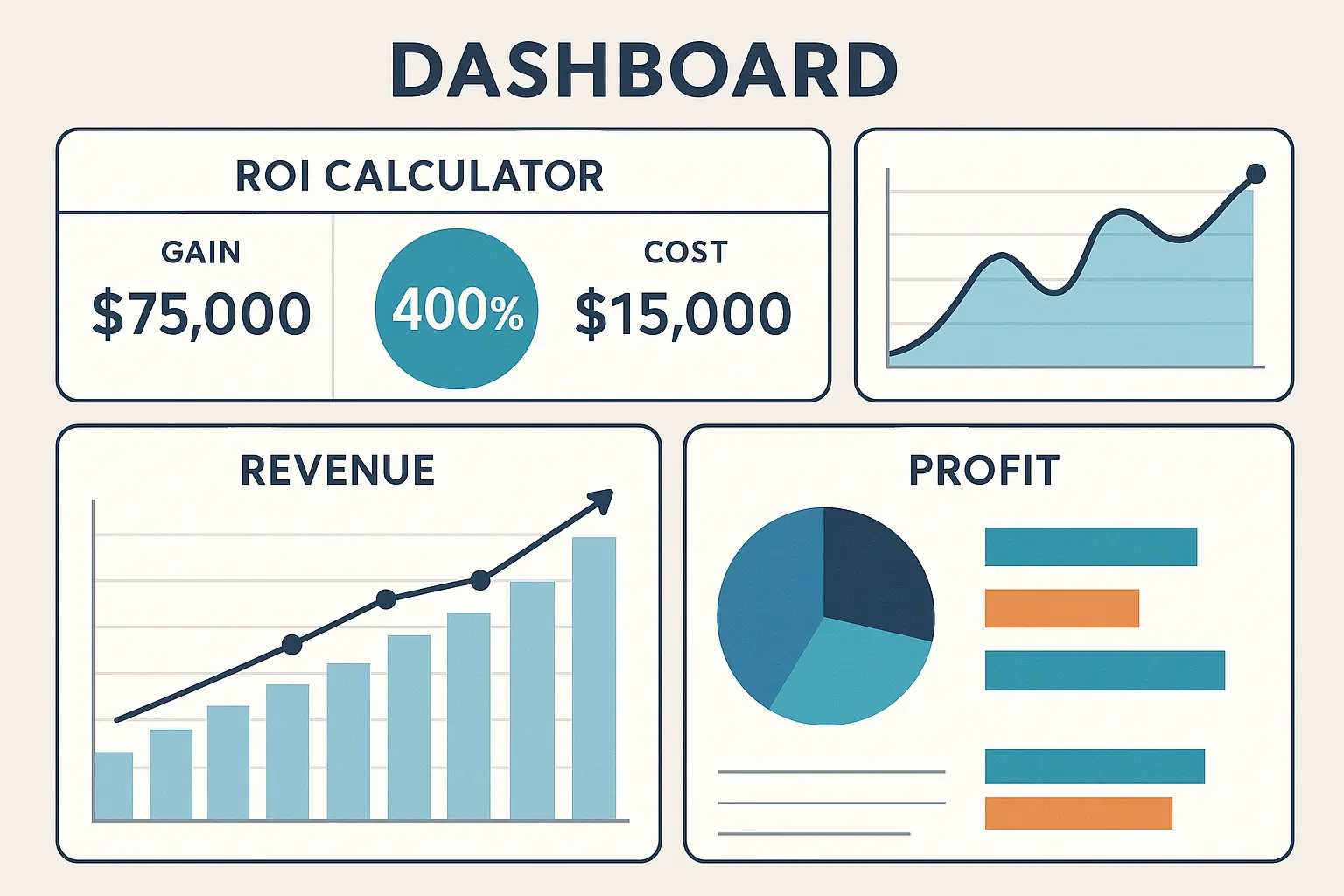
Calculate your ROI contribution to the organization. If your prompt engineering work saves the company $500,000 annually in operational costs, requesting a $20,000 salary increase becomes easily justifiable.
Timing and Leverage: Strategic Career Moves
Performance review cycles offer natural negotiation opportunities. Prepare comprehensive achievement summaries 2-3 months before reviews, giving managers time to budget for salary increases.
Company funding announcements, successful product launches, or major client wins create favorable negotiation environments. Organizations flush with success are more likely to approve compensation increases.
Building multiple job opportunities simultaneously provides maximum leverage. Having 2-3 competing offers enables you to negotiate from strength while comparing total compensation packages.
Think Beyond Base Salary: Total Compensation Mastery
Understanding and negotiating complete compensation packages maximizes total earnings beyond base salary alone. Equity compensation, performance bonuses, and benefits often represent 30-50% of total package value.
Equity Compensation: Your Path to Wealth Building
Restricted Stock Units (RSUs) at public companies provide predictable value, typically vesting over 3-4 years. A $100,000 annual RSU grant could be worth $150,000-$200,000 if the stock appreciates 15-20% annually.
Stock options and restricted stock units often represent the largest component of total compensation at technology companies. Understanding vesting schedules, tax implications, and company valuation helps professionals evaluate equity offers effectively.
Startup equity requires careful evaluation of company prospects, funding stage, and liquidation preferences. Early-stage companies might offer 0.1-2% equity stakes that could become extremely valuable through successful exits.
Negotiate equity refresh grants during performance reviews. Top performers often receive additional equity grants worth 50-100% of their initial allocation, significantly increasing long-term wealth potential.

Performance Bonuses: Rewarding Excellence
Annual performance bonuses typically range from 10-25% of base salary for prompt engineers. Exceeding performance targets can increase bonuses to 30-40% of base salary at some companies.
Variable compensation tied to individual and company performance can add 15-30% to total earnings. Understanding bonus structures, performance metrics, and payout timing helps professionals maximize variable compensation.
Project completion bonuses reward successful AI implementations. Major enterprise deployments often trigger $10,000-$50,000 bonuses for key contributors.
Patent and innovation bonuses recognize intellectual property creation. Companies may pay $5,000-$25,000 for novel prompt engineering techniques or AI innovations that result in patent applications.
Negotiation Preparation Template:
Market Research:
-
Current salary range for your experience level: $______
-
Industry premium for your specialization: _____%
-
Geographic adjustment factor: _____%
-
Competing offers or market data: $______
Value Demonstration:
-
Quantified business impact #1: ________________
-
Quantified business impact #2: ________________
-
Quantified business impact #3: ________________
-
Unique skills/certifications: ________________
Total Compensation Target:
-
Base salary goal: $______
-
Equity/RSU target: $______
-
Performance bonus potential: $______
-
Additional benefits valued at: $______
-
Total package goal: $______
Building Professional Credibility for High-Stakes Roles
As you move into senior roles or consulting, professional presentation becomes crucial. You’re not just a coder anymore—you’re representing yourself to executives, clients, and investors.
Professional presentation and credibility become increasingly important as prompt engineers pursue high-compensation roles and consulting opportunities. Maintaining proper documentation of achievements and credentials supports career advancement and client confidence.
When you’re earning $200,000+ as a prompt engineer, professional presentation matters more than ever. Client meetings, investor presentations, and executive briefings require polished credentials and documentation. Your educational background becomes part of your professional brand.
Portfolio and Documentation Excellence
Keep detailed records of your projects. Screenshots, metrics, testimonials from colleagues—anything that demonstrates real business impact. When someone asks what you’ve accomplished, you want specific examples ready.
Remote work has made home office presentation crucial for video conferences with high-stakes clients and stakeholders. Having your credentials properly displayed demonstrates professionalism and attention to detail that clients expect from premium consultants.
International opportunities in prompt engineering often require document verification and authentication. Keeping original diplomas secure while having quality copies available for various purposes becomes essential for global career mobility.
Continuous Learning and Network Building
The AI field moves fast. Stay current with new models, techniques, and industry developments. Follow key researchers on Twitter, attend conferences, and experiment with new tools. Your expertise needs to stay fresh.
Relationships matter more as you advance. Join AI meetups, contribute to open source projects, write blog posts, speak at conferences. The prompt engineering community is still small enough that building visibility isn’t that hard.
Many professionals find themselves needing to replace a lost diploma or require additional copies for multiple office locations. Professional credential management becomes particularly important for high-earning consultants and executives who need to maintain credible presentations across various professional settings.
ValidGrad provides an essential service for prompt engineers who need reliable credential management. Whether you’ve lost original documents, need copies for multiple office locations, or want to protect originals while displaying credentials professionally, ValidGrad’s high-quality diploma replacements ensure your educational achievements are properly represented.
The 2-7 business day turnaround means you won’t miss opportunities due to missing documentation. At $60, it’s a cost-effective solution compared to expensive university replacement processes that can take months and cost hundreds of dollars.
For professionals who need to understand how to get a diploma replacement efficiently, ValidGrad offers a streamlined solution that maintains the professional image required in high-stakes prompt engineering roles.
Ready to secure your professional presentation? Visit ValidGrad today to order your diploma replacement and maintain the credible image that high-paying prompt engineering roles demand.

The Future of Prompt Engineering Compensation
Despite predictions that AI will automate prompt engineering away, I’m bullish on long-term prospects. Yes, basic prompt writing might become easier, but the strategic work—understanding business needs, ensuring compliance, integrating AI into complex workflows—that’s getting more valuable, not less.
The role is evolving from “prompt writer” to “AI strategist.” Companies need people who can navigate the business implications of AI deployment, not just craft better prompts.
What This Means for Salaries
Compensation will likely polarize. Basic prompt work might become commoditized, but strategic AI roles will command premium pay. The key is positioning yourself on the strategic side—understanding business needs, regulatory requirements, and implementation challenges.
Understanding options like business certification can complement technical AI skills and open doors to higher-paying management and consulting opportunities.
Making Your Move
Whether you’re entering the field or looking to level up, focus on building skills that won’t easily be automated: business understanding, domain expertise, and the ability to translate between technical capabilities and business needs.
The prompt engineering salary landscape rewards people who can bridge the gap between AI possibilities and real-world applications. Success in this field requires more than technical knowledge—it demands business acumen, communication skills, and strategic thinking. The highest earners combine deep technical expertise with industry specialization and the ability to translate AI capabilities into business value.
For those considering the educational investment required for career advancement, exploring the cost of a college degree versus the potential return on investment in prompt engineering salaries can help inform strategic career decisions.
Whether you choose the corporate ladder, consulting independence, or entrepreneurial ventures, the key lies in continuous learning and strategic positioning. The AI revolution is just beginning, and prompt engineers who position themselves effectively will re ap the financial rewards of this technological transformation.
Your earning potential in prompt engineering is limited only by your willingness to develop valuable skills, build professional relationships, and pursue opportunities strategically. The market rewards expertise, and the compensation reflects the transformative impact of AI on business operations.