
After working here for several years, I can tell you that those salary numbers you see online? They don’t tell the whole story. Sure, the “average” monthly salary is around 196,626 JMD (about $1,253 USD), but that’s like saying the average person has one testicle and one breast – technically true, mathematically meaningless.
I’ve watched friends scrape by on tourism wages in Montego Bay while others in Kingston banking pull in serious cash. The difference isn’t just dramatic – it’s eye-opening about how Jamaica’s economy really works.
According to RemotePeople’s Jamaica salary analysis, the average monthly salary in Jamaica is 196,626 Jamaican dollars (JMD) or USD 1,253, with the median monthly income at 195,326 JMD ($1,244), showing minimal difference between average and median earnings. What struck me most was how these averages mask the dramatic variations I see every day.
Table of Contents
-
The Real Talk on Jamaican Salaries
-
Why Your Paycheck Depends on Where You Work
-
What People Actually Make (The Truth)
-
The Education Game-Changer
-
The Hidden Forces Affecting Your Paycheck
-
Your Action Plan for Better Pay
-
Making It Work Long-Term
The Real Talk on Jamaican Salaries
Here’s what matters most:
-
Most people actually earn JMD 45,000-65,000 monthly (not that inflated “average”)
-
Kingston pays way better than anywhere else – we’re talking 25-40% more
-
Your education level can literally double your income
-
About 60% of workers make under JMD 50,000 monthly
-
The sweet spots are healthcare, tech, and finance (JMD 150,000-800,000+ monthly)
-
Strategic career planning and proper documentation can dramatically impact your long-term earning potential
Why Your Paycheck Depends on Where You Work
Jamaica’s economy is like a patchwork quilt – some squares are gold, others are barely holding together. The backbone of our economy – tourism, agriculture, mining, and services – creates different salary tiers that determine your earning potential.

Tourism: The Rollercoaster Industry
Let me tell you about my friend Keisha, who works front desk at a Montego Bay hotel. During slow season (May-October), she makes her base JMD 35,000. But come December? Between tips and holiday bonuses, she’s pulling JMD 55,000+. Christmas week alone can equal her entire monthly salary in tips.
The catch? You better save during the good times because April hits hard.
Tourism Reality Check:
-
Base pay: JMD 25,000-60,000
-
Peak season can double your income
-
Off-season requires serious budgeting skills
Most hospitality positions range from JMD 25,000-60,000 monthly, but tips and seasonal bonuses can substantially increase total compensation. During Christmas week alone, experienced hospitality workers often earn their entire monthly salary in tips.
The unpredictability can be stressful, but smart hospitality workers save during peak months to cover slower periods. Some supplement their income with side businesses or take on additional shifts during busy seasons.
Agriculture: Not Your Grandfather’s Farm Work
Traditional farming pays poorly (JMD 15,000-35,000), but here’s what most people miss: specialty agriculture is where the money is. Coffee export managers and agricultural tech specialists can earn JMD 60,000-120,000 monthly. It’s not about working harder – it’s about working smarter.

Coffee and specialty crop exports have created niche opportunities where agricultural professionals can earn JMD 60,000-120,000 monthly. The key is moving beyond basic farming into value-added processing, quality control, or international marketing roles.
Mining: Blue Collar, Big Bucks
This might surprise you, but skilled mining positions pay JMD 80,000-150,000 monthly. The barrier to entry is training and safety certifications, but companies often provide this. It’s one of the few industries where you can earn serious money without a university degree.
Safety requirements and specialized training create barriers to entry, but they also protect wages from competition. Mining companies often provide extensive training programs, making this sector accessible to motivated workers willing to invest time in skill development.
Geography is Destiny (At Least for Your Wallet)
Geographic location creates dramatic salary differences across Jamaica, with urban centers and tourist zones commanding premium wages while rural parishes often struggle with wage compression.
Kingston: Where the Money Lives
Kingston isn’t just the capital – it’s where salaries go to get fat. Banking, insurance, telecom headquarters all cluster here, creating competition for talent that drives wages up 25-40% above everywhere else.

My friend Marcus moved from Spanish Town to Kingston for a banking job. Same role, 35% salary increase, just for changing his zip code.
Banking, insurance, and telecommunications companies concentrate their operations in Kingston, creating competition for skilled workers that drives wages higher. Government positions also cluster here, offering stable employment with structured pay scales and benefits.
Rural Reality
Rural parishes pay less, but here’s the thing – people adapt. I know teachers who run small farms, shop clerks who provide community services, skilled workers who commute to Kingston for projects. The hustle is real, and it works.
Rural parishes experience wage compression due to limited economic opportunities and fewer large employers. Many positions pay 20-30% below national averages, though the lower cost of living can partially compensate.
Professional Careers: Where Education Really Pays Off
White-collar professions demonstrate the widest salary ranges in Jamaica, heavily influenced by education levels, international certifications, and company size. These sectors offer the clearest path to higher earnings but require significant investment in skills and qualifications.
Understanding is it worth it to get a college degree becomes crucial when considering Jamaica’s professional salary landscape, where degree holders consistently outperform their non-degree counterparts by substantial margins.
Healthcare: Saving Lives and Earning Well
Medical professionals enjoy some of Jamaica’s highest salaries, though earnings vary dramatically by specialization. Doctors typically earn JMD 200,000-800,000 monthly depending on specialty and whether they work in public or private practice, while nurses earn JMD 80,000-180,000 monthly.
Dr. Sarah Campbell, a cardiologist in Kingston, earns JMD 650,000 monthly from her private practice plus JMD 180,000 from part-time public hospital work. Her total monthly income of JMD 830,000 represents the upper tier of Jamaica’s medical professionals, achieved through 12 years of education and specialized training.
Tech and Finance: Jamaica’s Growing Gold Mine
Emerging technology roles and financial services represent Jamaica’s fastest-growing high-salary sectors. Experienced professionals in these fields often earn JMD 150,000-500,000 monthly, with international companies and offshore operations typically offering the highest compensation packages.

Software developers, data analysts, and cybersecurity specialists are in high demand. Financial analysts, investment advisors, and banking executives command premium salaries, especially those with international certifications or experience.
What People Actually Make (The Truth)
Forget those misleading averages. Here’s the real distribution:
-
60% of workers: Under JMD 50,000 monthly
-
25%: JMD 50,000-100,000 monthly
-
15%: Above JMD 100,000 monthly
That tiny group earning JMD 200,000+ monthly? They’re skewing all the statistics you read online.
The latest “Caribbean Salary Survey Report: PayPulse 2024” from the Jamaica Observer reveals that Jamaica has fallen in regional salary rankings, with above-market salaries accounting for only 8.3% of roles assessed, while nearly 92% of positions fall below market value compared to other Caribbean countries.
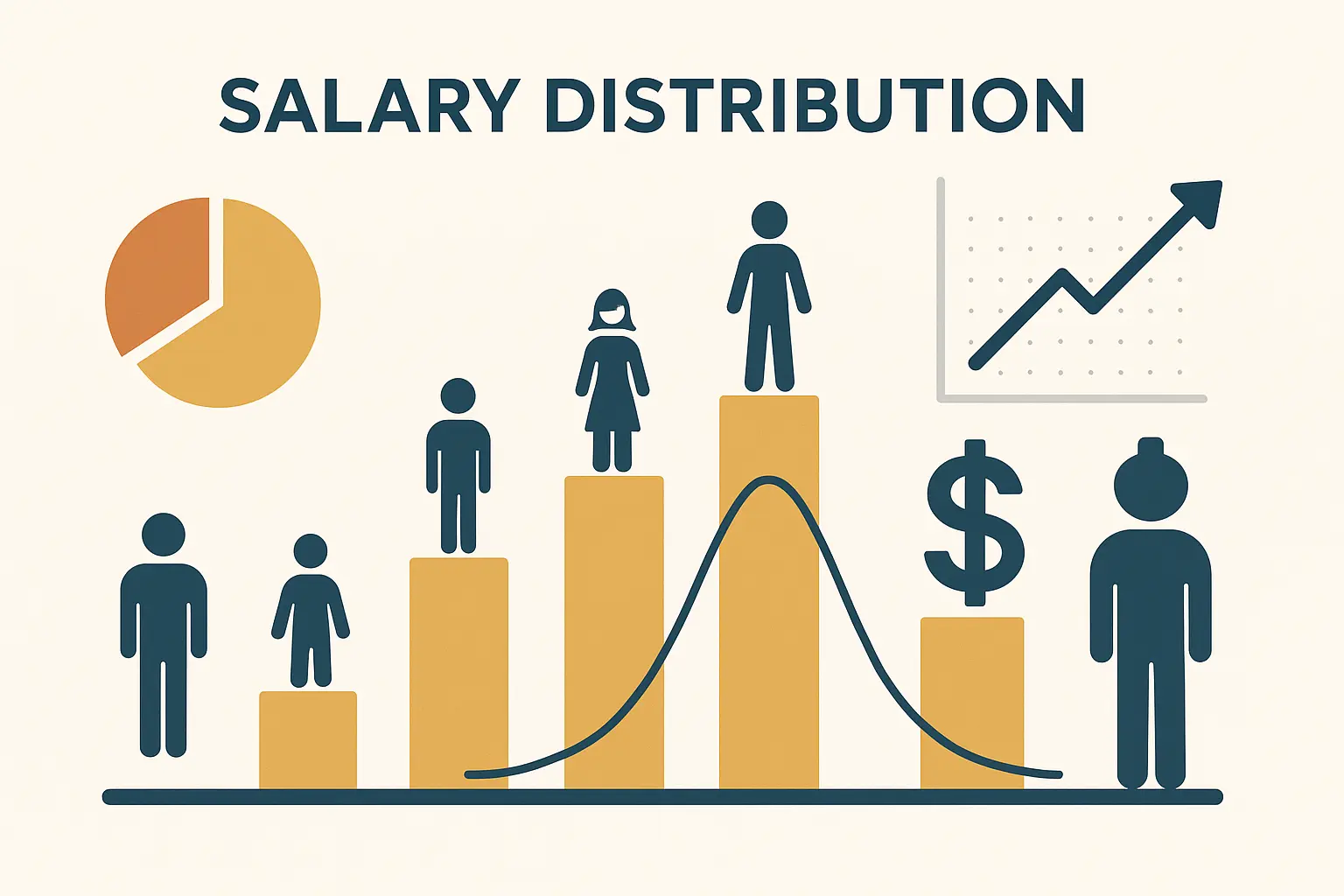
Data from RemotePeople shows Jamaica’s salary range spans dramatically from low earners making around 47,542 JMD (about $303) monthly to top earners making closer to 1,500,000 JMD (approximately $9,560) monthly, illustrating the vast income inequality across the workforce.
Minimum Wage Reality and Its Ripple Effects
According to RemotePeople’s analysis, Jamaica’s minimum wage was updated to 15,000 JMD per week (about $95 USD) on June 1, 2024, marking an increase from 2023’s 13,000 JMD rate, based on a 40-hour work week.
This translates to roughly JMD 60,000 monthly for full-time minimum wage work, which explains why so many workers cluster around this income level. The minimum wage increase helped, but it still leaves many families struggling to meet basic needs.
The Industries That Actually Pay
|
Industry |
Monthly Range (JMD) |
Reality Check |
|---|---|---|
|
Banking & Finance |
120,000-400,000 |
Education required, but worth it |
|
Healthcare |
80,000-800,000 |
Huge range by specialty |
|
Mining |
80,000-150,000 |
Skills-based, good benefits |
|
Tourism |
25,000-60,000 |
Seasonal, tip-dependent |
|
Agriculture |
15,000-120,000 |
Traditional vs. specialized |
|
Education |
60,000-180,000 |
Structured pay scales |
Banking, telecommunications, and international business services typically offer salaries 40-80% above national averages. These sectors benefit from foreign investment, regulatory requirements for skilled workers, and competition for talent that drives wages higher.

The Education Game-Changer
Here’s the uncomfortable truth: your degree matters. A lot.
Without a degree, you’re looking at JMD 30,000-50,000 monthly in most fields. With a bachelor’s degree, that jumps to JMD 80,000-150,000. It’s not fair, but it’s reality.
Higher education credentials and specialized skills create the most significant salary advantages in Jamaica’s job market. The education premium is substantial, with degree holders typically earning 50-100% more than those with only secondary education.
For professionals considering their educational options, understanding types of degrees becomes essential when planning career advancement in Jamaica’s competitive job market.

The Smart Move: Professional certifications often give you more bang for your buck than a full degree. A Cisco networking cert can double your IT salary in 18 months. An accounting certification opens doors that stay closed otherwise.
Marcus Thompson invested JMD 150,000 in obtaining his Cisco networking certification while working as an IT support technician earning JMD 45,000 monthly. Within 18 months, he secured a network administrator position paying JMD 85,000 monthly, nearly doubling his income and recovering his certification investment in just over two months of increased salary.
The Hidden Forces Affecting Your Paycheck
Beyond your control but worth understanding – Jamaica’s broader economy impacts everyone’s earning potential.
Recent analysis from “Jamaica’s wage woes persist” in the Jamaica Gleaner highlights that despite a recent national compensation review, pay levels continue falling below regional averages in 91% of roles surveyed, making Jamaica the worst performer among 20 Caribbean countries for competitive wages.
The Inflation Reality Check
Here’s what nobody talks about: if you’re not getting 5-8% raises annually, you’re effectively taking a pay cut. Jamaica’s inflation quietly eats away at your purchasing power every year.

Government workers and union members usually get cost-of-living adjustments. Everyone else? You’re on your own to negotiate or find new opportunities.
Why We’re Falling Behind Our Neighbors
Recent data shows Jamaica ranks dead last among 20 Caribbean countries for competitive wages. We’re not just dealing with internal inequality – we’re losing ground regionally. This affects everyone, regardless of qualifications.
What this means for you: If you’re considering regional opportunities, now you know why other Caribbean countries might offer better packages.
Your Action Plan for Better Pay
The average salary in jamaica can be dramatically exceeded through deliberate career moves and skill investments. I’ve seen people double their income within 2-3 years by following strategic approaches rather than hoping for gradual raises.
Master the Research Game
Before any salary conversation:
-
Check multiple job sites (but take them with a grain of salt)
-
Talk to people actually doing the work
-
Connect with recruiters in your field
-
Join professional WhatsApp groups where people share real numbers
Pro tip: Government stats are usually outdated. Your network gives you the real story.
When negotiating salaries in Jamaica’s competitive market, having proper documentation is crucial – professionals may need replacement diplomas to verify their credentials during the hiring process.
Timing Your Moves
Best times to negotiate:
-
During hiring (obviously)
-
Annual review season
-
After completing major projects
-
When your company just landed big contracts
Worst times:
-
Mid-year when budgets are tight
-
During company restructuring
-
Right after poor company performance

Companies typically set budgets in advance, so timing requests around budget cycles increases success rates. Mid-year requests often face budget constraints that don’t exist during annual planning periods.
The Smart Investment Strategy
High ROI moves:
-
Professional certifications (often pay for themselves in 6-12 months)
-
Evening degree programs (network + credential)
-
Industry conference attendance (connections matter)
Lower ROI:
-
Expensive MBA programs (unless targeting executive roles)
-
General courses without industry recognition
-
Certifications in declining fields
For professionals advancing their careers, understanding cost of a college degree helps evaluate the return on investment for higher education in Jamaica’s job market.
Building Your Professional Network
Join these groups:
-
Jamaica Institute of Management
-
Professional associations in your field
-
Alumni networks from your school
-
Industry-specific LinkedIn groups
Reality check: Many of Jamaica’s best-paying jobs never get advertised publicly. Your network is your early warning system for opportunities.

The Documentation Game
Keep your credentials organized and accessible. In Jamaica’s competitive market, missing paperwork can cost you opportunities. Whether it’s original diplomas, transcripts, or certificates – have copies ready.
Quick story: My friend lost out on a JMD 180,000 monthly position because he couldn’t quickly provide his degree verification. The company moved to the next candidate rather than wait.
When career advancement depends on proper documentation of your qualifications, professionals often need support with replacing a lost diploma to ensure missing paperwork doesn’t limit earning potential in Jamaica’s competitive job market.
When career advancement depends on proper documentation of your qualifications, ValidGrad provides essential support for Jamaican professionals. Whether you need replacement diplomas after document loss or backup certificates for salary negotiations, ValidGrad’s high-quality replica services ensure missing paperwork doesn’t limit your earning potential. In Jamaica’s competitive job market, where education credentials can mean the difference between earning JMD 50,000 versus JMD 150,000 monthly, having readily available documentation is crucial for maximizing professional opportunities.
For professionals who need to verify their educational background quickly, understanding how to get a copy of your diploma can be essential when pursuing higher-paying positions in Jamaica’s competitive market.
Making It Work Long-Term
The 5-Year Plan Approach
Years 1-2: Focus on learning and proving yourself
Years 3-5: This is jump time – either move up or move out
Years 5+: You should be earning significantly more or have a clear path to get there
Salary progression typically shows steep increases in the first 5 years of career development, then moderates with diminishing returns after 15+ years. Understanding this curve helps with career planning and timing for major moves or negotiations.
Fresh graduates often start 20-30% below market rates but can reach full market value within 2-3 years with good performance. The biggest jumps usually happen between years 3-7 of a career, making this period crucial for strategic moves.
Multiple Income Stream Reality
Many successful Jamaicans don’t rely on salary alone:
-
Freelance work in your expertise area
-
Small business ventures
-
Property rental (even renting a room helps)
-
Online services leveraging your skills
The Exit Strategy
Sometimes the best salary increase comes from leaving. If you’ve maxed out at your current company, moving might be your only option for significant growth.
Red flags it’s time to go:
-
No raises in 3+ years
-
Company consistently pays below market
-
No advancement opportunities
-
Industry is declining
Final Reality Check
Jamaica’s job market rewards preparation, patience, and strategic thinking. The salary gaps are real, but so are the opportunities to bridge them.
What works:
-
Continuous skill development
-
Strategic job changes every 3-5 years
-
Building genuine professional relationships
-
Understanding your market value
What doesn’t work:
-
Hoping for automatic raises
-
Staying loyal to companies that don’t reciprocate
-
Ignoring market trends
-
Waiting for perfect opportunities
The people I know who’ve significantly increased their earnings didn’t get lucky – they made deliberate choices. They invested time in education, built networks, and weren’t afraid to make strategic moves when opportunities appeared.
Success in Jamaica’s job market requires understanding these realities while taking concrete steps to position yourself advantageously. Whether through continuing education, professional networking, or strategic job changes, the opportunities exist for those willing to pursue them systematically.
Your salary in Jamaica isn’t just about your current job – it’s about positioning yourself for the next one, and the one after that. The landscape is challenging, but it’s navigable if you approach it with clear eyes and a solid plan.