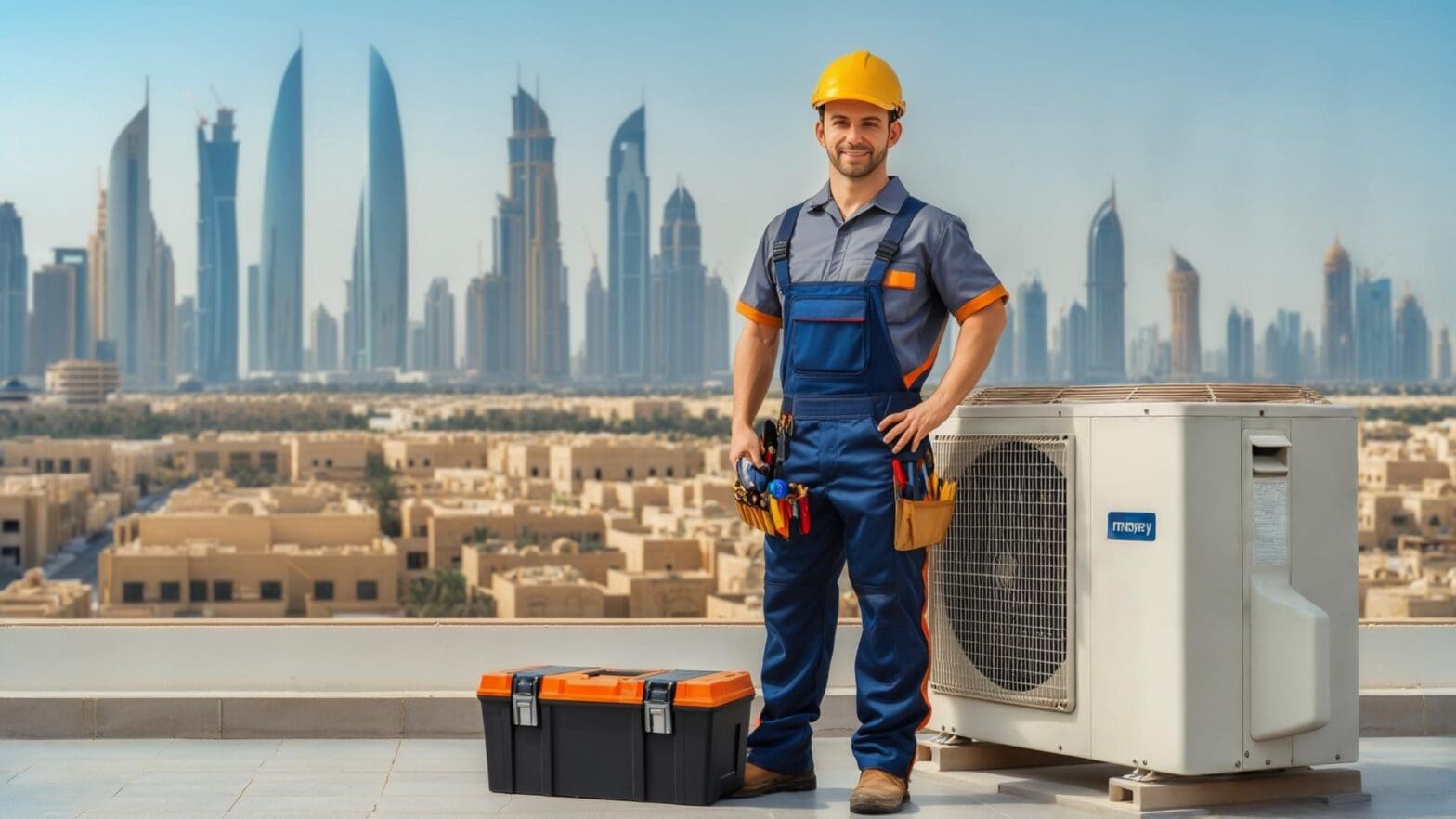
Let me be straight with you – I had no idea how much money you could actually make fixing air conditioners in Saudi Arabia until I started digging into this industry.
Think about it: when it’s 45°C outside and your AC breaks, you’ll pay whatever it takes to get it fixed, right? That desperation translates into serious money for skilled technicians. I’m talking about guys making anywhere from 2,500 SAR a month starting out to 20,000 SAR for the specialists working on those crazy NEOM projects you keep hearing about.
According to SalaryExpert data, the average AC technician gross salary in Saudi Arabia is 126,579 SAR annually, with entry-level technicians (1-3 years experience) earning an average of 93,174 SAR per year. But here’s what most people don’t realize – your earning potential depends heavily on way more than just showing up to work.

Understanding the value of proper documentation is crucial when pursuing high-paying positions, especially when considering whether formal education credentials are worth the investment for career advancement in technical fields like HVAC.
Table of Contents
-
The Real Money Behind Saudi Arabia’s HVAC Boom
-
What You’ll Actually Earn by Experience Level
-
Why Location Makes or Breaks Your Paycheck
-
Career Paths That Actually Lead to Premium Pay
-
Which Sectors Pay the Most (And Why)
-
Building Networks That Open Doors
-
Future Opportunities That Could Transform Your Career
-
Advanced Strategies Most Technicians Miss
-
The Real Trade-offs Nobody Talks About
-
Final Thoughts
TL;DR
-
Entry-level technicians start at 2,500-4,000 SAR monthly, experienced pros can hit 6,000-15,000 SAR
-
Major cities pay 15-25% more but competition is fierce
-
Oil & gas sector offers the ultimate premium: 8,000-15,000 SAR monthly plus benefits
-
International certifications like EPA Section 608 can boost your salary 15-20%
-
Smart building and IoT expertise commands 25-40% salary premiums
-
Vision 2030 mega-projects offer up to 20,000 SAR monthly for specialists
-
Government jobs provide rock-solid security with 5,000-10,000 SAR salaries
-
Solar HVAC and energy efficiency skills are the future goldmines
The Real Money Behind Saudi Arabia’s HVAC Boom
Here’s what blew my mind when I first started looking into this: Saudi Arabia’s HVAC market isn’t just big – it’s absolutely massive. And it’s not slowing down anytime soon.
When you’re living somewhere that hits 45°C regularly, air conditioning isn’t a nice-to-have. It’s literally survival. Add in all these crazy construction projects and the government’s Vision 2030 push, and you’ve got a perfect storm for technicians who know what they’re doing.
I’ve heard stories of managers calling around frantically trying to poach technicians from competitors because their systems went down and they needed someone immediately. The desperation is real, and it shows in the paychecks.
Why This Market Pays So Well
Companies are genuinely scrambling to find qualified people during summer months. The combination of harsh climate, government mega-projects, and industrial expansion has created conditions where skilled technicians are treated like essential professionals, not basic laborers.
What makes this market so lucrative:
-
Extreme climate creates year-round demand
-
Massive government projects need specialized skills
-
Not enough qualified technicians to go around
-
Companies will pay premium rates to avoid costly downtime

The Complete Compensation Picture Nobody Talks About
Here’s something most people don’t realize – your total compensation package often includes way more than just your base salary. We’re talking housing allowances, transportation, medical coverage, and annual bonuses that can bump your actual take-home by 30-50%.
Let me break down what that actually looks like:
|
Compensation Component |
Typical Value |
What It Means for You |
|---|---|---|
|
Base Salary |
4,000-12,000 SAR |
Your foundation |
|
Housing Allowance |
800-2,000 SAR |
Covers most rent costs |
|
Transportation |
300-600 SAR |
Car allowance or company vehicle |
|
Medical Coverage |
200-500 SAR equivalent |
Full family coverage |
|
Annual Bonus |
1-3 months salary |
Performance-based extra income |
So your 6,000 SAR base salary might actually be worth 9,000 SAR when you factor in everything else. That’s real money that changes your quality of life completely.
What You’ll Actually Earn by Experience Level
Okay, let’s get real about the numbers. I’m going to give you the straight truth about what you can expect to make, not some inflated marketing nonsense.
Starting Out: The Reality Check
If you’re new to this, expect to make 2,500-4,000 SAR monthly while you’re learning the ropes. Yeah, it’s not glamorous, but here’s the thing – this phase doesn’t last long if you’re serious about it.
During your training period, you might see as low as 1,800 SAR, but think of it as getting paid to go to school. The guys who treat this time as an investment rather than just collecting a paycheck are the ones who advance quickly.
Based on PayScale research, early career Air Conditioning technicians with 1-4 years of experience earn an average total compensation of SAR 30,000 annually, while the highest pay can reach SAR 72,000 per year.
What Actually Affects Your Starting Pay
I met this guy Kareem who started at 2,200 SAR with zero experience. He showed up early, stayed late, and asked questions constantly. Six months later, his supervisor bumped him to 3,400 SAR because he became the most reliable person on the team.
Your educational background matters too. Technical school graduates often start at the higher end of the range, while those learning on the job begin lower but can advance quickly with dedication.
Many technicians discover their original technical certificates have been damaged or lost when applying for positions. Having replacement diplomas and certificates readily available ensures you never miss opportunities due to missing documentation.
The Mid-Level Sweet Spot: Where Things Get Interesting
After 3-7 years, you’re looking at 6,000-9,000 SAR monthly, but only if you’ve specialized in something valuable. General technicians stay stuck at the lower end, while specialists in VRF systems or building automation can hit the upper range easily.
The jump from general to specialist can literally double your income overnight. I’ve seen it happen multiple times – a technician learns industrial systems or smart HVAC integration and suddenly they’re getting calls from headhunters.
Specialized Skills That Actually Pay
Industrial system expertise, building management systems, and smart HVAC integration are your golden tickets. Companies desperately need technicians who understand complex commercial and industrial installations. If you can troubleshoot a VRF system or program a building automation system, you’re looking at the top tier of compensation.

Ahmed, a recent technical school graduate from Pakistan, started his career in Riyadh at 3,200 SAR monthly. His technical diploma and basic English skills helped him secure a position 600 SAR higher than peers without formal training. Within 18 months, his consistent performance earned him a promotion to senior technician at 4,800 SAR monthly.
Senior Level: Where Experience Really Pays Off
Senior technicians with 8+ years pull down serious money. According to SalaryExpert data, senior level AC technicians earn an average salary of 155,550 SAR annually in Saudi Arabia. But getting here requires more than just showing up for eight years – you need to become the person companies call when everything else has failed.
Why Location Makes or Breaks Your Paycheck
Location can make or break your paycheck in ways that might surprise you.
Major Cities: High Risk, High Reward
Riyadh and Jeddah pay 15-25% more than smaller cities, but you’re competing with everyone who’s figured this out. The work is there – government buildings, corporate offices, luxury developments – but so is everyone else trying to get it.
In Riyadh specifically, I’ve seen monthly salaries range from 4,000-12,000 SAR depending on what you’re working on. Government contracts and international corporate offices pay the most, but landing those jobs means having your documentation perfect and your skills proven.
Riyadh: Where the Big Money Lives
Working in Riyadh means access to the highest-paying projects in the country. The downside? Everyone knows this, so you’ll need strong credentials and proven experience to stand out from other technicians seeking these premium positions.
Industrial Zones: The Hidden Gold Mines
Here’s where most people miss out – industrial facilities often pay more than the big cities, with way less competition. Oil and gas facilities, manufacturing plants, food processing centers – they all need specialized climate control and they’ll pay for it.
Oil & Gas: The Ultimate Premium
Oil and gas is the ultimate premium market. We’re talking 8,000-15,000 SAR monthly plus hardship allowances. Yeah, you might be working in the middle of nowhere, but the money makes up for it. Many technicians build their entire careers around this sector because the earning potential is just that good.
Manufacturing: Steady High-Paying Work
Manufacturing is steadier work – food processing, pharmaceuticals, electronics. These places need precise temperature and humidity control, so they pay 6,500-11,000 SAR monthly for people who can deliver it consistently.
|
Location Type |
Monthly Salary Range |
Competition Level |
Key Benefits |
|---|---|---|---|
|
Major Cities |
4,000-12,000 SAR |
High |
Networking opportunities |
|
Oil & Gas |
8,000-15,000 SAR |
Medium |
Hardship allowances |
|
Manufacturing |
6,500-11,000 SAR |
Medium |
Job stability |
|
Smaller Cities |
3,500-8,000 SAR |
Low |
Lower living costs |
|
Mega Projects |
10,000-20,000 SAR |
Low |
Premium benefits |
Career Paths That Actually Lead to Premium Pay
Strategic career planning separates high earners from average technicians. The most successful professionals identify emerging technologies early and position themselves as experts before demand peaks.
Certifications That Actually Matter
Let me tell you about the certifications that actually matter versus the ones that just look good on paper.
International Certifications: Your Competitive Edge
EPA Section 608 might be US-based, but multinational companies in Saudi Arabia love it. Same with HVAC Excellence certifications. These can bump your salary 15-20% because they prove you meet international standards that transcend local markets.
But here’s the catch – you need the documentation to prove it. I’ve seen technicians miss out on great opportunities because their certificates got damaged or lost.
Professional certifications require proper documentation and display. Learning how to display certificates professionally in your workspace demonstrates credibility to employers and clients.
Local Requirements: Non-Negotiable
SASO certification isn’t optional for certain positions – it’s mandatory. The process involves technical testing and work experience verification, but it opens doors to government contracts and major projects that pay premium rates.
Future-Proof Specializations
Smart building technology is where the real money is heading. Technicians with IoT and building automation skills are earning 25-40% more because there just aren’t enough of them yet. BMS specialists can pull 8,000-13,000 SAR monthly because the demand far exceeds supply.
Smart Building Technology: The New Frontier
As Saudi Arabia invests heavily in smart city initiatives, technicians with IoT expertise command premium salaries. This specialization requires continuous learning but offers exceptional long-term earning potential.
Energy Efficiency: Riding the Green Wave
Energy efficiency is another goldmine. With Saudi Arabia pushing green initiatives, solar HVAC integration skills can get you 7,000-12,000 SAR monthly in emerging markets. Green building certifications like LEED can increase your earning potential by 20-25%.
Mohammad, a 28-year-old technician from Bangladesh, invested two years learning smart building automation while working in Riyadh. After obtaining BMS certification, he secured a NEOM contractor position at 11,500 SAR monthly – nearly triple his previous salary. His expertise in predictive maintenance made him indispensable.
Which Sectors Pay the Most (And Why)
Understanding different employment sectors helps you identify the most lucrative career paths in Saudi Arabia’s diverse economy.
Private Sector: Where Performance Pays
Private companies typically offer the highest earning potential through competitive base salaries and performance-based incentives.
Multinational Corporations: Premium Packages
Multinational corporations typically pay 20-30% more than local competitors, but they want English proficiency, international certifications, and proven experience. The investment in meeting these requirements pays off through better benefits and advancement opportunities.
Local Businesses: Flexibility and Growth
Local businesses might pay less initially, but they offer flexibility and rapid advancement. Many successful technicians use them as stepping stones to build experience quickly.
Government Sector: The Security Play
Government jobs offer 5,000-10,000 SAR monthly with incredible job security and benefits. The application process is complex – civil service exams, security clearances, multiple interviews – but the long-term stability is unmatched.
Recent developments have created concerns about labor conditions at mega-projects. According to a “Human Rights Watch report” from December 2024, migrant workers at Saudi Arabia’s giga-projects face widespread labor abuses that technicians should consider when evaluating opportunities.
Navigating Government Applications
Government positions require specific documentation, formal education credentials, and passing civil service examinations. While complex, the long-term benefits often justify the effort required.

Building Networks That Open Doors
Professional relationships directly impact your earning potential more than most people realize.
Industry Associations: Worth the Investment
ASHRAE Saudi Arabia Chapter membership can increase your earning potential 10-15% through networking and continuing education. The connections you make at industry events often lead to job opportunities that never get posted publicly.
Manufacturer Programs: Direct Paths to Higher Pay
Daikin and Carrier certification programs often lead to authorized dealer positions paying 7,000-11,000 SAR monthly. These manufacturers actively seek qualified technicians to represent their brands, providing ongoing support and premium project assignments.
According to SalaryExpert data, senior level AC technicians (8+ years of experience) earn an average salary of 155,550 SAR annually, highlighting the value of experience and professional development.

Future Opportunities That Could Transform Your Career
Understanding industry trends helps you position yourself for emerging opportunities and serious salary growth.
Technology Integration: The Premium Skills of Tomorrow
IoT expertise commands 25-40% salary premiums as smart buildings become standard. Predictive maintenance skills are particularly valuable – professionals earn 8,500-14,000 SAR monthly because they save companies serious money on operational costs.
The growing demand for skilled workers in Saudi Arabia’s expanding economy is creating new opportunities. According to “Economy Middle East”, Saudi Arabia’s Vision 2030 plan has created numerous job opportunities in engineering and construction, with mechanical engineers who design and maintain HVAC systems being particularly in demand.
Vision 2030: The Ultimate Opportunity
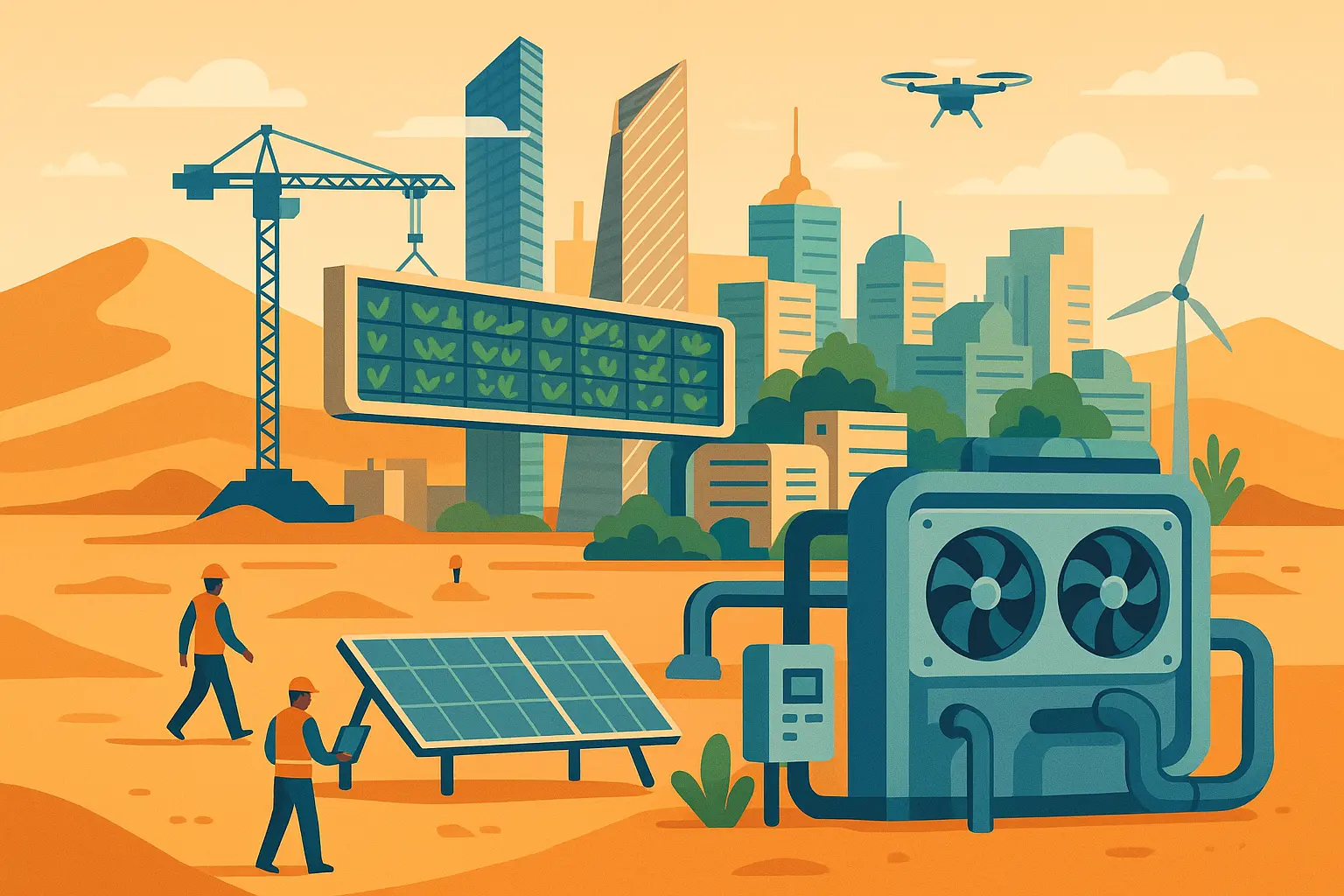
NEOM and other mega-projects offer 12,000-20,000 SAR monthly for technicians with advanced sustainable HVAC skills. These positions require security clearances and cutting-edge expertise, but they represent the pinnacle of earning potential in the field.
Rajesh, an experienced Indian technician with solar cooling expertise, secured a NEOM subcontractor position after completing specialized renewable energy training. His unique skill set in integrating solar-powered cooling earned him 18,000 SAR monthly, plus accommodation and transportation benefits.
Skills Development Checklist for Future-Ready Technicians:
-
☐ Complete IoT and smart building automation training
-
☐ Obtain predictive maintenance certification
-
☐ Learn solar HVAC integration techniques
-
☐ Master building management system programming
-
☐ Develop energy efficiency analysis skills
-
☐ Gain experience with sustainable refrigerants
-
☐ Practice remote monitoring and diagnostics
-
☐ Study green building certification requirements
How ValidGrad Supports Your Career Documentation
Professional documentation plays a crucial role in securing high-paying positions in Saudi Arabia’s competitive market. Whether you’ve completed HVAC training programs, earned technical certifications, or hold degrees supporting your career advancement, having proper documentation readily available is essential.
Many technicians discover their original diplomas or certificates have been damaged, lost, or are needed in multiple locations simultaneously. ValidGrad’s replica diploma service allows you to protect your originals while displaying professional-looking replicas in your workshop or office.
When pursuing high-paying technical positions, employers often require verification of your educational background. Understanding the importance of academic documents and maintaining proper copies can be the difference between landing a premium role or missing out on career-defining opportunities.
Ready to secure your career documentation? Visit ValidGrad today to create professional backup copies of your HVAC certifications and educational achievements.
Advanced Strategies Most Technicians Miss
Beyond basic certifications and experience, the highest-earning technicians employ specific strategies that set them apart from the competition.
Timing Your Market Entry for Maximum Impact
The smartest technicians enter specialized markets before they get saturated. Right now, solar HVAC integration and predictive maintenance represent emerging opportunities where early adopters can establish themselves as experts before competition intensifies.
Leveraging Manufacturer Relationships for Career Growth
Building strong relationships with major HVAC manufacturers opens doors to exclusive training opportunities, authorized dealer positions, and direct referrals for high-paying projects. Manufacturers like Daikin and Carrier actively seek qualified technicians to represent their brands in the Saudi market.

The Real Trade-offs Nobody Talks About
While salary figures grab attention, understanding the complete financial picture helps you make smarter long-term decisions.
Industrial vs. Commercial: What Nobody Tells You
Industrial positions offer the highest salaries but often mean remote locations, irregular schedules, and hazardous environments. Commercial work provides better work-life balance and networking opportunities, even with lower base salaries. Your personal situation should drive this decision more than just the numbers.
Based on PayScale research, the lowest pay for AC technicians in Saudi Arabia is SAR 2,000 per year while the highest reaches SAR 72,000 annually, demonstrating significant earning potential variations based on experience, specialization, and employment sector choices.
Government Benefits vs. Private Sector Income
Government positions offer benefits private companies can’t match – guaranteed pensions, extensive medical coverage, job security. Over a 20-30 year career, the total value often exceeds higher-paying private positions, especially if you prioritize stability.
For technicians considering government positions, having proper educational documentation is critical. Many discover they need replacement copies of lost diplomas when applying for civil service positions requiring verified credentials.
Government vs. Private Sector Decision Matrix:
-
Choose Government if you value: Job security, comprehensive benefits, predictable advancement, family medical coverage
-
Choose Private Sector if you value: Higher immediate income, performance bonuses, rapid advancement, skill-based pay increases
-
Consider Industrial if you value: Maximum earning potential, specialized experience, premium benefits, career acceleration

Final Thoughts
The earning potential in Saudi Arabia’s HVAC market is real, but it’s not automatic. The technicians making 15,000-20,000 SAR monthly didn’t get there by accident – they planned strategically and positioned themselves as indispensable experts in their specializations.
Success requires more than technical skills. Professional presentation, proper documentation, and strategic networking all play crucial roles in accessing the highest-paying opportunities. The industry is evolving rapidly, and your earning potential is limited only by your willingness to learn and adapt.
The opportunities ahead are incredible, especially with Vision 2030 creating demand for skills that didn’t exist five years ago. Whether you’re starting out or looking to advance, the Saudi HVAC market rewards professionals who invest in their skills and stay ahead of technological trends.
Remember that success in this field requires strategic planning. The technicians earning top dollar understand that this isn’t just about fixing air conditioners – you’re becoming an essential part of Saudi Arabia’s infrastructure and economic transformation.
Success in technical careers often depends on maintaining professional credentials and documentation. For those building long-term careers in HVAC, understanding the value of business certifications and proper credential management becomes increasingly important as you advance to supervisory and management roles.