
The bank teller profession employs approximately 265,945 people across the United States, with women making up 83.3% of the workforce and men comprising 16.7%, according to DataUSA. So what do bank tellers really make? It’s not that simple – pay varies like crazy depending on where you work and which bank hires you, making research essential before accepting any position.

Table of Contents
-
Current Bank Teller Salary Reality Check
-
What Actually Affects Your Bank Teller Paycheck
-
The Real Value of Bank Benefits (Beyond Your Base Pay)
-
Your Path from Teller to Higher-Paying Banking Roles
-
How to Research and Land the Best Bank Teller Salary
TL;DR
-
Bank teller salaries range from $28,000-$35,000 for beginners, with experienced tellers earning $35,000-$42,000 annually
-
Location matters huge – cities like San Francisco and New York pay 25-40% more than national averages
-
Benefits packages add 20-30% value to your total compensation through health insurance, 401(k) matching, and employee banking perks
-
Community banks offer more personal growth while national chains provide standardized pay scales and comprehensive benefits
-
Teller positions serve as stepping stones to customer relationship roles ($35,000-$45,000) and branch management ($45,000-$80,000)
-
College degrees can boost starting salaries by $2,000-$5,000, while banking certifications add $1,000-$3,000 annually
Current Bank Teller Salary Reality Check
The average yearly wage hit $32,425 in 2023, according to DataUSA – that’s about $35,000 less than the national average salary of $67,727. But don’t let that number fool you, because where you work makes all the difference.
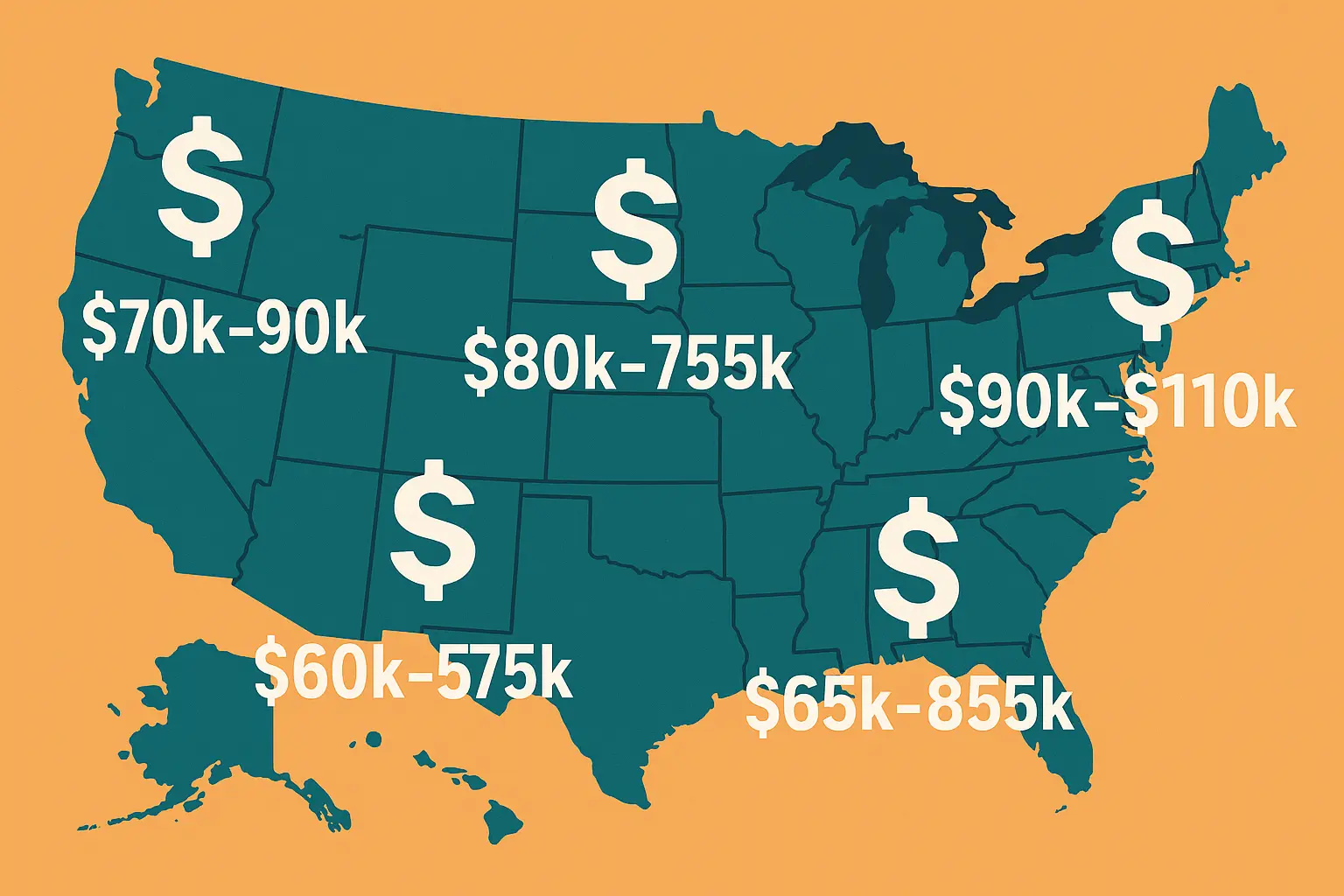
What Bank Tellers Really Earn Across America
Starting Out: Your First Paycheck
Fresh out of training? You’re looking at $28K-$35K annually. I’ve seen banks start people at $13.50 per hour, while others (especially in competitive markets) jump straight to $16.80. It really comes down to how desperate they are for good people.
My friend Sarah started at $14.50/hour in Ohio. Eight months later? She talked her way up to $16/hour just by showing what she accomplished with customers. For those thinking about whether a college degree is worth the investment, it can definitely boost your long-term earning potential in banking.
Mid-Career: Where Experience Pays Off
Once you’ve got a few years under your belt, things get better – we’re talking $35K-$42K territory. Banks love rewarding experienced tellers because training new people costs them a fortune. You might see performance bonuses or shift differentials that bump your total up another 5-15%.
Senior Positions: Leading the Pack
Senior tellers in lead roles? They’re pulling in $40K-$50K, sometimes more. These folks aren’t just handling transactions – they’re training newbies, managing the cash vault, and dealing with the complicated situations junior tellers can’t handle.
Location Makes or Breaks Your Paycheck
Here’s where things get interesting. Geography is everything in banking pay.
|
Region |
Average Salary |
Cost of Living Factor |
Net Purchasing Power |
|---|---|---|---|
|
San Francisco, CA |
$45,000-$55,000 |
Very High |
Moderate |
|
New York, NY |
$40,000-$50,000 |
Very High |
Moderate |
|
Dallas, TX |
$32,000-$38,000 |
Moderate |
Good |
|
Rural Midwest |
$26,000-$32,000 |
Low |
Good |
|
Seattle, WA |
$38,000-$45,000 |
High |
Moderate |
Big Cities = Big Paychecks (But Also Big Rent)
San Francisco, New York, Seattle – these places pay 25-40% more than average. We’re talking $38K-$55K for teller work, which sounds amazing until you realize rent just ate half that increase. Still, the experience and networking opportunities are incredible if you can swing it.

Small Towns: Different Math
Rural areas play by different rules. Sure, you might start at $26K instead of $32K, but your rent is probably $600 instead of $2,400. Plus, smaller banks often give you more responsibility faster, which means quicker advancement.
Community Banks vs. Big Chains
Community banks feel more like family businesses – you’ll know everyone’s name, get varied responsibilities, and have more face time with management. National chains have their systems down to a science with standardized pay scales, comprehensive training, and clear advancement tracks. Both have their perks.
Major banks are setting new standards too. Bank of America recently started “raising their U.S. minimum hourly wage to $24” – that’s nearly $50,000 annually for full-time work, way above industry averages.
What Actually Affects Your Bank Teller Paycheck
Your base salary is just the starting point. Several factors can boost (or limit) what you actually take home.
Experience and Time on the Job
Annual Reviews: Your Chance to Shine
Every year, you’ll sit down with your manager for that performance review. Most banks are predictable here – solid performers get their 2-5% bump, while standout employees might see bigger increases. I’ve watched tellers who consistently hit goals and keep customers happy negotiate impressive raises during these meetings.
Performance Review Game Plan:
-
Document customer compliments and feedback
-
Track your sales wins and cross-selling successes
-
List any extra training you’ve completed
-
Note process improvements you’ve made
-
Research current market rates for your position
-
Prepare specific examples of value you’ve added
-
Set clear goals for next year
Cross-Training: The Secret Weapon
Here’s what most people miss: banks pay more for versatility. Learn loan processing, get comfortable with the CRM system, become the go-to person for business accounts. Suddenly you’re worth more because you can fill in wherever needed.

Education: Does Your Degree Actually Matter?
With teller jobs projected to decline 13% from 2024 to 2034 according to the Bureau of Labor Statistics, extra qualifications are becoming more important for job security and advancement.
High School Diploma: The Baseline
Most banks just want that high school diploma. They’ll teach you everything else – banking regulations, their systems, customer service protocols. Don’t let anyone tell you that you need a college degree to start. If you need to replace a lost diploma for employment verification, you can quickly get a replacement diploma to keep your application on track.
College Degrees: Worth the Investment?
That said, having a degree does open doors. I’ve seen it bump starting salaries by $2K-$5K right away, and it definitely speeds up advancement into management. Banks like promoting degreed employees because it looks good to regulators and customers.
Marcus graduated with a business degree and started at $34,000 while his high school diploma colleagues started at $30,000. Within two years, he was promoted to assistant branch manager while they remained tellers.
Banking Certifications: Small Investment, Real Returns
Certifications from groups like the American Institute of Banking aren’t required, but they can add $1K-$3K annually. More importantly, they show you’re serious about banking as a career, which managers notice at promotion time.
The Real Value of Bank Benefits (Beyond Your Base Pay)
Bank benefits can add 20-30% value to your total compensation. When evaluating any offer, these benefits matter enormously.
Health Insurance and Protection
Medical Coverage That Actually Works
Bank health insurance is usually solid. Most places cover 70-90% of your premium with multiple plan options. Many also offer health savings accounts or flexible spending arrangements that save serious money on medical expenses.

Life Insurance and Disability Protection
Life insurance is often equal to your annual salary at no cost, with options to buy more at group rates. Disability insurance protects your income if you can’t work – something most people don’t think about until they need it.
Retirement and Financial Perks
|
Benefit Type |
Typical Value |
Annual Worth |
Notes |
|---|---|---|---|
|
Health Insurance |
70-90% premium coverage |
$3,000-$8,000 |
Family coverage varies |
|
401(k) Match |
3-6% of salary |
$1,000-$2,500 |
Based on $35K salary |
|
Life Insurance |
1x annual salary |
$300-$500 |
Basic coverage included |
|
Employee Banking |
Fee waivers, rate discounts |
$500-$2,000 |
Varies by usage |
|
Paid Time Off |
2-4 weeks vacation |
$1,300-$3,200 |
Plus holidays |
401(k) Matching: Free Money
Most banks match 3-6% of what you put into your 401(k). That’s literally free money – if you’re not contributing enough to get the full match, you’re leaving cash on the table.
Employee Banking Privileges: The Hidden Goldmine
This is where working at a bank gets really interesting. Free checking accounts, reduced loan rates, waived fees on everything from wire transfers to cashier’s checks. I know tellers who’ve saved thousands on their mortgages just because of employee rate discounts.
Paid Time Off: More Than Just Vacation
Most banks start you with 2-3 weeks vacation, plus all federal holidays and usually some personal days. Vacation time increases as you stick around, and many places are flexible about when you use it.

Your Path from Teller to Higher-Paying Banking Roles
Teller positions are valuable entry points into banking careers, with clear advancement paths that can significantly boost your earning potential. Your current salary is just the beginning.
Industry experts note “We seem to always be looking for tellers” because it’s an entry-level position that provides a pathway into banking, and many employees move on to other roles after gaining experience.
Moving Up in Banking
Customer Relationship Specialist: Your Next Step
Personal banker or customer relationship specialist roles are natural progressions. You’re looking at $35K-$45K, doing more consultative work – helping customers with financial planning, selling appropriate products, building long-term relationships. Less transactional, more strategic.

Loan Processing: Where Real Money Starts
This is where things get financially interesting. Mortgage processors, commercial loan specialists – we’re talking $40K-$60K depending on specialization. The work is more complex, but so is the paycheck. Plus, you’re learning transferable skills.
Jennifer jumped from teller to mortgage loan processor after two years, boosting her salary from $32,000 to $48,000. She took online mortgage training courses during evenings and shadowed the loan department during breaks.
Branch Management: Leading the Team
This is the big leagues. Assistant managers start around $45K, while branch managers pull in $60K-$80K plus bon uses tied to branch performance. You’re responsible for everything – staff, sales goals, customer satisfaction, regulatory compliance. Challenging but rewarding.
Skills That Actually Increase Your Value
Technology Skills: Staying Ahead
Banks are going digital fast, and tellers who understand technology are incredibly valuable. Learn the mobile apps inside and out, become the expert on new digital services, understand how backend systems work. This knowledge makes you indispensable.

Sales Skills: Turning Transactions into Relationships
Modern banking is about relationships and sales, not just processing transactions. Tellers who can spot opportunities – a customer who might benefit from a savings account, someone who could use a credit card – become much more valuable. Sales skills translate directly into advancement opportunities.
How to Research and Land the Best Bank Teller Salary
Getting competitive compensation requires systematic research, strategic applications, and ongoing salary monitoring.
Doing Your Homework Right
Start with the obvious places – Glassdoor, PayScale, Indeed’s salary tools. But don’t stop there. Call HR departments directly and ask about salary ranges. Most will give you ballpark figures over the phone. Network with current bank employees through LinkedIn. Real people give you the inside scoop on what banks actually pay versus what they advertise.
Salary Research Game Plan:
-
Check Glassdoor, PayScale, and Indeed salary data
-
Call HR departments for range information
-
Network with current bank employees on LinkedIn
-
Research specific banks’ recent press releases about wages
-
Compare benefits packages, not just base salary
-
Factor in local cost of living
-
Document findings for negotiation reference
Strategic Application and Negotiation
Before any interview, research that specific bank’s benefits package. Some have amazing health insurance but mediocre retirement matching. Others offer great employee banking perks but limited advancement opportunities. Know what you’re negotiating for beyond just base salary. If you need educational credentials during the application process, understanding how to obtain college transcripts ensures you have all necessary documentation ready.
When negotiating, have specific numbers ready. Don’t just say “I’d like more money” – say “Based on my research of similar positions in this market, I was expecting $X to $Y.” Back it up with data and explain why you’re worth the higher end.
Keeping Your Salary Competitive Long-Term
Document everything – customer compliments, sales achievements, additional training, problems you’ve solved. When annual review time comes, you want a file full of concrete examples of your value. Don’t hope your manager remembers all your great work. For those pursuing additional education while working, knowing how to request academic transcripts can be crucial for internal promotions or external opportunities.
Stay aware of market rates even after you’re hired. Salary websites update regularly, and you should know if you’re falling behind. If you are, that’s valuable information for your next performance review conversation.

Looking to advance your banking career but missing educational documentation? ValidGrad can help you quickly replace lost diplomas, degrees, or professional certificates that support your qualifications. With instant digital delivery and professional-quality physical copies, you can maintain complete career documentation while focusing on maximizing your salary potential. Get your replacement documents today and keep your career advancement on track. For those needing to replace educational credentials, learning how to get a diploma replacement ensures you have proper documentation for career advancement opportunities.
Final Thoughts
Bank teller positions offer solid entry points into financial services, with starting salaries that may seem modest but come with comprehensive benefits and clear advancement paths. The key to maximizing your earning potential? Understanding that location, experience, and institution type can affect your pay by tens of thousands of dollars annually.
What surprised me most during my research was how much the total package matters beyond base salary. Those employee banking perks, 401(k) matching, and health insurance benefits can add 20-30% to your actual compensation value. Don’t get tunnel vision on just the hourly wage.
The banking industry rewards loyalty and skill development more than many other fields. Tellers who cross-train, pursue certifications, and build relationships with management consistently outpace their peers in both salary growth and advancement opportunities. Your first teller position is really an investment in learning an industry that offers multiple career paths – from loan processing to branch management to specialized financial services roles. For those considering whether additional education is worth the investment, exploring high school diploma or GED options can provide the foundational credentials needed to start this rewarding career path.
Remember that negotiation doesn’t end once you’re hired. Annual reviews are your opportunity to present documented achievements and market research to justify salary increases. Banks need good people, and they’ll pay to keep them – but you have to advocate for yourself with concrete data and proven performance.