After spending years in veterinary medicine and talking with hundreds of vets about their careers, I’ve learned that salary expectations and reality often don’t match up. The good news? The field is growing fast—the Bureau of Labor Statistics projects 10% growth through 2034 with about 3,000 openings projected each year. The challenge? Knowing how to navigate your career to actually make good money.
Let me break down what vets really earn and, more importantly, how you can maximize your earning potential.

Table of Contents
-
The Reality Check: What Veterinarians Actually Earn
-
What Drives Your Paycheck: Practice Type and Location
-
The Growth Path: How to Increase Earnings Over Time
-
Alternative Routes to Higher Income
TL;DR
-
Entry-level vets: ~$75K, experienced vets: $130K+, practice owners: $200K+
-
Location matters huge—California pays more but costs more
-
Specialization is your fastest path to six figures
-
Rural practices often beat city salaries when you factor in living costs
The Reality Check: What Veterinarians Actually Earn
Let’s cut through the myths. Most people either think vets are broke or swimming in money—both are wrong. The reality sits somewhere in the middle, and understanding where you fit helps you plan your next move.

What You’ll Actually Make
New grads typically start around $75,000, which feels rough when you’re staring at six-figure student loans. But here’s the thing—vet salaries grow faster than most professions. Mid-career vets (5-10 years) usually hit $95,000-$120,000, and experienced vets often crack $130,000+.
The median veterinarian salary sits between $95,000 and $105,000 annually. Understanding these baseline numbers is crucial whether you’re considering vet school or trying to negotiate better pay. For those weighing their options, it’s worth considering is it worth it to get a college degree in veterinary medicine, especially given the significant educational investment required.
|
Experience Level |
Salary Range |
Typical Benefits |
|---|---|---|
|
New Graduate (0-2 years) |
$75,000 – $90,000 |
Health insurance, liability coverage |
|
Mid-Career (3-7 years) |
$95,000 – $120,000 |
Continuing education, vacation time |
|
Experienced (8-15 years) |
$110,000 – $140,000 |
Retirement matching, leadership roles |
|
Senior/Practice Owner |
$150,000 – $300,000+ |
Equity, profit sharing, full benefits |
The top 25% of vets earn over $120,000 annually. Getting there isn’t luck—it’s about making smart choices about where you work and what you specialize in.
The Salary Boom Nobody’s Talking About
Here’s what’s really exciting: veterinary salaries have jumped 8-12% annually over the past three years, crushing general inflation rates. This reflects massive demand for veterinary services and shows no signs of slowing down.
In fact, veterinarians recently secured the top spot on “Indeed’s 2025 Best Jobs list”, with the profession recording a 124% job share growth between 2021 and 2024—making it the fastest-growing profession on the list with a median annual salary of $139,999.
When people ask how much veterinarians make, the answer keeps getting better each year. Market forces are driving unprecedented compensation growth across all practice types and geographic regions.
What Drives Your Paycheck: Practice Type and Location
Now that you know the baseline numbers, let’s talk about what actually determines where you’ll fall in that range. This is where things get interesting—the type of veterinary work you choose will make or break your earning potential.
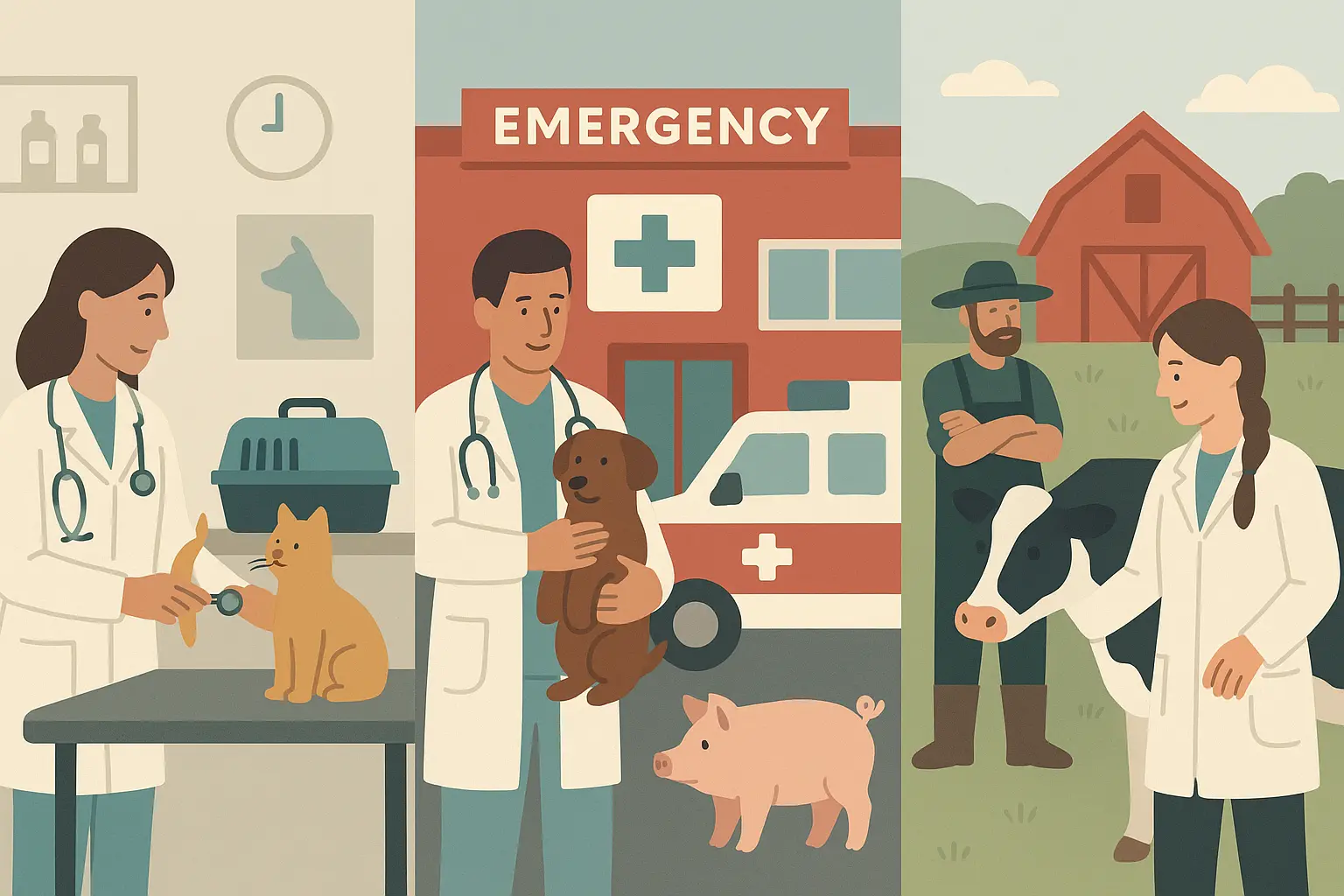
Practice Type: Where the Real Money Lives
Most vets start in general small animal practice making $90,000-$120,000. It’s steady work with regular hours, but you won’t get rich. If you want serious money, you need to think bigger.
Emergency Medicine: High Stress, High Rewards
Emergency vets earn $130,000-$180,000, but you’ll work nights, weekends, and holidays. The higher compensation reflects demanding schedules and the specialized skills needed for critical patient care.
Surgical Specialization: The Veterinary Elite
Board-certified specialists? They’re pulling in $180,000-$250,000+. The trade-off is years of additional training and residency programs that pay terribly.
However, there’s a concerning issue affecting specialty training. “Veterinary interns are suing over alleged wage suppression” in an antitrust lawsuit, claiming that while average veterinary interns earn approximately $56,000 annually, first-year private practice veterinarians earn an average of $131,000—a significant disparity that may artificially limit career advancement opportunities.
For professionals looking to transition between practice types, understanding what education do you need to join the military veterinary services can open additional career pathways with competitive compensation packages.
Employee vs. Owner: The Big Decision
As an associate, you’ll max out around $140,000 in most markets. Practice owners? They can hit $200,000-$300,000+, but they’re also dealing with business headaches, staff drama, and financial risk.
When hiring new associates, practice owners are increasingly having to explain compensation packages more thoroughly. According to “EquiManagement”, practice management consultants historically advised spending no more than 25% of a veterinarian’s gross revenue production for total employment costs, but many practices have had to increase that to 27% to attract associates, with new equine graduates without internships averaging $95,000 and those with internships starting around $100,000.

Location Makes or Breaks Your Paycheck
Your zip code can add $30,000+ to your salary without changing anything else about your job. But higher salaries don’t always mean more money in your pocket.
The California Reality
California vets earn $110,000-$150,000+, but housing costs will eat you alive. That $150,000 salary might feel like $100,000 after rent. Do the math before you pack your bags.
Major metropolitan areas including San Francisco, New York, and Seattle offer veterinary salaries 20-30% above national averages, but cost-of-living adjustments might eat up those nominal gains.
|
Metropolitan Area |
Average Salary |
Cost of Living Index |
Adjusted Purchasing Power |
|---|---|---|---|
|
San Francisco, CA |
$165,000 |
180% |
$91,667 |
|
New York, NY |
$155,000 |
170% |
$91,176 |
|
Seattle, WA |
$145,000 |
140% |
$103,571 |
|
Denver, CO |
$125,000 |
110% |
$113,636 |
|
Austin, TX |
$120,000 |
105% |
$114,286 |
|
National Average |
$105,000 |
100% |
$105,000 |

Rural Surprise
Here’s what shocked me: rural practices often pay $100,000-$130,000 plus benefits like housing allowances and loan forgiveness. When you factor in lower living costs, rural vets often come out ahead financially.
I know a vet who moved from Los Angeles ($140,000 salary) to rural Montana ($115,000 salary plus $15,000 housing allowance). His effective purchasing power increased by 40% due to lower living costs, and he received $50,000 in student loan forgiveness over five years, making the rural move financially superior despite the lower nominal salary.

The Growth Path: How to Increase Earnings Over Time
Want to maximize your earning potential? Strategic career planning and professional development can dramatically increase your earning potential throughout your veterinary career. Here’s your roadmap:

Years 1-3: Build Your Foundation
Focus on clinical skills, not salary. Use this time to figure out what you actually enjoy and what pays well. Complete internship programs when possible—they typically add $5,000-$10,000 to your starting salary.
Years 4-7: Specialize or Diversify
This is when you make your move. Add emergency skills, pursue specialty training, or develop business knowledge for ownership. Key advancement steps include:
-
Pursuing board certification in a specialty (adds $50,000-$80,000 to your salary)
-
Developing expertise in high-demand areas such as dentistry or surgery (worth $15,000-$30,000 more annually)
-
Obtaining business management skills for ownership opportunities
Professional advancement often requires updated credentials and documentation. When transitioning between positions or negotiating salaries, having proper replacement diplomas ensures your qualifications are properly represented to potential employers.
Years 8+: Cash In
By now you should be earning $120,000+ if you’ve made smart moves. Consider partnership, ownership, or consulting opportunities.
Salary Negotiation That Works
Most vets are terrible at asking for raises. Document your value—how much revenue you generate, your client retention rates, your efficiency metrics. Present facts, not feelings.
I know a vet who prepared for her salary review by documenting that she generated $450,000 in revenue for her practice over 12 months, compared to the practice average of $380,000. She researched local salary data showing her current $98,000 salary was $12,000 below market rate. By presenting these facts professionally, she secured a raise to $115,000 plus a production bonus structure.

Alternative Routes to Higher Income
Don’t forget about non-traditional paths. These often offer better work-life balance than practice and can be surprisingly lucrative:

Alternative Career Salary Guide:
-
Pharmaceutical Industry: $120,000-$180,000 (regulatory affairs, research)
-
Government Positions: $95,000-$140,000 (USDA, CDC, public health)
-
Academia/Teaching: $85,000-$130,000 (plus research grants, tenure benefits)
-
Corporate Veterinary Chains: $110,000-$150,000 (management track available)
-
Veterinary Consulting: $100,000-$200,000 (project-based, flexible schedule)
-
Insurance/Legal: $115,000-$175,000 (claims review, expert witness work)
For veterinarians exploring graduate degrees to enhance their qualifications for these alternative paths, understanding the time investment and potential salary returns is crucial for career planning.
When transitioning to new positions or showcasing your veterinary credentials in salary negotiations, diploma display ideas can help you present your qualifications professionally in your office or during interviews.
For veterinarians who need to replace lost credentials for career advancement opportunities, understanding how to get a copy of your diploma ensures you have the proper documentation when pursuing higher-paying positions or practice ownership opportunities.
The Bottom Line
Veterinary medicine can be financially rewarding, but it requires strategy. Your choices about specialization, location, and career path matter more than luck. The profession is growing fast, salaries are rising, and opportunities exist—but only if you know where to look and how to position yourself.
Stop thinking like an employee and start thinking like a business person. Your clinical skills get you in the door, but your business sense determines how much money you make. The recent salary growth trends suggest this is an excellent time to be entering or advancing in veterinary medicine, but success requires more than clinical skills—you need to understand the business side of the profession and position yourself strategically in the market.