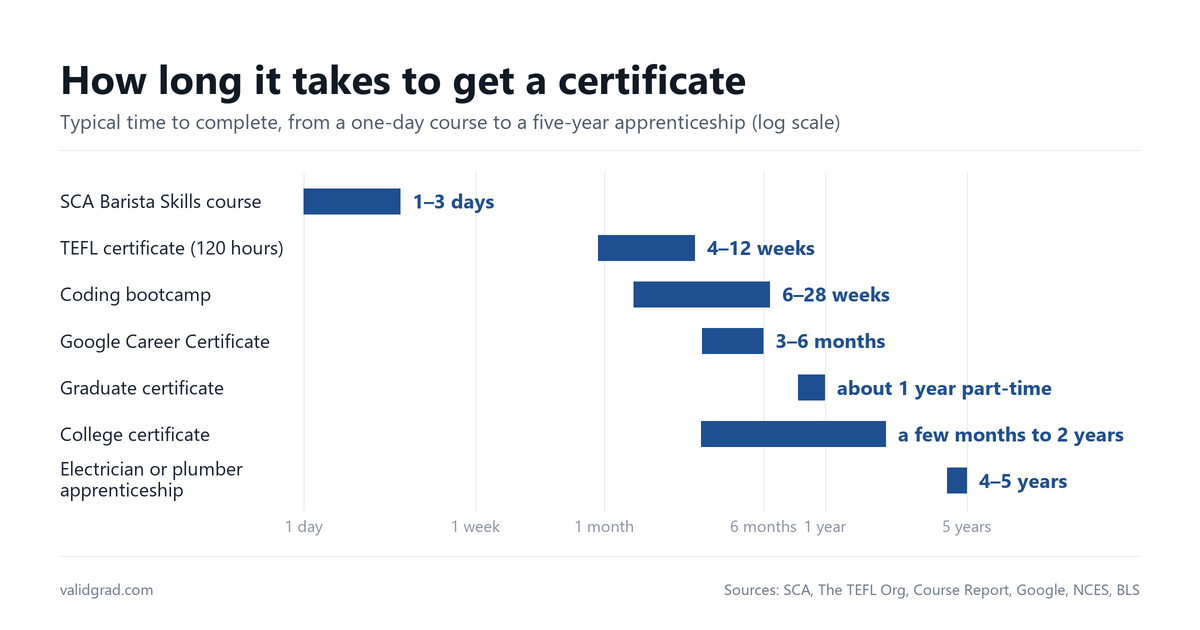
Here’s the truth nobody tells you upfront: getting your technical certificate could take anywhere from 2 months to 2 years, and it all depends on your situation. I’ve watched friends breeze through IT certifications in 8 weeks while others spent 18 months on what should have been a 6-month medical assistant program. The brochures make it sound simple, but real life has other plans.
Look, I get it. You’re probably stressed about making a career change, worried about time, and trying to figure out if you can actually pull this off. The reality is that IT certification prep time ranges from 2 months to over a year, depending on experience and study methods, and that’s just one field. Every technical certificate program has its own timeline quirks, and understanding them upfront will save you from nasty surprises later.
Table of Contents
-
Why Your Timeline Won’t Match the Brochure
-
Quick Wins vs Long Hauls: What You’re Really Signing Up For
-
Healthcare Takes Forever (And Here’s Why)
-
Tech Moves Fast, But Not That Fast
-
How Your Life Situation Changes Everything
-
The Money Factor Nobody Mentions
-
When Programs Can’t Be Rushed
-
Protecting Your Hard-Earned Investment
The Real Deal on Timelines
-
Basic IT and digital marketing: 2-6 months (if you actually stick with it)
-
Healthcare support roles: 6-18 months (with clinical hours you can’t skip)
-
Advanced tech specializations: 8-18 months (because this stuff is complicated)
-
Licensed practical nursing: 12-24+ months (state requirements aren’t negotiable)
-
Full-time study cuts timelines in half compared to part-time, but good luck affording that
-
Prior experience can save you 2-8 months if you can prove you know your stuff
-
Online programs sound flexible until you realize you need serious self-discipline
-
Real life will add 6-18 months to whatever timeline you’re planning
Why Your Timeline Won’t Match the Brochure
That glossy brochure showing “Complete Your Certificate in Just 6 Months!” is based on their ideal student—someone with no job, no kids, perfect health, and unlimited study time. Spoiler alert: that’s not you, and it’s not me either.
When considering how long does it take to get a technical certificate, remember that these programs assume you’ll show up to every class, never get sick, have zero family emergencies, and can dedicate 20-40 hours per week to studying. In the real world, stuff happens.
Your Field Makes All the Difference
Some technical certificates are just harder than others, and there’s no getting around it. Learning basic computer troubleshooting is one thing—understanding cybersecurity protocols that protect entire company networks is completely different. You can’t rush learning how to keep hackers out of a hospital’s patient records.
Take my friend who thought she’d knock out a pharmacy technician program in a few months. Turns out, when people’s medications are on the line, there’s a lot more to learn than she expected. Drug interactions, insurance systems, precise measurements—it all takes time to master safely.
Your Schedule Reality Check
Here’s where most people trip up. Full-time study means treating school like a 40-hour-per-week job. That’s great if you can swing it financially, but most of us can’t just stop earning money for 6-12 months.
Part-time students typically manage 10-15 hours of study per week, which naturally doubles your timeline. But here’s something interesting I’ve noticed: part-time students often understand the material better because they have time to let it sink in between classes.
Sarah, a single mom I know, chose evening medical assistant classes that met Tuesday and Thursday nights plus Saturday mornings. The program was supposed to take 12 months, but with her retail job and two kids, it took her 14 months. She still graduated, got certified, and now makes $18 an hour instead of $11. Sometimes slower works just fine.
Quick Wins vs Long Hauls: What You’re Really Signing Up For
Technical certificates basically fall into three buckets, and knowing which one you’re choosing helps set realistic expectations.
|
Program Length |
Timeline |
Reality Check |
What You Get |
|---|---|---|---|
|
Sprint Programs |
2-6 months |
Drinking from a fire hose |
Basic skills, entry-level pay |
|
Marathon Programs |
6-18 months |
Steady pace, balanced life |
Solid foundation, decent pay |
|
Ultra-Marathon |
18+ months |
Major life commitment |
Advanced skills, good money |
The 2-6 Month Sprint Programs
These are your “get me working yesterday” options. Perfect if you need to escape retail hell quickly or add a specific skill to your resume. I’ve seen people go from unemployed to help desk support in 3 months with CompTIA A+. The catch? You’re learning just enough to be functional, not enough to be an expert.
CompTIA A+ Gets You Started
This is the golden ticket for getting your foot in the IT door. CompTIA A+ can be earned in 2-3 months with structured study, and it covers hardware, software, networking basics, and troubleshooting. Employers love it because it proves you won’t accidentally delete the company’s files.
The exam isn’t a joke though. You’ll need to understand how computers actually work, not just how to use them. But stick with it for 2-3 months of serious study, and you’re looking at $35,000-45,000 starting salaries in most areas.
Digital Marketing Moves Even Faster
Digital marketing certificates are the speed demons of the certificate world. Most people already understand social media and web browsing, so you’re building on existing knowledge. Google’s certification programs can be finished in 4-6 weeks if you’re motivated and organized.
The challenge isn’t learning the material—it’s staying current. Social media algorithms change monthly, and what worked last year might be useless now. But for getting started quickly, these programs are hard to beat.
The 6-18 Month Sweet Spot
This timeline hits the sweet spot for most career changers. You get substantial training without committing multiple years of your life, and employers take these career certificate programs seriously because they know graduates have real skills.
Healthcare Support Roles Take Time for Good Reason
Healthcare doesn’t mess around because people’s lives are literally on the line. Medical assistants need to learn both administrative tasks (insurance, scheduling, medical records) and clinical procedures (drawing blood, taking vital signs, giving injections). You can’t fake your way through drawing someone’s blood.
Most medical assistant programs run 9-12 months because you need time to practice these skills until they become second nature. The clinical externship alone—where you work in a real medical office with actual patients—takes 4-6 weeks and can’t be rushed.
Maria finished her medical assistant program in 10 months, including a 6-week externship at a busy family practice. During her externship, she mastered electronic health records, figured out insurance verification, and got comfortable with clinical procedures like EKGs and vaccinations. The clinic offered her a job before she even graduated because they could see she knew what she was doing.
Skilled Trades Need Hands-On Time
Skilled trades certificates take 9-18 months because your hands need to learn alongside your brain. Reading about electrical circuits is completely different from actually wiring a panel safely. These programs spend most of their time in labs and workshops because employers expect graduates to be immediately productive.
HVAC, electrical assistant, and automotive technology programs focus heavily on practical skills that just take time to develop. You can’t speed up muscle memory or the confidence that comes from fixing the same problem 50 times.
The 18+ Month Ultra-Marathon Programs
When you’re looking at 18+ months, you’re getting associate degree-level training focused on one specific field. These programs produce specialists who command premium salaries from day one, but they require serious life commitment.
Licensed Practical Nursing Sets the Gold Standard
LPN programs can’t be rushed because they’re preparing you to make life-and-death decisions. You’ll spend months learning anatomy, pharmacology, and patient care procedures, followed by supervised clinical rotations in real healthcare settings.
The state licensing exam adds another layer of preparation time, but LPN graduates start at $45,000-55,000 annually. That 18-24 month investment pays off quickly when you’re earning $20+ per hour right out of school.
Healthcare Takes Forever (And Here’s Why)
Healthcare certificates take longer than everything else, and there’s no getting around it. Patient safety isn’t negotiable, and every program includes extensive hands-on training that can’t be compressed or skipped.
Understanding How Long Does It Take to Become a Pharmacy Technician
Pharmacy tech is one of the most popular healthcare certificates because it offers decent pay without requiring years of school. But the timeline varies dramatically depending on your state and program format.
Some community colleges offer 4-month intensive programs meeting 4-5 days per week. Others spread the same content over 9-12 months with evening classes for working adults. The comprehensive programs include hospital pharmacy, compounding, and insurance processing that shorter programs skip.
Here’s the kicker: most employers now require national certification through PTCB or ExCPT, which means 6-10 weeks of additional exam prep after you finish your program. Plan accordingly, because this certification significantly improves your job prospects and starting salary.
Clinical Hours Can’t Be Faked
You can’t learn to draw blood from a YouTube video or master patient communication through online modules. Clinical hours exist because healthcare skills require practice with real people in real situations.
Medical assistant programs typically require 160 clinical hours—that’s 4-5 weeks of full-time externship. Pharmacy tech programs often require 240+ hours in actual pharmacies. These aren’t suggestions; they’re requirements that exist because mistakes in healthcare can be life-threatening.
The externship is where everything clicks together. You’re dealing with real patients, actual insurance problems, and the pressure of a busy medical environment. It’s stressful, but many students get hired by their externship sites because employers can see they’re ready to work.
Tech Moves Fast, But Not That Fast
Tech certificates span the widest range of timelines because the field itself is so diverse. You can get started in basic IT support within a few months, but advanced specializations require serious time investment.
The field is experiencing unprecedented growth, with AI-related job postings in the U.S. surging by 25.2% in Q1 2025 compared to Q1 2024, creating new opportunities but also new complexity in training requirements.
The Big Names Control the Timeline
Microsoft, Cisco, Amazon, CompTIA—these companies set the certification standards that employers use for hiring decisions. Their timelines reflect the complexity of modern technology systems, and you can’t really argue with them.
Microsoft Azure certifications can land you $60,000+ starting salaries, but they require understanding cloud computing concepts that take months to master. Cisco’s CCNA typically needs 4-6 months of study, but it opens doors to $55,000-70,000 network administrator positions.
Cybersecurity Can’t Be Rushed
Cybersecurity takes longer because one mistake can cost companies millions. Security+ requires 3-6 months of study, depending on IT experience, covering six major domains from threats and vulnerabilities to risk management and cryptography.
Most people need 4-6 months of study for entry-level security certifications, and that’s just the beginning. Cybersecurity professionals need continuous learning because hackers don’t take breaks.
Cloud Computing Depends on Your Background
If you’re already working in IT, you might finish an AWS Cloud Practitioner certification in 6-8 weeks. But professional-level certifications assume you’re working with cloud technologies daily. Without that experience, you’re looking at 4-6 months of intensive study and hands-on lab work.
The industry is also witnessing rapid adaptation, as Ohio University Lancaster has developed a new, specialized Semiconductor Technician Certificate which will begin training students in fall of 2025, showing how institutions are quickly responding to emerging technology workforce demands.
How Your Life Situation Changes Everything
Here’s where the rubber meets the road. Your personal situation affects your timeline more than the program itself, and most people underestimate this factor completely.

Full-Time vs Part-Time Reality Check
The math seems simple—study 40 hours per week instead of 15, and you’ll finish much faster. But full-time study requires financial planning and lifestyle changes that most people can’t manage.
Full-time students typically finish 30-50% faster, but they also need to cover living expenses without working. Part-time students take longer but keep their paychecks throughout the program.
Accelerated Programs Are Intense
Accelerated programs compress 12 months of content into 6-8 months through 8-hour days and Saturday classes. It’s like drinking from a fire hose, but you’re working and earning money while others are still in school.
These programs work great for motivated people with minimal outside obligations. If you’ve got kids, elderly parents, or a demanding job, the intensity might be overwhelming.
Evening Programs Work Around Life
Evening programs meet 2-3 nights per week plus occasional Saturday labs. A 9-month full-time program becomes 12-18 months part-time, but you keep earning your regular paycheck.
The challenge is maintaining energy and focus after working all day. I know people who’ve fallen asleep in evening classes because they were exhausted from their day jobs.
Online vs In-Person Changes Everything
Online programs offer maximum flexibility but require serious self-discipline. I’ve seen motivated people finish 6-month programs in 3 months by studying nights and weekends. I’ve also seen people take 18 months for the same program because they kept procrastinating without deadlines and classmates.
Self-Paced Can Be Too Flexible
Self-paced online programs are amazing if you’re organized and motivated. But without external deadlines and peer pressure, it’s easy to keep pushing assignments to “tomorrow.” Success depends heavily on your ability to stay disciplined without someone watching over you.
Traditional Classrooms Provide Structure
Fixed classroom schedules might feel restrictive, but they keep you moving forward at a steady pace. The built-in semester breaks add 2-4 weeks to your timeline, but the structured environment helps many students stay on track.
You also get immediate instructor feedback and peer support that can accelerate learning in ways that online programs can’t match.
The Money Factor Nobody Mentions
Your financial situation affects everything from program selection to completion speed. Understanding these impacts helps you plan realistically instead of getting blindsided later.
How You Pay Changes Your Timeline
When your employer is paying, they usually want you back at work with new skills quickly. This often means full-time study with paid time off for classes. The pressure can be intense, but having dedicated study time without financial stress often leads to faster completion.
Financial aid often requires half-time or full-time enrollment, which might push you into a longer program than you originally wanted. The paperwork and approval process can add 2-3 months to your start date, but funding makes quality education accessible.
James received employer sponsorship for a cybersecurity certificate. His company provided 20 hours per week of paid study time and expected completion within 8 months. The dedicated study time allowed him to finish in 7 months instead of the typical 12-month timeline for part-time students.
ROI Timeline Matters
Sometimes spending more money upfront saves money long-term by getting you working sooner at higher wages. A $15,000 intensive program that gets you working in 6 months might be cheaper than an $8,000 program that takes 18 months when you factor in lost wages.
If the faster program gets you earning $40,000 annually a year sooner, you’re ahead financially despite the higher tuition.
|
Funding Source |
Timeline Impact |
Advantages |
Reality Check |
|---|---|---|---|
|
Employer Sponsorship |
20-40% faster |
Paid study time |
Pressure to finish quickly |
|
Personal Savings |
Maximum flexibility |
Any program, own pace |
Financial stress extends timeline |
|
Financial Aid |
May extend timeline |
Access to quality programs |
Paperwork delays, restrictions |
|
Payment Plans |
Neutral to extended |
Manageable costs |
Need to work while studying |
When Real Life Crashes Your Study Plans
Real life doesn’t pause for your education goals. Family responsibilities, work obligations, and unexpected challenges will mess with even the best-planned timeline. Planning for these realities helps you set achievable goals instead of setting yourself up for disappointment.
Family Responsibilities Add Complexity
Having kids or caring for elderly parents doesn’t disqualify you from getting certified, but it definitely affects your timeline. Evening programs become challenging when you need to help with homework. Weekend study sessions compete with family time and household responsibilities.
Many successful students with family obligations choose online programs for maximum flexibility, but they typically take 25-50% longer to complete because study time gets fragmented around family emergencies and obligations.
Geographic Reality Check
Where you live affects your options more than you think. Rural students might drive 2+ hours to reach the nearest campus, which limits program options and adds travel time to every class session. This often pushes students toward online programs.
Urban students have more program choices but face parking costs, traffic delays, and higher living expenses that affect their ability to study full-time.
Reliable high-speed internet isn’t optional for online programs. Slow connections make video lectures frustrating and prevent access to required software. Students without adequate technology often spend extra money on upgrades or switch to more expensive in-person programs.
When Programs Can’t Be Rushed
Not all education can be accelerated without consequences. Certain fields have non-negotiable requirements that exist for safety and competency reasons—usually protecting both you and the people you’ll serve.
Accreditation Standards Set Hard Limits
Accreditation isn’t bureaucratic red tape—it’s quality assurance ensuring your certificate will be recognized by employers and licensing boards. These standards often include minimum hour requirements that can’t be waived or compressed.
The median annual wage for technical writers was $80,050 in May 2023 with the highest 10 percent earning more than $129,440, demonstrating the value of quality programs that meet industry standards.
Clinical Hours Are Non-Negotiable
You can’t learn to draw blood from a textbook or master patient communication through online modules. Clinical hours exist because healthcare skills require practice with real people in real situations.
Healthcare certificates typically require 100-500+ clinical hours that add 3-12 months to completion. These hands-on experiences with real patients can’t be simulated or accelerated because they develop critical skills and judgment that only come with practice.
State licensing boards and employers expect graduates to have this experience before they’ll trust you with patient care. A medical assistant program might require 160 clinical hours—4-5 weeks of full-time externship. Pharmacy technician programs often require 240+ hours in actual pharmacies.
Industry Partnerships Have Standards
Programs with industry partnerships often have non-negotiable timelines because partner employers expect graduates to meet specific competency standards. You might not be able to accelerate the program, but you’re virtually guaranteed job interviews upon graduation.
Many technical certificates require ongoing education, making initial completion just the beginning of professional development. Understanding these requirements helps you plan for career-long learning commitments.
Protecting Your Hard-Earned Investment
After months of study, clinical hours, and exam preparation, your certificate becomes one of your most valuable professional assets. Whether you spent 6 months earning a basic IT certification or 18 months completing a comprehensive healthcare program, that document proves your dedication and expertise.
Technical certificates can easily be damaged during moves, fade over time, or get lost in daily life chaos. Having a professional-quality backup ensures you can always display your achievements confidently while keeping originals safely stored.
Many professionals discover the importance of how to display certificates on wall to showcase their achievements while protecting originals from damage.
This is particularly important for technical professionals who may need to show credentials in multiple locations—at home, in the office, or when presenting qualifications to potential employers or clients.
ValidGrad understands the value of your educational investment and offers professional replica certificate services that honor your achievement. Whether you earned a pharmacy technician certificate after months of clinical training, completed an intensive cybersecurity program, or finished any other technical certification, ValidGrad can create high-quality replicas that showcase your credentials without risking damage to originals.
Ready to protect your hard-earned certificate? Visit ValidGrad today to learn more about professional certificate replica services that safeguard your educational investment.
Your Next Steps
Look, getting a technical certificate isn’t just about picking a program and showing up. It’s about understanding how your personal situation, learning style, and career goals align with different timeline options. The “right” timeline is the one that gets you to your career goals without overwhelming your current life.
Here’s what to do this week:
Ask yourself honestly:
-
Can you realistically study 20+ hours per week?
-
Do you have reliable childcare and transportation?
-
Can you afford to reduce work hours or stop working entirely?
-
Are you self-motivated enough for online programs?
Before choosing any program:
-
Verify accreditation status and employer recognition
-
Understand clinical or hands-on hour requirements that can’t be compressed
-
Check graduate job placement rates and starting salaries
-
Research continuing education requirements post-graduation
Remember that faster isn’t always better. A 6-month intensive program might get you working sooner, but an 18-month comprehensive program might lead to higher starting salaries and better advancement opportunities.
Most importantly, don’t let timeline concerns prevent you from starting. Whether your certificate takes 6 months or 2 years, you’ll have new skills and better job prospects at the end. The time will pass regardless—you might as well spend it building toward your career goals.
Your technical certificate represents a significant investment in your future. Plan your timeline realistically, choose the program format that fits your life, and remember that every month you spend learning is a month closer to better career opportunities and financial security.


